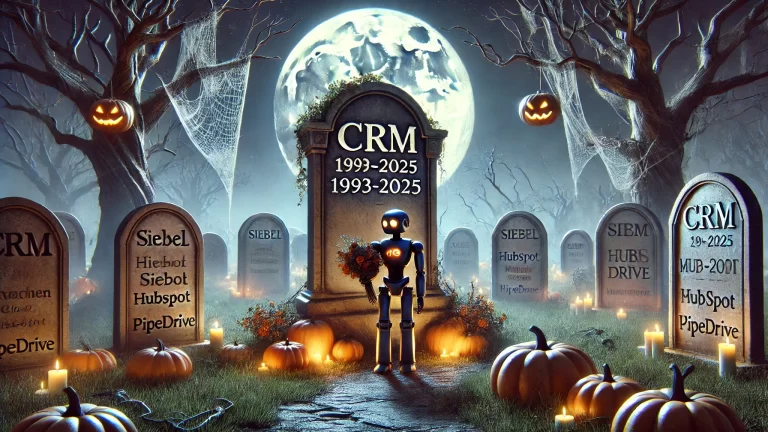
Category: Salesforce.com

  • Don’t Let Sales Training Fizzle: How to Max ROI with AI

    Don’t Let Sales Training Fizzle: How to Max ROI with AI

    Readers of our previous article how to avoid the “AI Circle of Sorrow” know that its rarely just one thing that needs to be fixed to max sales success. Great training is one of the pillars to a successful sales team.

    But what do you do after that amazing, energetic, “could sell ice in Greenland” inspirational, can-do trainer has left the building?  

    Your team needs to apply those awesome lessons, strategies, playbooks, sales cadences, tips and tricks. Luckily you can count on 100% training class retention, right?  

    The stats are stark: A staggering

    Sales reps forget 70% of the information they learn within a week of training, and 87% will forget it within a month. Gartner – How sales training and technology has changed

    This isn’t just a knowledge gap; it’s a direct hit to your bottom line/training investment. It can also be a significant part of your sales team churn rate.

    So, how do you ensure your sales team not only retains new training, but actively applies it to drive sales success? The answer lies in a strategic approach to post-training reinforcement, deeply integrated with your existing IT infrastructure – and increasingly, supercharged by AI.

    Post-Training Reinforcement

    Sales training isn’t a one-and-done event. It’s an ongoing journey. When your sales team learns how to leverage your AI enabled Smart CRM, sales enablement platforms, and other tools, the goal is not just understanding, but habit formation. Here’s how to make that happen:

    • Continuous Reinforcement & Microlearning: Break down complex sales learnings into bite-sized pieces. Deliver these via your Learning Management System (LMS) or sales enablement platform (CRM), using quick quizzes and “boosts” at spaced intervals. This combats the forgetting curve directly.
      • Tip Gamify it with your CRM and reward sales team members for continuing their learning. This also shows CRO’s who is putting the effort in.
    • Integrated Learning & Workflow Tools: Don’t pull reps out of their workflow to learn. Instead, embed learning directly into their daily tasks. Think in-app guidance, pop-up tips, and context-sensitive help within your CRM. This “just-in-time” learning is highly effective, with companies integrating learning content into workflow being 3x more likely to have highly effective sales training (see Gartner, Forrester).
    • Active Coaching and Manager Involvement: Sales managers are your frontline coaches. Empower them to review CRM data, observe training usage, and provide targeted, real-time feedback. Their involvement can improve training effectiveness by 44%.
      • Tip Managers can have AI looking for training opportunities that fit each sales rep’s current development journey. It can then send suggestions to the salesperson without their manager sending it. For many younger salespeople they like this approach better and are more receptive to it.
    • Post Training Knowledge Gamification and Incentives: Make learning and IT system adoption fun! Leaderboards, badges, and friendly competitions can significantly boost engagement. Gamified microlearning courses boast completion rates of 80% or higher.
    • Performance Measurement & Feedback Loops: Continuously monitor KPIs related to IT system usage (e.g., data quality, activity rates) and sales outcomes. Use this data to refine training, address pain points, and demonstrate the ROI of your efforts. Improved CRM adoption stats show that 90% of companies report higher sales rep productivity.
      • Tip- Alignment matters as well as strategy and planning. Best practices show that new sales training works best when you have the IT systems setup to reinforce the training. Here is our new sales process and here is how our CRM will support you every step of the way.
      • T-p-Invest in a CRM that your reps do not have to enter calls, video meetings, emails or LinkedIn messaging.  AI enabled CRMs can save reps 25% of their daily time and CRO’s see meetings immediately, not if a rep enters it. HUGE uplift.

    The AI Advantage: Supercharging Your Post-Training Strategy

    Imagine having your AI enabled smart CRM absorbing all the training materials before your team starts it, sets up each training module with reinforcement schedules, rep process triggers and system automation inside your CRM, before the training starts. Now reps are using it the right way the first time and going forward. Retention rates soar and alignment sings like a well-tuned piano!

    My top 5 “How can AI amplify your Post Training Retention Efforts”

    Retention & Application       How AI Can Reinforce Training
    1. Continuous Microlearning & Spaced RepetitionAI-Powered Learning Platforms: An AI-driven LMS can analyze a rep’s performance and knowledge gaps within the CRM (e.g., struggling with a specific feature) and automatically push relevant micro-modules or quizzes on that topic at optimal intervals. Example: If a rep consistently misses logging specific lead qualification data in Salesforce, HubSpot, Sentia the AI sends a 2-minute video on “Effective Lead Qualification in your CRM.”
    2. Integrated Learning & Workflow ToolsAI-Powered In-App Guidance: AI can detect when a user is struggling or hesitating within the sales system and proactively offer context-sensitive tips or walk-throughs to ensure they are using the right tools at the right time pursuant to their training. Example: As a rep creates a new opportunity in their CRM, AI detects an empty “Next Steps” field and prompts with “Based on this deal stage, consider adding ‘Follow-up Call Scheduled’ here.”
    3. Active AI Coaching & Manager InvolvementAI-Powered Coaching Analytics: AI can analyze sales call recordings and CRM activity to identify coaching opportunities, highlight areas where IT system usage could be improved, and even suggest personalized coaching points for managers and sellers. Example: AI flags a call where a rep didn’t update the CRM after a key customer objection, providing the manager a transcript snippet and suggesting coaching on “CRM hygiene post-objection handling.” Or the AI can auto send it based on pre-configured training criteria built into the system.
    4. Gamification & IncentivesAI-Driven Gamification Personalization: AI can personalize gamified challenges based on individual rep performance and goals, making competitions more relevant and engaging. Example: AI creates a personalized challenge for a rep to “Complete 10 highly rated lead qualifications in the CRM this week” with automated progress tracking and instant badge awarding.
    5. Performance Measurement & Feedback LoopsAI-Powered Predictive Analytics: AI can analyze CRM data to predict potential issues with data quality or process adherence before they become major problems, providing early warnings and actionable insights for training refinement. Example: AI identifies a pattern of incomplete contact records from a specific sales team or region, suggesting a need for localized training reinforcement on contact data entry best practices.  Alternatively select a CRM that enters all the account and target data for the reps without their manual data entry requirement.

    Solid training starts with understanding where you want to go first. Then put a plan in place of getting there, by aligning your sales training and sales system to your chosen sales process.

    By adopting a proactive, AI-enhanced post-training strategy, you can ensure your sales team not only retains new knowledge but genuinely leverages it to drive performance, increase productivity, and ultimately, close more deals. Don’t let your training investment fizzle – ignite continuous learning and empower your sales team for sustained success.

    What do you think? How can AI reinforce sales training after the sale?


    #SalesTraining #CRM #SalesEnablement #AIforsales #SalesTech #B2BSales #LearningAndDevelopment

    Is there anything else I can help you with?

  • The Future of CRM in Salesforce: Which Fields Will Disappear due to AI Features?

    The Future of CRM in Salesforce: Which Fields Will Disappear due to AI Features?

    Prediction: In just 12 months, many of the fields you see in Salesforce today will no longer exist. Sounds bold?

    Let’s break down why this radical shift is inevitable.

    The Problem: Too Many Fields, Not Enough Value

    Today, if you look at your Salesforce Opportunity object, you’ll likely find more than 100 fields. Yet most of these are rarely filled out by sales teams, and even when they are, the data often can’t be trusted.

    Reps enter inconsistent or inaccurate information-sometimes just to bypass validation rules. And every time a new field is added, it’s irrelevant for older records, further muddying your data.  This patchwork of unreliable fields leads to a CRM that’s cluttered, hard to use, and ultimately, not trusted by the very people it’s meant to help.

    Opportunity: Have reps use the exact same CRO approved sales process every time with mandatory fields. Gamify the process and have some fun with it. Better yet let Sentia AI enter the right fields for the rep with a single click new contact entry.

    The Shift: From Manual Fields to AI-Powered Intelligence

    So why do we keep trying to force reps to fill out fields that don’t add value? The answer is: we won’t for much longer.

    The future of CRM in Salesforce is about keeping only the truly objective fields-focus will be on the essentials like:

    • Name
    • Amount
    • Close Date
    • Stage
    • Forecast Category
    • A handful of other critical fields for reporting

    Everything else that is subjective, context-rich, data-will move to AI.

    Instead of relying on reps to manually update competitor fields, next steps, or deal risks, AI will capture and analyze unstructured data: calls, emails, meeting notes, and more. You’ll simply query Salesforce in plain language, and AI will surface the insights you need.

    Example:
    Want to know which deals involve a specific competitor?

    Ask your future Salesforce system, and AI will scan all relevant communications and notes to give you a precise answer. Wondering which opportunities lack a clear next step? AI will tell you instantly-no more chasing down reps or sifting through incomplete fields.

    Why is Salesforce Headed in this Direction?

    AI in Salesforce is evolving rapidly. New agentic AI capabilities, like Salesforce’s Atlas Reasoning Engine and Einstein Copilot, are already automating data capture, driving predictive insights, and guiding sales teams with real-time recommendations. By 2027, AI will be so deeply embedded that most manual data entry will be obsolete.

    • AI-driven pipeline management: Real-time deal insights and risk detection
    • Automated lead scoring and follow-ups: AI prioritizes and nudges opportunities
    • Conversational AI assistants: Guide users and automate repetitive tasks
    • Hyper-personalization: AI tailors outreach and engagement at scale

    What This Means for Sales Teams

    • Far better data: AI captures context and nuance humans miss, making CRM data more accurate and actionable.
    • Less admin, more selling: Reps spend less time updating fields and more time building relationships.
    • New possibilities: Hundreds of use cases open up, from dynamic forecasting to real-time coaching and customer insights.

    In short, the CRM of the future will be lighter, smarter, and more powerful-and sales teams will finally be free from the tyranny of endless unused / useless fields.

    Salesforce Future

    A year from now-updating Salesforce with AI won’t be necessary because there will be almost nothing left to update. The future of CRM is objective data at the core, with AI doing the heavy lifting everywhere else.

    Are you ready for a Salesforce where fields are few, but insights are limitless? The countdown has already begun. www.sentia.website

    #Salesforce #CRM #AIinSales #FutureOfWork #SalesTech #AIAutomation

    Frequently Asked Questions: The Future of Salesforce Fields & AI

    Why are Salesforce fields predicted to disappear?

    Most Salesforce fields will disappear because AI now automates data capture. Traditionally, sales teams had to manually enter data into over 100 fields per Opportunity, leading to “dirty data” and administrative fatigue. With the rise of Salesforce Agentforce and autonomous AI, CRM data is captured directly from emails, calls, and meetings, making manual fields redundant.

    Which types of Salesforce fields will be removed first?

    The first fields to disappear are manual entry tracking fields, such as:

    • Next Steps: Automatically derived from meeting transcripts.

    • Discovery Notes: Captured via AI-powered sentiment and keyword analysis.

    • Competitor Tracking: Identified through natural language processing (NLP) of sales calls.

    • BANT Criteria: (Budget, Authority, Need, Timeline) automatically validated by AI interactions.

    What is Salesforce Agentforce’s role in CRM evolution?

    Agentforce represents a shift from passive CRM systems to active, decision-making agents. It acts as an autonomous data steward that enriches CRM records in real-time without human intervention, allowing sales reps to focus on customer relationships rather than data entry.

    How does AI improve CRM data quality?

    AI improves data quality by eliminating human error and “empty field syndrome.” Instead of relying on a busy sales rep to update a record, AI captures 100% of interaction data immediately. This provides RevOps teams with a “single source of truth” that is consistently updated and accurately reflects the state of the pipeline.

    Will Salesforce become a “field-less” CRM?

    While Salesforce won’t lose all fields, it is moving toward a “Headless CRM” or “Invisible CRM” experience. The user interface will shift from dense data tables to AI-generated summaries and actionable insights, where the underlying data exists but doesn’t require manual management.

    How should RevOps teams prepare for disappearing CRM fields?

    RevOps teams should begin by auditing their current Salesforce objects and identifying fields with low completion rates. Preparing for this shift involves moving away from rigid manual validation rules and instead investing in AI-driven data orchestration and clean data architectures.

  • Transforming In-Store Execution with AI: Introducing the Sentia Smart Layer

    Transforming In-Store Execution with AI: Introducing the Sentia Smart Layer

    Transforming In-Store Execution with AI: Introducing the Sentia Smart Layer

    Sentia’s AI seers here to give you the latest in the CPG wars where margins are tighter than a.. well you know and the slightest edge is fought for like the beaches of Normandy. Fear not faithful CPG warrior – we have the scoop on what’s shaking in, in store merchandising and what you need to know you’re competitors are already doing and why your numbers are dropping faster than tariff threats.

    Let’s get back to basics. In today’s hyper charged consumer goods industry, staying ahead in retail execution is not a option it’s win or bust.

    Enter Sentia Smart Layer, a groundbreaking AI-powered platform designed to revolutionize how field teams and visual merchandisers operate. With cutting-edge AI enhanced technologies, Sentia transforms images and voice inputs into actionable insights in real-time, empowering teams to deliver unparalleled in-store performance.

    Your Question?

    “There is a bit of AI marketing “fluffier” around AI App capabilities. What makes Sentia AI different from all these AI VC backed startups that claim to uncover every target, upsell, cross sell, website pixel generated lead that was never possible before Alexander Grahm Bell and the telephone.” – Frustrated not willing to go on record CEO (4X in past 5 days).  But as Sentia says, I digress.

    Why are these CEO, COO, CFOs feeling so much frustration when their CRMs can be enhanced with AI?

    What real world problems can it solve – that I will be willing to pay for?   

    Why Sentia Smart Layer is a Game-Changer

    Here’s how Sentia is redefining retail execution:

    1. Effortless Field Reporting
      Say goodbye to tedious typing! Field teams can now create detailed reports simply by speaking. Sentia’s AI extracts insights from photos of shelves, fixtures, and displays, enabling real-time data capture and reducing administrative burdens.
    2. In-Store Visual Analysis
      Sentia analyzes store images to ensure planogram compliance, measure stock levels, assess POS material quality, and validate shelf allocations—all while suggesting layout improvements to optimize shopper flow and visibility.
    3. Competitive Intelligence
      Beyond monitoring your own products, Sentia tracks competitor share of shelf, promotional displays, and stock levels—providing visual benchmarking to keep you ahead of the competition.
    4. Real-Time Prioritization
      Incoming reports are scored for urgency and relevance, surfacing critical issues like compliance gaps or stock shortages as actionable Smart Cards. Teams can act fast to fix problems before they escalate.
    5. Continuous Monitoring
      Every submitted image is vetted for out-of-stocks, non-compliant POS materials, competitor intrusions, and execution quality—ensuring proactive alerts for rapid resolution.
    6. On-Demand Summaries
      Get concise visual summaries by store, region, or retailer with execution scores, competitor trends, and actionable recommendations—all at your fingertips.
    7. Natural Language Chat Interface
      Just ask questions like “What stores have execution issues this week?” or “Summarize merchandising problems in Region Y,” and Sentia delivers instant answers through conversational AI.

    Why It Matters

    The Sentia Smart Layer empowers brands with unparalleled control and visibility across thousands of retail locations—without relying on outdated manual reporting or delayed audits. By enabling faster decision-making and smarter execution strategies:

    • Teams act swiftly on opportunities to improve share at the shelf.
    • Brands gain deeper insights into competitor activities and trends.
    • Execution quality reaches new heights with real-time monitoring and actionable insights.

    Key Features That Set Sentia Apart

    • Trend Detection: Spot long-term patterns in competitor movements or display quality.
    • Predictive Alerts: Receive warnings about potential stock-outs or compliance gaps before they happen.
    • Integration-Ready: Sync seamlessly with retail apps, CRMs, and BI dashboards for streamlined workflows.
    • Gamification: Motivate field teams with scorecards and leaderboards to drive performance excellence.

    Revolutionizing Retail Execution Starts Here

    The Sentia Smart Layer isn’t just an innovation—it’s a transformation of how consumer goods brands approach in-store execution. From empowering field teams to delivering competitive intelligence at scale, this platform is the ultimate tool for winning at retail.

    Are you ready to elevate your brand’s in-store presence? Let Sentia lead the way into the future of smarter retail execution!

    Keywords for Visibility:

    #AI #RetailExecution #ConsumerGoods #VisualMerchandising #PlanogramCompliance #CompetitiveIntelligence #SmartTechnology #FieldTeams #RetailInnovation #SentiaSmartLayer


    Add Your Heading Text Here

  • How do Field Sales Reps Gain an Edge with AI? 10 AI Features to Know

    How do Field Sales Reps Gain an Edge with AI? 10 AI Features to Know

    AI in Field Sales: Current Impact and Future Potential

    Field sales reps have both the coolest (on the road!) and most stressful jobs out there. Sales in general can be an extremely monetarily rewarding field yet also has equally high job churn rates. Salespeople by nature are competive, always looking for an edge and they were some of the first to truly embrace AI and quickly leverage it.

    Let’s start with the statistics. Today’s field sales representatives spend approximately 65% of their time on non-selling activities—a ratio that AI technologies are now flipping by handling administrative burdens and enabling reps to focus on relationship building and closing deals1. Organizations implementing AI-powered sales tools are experiencing remarkable results: leads increasing by over 50%, call times reducing by 60-70%, and operational costs decreasing by 40-60%3. Lots of opportunities to apply AI – But how, who and which tools are delivering?

    Today’s Top 10 AI Features for Field Sales Representatives

    1. AI Meeting Note-Taking and Transcription

    Use Case: Field sales representatives can focus entirely on customer conversations while AI automatically captures, transcribes, and summarizes meetings.
    Example: Fireflies.ai integrates with video conferencing platforms to record, transcribe, and summarize customer interactions, then syncs these notes directly to your CRM2.

    1. AI-Driven Conversation Intelligence

    Use Case: Reps receive real-time feedback and coaching on their sales conversations based on patterns from top performers.
    Example: Gong.io analyzes sales calls to provide actionable insights and suggestions for improvement, such as optimal question patterns for discovery calls2.

    3. Prospect Personality Assessment

    Use Case: Before making contact, sales representatives gain insights into a prospect’s communication style and preferences.
    Example: Crystal uses compliant customer data to predict a prospect’s personality using the DISC methodology, then provides communication recommendations tailored to that individual2.

    4. AI-Powered Sales Forecasting

    Use Case: Field sales teams leverage predictive analytics for more accurate territory planning and goal setting.
    Example: InsightSquared offers 350 pre-built reports and identifies data gaps affecting forecast accuracy, helping reps better predict monthly bookings and opportunity values2.

    5. Automated Meeting Preparation

    Use Case: Reps receive comprehensive pre-meeting intelligence without manual research.
    Example: Cirrus Insight’s Meeting AI automatically compiles company and contact information ahead of scheduled meetings, eliminating hours of preparation time2.

    6. Territory Management and Route Optimization

    Use Case: AI optimizes travel routes between customer locations, maximizing productive selling time.
    Example: Field sales organizations using AI for territory management report 20-30% increases in productivity by optimizing customer visit sequencing1.

    7. Lead Prioritization and Scoring

    Use Case: Representatives focus on prospects most likely to convert based on AI analysis of customer behavior patterns.
    Example: AI systems analyze website visitor behavior and can send automatic “trigger reports” when high-quality leads are identified3.

    8. AI-Enhanced CRM Assistance

    Use Case: Sales reps receive guided selling recommendations throughout the sales process.
    Example: Salesforce Sales Cloud’s Einstein Copilot leverages customer data to guide sellers, generate personalized emails, and suggest actions most likely to move deals forward2.

    9. Automated Follow-up Management

    Use Case: AI ensures consistent post-meeting follow-up by automatically generating and scheduling communications.
    Example: AI SDR agents like Artisan AI’s Ava handle email outreach by drafting responses and automating follow-ups to streamline sales activities3.

    10. Real-time Competitive and Product Information

    Use Case: Field reps instantly access relevant product specifications and competitive information during customer conversations.
    Example: In real estate sales, AI agents process MLS listings, tax records, school ratings, and neighborhood information in real-time during client interactions1.

    Top 5 AI Features Coming in the Next Six Months

    1. Advanced AI Sales Development Representatives

    Expected Impact: Complete automation of early-stage sales processes, with AI agents handling lead generation, qualification, and initial outreach across multiple channels (email, voice, social) with increasingly human-like interaction capabilities3.

    2. Real-time Conversation Coaching

    Expected Impact: AI will provide live, in-ear guidance during customer conversations, suggesting responses to objections, identifying upsell opportunities, and recommending optimal negotiation strategies based on real-time conversation analysis2.

    3. Predictive Opportunity Management

    Expected Impact: AI systems will forecast not just overall sales but individual opportunity outcomes with greater precision, recommending specific actions to improve close probability for each deal in a rep’s pipeline2.

    4. Cross-platform Customer Intelligence

    Expected Impact: AI will aggregate and analyze customer signals across disparate platforms (social media, website visits, email engagement, purchase history) to create comprehensive engagement profiles accessible to field reps in real-time3.

    5. Industry-Specific AI Sales Assistants

    Expected Impact: Rather than generic AI tools, field sales representatives will have access to specialized AI assistants trained on industry-specific knowledge, regulations, and selling patterns, particularly in complex sectors like healthcare, financial services, and manufacturing1.

    Caution: When AI Over-Promises and Under-Delivers

    Field sales leaders should be cautious about several common pitfalls when adopting AI technologies:

    Integration Challenges

    Many AI tools promise seamless integration with existing systems but require significant customization and technical resources to deliver value. Before implementing new solutions, evaluate whether they truly connect with your existing tech stack without creating data silos1.

    Training Requirements

    Some AI systems require extensive training with your specific sales data before providing accurate recommendations. Be realistic about the volume of quality data required and the time needed before seeing meaningful results3.

    Human Oversight Needs

    While automation is valuable, tools that promise to eliminate human involvement entirely often create new forms of work in verification and exception handling. The most effective AI implementations augment rather than replace human expertise1.

    Cost vs. Value Assessment

    Sophisticated AI tools often come with premium pricing. Carefully evaluate whether the promised efficiency gains justify the investment, particularly for smaller sales teams or those with limited technology budgets2.

    Security and Compliance Concerns

    AI tools that access customer data or record conversations may create privacy vulnerabilities or compliance risks in regulated industries. Thoroughly vet vendors’ security practices and compliance certifications3.

    Field Sales Tech Stack Assessment Checklist

    Capability Current Tech Stack AI-Enhanced Potential
    Meeting Documentation Manual note-taking, inconsistent CRM updates Automated transcription, AI-generated summaries, CRM integration without manual entry
    Lead Prioritization Intuition-based or simple scoring models Behavioral analysis, predictive conversion modeling, real-time engagement tracking
    Territory Management Static assignments, manual routing Dynamic territory optimization, predictive customer value mapping, automated route planning
    Customer Intelligence Limited to CRM data, manually researched Real-time aggregation across platforms, personality insights, competitive intelligence
    Conversation Effectiveness Limited coaching, periodic reviews Real-time guidance, pattern recognition from top performers, automated improvement suggestions
    Follow-up Management Manual tracking, template-based Automated, personalized follow-ups with optimal timing recommendations
    Sales Forecasting Experience-based, often inaccurate AI-driven predictions with specific deal-level insights and improvement recommendations
    Competitive Intelligence Static battlecards, limited updates Real-time market intelligence, personalized competitive positioning suggestions
    Product Knowledge Manual research, limited accessibility Instant access to relevant specifications, AI-suggested positioning based on customer needs
    Performance Analytics Lagging indicators, manual analysis Real-time performance tracking, AI-recommended improvement areas, predictive coaching

    What’s Coming Next?

    Despite the hype we’re on the fringes of AI in business. As is typical in most tech cycles the marketing and sales drumbeat is louder than the actual successful implementations to date. I’m predicting that 2025 will be the year that AI starts taking hold and becomes accountable for real ROI just like any tech tool. That will force the pretenders out and the rest focus on real world solutions that have a clear and demonstratable impact.

    With that as a base there is no doubt that AI can fundamentally transform field sales by addressing core inefficiencies in the traditional selling model and field store visit teams. The most successful implementations to date pair AI capabilities with human expertise (“Functional AI) rather than attempting to replace it. As these technologies continue to evolve over the next six to nine months, field sales organizations that strategically evaluate and integrate AI tools while maintaining focus on relationship building will create sustainable competitive advantages.

    The key to successful AI adoption is to treat like any other new technology. Do this by starting small with focused use cases, to known easy to see problems that can deliver immediate value, then gradually expanding to more complex processes as teams build confidence in their digital teammates. If your analysis shows only incremental improvements (less than 20% ROI) look for bigger impact opportunities.

    Citations:

    1. https://relevanceai.com/agent-templates-roles/field-sales-representative-ai-agents
    2. https://www.cognism.com/blog/ai-sales-tools
    3. https://research.aimultiple.com/sales-ai/
    4. https://goconsensus.com/blog/best-ai-sales-tools/
    5. https://relevanceai.com/agent-templates-roles/sales-forecasting-analyst-ai-agents
    6. https://www.leadbeam.ai/blog/how-automation-ai-agents-ai-sdrs-impact-field-sales
    7. https://makesocialmediasell.com/ai-in-sales-examples/
    8. https://www.mailmodo.com/guides/ai-tools-for-sales/
    9. https://www.copy.ai/blog/field-sales-representatives
    10. https://www.close.com/blog/ai-sales-tools
    11. https://www.stackmoxie.com/blog/ai-readiness-checklist-for-marketing-ops-revops/
    12. https://www.avoma.com/blog/sales-forecasting-tools
    13. https://www.mdm.com/article/featured/featured-blog/ai-in-the-field-the-secret-to-success-in-outside-sales/
    14. https://www.glideapps.com/use-cases/field-sales
    15. https://www.mentimeter.com/blog/business/ai-sales-tools
    16. https://huble.com/blog/ai-use-cases
    17. https://www.getassistive.com/blog/field-sales-crm-solution-checklist-of-essential-features
    18. https://www.clappia.com/blog/how-ai-can-help-with-field-sales-tracking
    19. https://zapier.com/blog/ai-sales-assistant/
    20. https://cloud.google.com/transform/101-real-world-generative-ai-use-cases-from-industry-leaders
    21. https://skaled.com/insights/generative-ai-sales-checklist/
    22. https://veloxy.io/sales-ai/field-sales-software/
    23. https://spotio.com/blog/ai-sales-tools/
    24. https://www.fullestop.com/blog/ai-in-sales-use-cases-benefits-and-challenges
    25. https://www.quantified.ai/blog/sales-readiness-checklist/
    26. https://www.techpowerup.com/forums/threads/report-ai-software-sales-to-experience-massive-growth-with-40-6-cagr-over-the-next-five-years.325039/
    27. https://www.mckinsey.com/capabilities/growth-marketing-and-sales/our-insights/an-unconstrained-future-how-generative-ai-could-reshape-b2b-sales
    28. https://www.gartner.com/peer-community/post/ai-improve-sales-operations
    29. https://www.salesmate.io/blog/ai-sales-assistant/
    30. https://learnprompting.org/blog/ai-tools-for-sales-teams
    31. https://www.mindtheproduct.com/order-promising-the-secret-sauce-of-multi-channel-fulfillment/
    32. https://www.pwc.com/us/en/tech-effect/ai-analytics/ai-predictions.html
    33. https://www.vivun.com/blog/5-ai-trends-shaping-the-future-of-sales
    34. https://www.linkedin.com/pulse/ai-agents-overpromising-underdelivering-closer-look-richard-hn2pc
    35. https://veloxy.io/sales-ai/software-comparison/
  • What the Hell are / is / an: AI Agent(s)?

    What the Hell are / is / an: AI Agent(s)?

    AI Agents the next Frontier in artificial intelligence or just more AI Hype?

    With Billions of venture capital dollars already sunk into it, the AI marketing buzz continues to build. The latest excitement centers around a term many cannot agree upon. AI agents are becoming increasingly prevalent or at least written and hyped more and more. Ask most people what an AI Agent is, and the first thing they think of is chatbot type things. But what exactly are AI agents, and how are they shaping our technological landscape or is it just a bunch of tech marketing hype?

    What are AI Agents?

    AI agents are autonomous systems or programs capable of performing tasks on behalf of users or other systems. They go beyond simple chatbots, incorporating advanced decision-making, problem-solving, and execution capabilities1. These agents utilize large language models (LLMs) as their core, enabling them to understand and respond to complex inputs while adapting to user expectations over time1.

    Definitions Across Industries

    While there’s no universally agreed-upon definition, several key players offer their interpretations:

    • IBM defines AI agents as systems that can autonomously perform tasks by designing workflows and utilizing available tools1.
    • OpenAI describes them as automated systems that can independently accomplish tasks for users2.
    • Microsoft distinguishes agents from AI assistants, positioning agents as more specialized and tailored to specific expertise2.
    • Salesforce definition: AI agents are a type of AI system that can understand and respond to customer inquiries without human intervention. They are created using an agent builder, like Agentforce, and rely on machine learning and natural language processing (NLP) to handle a wide range of tasks. These intelligent agents can include anything from answering simple questions to resolving complex issues — even multi-tasking. Most importantly, AI agents can continuously improve their own performance through self-learning. This is distinct from traditional AI, which requires human input for specific tasks.

    Companies Developing AI Agents

    Several tech giants are at the forefront of AI agent development:

    1. OpenAI: Developing the Operator agent2.
    2. Google: Working on Project Mariner2.
    3. Anthropic: Claude – a generative AI chatbot and family of large language models (LLMs).
    4. Perplexity: Created a shopping agent2.
    5. Amazon: Developing AI agents for e-commerce applications4.
    6. Salesforce: Aiming to become a leading provider of “digital labor” through various agentic services2. See Agentforce.

    5 Real-World AI Agent Use Cases

    1. E-Commerce: AI agents on platforms like Amazon provide personalized product recommendations, automatically place orders, and track shipping, contributing significantly to revenue generation4.
    2. Sales and Marketing: AI agents like Find AI build lead lists, send personalized communications, and qualify leads, often outperforming human counterparts in lead generation4.
    3. Customer Support: Advanced AI agents, such as those developed by Chatbase, can handle complex technical support issues, process refunds, and provide product recommendations, leading to substantial reductions in support tickets4.
    4. Autonomous Vehicles: Self-driving cars represent a complex application of AI agents, combining multiple agent types for navigation, decision-making, and real-time responses. Companies like Waymo are pioneering this technology in cities like San Francisco and across the United States4.
    5. Healthcare: AI agents assist in diagnosing medical conditions, analyzing medical images, and creating personalized treatment plans. For instance, Google’s AI agent has demonstrated superior accuracy in diagnosing skin cancer compared to human dermatologists4.

    As AI agents continue to evolve, they promise to revolutionize various sectors, enhancing efficiency and providing personalized experiences. However, challenges remain in standardizing definitions and managing user expectations. The coming years will likely see further advancements and refinements in this exciting field of artificial intelligence.124

    Citations:

    1. https://www.ibm.com/think/topics/ai-agents
    2. https://www.glean.com/blog/ai-agents-how-they-work
    3. https://deviniti.com/blog/enterprise-software/best-ai-agent-development-companies/
    4. https://www.chatbase.co/blog/ai-agent-examples
    5. https://anth.us/blog/null/
    6. https://zapier.com/blog/ai-agent/
    7. https://www.youtube.com/watch?v=ZZ2QUCePgYw
    8. https://cloud.google.com/discover/what-are-ai-agents
    9. https://www.forbes.com/councils/forbestechcouncil/2025/03/07/ai-agents-in-2025-transforming-business-redefining-leadership-and-accelerating-digital-transformation/
    10. https://www.teneo.ai/blog/5-companies-leading-the-way-in-ai-agent-technology
    11. https://a16z.com/ai-voice-agents-2025-update/
    12. https://www.salesforce.com/agentforce/what-are-ai-agents/
    13. https://botpress.com/blog/real-world-applications-of-ai-agents
    14. https://aws.amazon.com/what-is/ai-agents/
    15. https://openai.com/index/new-tools-for-building-agents/
    16. https://www.reddit.com/r/AI_Agents/comments/1hhlzkh/whats_your_use_case_for_ai_agents_what_problems/
    17. https://direct.mit.edu/isal/article/doi/10.1162/isal_a_00605/116885/Towards-a-Theory-of-Mind-for-Artificial
    18. https://hallmark.libguides.com/c.php?g=1312147&p=9645253
    19. https://www.reddit.com/r/OpenAI/comments/1hk4d8h/eli5_what_exactly_is_an_ai_agent_with_examples/
    20. https://botpress.com/blog/what-is-an-ai-agent
    21. https://devrev.ai/blog/ai-agents
    22. https://en.wikipedia.org/wiki/Intelligent_agent
    23. https://github.com/resources/articles/ai/what-are-ai-agents
    24. https://www.geekwire.com/2025/microsoft-unveils-ai-agents-for-sales-striking-back-at-salesforce/
    25. https://www.businessinsider.com/generative-ai-evolution-software-companies-develop-ai-agents-workforce-2025-3
    26. https://tech.co/news/microsoft-new-ai-sales-agents
    27. https://cloud.google.com/transform/101-real-world-generative-ai-use-cases-from-industry-leaders
    28. https://www.techradar.com/pro/openai-wants-to-help-your-business-build-its-next-generation-of-ai-agents
    29. https://iblnews.org/microsoft-announces-two-sales-ai-agents-in-competition-with-salesforce/
    30. https://www.teneo.ai/blog/what-are-ai-agents-6-powerful-examples-in-action
    31. https://martech.org/ai-agents-2025-predictions/
    32. https://www.salesforce.com/news/stories/future-of-ai-agents-2025/
    33. https://guides.lib.purdue.edu/c.php?g=1371380&p=10135074
    34. https://papers.ssrn.com/sol3/papers.cfm?abstract_id=4772956
    35. https://customgpt.ai/sources-citations-observability/
    36. https://www.moveworks.com/us/en/resources/blog/what-is-an-ai-agent
    37. https://open.mitchellhamline.edu/mhlr/vol46/iss5/2/
    38. https://www.reddit.com/r/n8n/comments/1gxkf9c/ai_agent_pinecone_source_citations/
  • Salesforce’s AgentExchange: What is it? How to Leverage it?

    Salesforce’s AgentExchange: What is it? How to Leverage it?

    Salesforce just dropped a major announcement that’s set to reshape the AI CRM landscape: AgentExchange. This new marketplace and community for Agentforce is a bold step into the $6 trillion digital labor market, and it’s creating exciting opportunities for both Salesforce users and partners like Sentia AI.

    What is AgentExchange?

    Think of AgentExchange as the AppExchange, but for AI agents. It’s a trusted marketplace built into Salesforce where businesses can find pre-built actions, topics, and templates to quickly create and deploy AI agents. With over 200 partners already on board, including Google Cloud, Docusign, and Box, AgentExchange promises to accelerate AI adoption and drive innovation across industries.

    Why This Matters to Us (and You!)

    At Sentia AI, we’re passionate about leveraging AI to transform customer experiences. AgentExchange validates this vision and amplifies the potential of agentic AI. Here’s why we’re excited:

    • Speed and Efficiency: AgentExchange offers ready-to-use solutions that can dramatically reduce the time and effort required to build and deploy AI agents. This aligns perfectly with our mission to deliver rapid, impactful AI solutions for our clients.
    • Ecosystem Expansion: The AgentExchange ecosystem creates new avenues for collaboration and innovation. As a company specializing in functional AI, AI Agents, and AI development, Sentia AI can leverage AgentExchange to integrate our expertise with other best-in-class solutions, creating even more powerful and comprehensive AI offerings.
    • Focus on Industry-Specific Solutions: AgentExchange emphasizes industry-specific solutions, which is critical for delivering truly personalized and effective AI experiences. We’re eager to explore how we can tailor our AI solutions to meet the unique needs of various industries through the AgentExchange.

    Key Features of AgentExchange:

    • Partner-Built Components: Access a wide range of agentic components, including actions, prompt templates, topics, and agent templates, to customize and enhance your AI agents.
    • Easy Discovery: Find and deploy the right AI solutions directly on the marketplace or within Salesforce’s Agent Builder tool.
    • Trusted Solutions: Benefit from rigorous security reviews and customer feedback to ensure the quality and reliability of every solution listed on AgentExchange.

    What’s Next for Sentia AI?

    We are diving into AgentExchange to assess how we can best integrate our AI capabilities and leverage this exciting platform to deliver even greater value to our clients. We believe that AgentExchange will be a catalyst for AI-driven customer experience, and we’re committed to being at the forefront of this transformation.

    The Future is Agentic

    The launch of AgentExchange signals a significant shift towards agentic AI – where AI agents work alongside humans to augment capabilities and drive efficiency. We see this as the future of work, and we’re excited to partner with Salesforce and the Agentblazer community to make this vision a reality.

    What are your thoughts on AgentExchange?

    How do you see agentic AI transforming your business? Share your comments below!

    #AI #AgenticAI #Salesforce #AgentExchange #CRM #Innovation #CustomerExperience #DigitalTransformation #SentiaAI #SalesforceAI #appexchange

  • AI in Big Pharma: How is it Being Applied in 2025?

    AI in Big Pharma: How is it Being Applied in 2025?

    Valued at $1.5 trillion, the pharmaceutical industry has long grappled with significant challenges. R&D development of a new drug costs $2 billion plus, takes over a decade, and faces a 90% failure rate in early stages. However, with AI adoption in life sciences growing at 29% annually, a unique opportunity emerges to address these inefficiencies and pain points in drug development12.

    Pain Points in Pharma

    Big Pharma executives and life sciences investors face uncertainty and risk due to four major issues:

    • Disconnected Data: Decision-making relies on vast volumes of structured and unstructured scientific data.
    • Knowledge Gaps: Significant gaps persist across scientific, clinical, regulatory, and commercial decision-making processes.
    • Inefficient Processes: Integrating and analyzing datasets is time-consuming and resource-intensive.
    • Lack of Standardization: Inconsistent evaluations hinder reproducibility in asset assessments.

    AI Applications in Drug Development – Recent Examples

    AI is transforming various stages of drug discovery, development, and commercialization:

    1. Target Identification and Validation: Atomwise and Pfizer’s partnership reduced initial drug discovery timeline from 4-6 years to approximately 18 months.
    2. Clinical Trial Optimization: Deep 6 AI’s implementation reduced patient recruitment time by 85% and increased trial enrollment rates.
    3. Manufacturing Process Optimization: GSK and Gatehouse Bio’s collaboration led to a 25% increase in production yield and $20 million annual cost savings at a single site.
    4. Post-Market Surveillance: FDA and Novartis’ AI-powered systems enabled earlier detection of safety signals and more proactive risk management.

    CRM & AI in Healthcare

    Customer Relationship Management (CRM) systems, enhanced by AI, are improving healthcare delivery and patient engagement:

    • Personalized Patient Care: AI-powered CRM systems analyze patient data to provide tailored treatment recommendations and follow-ups.
    • Predictive Analytics: These systems can forecast patient needs, potential health risks, and treatment outcomes.
    • Streamlined Administrative Tasks: AI automates appointment scheduling, billing, and record-keeping, allowing healthcare providers to focus more on patient care.
    • Enhanced Patient Engagement: AI-driven CRM tools facilitate better communication between patients and healthcare providers, improving adherence to treatment plans.

    The AI Solution

    AI addresses several critical issues in healthcare and pharma:

    1. Data Integration: AI can seamlessly integrate and analyze vast amounts of disparate data, providing comprehensive insights for decision-making.
    2. Accelerated Research: Machine learning algorithms can rapidly identify potential drug candidates and predict their efficacy, significantly reducing the time and cost of drug discovery6.
    3. Improved Clinical Trials: AI optimizes patient recruitment, monitors responses, and predicts potential side effects, making trials more efficient and reliable5.
    4. Personalized Medicine: By analyzing individual patient data, AI enables the selection of treatments tailored to each person, improving outcomes and reducing adverse reactions4.
    5. Operational Efficiency: AI automates routine tasks and provides insights into market trends and patient needs, streamlining pharmaceutical operations2.

    The Impact of AI on Drug Development

    The benefits of AI in pharmaceutical industry are clear:

    • 30-50% reduction in time-to-market for new drugs
    • Estimated $100-200 million cost savings per successful drug
    • Higher success rates in clinical trials due to better candidate selection
    • More efficient use of research resources
    • Improved safety monitoring and risk management
    • Faster response to emerging health threats through drug repurposing

    Looking Ahead

    2025 is the AI “Go Year” for the entire Pharmaceutical Industry.

    AI is expected to drive 30% of new drug discoveries, cutting costs and accelerating personalized treatments7. Challenges, including regulatory hurdles, data privacy concerns, and the need for specialized skills loom large! 3.

    The future of pharma lies in embracing these AI-driven innovations while navigating the complex regulatory landscape. As the industry evolves, collaboration between tech companies, pharmaceutical firms, and regulatory bodies will be crucial in realizing the full potential of AI in healthcare and drug development.

    What are your thoughts on AI’s role in transforming the pharmaceutical industry? How is AI changing your processes and workflows in pharma? Share your experiences and let’s continue this important conversation.

    Connect with me so you don’t miss any future articles!

    Please follow me on X (@Intmktentry) on Linkedin, YouTube or via our AI Community Site.

    Citations:

    1. https://www.zs.com/insights/pharmaceutical-trends-2025-outlook-ai-supplychain-and-beyond
    2. https://www.datacamp.com/blog/ai-in-pharmaceuticals
    3. https://www2.deloitte.com/us/en/insights/industry/health-care/life-sciences-and-health-care-industry-outlooks/2025-life-sciences-executive-outlook.html
    4. https://pmc.ncbi.nlm.nih.gov/articles/PMC10385763/
    5. https://www.clinicaltrialsarena.com/features/clinical-trials-challenges-expect-2025/
    6. https://www.mckinsey.com/industries/life-sciences/our-insights/generative-ai-in-the-pharmaceutical-industry-moving-from-hype-to-reality
    7. https://www.weforum.org/stories/2025/01/2025-can-be-a-pivotal-year-of-progress-for-pharma/
    8. https://www.scilife.io/blog/ai-pharma-innovation-challenges
  • Einstein GPT potentially providing discounts?

    Einstein GPT potentially providing discounts?

    If you’re a Salesforce customer or partner and want to save we have had reports that purchasing even a single Einstein GPT credit may open the door to better discounts on Salesforce products.

    It’s a bit of a hack, and while results can vary, it’s a low-cost move that could give you leverage in your Salesforce negotiations.

    Salesforce is heavily promoting its Einstein GPT AI features, and in many cases, customers who include any AI-related spend in their contract may qualify for additional incentives or discounts. Even buying just one credit for $2 could make a difference.

    Especially relevant for
     Salesforce customers negotiating a new contract or renewal.

    • Salesforce partners looking for ways to optimize pricing for themselves or their clients.
    • Anyone considering Salesforce AI features but not ready to fully commit—this keeps options open while potentially unlocking savings.

    Check with your Salesforce rep to see purchasing einstein credits qualifies you for better pricing. Compare any potential savings on your licenses or bundled deals.

    While there’s no guarantee this will work in every case, it’s a small, low-risk move that could help you secure better pricing on Salesforce products. If you’re negotiating with Salesforce soon, it may be worth a try!

  • Satya Nadella (Microsoft CEO) says AI will eat CRM

    Satya Nadella (Microsoft CEO) says AI will eat CRM

    The rise of artificial intelligence (AI) is not just transforming technology; it is also reshaping how businesses operate. Satya Nadella, CEO of Microsoft, on a recent podcast episode at BG2Pod has offered a compelling vision of how AI will change the landscape of business applications, including Customer Relationship Management (CRM) software. To understand Nadella’s perspective, it’s important to first understand the role of CRM today and then consider how AI could disrupt it.

    The Current State of CRM
    Customer Relationship Management (CRM) software is a category of technology solutions that helps companies manage interactions with current and potential customers. At its core, CRM is about centralizing customer data, streamlining sales processes, and enhancing customer service. A typical CRM system includes features such as:
    • Contact Management: Storing and organizing customer contact information.
    • Sales Tracking: Managing leads, opportunities, and sales pipelines.
    • Customer Service: Tracking support tickets and customer interactions.
    • Marketing Automation: Automating email campaigns and other marketing activities.

    CRM systems are designed to be the single source of truth for customer-related information, helping businesses make data-driven decisions. However, these systems are often complex, requiring users to navigate multiple interfaces and manually input or retrieve data. According to Nadella, this is where AI will make a significant impact.

    Nadella’s Vision: The Collapse of Traditional Business Applications

    Nadella believes that the traditional notion of business applications, including CRM, is likely to collapse in the era of AI agents. This is because:

    • Business applications are essentially databases with business logic: CRM systems and other business applications are fundamentally databases with a layer of business logic on top that helps companies manage their data.
    • AI is taking over the business logic: AI agents are taking over the role of the business logic layer, meaning that these agents will be interacting with multiple data sources, not limited by the traditional backends of CRM or other systems.
    • The AI tier becomes the central logic processing area: Nadella envisions a future where the AI tier will become the primary location for all business logic processing, meaning users will not need to access CRM systems directly.
    With AI handling the business logic, the specific back-end database or application (like a CRM) becomes less important. Instead of logging into a CRM system to find information or input data, users will interact with AI agents that can retrieve, update and analyze data across various systems, including CRM. In Nadella’s words, it will be possible to “literally say hey I’m meeting with Bill tell me about all the companies that benchmarks uh invested in it’s both taking the web anything that’s in my CRM database collating it all together giving me a note”.

    The Role of Co-pilot and AI Agents

    Microsoft’s co-pilot is a key component of Nadella’s vision. Co-pilot is positioned as the organizing layer for work artifacts and workflow. It serves as the user interface for interacting with AI, allowing users to leverage its capabilities across various applications, including Microsoft 365 and other systems. In the context of CRM, this means:

    • Seamless orchestration: Co-pilot will orchestrate business logic with AI agents, making the interaction with business applications more seamless.
    • Direct data access through conversational interface: Instead of navigating through a CRM system, users can ask the co-pilot (an AI agent) to retrieve information or perform actions.
    • Multi-system updates: AI agents will be capable of updating multiple databases, without being limited to a single CRM system or application.

    The Transformation of Workflows

    Nadella illustrates the potential for AI to transform workflows with an example of preparing for a customer meeting:
    • Traditional Workflow: Historically, employees would need to gather information from various sources, like CRM, email, and other databases. They would need to prepare a brief, and share it within a team.
    • AI-Powered Workflow: With co-pilot, a user can ask the AI to gather all the necessary information about a client from various sources, including the CRM, emails, team meetings, and the web. This information is then organized and can be shared with the account team in real-time.
    • Real-time analysis: AI-powered financial analysts can provide real-time insights to supply chain managers as they work through contracts and other activities, helping avoid mistakes.
    In this vision, workflows are not centered on individual business applications, but instead on the AI agent and its ability to access information and perform tasks across multiple systems.

    The Move Towards AI-Native Business Apps

    Nadella also notes that Microsoft is seeing significant adoption of its Dynamics backends and the use of AI agents. This suggests a shift toward what Nadella terms “AI-native Biz apps”. These apps will have a logic tier orchestrated by AI and AI agents, making them more efficient and capable of more complex tasks. This approach will mean that business logic will be located within the AI tier, and users can interact with their business applications through the co-pilot interface.

    Conclusion: A New Era of Business Applications

    Satya Nadella’s vision suggests a future where traditional business applications, like CRM systems, become more like databases, while AI agents become the primary interface for users. This transition will be enabled by AI-powered tools like co-pilot, which will integrate with multiple systems and simplify the way we access and interact with data. This new era promises to move away from traditional application silos, and offer more streamlined workflows, making it easier for businesses to access and use their data to make better decisions