Category: Products

  • AI and Salesforce Einstein. Is it’s AI Ready for Deployment?

    AI and Salesforce Einstein. Is it’s AI Ready for Deployment?

    In the ever-evolving landscape of enterprise AI, Salesforce’s Einstein platform stands as an emerging enterprise grade comprehensive suite tailored for the modern corporate buyer. Yes, it has lots of room for improvement just like every other AI in the market, that being said if you are already a Salesforce customer and want to get some help evaluating it here is a high-level view of what exactly Einstein is and is not.

    Setting the table. As an enterprise leader, I recognize the critical importance of integrating AI capabilities that not only enhance operational efficiency but also secure a competitive edge.

    As a strategic thinker. It is important to go back to basics and remember MBA 101.

    It isn’t about the flashing AI sizzle, slick AI PowerPoint presentations or those “gee whiz you can do that,” features. It is about what can AI do, that I can’t do now, that will make an immediate impact on my business. Use the following before you start your AI buyer journey.

    AI Evaluation Checklist:

    1. Take AI out of the equation. What are the problems your company needs to solve.
    2. These specific problems can be solved by AI
    3. How long will it take to develop these AI tools?
    4. How much will it cost to develop, integrate and train employees?
    5. Are there internal resources to install it or will you need AI Implementation help?
    6. When will you see a return on your AI investment?

    Einstein 1 Platform serves as the cornerstone of Salesforce’s AI offerings, encompassing a wide array of tools from predictive analytics to advanced AI-driven actions. The inclusion of both legacy and cutting-edge features, such as Einstein for Developers, ensures a robust and versatile environment for any organization.

    The Einstein Copilot is particularly noteworthy for its user-friendly interface and customizable actions, providing a glimpse into the future of organization-wide AI chatbots. Its simplicity out of the box belies its potential for extensive customization, empowering users to tailor it to their unique business needs.

    The Einstein 1 Studio is where the magic of personalization happens. Here, you can fine-tune the Copilot’s actions, imbue it with a distinct personality, and meticulously test and debug to ensure seamless deployment.

    The Prompt Builder is a game-changer, offering unparalleled value by enabling the creation of sophisticated prompts that leverage both internal and external data sources. This tool is instrumental in harnessing the full power of the Data Cloud, akin to crafting an intricate email merge template on a grand scale.

    The Einstein Trust Layer is a robust set of features and guardrails that protect the privacy and security of your data, improve the safety and accuracy of your AI results, and promote the responsible use of AI across the Salesforce ecosystem. With features like dynamic grounding, zero data retention, and toxicity detection, the Einstein Trust Layer is designed to help you unleash the power of generative AI without compromising your safety or security standards.

    Lastly, the Model Builder may appear modest, but it is a fundamental component that grows in significance as one delves deeper into the AI models suitable for enhancing Copilot Actions.

    It’s essential to note that while Salesforce’s solutions provide a secure and structured approach to AI within an organization, they do not restrict the ingenuity and expertise of AI specialists. The safety measures in place are commendable, yet the flexibility remains for specialists to extract maximum value from AI, ensuring that the enterprise remains at the forefront of innovation and efficiency.

    Fortune 500 companies are testing, deploying and have been using AI for some time. From the field the number one issue I hear is that it takes time to get it right, it can produce amazing results but it isn’t set it and forget it software. To max the value it requires constant tweaking and enhancements from a knowledgeable team. This often requires mixing inside and outside talent to ensure outside best practices are brought in.

    There you go. Grab a certified Salesforce partner (like Sentia AI) to help understand how large enterprise businesses like yours, can evaluate how, when and where they can leverage the amazing potential of AI in their businesses, profitably.

    tags: #Salesforce #AI #Einstein #CRM #Salesforce.com #GenAI #AIadoption #AIRisk #CRMChecklist

  • What is an Autonomous AI Agent? How is it being used Right Now??

    What is an Autonomous AI Agent? How is it being used Right Now??

    The Advantages, Risks, and Applications of Autonomous AI
    Agents

    Autonomous AI agents are at the forefront of technological innovation, transforming industries and redefining how we solve complex tasks.

    However, like any powerful tool, they come with both benefits and risks. In this article, we’ll explore the advantages and risks of using autonomous AI agents, delve into their diverse applications, and highlight companies that are harnessing their potential.

    Advantages of Autonomous AI Agents

    Autonomous AI agents are intelligent software programs designed to perform tasks without constant human supervision. They can sense their environment, reason, learn from their experiences, and take actions12. Here are some of the key advantages:

    1. Autonomy: AI agents can operate independently without human intervention1.
    2. Perception: They can sense their environment through various input methods such as cameras, sensors, and data streams1.
    3. Reasoning: They use algorithms and models to process information and make decisions1.
    4. Learning: Many AI agents are capable of learning from their experiences using machine learning techniques1.
    5. Action: They can take actions or provide recommendations based on their reasoning1.
    6. Efficiency: AI agents can automate complex workflows, enhancing operational efficiency3.
    7. Time-saving: They free up human employees to focus on higher-value tasks by automating repetitive tasks3.
    8. Adaptability: AI agents can adjust their actions according to changes in the environment or new data2.
    9. Collaboration: One of the most significant advantages of AI agents is their ability to work together in multi-agent systems1.
    10. Applications: AI agents have a wide range of applications across various domains, from customer service to finance4. 

    Companies Using Autonomous AI Agents

    Several companies are leveraging the power of autonomous AI agents to drive efficiency and innovation:

    1. Significant Gravitas Ltd.: Developed AutoGPT, one of the early autonomous AI agents5.
    2. Untapped Capital: Published the concept of autonomous AI agents5.
    3. Microsoft: Known for its AI agent, JARVIS6.
    4. Google: Utilizes AI agents in various applications7.
    5. Broadcom: Employs AI agents for different tasks7.

    Risks of Using Autonomous AI Agents

    While autonomous AI agents offer numerous benefits, they also present potential risks:

    1. Overlooking Rare Cases: As AI agents are based on statistical models, they might overlook rare cases and abnormalities, potentially leading to operational errors3.
    2. Complex Algorithms: The complex algorithms powering autonomous AI agents can be esoteric, making it challenging for users to understand or predict their behavior. This raises trust and transparency issues3.
    3. Ethical and Societal Considerations: The advent of autonomous AI agents brings to the forefront critical ethical and societal considerations. Issues such as privacy, security, and the impact on employment and social structures are paramount8.

    In conclusion, autonomous AI agents are transforming the way we approach complex tasks and decision-making processes. While they offer numerous advantages, it’s crucial to be aware of the potential risks and implement responsible usage strategies. As we continue to innovate and evolve, autonomous AI agents will undoubtedly play a significant role in shaping our future.

    Tags: #AI #automonousai #AIAgents #AITrust #aisecurity #GenAI

  • How do Salesforce CRM, Microsoft Dynamics, and Hubspot CRM Compare according to Copilot?

    How do Salesforce CRM, Microsoft Dynamics, and Hubspot CRM Compare according to Copilot?

    As a leader in the AI CRM Sales tech space I was curious how AI’s would evaluate competitive CRM/AI enhanced offerings and how likely it would be that it would be factual vs. the usual CRM marketing puffery we see on a daily basis. I was also curious how much AI “hallucination” would take place and whether or not it would be to the advantage of the AI parent company (in this case Microsoft) or just generalized AI hallucinations or perhaps non at all.

    Copilot comparison of AI capabilities and features across Microsoft Dynamics, Salesforce CRM, Hubspot CRM:

    FeatureMicrosoft DynamicsSalesforce CRMHubspot CRM
    AI-Assisted SalesAdvanced AI for sales insights and personalization1AI with Einstein for predictive analytics and recommendations1Basic AI functionalities for sales insights2
    Automated Data CaptureComprehensive automation in data entry1Automation with a focus on sales productivity1Automation for basic tasks2
    Intelligent ForecastingDetailed forecasting using AI1Predictive forecasting with Einstein AI1Forecasting based on standard sales data2
    Performance RecommendationsPersonalized suggestions for sales actions1Recommendations for next best actions1General guidance based on performance metrics2
    Conversation IntelligenceConversation analysis for actionable insights3Detailed conversation insights with Einstein Call Coaching1Basic conversation tracking2
    Lead & Opportunity ScoringAI-driven scoring to prioritize leads4Predictive lead scoring with AI1Lead scoring based on user-defined criteria2
    CustomizationHighly customizable with AI applications1Extensive customization options with AI1Customizable to a lesser extent compared to others2
    Ease of UseRequires some technical expertise4Complex, with a steep learning curve1User-friendly and intuitive interface2
    CostStarts at $65 per user per month2Starts at $25 per user per month1Free for basic features; pay for more as you go2
    Copilot generated table comparing Dynamics, Salesforce & Hubspot

    This table provides a high-level overview of how each CRM utilizes AI to enhance the sales process. Microsoft Dynamics and Salesforce CRM offer more advanced AI capabilities, which are suitable for larger organizations or those with complex sales processes.

    The challenge with this table is not knowing what is the “latest” and most correct information vs. what Copilot was able to access (and the time period). If I look at the cost, I think the research is a bit *old however, I look to my readers to help out and tell me what they think. How accurate is this table and what is AI marketing puffery vs. what these three CRM platforms can actually deliver.

    *Microsoft Dynamics Official Seat Pricing Page

    Salesforce CRM Official Seat Pricing Page

    HubSpot – I went to their website looking for a HubSpot pricing page (like Microsoft and Salesforce) and was intercepted by the worst AI chatbot I have seen this year. It refused to answer my questions, no matter my change in prompt, instead it was just sell, give me your email address, sell, sign up for demo, sell and my last contact with it was “Thanks Hubspot Chatbot – your performance has been so horrid that I have just taken your CRM off my consideration list.”

    As my dear readers know AI must be constantly monitored by humanoids. In this case my guess is they turned up the aggressive sell chatbot feature and forgot the sentiment / human part of the CX equation. Will check back in a week to see if it was an AI hallucination or programmed in.

    This is your average Blended AI SME Homosapien signing off and respectfully requesting your comments and perspective. Who is going to win or will it be a dark house like Sentia AI – that will take over the CRM landscape. Stay tuned!  

  • AI Gold Mining: 10 Reasons Why a Private LLM is Critical to AI Data Security!

    AI Gold Mining: 10 Reasons Why a Private LLM is Critical to AI Data Security!

    Let’s face it, AI & Data is the new 49er gold rush!

    But unlike prospectors of yore, most companies are stuck panning for insights in a kiddie pool. That’s where Private LLMs swoop in, like a magnificent AI-powered scuba team, ready to dive deep into your sea of data and unearth a treasure trove of buried secrets.

    Ah but what about Microsoft Co-Pilot and Salesforce Einstein I hear you say? Why aren’t they good enough?

    As any intrepid reporter that doesn’t know the answer would do, I asked a verified AI & Salesforce Expert David Forder CEO of Sentia AI.

    What does Microsoft Co-Pilot offer in terms of data privacy and is it enough? David replied: “Not even close. Although your team is better protected with MS Copilot than say, Chat GPT, there are still serious risks inherent with their offer. Cross-client data leakage, poor control of sensitive information leading to data loss or inappropriate sharing of information and loads more are all still real issues with these shared AI tools. The safest solution is to deploy for your team your own private AI, dedicated solely to you and your teams’ use.” *AI Legal Panel Discussion link

    So if public AI’s are problematic because of where & how data is used outside my company-Why are Private LLMs different or better?

    Private LLMs Are the Missing Piece in Your AI Data Security Puzzle

    Public LLMs are great, but they’re like chatty robots trained on the internet – good for trivia nights, not exactly insightful for your business. Here’s why a Private LLM, trained on your proprietary data, is the real deal:

    1. Security – Fort Knox ain’t got nothin’ on this. Your data stays safely locked away, like your grandma’s secret pecan pie recipe.

    2. Industry Expertise – Your LLM speaks fluent “your-company-ese,” understanding the nuances of your industry like a seasoned veteran.

    3. Competitive Advantage – Insights from your private data become your secret weapon, giving you an edge sharper than a samurai sword.

    4. Customization – Bend it, shape it, mold it to your specific needs. This LLM is your data marionette, ready to perform your bidding.

    5. Compliance Champion – Regulations are no match for this LLM. It waltzes through data privacy laws like a champion ballroom dancer.

    Bonus Advantages!

    • Say Goodbye to Manual Tasks – Repetitive data chores? Let your LLM handle them, while you sip margaritas on the beach (metaphorically speaking).
    • Unleash the Power of Automation – Automate complex processes and workflows, freeing up your team to focus on more strategic initiatives.
    • Boost Innovation – Unearth hidden patterns and trends, inspiring groundbreaking ideas that will leave your competitors in the dust.
    • Supercharge Customer Experience – Gain a deeper understanding of your customers, leading to hyper-personalized interactions that make them sing your praises.
    • The Future is Now – Get ahead of the curve by embracing cutting-edge AI technology. Be the envy of your industry, the talk of the town, and the winner of all the data-driven awards (we’re manifesting it for you).

    Ready to Dive Into your AI Gold Pile?

    We’re here to help you unlock the power of your data with a custom-built Private AI LLM. Get in touch, and let’s chat about how we can turn your data into a gushing geyser of actionable, saleable insights.

    #privateLLM #datasecurity #AI #innovation #competitiveadvantage #LLM #AIsecurity #AIData

    PS Want to see our Private LLM in action? Leave a comment below and we’ll be happy to give you a sneak peek!

  • Using Google Gemini AI, companies will soon be able to build internal search engines — with no coding?

    Using Google Gemini AI, companies will soon be able to build internal search engines — with no coding?

    Google Gemini AI is a new technology that allows companies to create their own internal search engines without any coding. Gemini AI is a powerful and general AI model that can understand and generate text, images, video, audio, and code. It can also handle complex tasks that require reasoning, math, and logic.

    With Gemini AI, companies can create custom search engines that can answer complex queries, analyze data, and provide insights. For example, a company can use Gemini AI to create a search engine that can answer questions such as “What are the sales trends for product X in region Y?” or “How can we optimize our inventory based on demand and supply?”.

    Gemini AI is based on the latest research from Google DeepMind, the AI division of Google that is behind breakthroughs such as AlphaGo and AlphaFold. Gemini AI is the first model to outperform human experts on a wide range of benchmarks, such as reading comprehension, code generation, and infographic understanding.

    Google is making Gemini AI available for developers and businesses through its AI Studio and Vertex AI platforms. AI Studio is a new tool that simplifies the process of building and deploying Gemini AI models. Vertex AI is a unified platform that offers end-to-end solutions for machine learning and AI.

    Gemini AI is part of Google’s vision to make AI more helpful and accessible for everyone. Google CEO Sundar Pichai said that Gemini AI represents one of the biggest science and engineering efforts the company has undertaken, and that he is excited for the opportunities it will unlock for people and society.

    Read More

  • Amazon’s Flagship AI, Q has ‘severe hallucinations’ and leaking confidential data

    Amazon’s Flagship AI, Q has ‘severe hallucinations’ and leaking confidential data

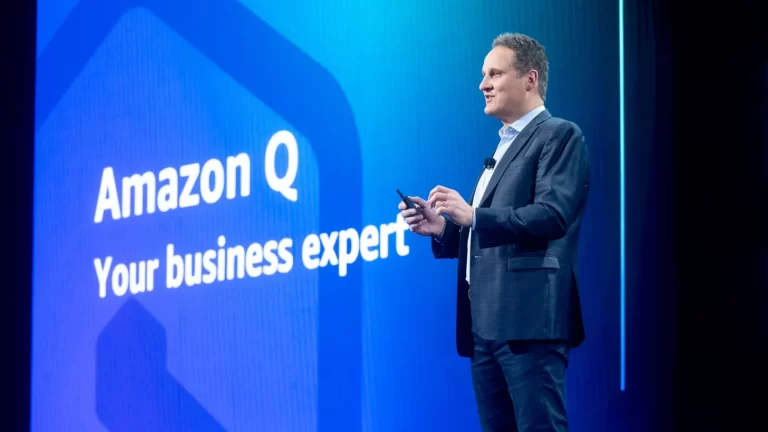
    Just days after Amazon’s announcement of its AI chatbot Q, internal concerns are surfacing regarding its accuracy and privacy. According to leaked documents obtained by Platformer, Q is reportedly experiencing severe hallucinations and leaking confidential data. This sensitive information includes the location of AWS data centers, details about internal discount programs, and unreleased features12.

    These early challenges for Q arise as Amazon strives to dispel the perception that it lags behind competitors like Microsoft and Google in the race to develop cutting-edge tools and infrastructure powered by generative artificial intelligence. In a bid to bolster its AI capabilities, Amazon recently announced a substantial investment of up to $4 billion in the AI startup Anthropic. Furthermore, during its annual Amazon Web Services developer conference, the company unveiled Q, a high-profile addition to its suite of new AI initiatives13.

    As Q navigates its initial hurdles, Amazon aims to position itself at the forefront of AI innovation, leveraging its extensive knowledge and resources to create transformative solutions for businesses and customers alike.

    Read More

  • InSpace – Finally a L&D environment worth looking at!

    InSpace – Finally a L&D environment worth looking at!

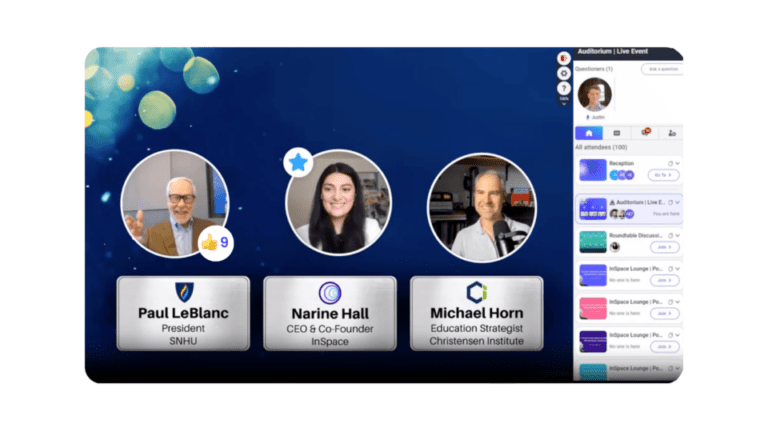
    InSpace is a video conferencing platform specifically designed for education. Unlike traditional video conferencing tools, InSpace prioritizes creating a virtual classroom environment that mirrors the fluid, personal, and interactive nature of a real classroom. Let’s delve into its key features and benefits:

    Features of InSpace:

    1. Dynamic Virtual Environment:
    2. Educator-Centric Design:
    3. Enterprise-Ready Solution:

    Benefits of InSpace:

    1. Engagement and Interaction:
      • InSpace’s dynamic environment encourages active participation. Students can move their video circles, collaborate, and engage with peers and instructors naturally.
      • The platform fosters meaningful interactions, making virtual classes feel more like in-person sessions.
    2. Seamless Transition:
    3. Educational Focus:

    In summary, InSpace combines the best of video conferencing technology with the personalized touch of a classroom. It empowers educators and learners alike, making virtual education more engaging and effective.

    Read More

  • How to Use Bard With Google Sheets: A Step-by-Step Guide

    How to Use Bard With Google Sheets: A Step-by-Step Guide

    As we continue to advance in the digital age, artificial intelligence (AI) is becoming an increasingly integral part of our everyday lives, especially in the realm of productivity tools. One such AI-powered tool that has been making waves in the world of spreadsheet management is Google Bard. This AI-based chatbot is designed to aid in various tasks, from automating data entry to performing complex calculations. Now the question arises: How to use Bard in Google Sheets?

    Read More

  • Demystifying AI: Shared Tenancy vs. New Siloed LLMs – Why Understanding Matters to You!

    Demystifying AI: Shared Tenancy vs. New Siloed LLMs – Why Understanding Matters to You!

    The AI Landscape: A Bird’s Eye View

    Artificial Intelligence has become the driving force behind innovation, transforming the way businesses operate and make decisions. Within this AI landscape, most companies that offer AI, utilize APIs to shared “Large Language Models” (LLMs). I see a distinct issue with this and would like to explore the alternative approach that has emerged – siloed LLMs and other AI models.

    The Shared Tenancy Conundrum:

    Shared tenancy models involve multiple organizations sharing a common AI model fed with data from their respective enterprise systems. It’s like a shared workspace for AI, where diverse data mingles in pursuit of collective insights. However, despite this, concerns arise, particularly in the context of data security and obvious patterns emerging.

    Why I Stand as a Thought Leader:

    As a thought leader in the AI domain, my concerns echo through the corridors of innovation. I’ve observed a trend among many SaaS companies claiming to have tackled the challenges associated with shared tenancy models via the use of anonymizing data and using encryption. However, the reality often falls short of the assurances, leaving organizations vulnerable to potential risks. For example, if a model is asked by several staff members to draft a response to an email, the AI could potentially discover patterns in the content of all the emails being piped through the AI model (from staff in that organization) and then deduce from there, even though specifics on individuals has been redacted.

    Data Security: A House of Cards?

    Shared tenancy models walk a fine line when it comes to data security. While encryption layers are touted as safeguards, the intermingling of data from different organizations raises red flags. My qualms stem from the fact that, in practice, not all companies are as fortified against breaches as they profess to be. The shared nature of these models poses a risk – a breach in one organization’s data could ripple across the shared space, affecting others in the consortium.

    Customization Woes: One Size Fits None:

    A shared model, by its nature, tends to be a jack of all trades, master of none. My concerns deepen when considering the limited room for customization. Organizations, each with unique objectives, find themselves constrained by a model that might not align seamlessly with their specific needs. This lack of adaptability can stifle innovation and hinder the full potential of AI for individual organizations. A powerful integration of AI would mean the appropriate use of multiple different AI models or even better, a series of trained models that are tailored to the organization.

    Siloed LLMs: An Oasis of Security and Customization:

    Contrastingly, siloed LLMs stand as a beacon of security and tailored precision. As a thought leader in this space, I champion the cause of siloed models within secure containers for individual organizations. The benefits are clear – enhanced data security and the freedom to fine-tune the AI model according to the distinct requirements of each organization, coupled with the use of “Vector” storage, will dramatically improve the benefits of AI in a given use case.

    Why Understanding Matters to You:

    Now, why should you care about this AI showdown? As businesses increasingly integrate AI into their operations, your data security and the adaptability of the AI tools at your disposal matter. If you’re relying on a shared tenancy model, it’s vital to scrutinize the assurances provided by your AI service provider. I implore you to question whether your organization’s valuable data is truly shielded from potential breaches, and if the promised customization aligns with your unique goals. This may be hard to ascertain from your vendors, especially when their marketing and comms touts “Trust” but falls short on the delivery.

    My Final Thoughts:

    In the fast and ever-evolving landscape of AI, understanding the nuances between shared tenancy models and siloed LLMs is not just an academic exercise – it’s a practical necessity. My concerns about the nonchalant approach of many vendors are a call to action. As you navigate the AI terrain, consider the path that aligns best with your organization’s security and customization needs. In this journey of demystifying AI, your informed choices pave the way for a more robust, secure, and tailored AI experience.