Category: Humor
-

RevOps Acronyms: What do they Really Mean?
Executive Summary
Drowning in RevOps alphabet soup? This guide decodes the top 25 industry acronyms—from ARR and CAC to the future of AIRO (Artificial Intelligence Revenue Optimization). Beyond the marketing hype, we explore how to align people, processes, and technology to eliminate the “AI Circle of Sorrow” and transform your CRM into a high-velocity revenue engine.
Drowning in a sea of RevOps marketing & sales acronyms?
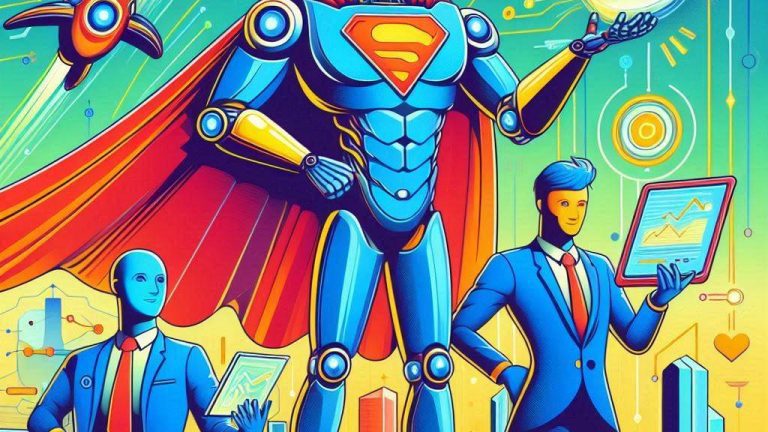
Fear not! As your trusty Chief Confusion Officer (CCO), I’m here to help you navigate these murky waters with a dash of humor and a sprinkle of reality. Let’s dive into the world of RevOps marketing, where every letter promises to turn your business into a money-printing AI enhanced machine if you just buy our software!
- RevOps: The Magic Wand of Business?
Marketers would have you believe that RevOps is the Hogwarts of the business world. Wave this wand, and poof! Your sales, marketing, and customer success teams are suddenly in perfect harmony. In reality, it’s less “Wingardium Leviosa” and more “We’ve got a lot of work to do-sa.”
- ARR: The Golden Goose
Annual Recurring Revenue sounds like a promise of endless riches.
“Implement our RevOps strategy, and you’ll have your own golden goose!” they say. But remember, even golden geese need feeding and care. ARR is powerful, but it’s not automatic.
- CAC: The Disappearing Act
Customer Acquisition Cost is often marketed as something RevOps can make vanish.
“Watch as we make your CAC disappear!” But unless your marketing team has mastered actual sorcery, CAC will always be there. The trick is putting a smart plan in place and managing it effectively.
- CLV: The Fountain of Youth
Customer Lifetime Value is sold as the secret to eternal customer relationships.
“Our RevOps approach will make your customers immortal!” While increasing CLV is crucial, it requires ongoing effort and genuine value delivery.
- KPI: The Magic Mirror
Key Performance Indicators are often portrayed as a magic mirror that always shows success.
“Mirror, mirror on the wall, who’s the most profitable of them all?” But KPIs are tools for insight, not guaranteed success stories. Crystal ball should I trust what the humans are telling me, my faithful CRM, AI, Ouija board or ?
The Future of RevOps: Enter AIRO!
But wait, there’s more! Get ready for the next big thing:
AIRO (Artificial Intelligence Revenue Optimization). Imagine a world where AI doesn’t just assist your RevOps, it becomes your RevOps! And the second question? How fast can you replace your pesky humanoids with AIRO’s?*
Picture this: AI-powered chatbots that not only close deals but also write your quarterly reports and order your coffee. Who needs human salespeople when you’ve got an army of charming AI agents ready to woo your clients 24/7?
With AIRO, we promise to turn your sales funnel into a sales black hole, sucking in leads faster than you can say “revenue”! In this brave new world, ROI stands for
“Robots Outperforming Individuals.”
Yikes. Do you believe that?
The Bottom Line
While RevOps acronyms may sometimes be served with a side of exaggeration, the concepts behind them are powerful when applied correctly. The key is to approach these tools with a clear understanding of what they can realistically achieve, constantly measure goals and outcomes while adjusting faster than ever before (no choice in today’s market).
So, the next time a marketer promises you the moon with their RevOps alphabet soup, remember to take it with a grain of salt (and maybe a chuckle). After all, in the world of business, there’s no such thing as a magic wand – but with the right strategy and execution, you can certainly work some magic of your own.
What’s your favorite RevOps acronym?
Please be so kind as to share your thoughts (and any humorous misuses you’ve encountered) in the comments below!
*RevOps: Revenue Operations (RevOps) is a business strategy combining the best of sales, marketing, and customer service to increase revenue. It’s thought of as a holistic approach that involves aligning teams and processes to improve customer experience and drive revenue growth.
RevOps vs. CRM: CRM provides the foundation for customer data management, while RevOps provides a strategic framework for aligning teams and optimizing revenue growth. Together, CRM and RevOps can help businesses streamline processes, improve efficiency, and increase revenue.
Top 25 Common Acronyms in RevOps Marketing and Sales:
- ABM – Account-Based Marketing
- ABS – Account-Based Selling
- ABX – Account-Based Experience
- ARR – Annual Recurring Revenue
- CAC – Customer Acquisition Cost
- CLV – Customer Lifetime Value
- CRM – Customer Relationship Management
- CX – Customer Experience
- DG – Demand Generation
- KPI – Key Performance Indicator
- LTV – Lifetime Value
- MQL – Marketing Qualified Lead
- NPS – Net Promoter Score
- PLG – Product-Led Growth
- RevOps – Revenue Operations
- ROI – Return on Investment
- SAL – Sales Accepted Lead
- SDR – Sales Development Representative
- SEM – Search Engine Marketing
- SEO – Search Engine Optimization
- SQL – Sales Qualified Lead
- TAM – Total Addressable Market
- TOFU – Top of Funnel
- MOFU – Middle of Funnel
- BOFU – Bottom of Funnel
#RevOps #MarketingHumor #AIRO #FutureOfSales #RevenueOperations #CRM #AI #AgenticAI #marketing #Sales #strategy #revenuegrowth
-
In Gratitude- Thanksgiving Season 365
“You have it easily in your power to increase the total of this world’s happiness now. How? By giving a few words of appreciation to someone lonely or discouraged. Perhaps you will forget the kind words you say today tomorrow, but the recipient may cherish them forever.”
Dale Carnegie
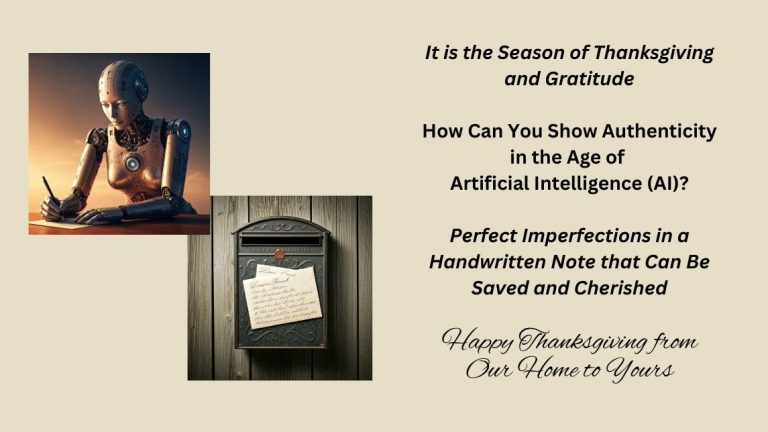
November and Thanksgiving are the perfect times to reach out and communicate with those who have impacted our lives in the past and present. In our digital age, many ways of communicating exist, including social media, email, and text. AI (Artificial Intelligence) can make it more difficult since everyone is a prompt away from crafting the perfect message. Ironically, snail mail (a.k.a. United Postal Service is an easy, cost-effective way to communicate gratitude with a handwritten notecard.
Does writing a handwritten note take planning and effort? Absolutely, yes. However, the person and relationship dividends are priceless. Are handwritten notes perfect? Absolutely not. Handwritten notes are perfectly imperfect. In three sentences, you can express appreciation, reference memory, and have something tangible for the recipient to keep.
Every handwritten note is a souvenir (French verb to remember) for the writer and the recipient. Writing 365 cards in 365 days is my quest for gratitude for 2025. With all of AI’s advances, I cannot share my sincere appreciation and memories or be a tangible keepsake.


One of my most prized possessions is a card I made for my Great Grandmother when I was 5. I found it when I became the historian for my family. She died at 87 and died when I was 11. However, she kept it all those years. A card made on notebook paper folded the wrong way, and I did not have blue eyes. I keep the notecards that are written to me. Many have told me that they keep the handwritten notecards that I write and how my notes touched them.
I admit that I used ChatGPT to explain that handwritten notes are unique and can’t be replicated.
From ChatGPT
Essentially, a handwritten note lets the recipient know that you are thinking of them, that they are important, and that you care about their well-being. Secondly, it requires your full and undivided attention, and it takes time to give it a personal touch.
AI can indeed influence the content of a handwritten note, though it typically works behind the scenes. While AI can enhance or facilitate the process, the emotional impact of a handwritten note still comes from the human element—choosing to send the note and personalizing its content.
Here are some ways AI might be involved:
- Content Suggestions: AI can help draft or suggest thoughtful messages, particularly if the sender struggles with expressing themselves. For example, AI-powered writing tools or assistants can generate phrases, prompts, or entire messages tailored to specific situations, such as birthdays, thank-you notes, or condolences.
- Personalization: AI can help personalize notes by analyzing data about the recipient, such as their preferences, past interactions, or shared experiences. This can help the sender craft a more meaningful message.
- Handwriting Simulation: AI can also simulate handwriting styles. Some services allow users to type their message, and then AI-driven tools transform it into handwriting that appears more personal and authentic, though it isn’t truly handwritten.
- Grammar and Style: AI-powered tools like Grammarly can help proofread and improve the tone or flow of the message, ensuring that it is well-written and coherent.
Differences between AI and the human element lie in authenticity, emotion, and intent. Here’s how they differ in specific aspects:
1. Creativity and Emotion:
- AI: AI can generate text, mimic styles, and produce content that appears human-like, but it needs more true understanding, emotions, and lived experiences. It analyzes patterns and produces responses based on data, but it doesn’t experience feelings or empathy. Algorithms and training on vast amounts of data drive AI’s creativity.
- Human Element: Humans create from personal experience, emotions, and unique worldviews. When a human writes something, it often carries personal insights, emotional depth, and spontaneity that stem from real-life experiences. The intention behind human expression adds a layer of meaning that AI can mimic but not generate.
2. Intent and Personal Connection:
- AI: AI responds based on patterns and input data but doesn’t have personal relationships or emotional investment. It can simulate care and connection, but it doesn’t honestly “care.” The intent behind AI-generated content is utilitarian, driven by efficiency, not personal connection.
- Human Element: When a human reaches out, whether through a handwritten note or conversation, there’s genuine intent and a personal connection. Human interaction involves empathy, understanding, and emotional resonance. A handwritten note from a person shows thoughtfulness, effort, and care that go beyond the content—it reflects the person’s desire to connect.
3. Authenticity and Imperfection:
- AI aims for precision and can create nearly flawless, polished messages. However, this perfection can sometimes feel impersonal or mechanical. Although the content it produces can be accurate, it lacks the small, unique imperfections that often make human communication feel authentic.
- Human Element: Human communication is filled with nuance, subtle imperfections, and individual quirks—slightly messy handwriting, an unintended pause, or a personal anecdote. These imperfections are part of what makes human interaction feel genuine and relatable.
4. Context and Depth of Understanding:
- AI: AI can quickly process vast amounts of information and respond based on learned patterns, but it lacks proper comprehension. It doesn’t experience life, culture, or context as humans do. AI might miss a conversation or note’s deeper emotional, cultural, or situational nuances.
- Human Element: Humans communicate through lived experience, cultural context, and emotional awareness. A human’s understanding of the world is shaped by personal experiences, relationships, and emotions, making human-generated content often more profoundly layered and contextually rich.
5. Motivation and Effort:
- AI: AI operates based on instructions and input without any personal motivation. Its effort is driven by algorithms and a pre-set goal to optimize output, but it doesn’t feel satisfaction or dedication in its tasks.
- Human Element: Humans choose to invest time and effort, especially when it comes to meaningful gestures like writing a handwritten note. The personal effort, care, and attention a human puts into such a task make it special, signaling that they value the recipient.
In summary, AI can assist, automate, and simulate aspects of human communication, but it needs more emotional depth, authenticity, and genuine intent to define the human element. The human touch carries real experiences, emotions, and connections that AI can mimic but never truly replicate.

Sylpro Productions began with Sylvia France, and the goal was to work with Apple in Silicon Valley. Not only did she realize that goal, but she also launched new products and industry categories, including personal digital navigation and streaming television program guides. In addition to working with several startups, our client roster includes The Home Depot, Union Pacific, Verizon, and Right at Home. To learn more, contact me at sylvia@sylproproductions.
-

10 Best Practices from World Class Sales Teams, Beyond Exceeding Quota!
Not an AI Agent Dave here to check in and give you the latest in what I’ hearing on the AI strip from the C-Suite AI conference bandwagon gang.
The C-Suite / BOD has educated themselves and starting to get it. AI is either a competitive advantage or something to watch competitors leapfrog ahead. Yes, it can be awesome! No it doesn’t replace sales reps. Instead, with autonomous AI agents it helps humans do what they do best, create ongoing relationships with companies, products and services their customers need.
Yikes you say. Have you been drinking the AI Kool-Aid you keep warning readers about?
“Kinda.” AI is super cool and autonomous AI agents are most definitely the rage with Microsoft and Salesforce at AI “war” with each other over whether their AI agents actually work.
TBS as always with my 100K View on sales / marketing perspectives, it isn’t what’s cool new tech, it’s what tech gives you that unfair advantage when you properly apply it to a proven process! More simply. Get back to your MBA strategy 101 thinking.
What can I do better, faster, cheaper and / or how can I differentiate my company with this new technology. It doesn’t matter if its 100% AI or not. Make sure it is actually providing a solid ROI or can in the near future. Think about it from a non tech perspective. These are the top ten problems my company is facing. Tech isn’t the answer, its applying AI to things we know can work and doing it faster and better than our competitors.
If you go beyond numbers, focusing on best practices that foster long-term growth, customer satisfaction, and team cohesion, you’ll discover what it is that makes a top team tick. Let’s explore these AI best practices with real-world examples and lessons learned. *{Every use case has an article and a link behind at the end of the article}.
1. Data-Driven Decision Making
Leading sales teams leverage data analytics to inform their strategies and tactics.
Use Case: Google uses data from reviews and surveys to understand the need for managers and improve their leadership development programs. This approach has helped Google identify effective manager qualities and support their growth.
2. Consistent Sales Process Adherence
High-performing teams closely follow their established sales processes across all departments.
Use Case: Coca-Cola has woven data analytics into the fabric of their operations, informing decisions in sourcing, distribution, sales, and production. This consistent approach ensures a unified strategy throughout the organization.
3. Value-Based Selling
Top sales teams focus on communicating the value and ROI of their solutions rather than competing on price.
Use Case: Amazon uses data insights to make personalized product recommendations to customers, increasing sales and maintaining their position as the world’s leading e-commerce platform.
4. Effective Questioning Strategies
Successful teams use sophisticated discovery and questioning approaches to uncover client needs.
Use Case: Netflix analyzes user data to understand what triggers people to subscribe, what makes them stay longer, and where to invest in improving services. This data-driven approach helps them ask the right questions and make informed decisions about content creation and user experience.
5. Continuous Sales Coaching
High-performing teams prioritize ongoing coaching as part of their training and development strategy.
Use Case: Google’s data scientists analyzed qualitative data like performance reviews and surveys about managers within the organization to improve their internal hierarchies and coaching practices.
6. Strategic Hiring Practices
Top sales organizations use advanced hiring tools and assessments to build stronger teams.
Use Case: While not specifically mentioned in the search results, companies like Unilever and IBM are known to use AI-powered tools and data analytics in their hiring processes to identify the best candidates for sales roles.
7. Omnichannel Sales Strategy
Leading sales teams implement a coordinated approach across multiple channels for a seamless customer experience.
Use Case: Starbucks uses big data through mobile apps and reward programs to gather insights directly from customers, creating a better omnichannel customer experience and personalizing their marketing strategies.
8. Personalized Sales Presentations
Top performers customize their presentations for each prospect, demonstrating thorough research and understanding.
Use Case: Red Roof Inn combined weather reports and flight cancellation data to identify marketing opportunities, targeting mobile users in the vicinity of airports during bad weather. This personalized approach led to a 10% increase in check-ins.
9. Effective Use of AI and Technology
Leading sales teams leverage AI and other advanced technologies to increase productivity and gain competitive advantages.
Use Case: Uber uses predictive analytics and big data to bridge the demand-supply gap in real-time, catering to customer demands and solving supply issues efficiently.
10. Post-Sale Relationship Nurturing
Top sales organizations focus on building long-term relationships and nurturing customers after the initial sale.
Use Case: Amazon’s use of data analytics extends beyond the initial sale, analyzing customer reviews, rankings, and post-purchase behavior to continually improve their service and maintain customer loyalty.
Checklist for CROs
To evaluate your organization’s alignment with these best practices, consider this checklist:
- Do we have a robust data analytics system in place like Google’s people analytics?
- Is our sales process clearly defined and consistently followed across departments like Coca-Cola’s?
- Are we focusing on value-based selling rather than price competition, similar to Amazon’s personalized approach?
- Have we implemented advanced questioning strategies in our discovery process, akin to Netflix’s data-driven content decisions?
- Do we have a structured, ongoing sales coaching program informed by data like Google’s manager quality analysis?
- Are we using advanced hiring tools and assessments?
- Have we implemented an omnichannel sales strategy like Starbucks?
- Do our sales presentations demonstrate thorough customization for each prospect, similar to Red Roof Inn’s targeted marketing?
- Are we effectively leveraging AI and other advanced technologies like Uber’s predictive analytics?
- Do we have a strong post-sale relationship nurturing program similar to Amazon’s continuous customer engagement?
By comparing your current practices against this best practice checklist and these industry-leading examples, you can identify areas for improvement and align your sales organization with the best practices of top-performing teams.
- Google’s People Analytics
URL: https://www.reddit.com/r/compsci/comments/15pub3z/datadriven_decision_making_case_studies/ - Starbucks’ Store Location Analysis
URL: https://online.hbs.edu/blog/post/data-driven-decision-making - Amazon’s Product Recommendation System
URL: https://online.hbs.edu/blog/post/data-driven-decision-making - Red Roof Inn’s Weather-Based Marketing
URL: https://gapscout.com/blog/5-data-driven-decision-making-examples/ - Uber’s Real-Time Ride Pricing and Allocation
URL: https://gapscout.com/blog/5-data-driven-decision-making-examples/ - Google’s Manager Quality Analysis
URL: https://programs.online.utica.edu/resources/article/data-driven-decisions - Amazon’s Customer Behavior Analysis for Recommendations
URL: https://programs.online.utica.edu/resources/article/data-driven-decisions - Southwest Airlines’ Customer Data Analysis for Service Optimization
URL: https://programs.online.utica.edu/resources/article/data-driven-decisions - Google’s Data Center Energy Optimization
URL: https://www.reddit.com/r/compsci/comments/15pub3z/datadriven_decision_making_case_studies/ - Service Hotel’s Data-Driven Culture Implementation
URL: https://www.reddit.com/r/compsci/comments/15pub3z/datadriven_decision_making_case_studies/
Tags: #starbucks #amazon #salesforce #redroofin #Google #Uber #data #datascience #sales #bestpractice #AI
-

Agentic AI: The Next Big AI Breakthrough to Watch?
Agentic AI is strutting onto the tech scene like Mick Jagger rocking on the big stage.
Unlike its older sibling, Generative AI, which is great at whipping up new content like a master chef, Agentic AI is the ultimate multitasker, ready to make decisions and tackle tasks with the finesse of Superman’s arch nemesis Brainiac. This shift towards goal-oriented and adaptive decision-making means Agentic AI can navigate complex environments like a pro gamer, executing actions in real-time and leveling up through continuous feedback.
Imagine Agentic AI applications in fintech / financial services: it could be the ultimate stock market wizard, managing investment portfolios, executing trades faster than you can say “bull market,” and catching fraudsters red-handed like Batman and Robin protecting Gotham. This level of autonomy and adaptability could turn the finance world upside down, bringing efficiency and decision-making skills that would make even the sharpest Wall Street minds jealous.
Agentic AI maybe the next big thing in the age of AI—it’s the AI equivalent of discovering fire. The implications for shared services and finance are mind-blowing, promising a future where AI can handle complex tasks and workflows like a boss, driving innovation and value creation in ways that would make even the Jetsons proud. So, buckle up AI Knowledge Seekers, because this journey is going to be one wild ride, and it’s one that professionals and organizations need to plan for, experiment, deploy, learn and evolve. AI isn’t set it and forget it software (yet?).
As Spiderman would say to Mysterio – “that looks super cool – but I don’t believe it, what should I really be seeing?” Is that more marketing puffery, creating an image of success or something that actually works in the real world, that my boss will be super happy with? Lets jump in with five real world applications and then five examples of corporations that are developing Agentic AI right now.
Five real-world applications across different sectors:
1. Financial Services: Agentic AI is revolutionizing financial planning and analysis by autonomously managing investment portfolios and executing trades based on real-time market analysis. This not only enhances the accuracy of financial forecasting but also adapts to market changes dynamically, providing a significant edge in financial decision-making.
2. Manufacturing: In the manufacturing sector, Agentic AI is being deployed for predictive maintenance of machinery, leading to a substantial reduction in downtime and maintenance costs. By autonomously managing inventory and overseeing robotic assembly, these intelligent agents are driving efficiency and productivity to new heights.
3. B2C Sales: The power of Agentic AI in B2C sales lies in its ability to analyze vast datasets to personalize marketing campaigns with unprecedented precision. Understanding customer behavior and preferences allows for optimized advertising strategies, maximizing conversion rates and driving revenue growth.
4. Banking: Agentic AI is being used in banking for advanced fraud detection by continuously monitoring transactions and flagging anomalies. This proactive approach significantly reduces financial losses and enhances security for both the institution and its customers.
5. E-commerce: In e-commerce, Agentic AI is improving customer experiences by managing queries autonomously and providing 24/7 customer service. This not only improves resolution times but also ensures a consistent and personalized interaction for each customer, fostering loyalty and trust.
These applications embody the versatility and potential of Agentic AI to enhance decision-making, optimize operations, and drive growth across various industries. As we continue to explore the capabilities of Agentic AI, it’s clear that its impact could be far-reaching, ushering in a new era of autonomous and intelligent systems. But is it different than what we already have in play today for businesses?
With that question in mind. What are the big AI Players doing with Agentic AI you need to know about?
Companies using Agentic AI with links:
- Microsoft: Through projects like Project AutoGen and Copilot, Microsoft is integrating Agentic AI to create more autonomous and action-based applications12. These tools help automate complex workflows and improve productivity by making independent decisions and executing tasks with minimal human intervention.
- Google: With initiatives like Project Astra, Google is focusing on developing AI systems that go beyond responding to user prompts, aiming for more proactive and autonomous functionalities1.
- OpenAI: Known for its advancements in AI, OpenAI is also investing in Agentic AI to enhance the capabilities of its models, enabling them to perform more complex and autonomous tasks1.
- Cognition Labs: This startup has developed Devin, an advanced Agentic AI that functions as a fully autonomous software engineer. Devin handles long-term reasoning, planning, and complex engineering tasks independently, collaborating with human engineers within a sandboxed environment3.
- Nagra DTV: A digital content company, Nagra DTV uses Agentic AI to support web, mobile, desktop, and API test automation, optimizing their testing processes and improving efficiency4.
And there you have it fellow AI knowledge seekers. The latest on Agentic AI. For more on AI buzzwords, AI strategies and AI adoption techniques check out the 100’s of articles on www.sentia.community.
Forbes Agentic AI: The Next Big Breakthrough
Venture Beat Agentic AI is reshaping Development teams
Andrew Ng on Agentic AI video
Agentic AI https://www.agentic.ai/
-

“Rise of the CAIO: Ready to Embrace the AI Overlord?”
Today I’m here to talk about a new trend that’s sweeping the business world faster than a Roomba on overdrive. Yes, folks, we’re talking about the rise of the CAIO – the Chief Artificial Intelligence Officer.
What is a CAIO?
A CAIO is like the captain of the Starship Enterprise, but for AI. They’re responsible for setting a company’s overall AI strategy, including the design, development, testing and implementation of artificial intelligence technologies. They’re the ones who ensure that AI isn’t just a buzzword in the company, but a tool that’s used effectively and ethically.
How Many Companies Have a CAIO?
According to research from Foundry, 11% of midsize to large organizations have already designated a CAIO, and another 21% of organizations are actively seeking one. That’s right, folks, the CAIOs are coming, and they’re coming in hot!
Do You Need a CAIO?
Well, that depends. If your organization is struggling to understand, develop, or apply AI technologies, you may need a CAIO. If you’re still using a calculator to do your taxes, maybe not. But if you’re looking to leverage AI to create personalized care plans for clients or to automate daily tasks to improve efficiency, a CAIO might just be what you need.
Fractional CAIO’s?
Most companies aren’t ready for a full time CAIO while a part time one makes perfect sense as they develop their AI strategy. Alternatives are to pay for AI strategy services and have a vendor implement them. Since AI Strategies are critical to future business success finding a good part time CAIO may be a good bridge to a FTE in the future while keeping costs lower.
What are CAIO’s getting paid?
CAIO compensation ranges from $225K to $400K before stock options, bonus etc. See wage article from freelancer.
Specific skills and qualifications required for a Chief AI Officer (CAIO) role
Technical Skills:
Proficiency in AI and machine learning, data science and analytics, traditional software development, and an understanding of AI infrastructure.
Experience with several technologies across multiple job functions.
5-10 years of experience in the machine learning field, working with or building AI-based products/platforms/solutions.
5-10 years of experience with cloud computing technologies, including both public or private clouds.
Leadership and Strategic Vision:
The ability to develop and drive the AI strategy to align with the organization’s broader digital transformation roadmap and business goals.
The ability to identify opportunities where AI can add value, such as improving operational efficiencies, enhancing customer experiences, or creating new revenue streams.
The ability to work collaboratively with many departments in developing AI strategy and vision.
The ability to design and target relevant business use cases, assess project outcomes, and measure ROI in each case.
Ethical Insight:
The ability to recognize and balance AI benefits with risks.
The ability to navigate an ever-shifting global regulatory environment and the serious ethical implications involved in AI development.
Educational Background:
A strong educational background in computer science, data science, or a related field is often a prerequisite.
Many CAIOs hold advanced degrees such as a Master’s or Ph.D. in a relevant field.
Top 5 Things CAIOs Are Focused on in the Next 3 Months
- Learning about each business to see where AI opportunities are: CAIO needs to understand the ins and outs of the company, from the financials to the people. Where does data flow? What are my IT resources vs. what I need to implement AI? Where are the biggest corporate problems that the C-Suite agrees on and are well known – that is usually where they greatest opportunity for AI successes lie.
- Engaging with leaders: They need to get their finger on the pulse of the company and keep it there. Where are the problems in each business unit? How are they being addressed? What have they done in the past? Who can they count on as internal champions? Who is scared of AI and needs to be brought up to speed?
- Communicating with the team: The CAIO needs to introduce themselves, share their vision, and keep everyone in the loop. People are worried about their jobs especially when AI comes up – part of the job is calming the team, being clear what is going to happen and have human resources ready with retraining opportunities. Yes, it’s a fact. The CAIO will be replacing old jobs with Augmented AI. There is going to be disruption plan accordingly.
- Developing or amending plans: They need to work with leaders to develop strategies and get board approval for AI strategies, investments and change management. AI is just like any other business unit. It must have clear objectives and measurable goals – and be held accountable.
- Executing and delivering: The CAIO needs to deliver on their promises and make things happen. Often the CAIO will develop smaller AI demonstration projects to get team buy in and acceptance prior to implementation. Aligning tech feature enhancements with training and acceptance is critical to success.
Bonus: CAIO Top Concerns Right Now!
AI Risk Mitigation. AI has tremendous opportunities to greatly expand what a company can do with technology and it will become a clear differentiator in the marketplace. However…
Today’s AI laws are only on the books in a few states with no federal laws likely in the next year. The CAIO must work closely with human resources, internal legal team and the C-Suite to actively watch their known AI installments for bad behaviors as well as rogue employees using AI in unauthorized ways that can legally impact a company or put corporate data in the wild.
So, there you have it, folks! The rise of the CAIO is upon us. Will your business embrace its new AI overlord? Only time will tell!
Additional Reading:
How to Assess if you Need an AI Risk Audit
Hiring a CAIO – Here is what you need to know
What is a CAIO – According to IBM
Keeping Counsel – 5 Things keeping AI lawyers up at night
CAIO – What does it take to get the hottest IT job – according to CIO Magazine
What is a CAIO – And how do you become one?
Where do CAIO’s go for AI Information and Tools?
#Hashtags: #CAIO #ArtificialIntelligence #BusinessTrends #AIinBusiness #RiseOfTheCAIO