Category: Guides
-

Don’t Let Sales Training Fizzle: How to Max ROI with AI
Readers of our previous article how to avoid the “AI Circle of Sorrow” know that its rarely just one thing that needs to be fixed to max sales success. Great training is one of the pillars to a successful sales team.
But what do you do after that amazing, energetic, “could sell ice in Greenland” inspirational, can-do trainer has left the building?
Your team needs to apply those awesome lessons, strategies, playbooks, sales cadences, tips and tricks. Luckily you can count on 100% training class retention, right?
The stats are stark: A staggering
Sales reps forget 70% of the information they learn within a week of training, and 87% will forget it within a month. Gartner – How sales training and technology has changed
This isn’t just a knowledge gap; it’s a direct hit to your bottom line/training investment. It can also be a significant part of your sales team churn rate.
So, how do you ensure your sales team not only retains new training, but actively applies it to drive sales success? The answer lies in a strategic approach to post-training reinforcement, deeply integrated with your existing IT infrastructure – and increasingly, supercharged by AI.
Post-Training Reinforcement
Sales training isn’t a one-and-done event. It’s an ongoing journey. When your sales team learns how to leverage your AI enabled Smart CRM, sales enablement platforms, and other tools, the goal is not just understanding, but habit formation. Here’s how to make that happen:
- Continuous Reinforcement & Microlearning: Break down complex sales learnings into bite-sized pieces. Deliver these via your Learning Management System (LMS) or sales enablement platform (CRM), using quick quizzes and “boosts” at spaced intervals. This combats the forgetting curve directly.
- Tip Gamify it with your CRM and reward sales team members for continuing their learning. This also shows CRO’s who is putting the effort in.
- Integrated Learning & Workflow Tools: Don’t pull reps out of their workflow to learn. Instead, embed learning directly into their daily tasks. Think in-app guidance, pop-up tips, and context-sensitive help within your CRM. This “just-in-time” learning is highly effective, with companies integrating learning content into workflow being 3x more likely to have highly effective sales training (see Gartner, Forrester).
- Active Coaching and Manager Involvement: Sales managers are your frontline coaches. Empower them to review CRM data, observe training usage, and provide targeted, real-time feedback. Their involvement can improve training effectiveness by 44%.
- Tip Managers can have AI looking for training opportunities that fit each sales rep’s current development journey. It can then send suggestions to the salesperson without their manager sending it. For many younger salespeople they like this approach better and are more receptive to it.
- Post Training Knowledge Gamification and Incentives: Make learning and IT system adoption fun! Leaderboards, badges, and friendly competitions can significantly boost engagement. Gamified microlearning courses boast completion rates of 80% or higher.
- Performance Measurement & Feedback Loops: Continuously monitor KPIs related to IT system usage (e.g., data quality, activity rates) and sales outcomes. Use this data to refine training, address pain points, and demonstrate the ROI of your efforts. Improved CRM adoption stats show that 90% of companies report higher sales rep productivity.
- Tip- Alignment matters as well as strategy and planning. Best practices show that new sales training works best when you have the IT systems setup to reinforce the training. Here is our new sales process and here is how our CRM will support you every step of the way.
- T-p-Invest in a CRM that your reps do not have to enter calls, video meetings, emails or LinkedIn messaging. AI enabled CRMs can save reps 25% of their daily time and CRO’s see meetings immediately, not if a rep enters it. HUGE uplift.
The AI Advantage: Supercharging Your Post-Training Strategy
Imagine having your AI enabled smart CRM absorbing all the training materials before your team starts it, sets up each training module with reinforcement schedules, rep process triggers and system automation inside your CRM, before the training starts. Now reps are using it the right way the first time and going forward. Retention rates soar and alignment sings like a well-tuned piano!
My top 5 “How can AI amplify your Post Training Retention Efforts”
Retention & Application How AI Can Reinforce Training 1. Continuous Microlearning & Spaced Repetition AI-Powered Learning Platforms: An AI-driven LMS can analyze a rep’s performance and knowledge gaps within the CRM (e.g., struggling with a specific feature) and automatically push relevant micro-modules or quizzes on that topic at optimal intervals. Example: If a rep consistently misses logging specific lead qualification data in Salesforce, HubSpot, Sentia the AI sends a 2-minute video on “Effective Lead Qualification in your CRM.” 2. Integrated Learning & Workflow Tools AI-Powered In-App Guidance: AI can detect when a user is struggling or hesitating within the sales system and proactively offer context-sensitive tips or walk-throughs to ensure they are using the right tools at the right time pursuant to their training. Example: As a rep creates a new opportunity in their CRM, AI detects an empty “Next Steps” field and prompts with “Based on this deal stage, consider adding ‘Follow-up Call Scheduled’ here.” 3. Active AI Coaching & Manager Involvement AI-Powered Coaching Analytics: AI can analyze sales call recordings and CRM activity to identify coaching opportunities, highlight areas where IT system usage could be improved, and even suggest personalized coaching points for managers and sellers. Example: AI flags a call where a rep didn’t update the CRM after a key customer objection, providing the manager a transcript snippet and suggesting coaching on “CRM hygiene post-objection handling.” Or the AI can auto send it based on pre-configured training criteria built into the system. 4. Gamification & Incentives AI-Driven Gamification Personalization: AI can personalize gamified challenges based on individual rep performance and goals, making competitions more relevant and engaging. Example: AI creates a personalized challenge for a rep to “Complete 10 highly rated lead qualifications in the CRM this week” with automated progress tracking and instant badge awarding. 5. Performance Measurement & Feedback Loops AI-Powered Predictive Analytics: AI can analyze CRM data to predict potential issues with data quality or process adherence before they become major problems, providing early warnings and actionable insights for training refinement. Example: AI identifies a pattern of incomplete contact records from a specific sales team or region, suggesting a need for localized training reinforcement on contact data entry best practices. Alternatively select a CRM that enters all the account and target data for the reps without their manual data entry requirement. Solid training starts with understanding where you want to go first. Then put a plan in place of getting there, by aligning your sales training and sales system to your chosen sales process.
By adopting a proactive, AI-enhanced post-training strategy, you can ensure your sales team not only retains new knowledge but genuinely leverages it to drive performance, increase productivity, and ultimately, close more deals. Don’t let your training investment fizzle – ignite continuous learning and empower your sales team for sustained success.
What do you think? How can AI reinforce sales training after the sale?
#SalesTraining #CRM #SalesEnablement #AIforsales #SalesTech #B2BSales #LearningAndDevelopment
Is there anything else I can help you with?
- Continuous Reinforcement & Microlearning: Break down complex sales learnings into bite-sized pieces. Deliver these via your Learning Management System (LMS) or sales enablement platform (CRM), using quick quizzes and “boosts” at spaced intervals. This combats the forgetting curve directly.
-

The Future of CRM in Salesforce: Which Fields Will Disappear due to AI Features?
Prediction: In just 12 months, many of the fields you see in Salesforce today will no longer exist. Sounds bold?
Let’s break down why this radical shift is inevitable.
The Problem: Too Many Fields, Not Enough Value
Today, if you look at your Salesforce Opportunity object, you’ll likely find more than 100 fields. Yet most of these are rarely filled out by sales teams, and even when they are, the data often can’t be trusted.
Reps enter inconsistent or inaccurate information-sometimes just to bypass validation rules. And every time a new field is added, it’s irrelevant for older records, further muddying your data. This patchwork of unreliable fields leads to a CRM that’s cluttered, hard to use, and ultimately, not trusted by the very people it’s meant to help.
Opportunity: Have reps use the exact same CRO approved sales process every time with mandatory fields. Gamify the process and have some fun with it. Better yet let Sentia AI enter the right fields for the rep with a single click new contact entry.
The Shift: From Manual Fields to AI-Powered Intelligence
So why do we keep trying to force reps to fill out fields that don’t add value? The answer is: we won’t for much longer.
The future of CRM in Salesforce is about keeping only the truly objective fields-focus will be on the essentials like:
- Name
- Amount
- Close Date
- Stage
- Forecast Category
- A handful of other critical fields for reporting
Everything else that is subjective, context-rich, data-will move to AI.
Instead of relying on reps to manually update competitor fields, next steps, or deal risks, AI will capture and analyze unstructured data: calls, emails, meeting notes, and more. You’ll simply query Salesforce in plain language, and AI will surface the insights you need.
Example:
Want to know which deals involve a specific competitor?Ask your future Salesforce system, and AI will scan all relevant communications and notes to give you a precise answer. Wondering which opportunities lack a clear next step? AI will tell you instantly-no more chasing down reps or sifting through incomplete fields.
Why is Salesforce Headed in this Direction?
AI in Salesforce is evolving rapidly. New agentic AI capabilities, like Salesforce’s Atlas Reasoning Engine and Einstein Copilot, are already automating data capture, driving predictive insights, and guiding sales teams with real-time recommendations. By 2027, AI will be so deeply embedded that most manual data entry will be obsolete.
- AI-driven pipeline management: Real-time deal insights and risk detection
- Automated lead scoring and follow-ups: AI prioritizes and nudges opportunities
- Conversational AI assistants: Guide users and automate repetitive tasks
- Hyper-personalization: AI tailors outreach and engagement at scale
What This Means for Sales Teams
- Far better data: AI captures context and nuance humans miss, making CRM data more accurate and actionable.
- Less admin, more selling: Reps spend less time updating fields and more time building relationships.
- New possibilities: Hundreds of use cases open up, from dynamic forecasting to real-time coaching and customer insights.
In short, the CRM of the future will be lighter, smarter, and more powerful-and sales teams will finally be free from the tyranny of endless unused / useless fields.
Salesforce Future
A year from now-updating Salesforce with AI won’t be necessary because there will be almost nothing left to update. The future of CRM is objective data at the core, with AI doing the heavy lifting everywhere else.
Are you ready for a Salesforce where fields are few, but insights are limitless? The countdown has already begun. www.sentia.website
#Salesforce #CRM #AIinSales #FutureOfWork #SalesTech #AIAutomation
Frequently Asked Questions: The Future of Salesforce Fields & AI
Why are Salesforce fields predicted to disappear?
Most Salesforce fields will disappear because AI now automates data capture. Traditionally, sales teams had to manually enter data into over 100 fields per Opportunity, leading to “dirty data” and administrative fatigue. With the rise of Salesforce Agentforce and autonomous AI, CRM data is captured directly from emails, calls, and meetings, making manual fields redundant.
Which types of Salesforce fields will be removed first?
The first fields to disappear are manual entry tracking fields, such as:
-
Next Steps: Automatically derived from meeting transcripts.
-
Discovery Notes: Captured via AI-powered sentiment and keyword analysis.
-
Competitor Tracking: Identified through natural language processing (NLP) of sales calls.
-
BANT Criteria: (Budget, Authority, Need, Timeline) automatically validated by AI interactions.
What is Salesforce Agentforce’s role in CRM evolution?
Agentforce represents a shift from passive CRM systems to active, decision-making agents. It acts as an autonomous data steward that enriches CRM records in real-time without human intervention, allowing sales reps to focus on customer relationships rather than data entry.
How does AI improve CRM data quality?
AI improves data quality by eliminating human error and “empty field syndrome.” Instead of relying on a busy sales rep to update a record, AI captures 100% of interaction data immediately. This provides RevOps teams with a “single source of truth” that is consistently updated and accurately reflects the state of the pipeline.
Will Salesforce become a “field-less” CRM?
While Salesforce won’t lose all fields, it is moving toward a “Headless CRM” or “Invisible CRM” experience. The user interface will shift from dense data tables to AI-generated summaries and actionable insights, where the underlying data exists but doesn’t require manual management.
How should RevOps teams prepare for disappearing CRM fields?
RevOps teams should begin by auditing their current Salesforce objects and identifying fields with low completion rates. Preparing for this shift involves moving away from rigid manual validation rules and instead investing in AI-driven data orchestration and clean data architectures.
-

If Your Sales Pipeline Data Isn’t Accurate, Your Forecasts, Strategies, and Growth Plans Are Built on Vapor
We’ve all seen it: the pipeline review that reveals more fiction than fact.
❌ Opportunities that should have been closed months ago
❌ Close dates long passed
❌ Values wildly overstated or understated
❌ Stages that don’t match reality
❌ Fields that are blank or outdatedThe result? Leaders are building forecasts, strategies, and growth plans on unstable ground. And when the foundation is shaky, everything above it is at risk of collapse.
The High Cost of Bad Data
Bad pipeline data isn’t just an internal headache-it’s a business-wide domino effect. When your sales forecast is built on bad data, every department feels the impact:
- Finance may misjudge budgets or cash flow, risking over- or under-investment.
- Operations might over hire or understaff, leading to inefficiencies.
- Marketing could double down on campaigns that don’t actually drive high-value opportunities.
Even small data inconsistencies can have massive consequences. If just 10% of your opportunities are missing amounts, and the average deal is $100,000, a pipeline of 1,000 deals could be undervalued by $10 million. That’s not a rounding error-it’s a gap that can swallow your quota whole.
But perhaps worst of all, bad data erodes trust. When forecasts miss the mark quarter after quarter, stakeholders lose faith in sales leadership, making it harder to secure resources, align teams, or drive change.
Why Data Integrity Is So Hard
Let’s be honest: no salesperson dreams of updating CRM fields. Their passion-and their value-comes from being in front of customers, not wrestling with dropdown menus and mandatory fields. Expecting meticulous data entry as a natural behavior is unrealistic.
Data integrity in sales is not a default setting; it’s a discipline. Without leadership and process, pipeline data will always decay.
Lead the Way: Building a Culture of Data Integrity
If you want reliable data, you have to lead it. Here’s how:
- Frequent, Structured Pipeline Reviews
Don’t settle for monthly, surface-level check-ins. Hold structured, opportunity-by-opportunity reviews at least every fortnight. Ask tough questions:
- Is the opportunity real?
- Is the close date credible?
- Is the value accurate?
- Is it in the right stage?
- What does the salesperson need to move it forward?
- Evidence-Based Accountability
Push reps for evidence, not just opinions. “I think we’re moving forward” isn’t enough-ask for proof, like stakeholder feedback or documented next steps.
- Regular Data Cleanups
Schedule routine audits to remove dead leads, update outdated info, and validate key fields. Automation can help, but human review is essential for context and accuracy.
- Embrace Data Governance
Establish clear policies, assign data stewards, and provide ongoing training. Make data quality everyone’s responsibility, not just sales ops.
The Payoff: Forecasts You Can Trust
When you build a culture of data integrity, your forecasts become credible, your strategies become actionable, and your growth plans rest on a foundation as solid as bedrock-not sand.
What you focus on grows. If you focus on data discipline, you’ll see not just better numbers, but better outcomes across your business.
Are you ready to stop building on Vapor? Share your experiences and tips for pipeline data integrity in the comments below!
#SalesLeadership #PipelineManagement #DataIntegrity #SalesForecasting #CRM #SalesOps
Add Your Heading Text Here
-
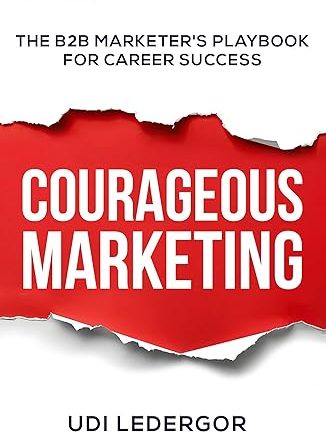
Courageous Marketing: The B2B Marketer’s Playbook for Career Success
Book Review & Synopsis
Udi Ledergor’s Courageous Marketing is a transformative guide for B2B marketers seeking to break free from conventional, uninspired strategies. Drawing on over two decades of experience, including his role as CMO at Gong, Ledergor advocates for boldness and creativity as essential tools for driving business success. The book challenges the prevailing “play-it-safe” mentality in B2B marketing, arguing that taking calculated risks and embracing originality are critical for standing out in a crowded marketplace. Released on April 10, 2025, it serves as both a manifesto and a practical playbook for marketers aiming to make a lasting impact.
Through vivid examples—such as Gong’s innovative Super Bowl-adjacent commercial stunt—Ledergor demonstrates how unconventional approaches can deliver outsized results even on limited budgets. The book is structured around actionable strategies designed to empower marketers to craft compelling content, leverage guerrilla marketing tactics, create memorable events, and establish thought leadership.
Key Points from the Book
Core Themes
-
Boldness as a Strategy: Playing it safe is portrayed as the riskiest approach in today’s competitive marketing landscape.
-
Creativity Over Conformity: The book emphasizes the importance of originality and human creativity, especially in an era dominated by AI-generated content.
-
Marketing with Impact: Campaigns should not only be creative but also drive tangible business results.
Actionable Strategies
-
Craft Compelling Content: Develop material so engaging that audiences would pay for it.
-
Leverage Guerrilla Marketing: Use unconventional tactics to amplify brand presence without large budgets.
-
Establish Product Categories: Position offerings strategically to dominate new market segments.
-
Design Memorable Events: Create experiences that resonate deeply with attendees and foster brand loyalty.
-
Champion Industry Issues: Take bold stands on pivotal topics to establish thought leadership.
-
Advance Careers and Teams: Cultivate personal growth and build high-performing teams through intentional strategies.
Why It Matters Now
-
With AI flooding the market with generic content, human creativity has become a key differentiator.
-
The book provides a roadmap for marketers to navigate this landscape by embracing audacity and innovation.
Endorsements
-
Industry leaders like Neil Patel, Robert Cialdini, and Daniel H. Pink praise the book for its practical advice and bold vision.
-
Michelle Taite (CMO of Intuit Mailchimp) highlights its transformative potential for marketers tired of conventional approaches.
Real-World Examples
-
Gong’s viral marketing stunts, such as cost-effective yet impactful Super Bowl-related campaigns, illustrate how bold ideas can succeed without excessive spending.
Availability
Courageous Marketing is available through major retailers like Amazon and Barnes & Noble. Udi Ledergor will also be speaking at upcoming events, including Canva Create (Los Angeles), Pavilion CMO Summit (Atlanta), and The Brand Tech Summit (Tel Aviv).
This book is not just a guide—it’s a call to action for marketers seeking to challenge the status quo and redefine what’s possible in B2B marketing.
This is the heading
Lorem ipsum dolor sit amet, consectetur adipiscing elit. Ut elit tellus, luctus nec ullamcorper mattis, pulvinar dapibus leo.
-
-

RevOps Acronyms: What do they Really Mean?
Executive Summary
Drowning in RevOps alphabet soup? This guide decodes the top 25 industry acronyms—from ARR and CAC to the future of AIRO (Artificial Intelligence Revenue Optimization). Beyond the marketing hype, we explore how to align people, processes, and technology to eliminate the “AI Circle of Sorrow” and transform your CRM into a high-velocity revenue engine.
Drowning in a sea of RevOps marketing & sales acronyms?
Fear not! As your trusty Chief Confusion Officer (CCO), I’m here to help you navigate these murky waters with a dash of humor and a sprinkle of reality. Let’s dive into the world of RevOps marketing, where every letter promises to turn your business into a money-printing AI enhanced machine if you just buy our software!
- RevOps: The Magic Wand of Business?
Marketers would have you believe that RevOps is the Hogwarts of the business world. Wave this wand, and poof! Your sales, marketing, and customer success teams are suddenly in perfect harmony. In reality, it’s less “Wingardium Leviosa” and more “We’ve got a lot of work to do-sa.”
- ARR: The Golden Goose
Annual Recurring Revenue sounds like a promise of endless riches.
“Implement our RevOps strategy, and you’ll have your own golden goose!” they say. But remember, even golden geese need feeding and care. ARR is powerful, but it’s not automatic.
- CAC: The Disappearing Act
Customer Acquisition Cost is often marketed as something RevOps can make vanish.
“Watch as we make your CAC disappear!” But unless your marketing team has mastered actual sorcery, CAC will always be there. The trick is putting a smart plan in place and managing it effectively.
- CLV: The Fountain of Youth
Customer Lifetime Value is sold as the secret to eternal customer relationships.
“Our RevOps approach will make your customers immortal!” While increasing CLV is crucial, it requires ongoing effort and genuine value delivery.
- KPI: The Magic Mirror
Key Performance Indicators are often portrayed as a magic mirror that always shows success.
“Mirror, mirror on the wall, who’s the most profitable of them all?” But KPIs are tools for insight, not guaranteed success stories. Crystal ball should I trust what the humans are telling me, my faithful CRM, AI, Ouija board or ?
The Future of RevOps: Enter AIRO!
But wait, there’s more! Get ready for the next big thing:
AIRO (Artificial Intelligence Revenue Optimization). Imagine a world where AI doesn’t just assist your RevOps, it becomes your RevOps! And the second question? How fast can you replace your pesky humanoids with AIRO’s?*
Picture this: AI-powered chatbots that not only close deals but also write your quarterly reports and order your coffee. Who needs human salespeople when you’ve got an army of charming AI agents ready to woo your clients 24/7?
With AIRO, we promise to turn your sales funnel into a sales black hole, sucking in leads faster than you can say “revenue”! In this brave new world, ROI stands for
“Robots Outperforming Individuals.”
Yikes. Do you believe that?
The Bottom Line
While RevOps acronyms may sometimes be served with a side of exaggeration, the concepts behind them are powerful when applied correctly. The key is to approach these tools with a clear understanding of what they can realistically achieve, constantly measure goals and outcomes while adjusting faster than ever before (no choice in today’s market).
So, the next time a marketer promises you the moon with their RevOps alphabet soup, remember to take it with a grain of salt (and maybe a chuckle). After all, in the world of business, there’s no such thing as a magic wand – but with the right strategy and execution, you can certainly work some magic of your own.
What’s your favorite RevOps acronym?
Please be so kind as to share your thoughts (and any humorous misuses you’ve encountered) in the comments below!
*RevOps: Revenue Operations (RevOps) is a business strategy combining the best of sales, marketing, and customer service to increase revenue. It’s thought of as a holistic approach that involves aligning teams and processes to improve customer experience and drive revenue growth.
RevOps vs. CRM: CRM provides the foundation for customer data management, while RevOps provides a strategic framework for aligning teams and optimizing revenue growth. Together, CRM and RevOps can help businesses streamline processes, improve efficiency, and increase revenue.
Top 25 Common Acronyms in RevOps Marketing and Sales:
- ABM – Account-Based Marketing
- ABS – Account-Based Selling
- ABX – Account-Based Experience
- ARR – Annual Recurring Revenue
- CAC – Customer Acquisition Cost
- CLV – Customer Lifetime Value
- CRM – Customer Relationship Management
- CX – Customer Experience
- DG – Demand Generation
- KPI – Key Performance Indicator
- LTV – Lifetime Value
- MQL – Marketing Qualified Lead
- NPS – Net Promoter Score
- PLG – Product-Led Growth
- RevOps – Revenue Operations
- ROI – Return on Investment
- SAL – Sales Accepted Lead
- SDR – Sales Development Representative
- SEM – Search Engine Marketing
- SEO – Search Engine Optimization
- SQL – Sales Qualified Lead
- TAM – Total Addressable Market
- TOFU – Top of Funnel
- MOFU – Middle of Funnel
- BOFU – Bottom of Funnel
#RevOps #MarketingHumor #AIRO #FutureOfSales #RevenueOperations #CRM #AI #AgenticAI #marketing #Sales #strategy #revenuegrowth
-

Salesforce’s AgentExchange: What is it? How to Leverage it?
Salesforce just dropped a major announcement that’s set to reshape the AI CRM landscape: AgentExchange. This new marketplace and community for Agentforce is a bold step into the $6 trillion digital labor market, and it’s creating exciting opportunities for both Salesforce users and partners like Sentia AI.
What is AgentExchange?
Think of AgentExchange as the AppExchange, but for AI agents. It’s a trusted marketplace built into Salesforce where businesses can find pre-built actions, topics, and templates to quickly create and deploy AI agents. With over 200 partners already on board, including Google Cloud, Docusign, and Box, AgentExchange promises to accelerate AI adoption and drive innovation across industries.
Why This Matters to Us (and You!)
At Sentia AI, we’re passionate about leveraging AI to transform customer experiences. AgentExchange validates this vision and amplifies the potential of agentic AI. Here’s why we’re excited:
- Speed and Efficiency: AgentExchange offers ready-to-use solutions that can dramatically reduce the time and effort required to build and deploy AI agents. This aligns perfectly with our mission to deliver rapid, impactful AI solutions for our clients.
- Ecosystem Expansion: The AgentExchange ecosystem creates new avenues for collaboration and innovation. As a company specializing in functional AI, AI Agents, and AI development, Sentia AI can leverage AgentExchange to integrate our expertise with other best-in-class solutions, creating even more powerful and comprehensive AI offerings.
- Focus on Industry-Specific Solutions: AgentExchange emphasizes industry-specific solutions, which is critical for delivering truly personalized and effective AI experiences. We’re eager to explore how we can tailor our AI solutions to meet the unique needs of various industries through the AgentExchange.
Key Features of AgentExchange:
- Partner-Built Components: Access a wide range of agentic components, including actions, prompt templates, topics, and agent templates, to customize and enhance your AI agents.
- Easy Discovery: Find and deploy the right AI solutions directly on the marketplace or within Salesforce’s Agent Builder tool.
- Trusted Solutions: Benefit from rigorous security reviews and customer feedback to ensure the quality and reliability of every solution listed on AgentExchange.
What’s Next for Sentia AI?
We are diving into AgentExchange to assess how we can best integrate our AI capabilities and leverage this exciting platform to deliver even greater value to our clients. We believe that AgentExchange will be a catalyst for AI-driven customer experience, and we’re committed to being at the forefront of this transformation.
The Future is Agentic
The launch of AgentExchange signals a significant shift towards agentic AI – where AI agents work alongside humans to augment capabilities and drive efficiency. We see this as the future of work, and we’re excited to partner with Salesforce and the Agentblazer community to make this vision a reality.
What are your thoughts on AgentExchange?
How do you see agentic AI transforming your business? Share your comments below!
#AI #AgenticAI #Salesforce #AgentExchange #CRM #Innovation #CustomerExperience #DigitalTransformation #SentiaAI #SalesforceAI #appexchange