Category: CAIO

  • The Future of CRM in Salesforce: Which Fields Will Disappear due to AI Features?

    The Future of CRM in Salesforce: Which Fields Will Disappear due to AI Features?

    Prediction: In just 12 months, many of the fields you see in Salesforce today will no longer exist. Sounds bold?

    Let’s break down why this radical shift is inevitable.

    The Problem: Too Many Fields, Not Enough Value

    Today, if you look at your Salesforce Opportunity object, you’ll likely find more than 100 fields. Yet most of these are rarely filled out by sales teams, and even when they are, the data often can’t be trusted.

    Reps enter inconsistent or inaccurate information-sometimes just to bypass validation rules. And every time a new field is added, it’s irrelevant for older records, further muddying your data.  This patchwork of unreliable fields leads to a CRM that’s cluttered, hard to use, and ultimately, not trusted by the very people it’s meant to help.

    Opportunity: Have reps use the exact same CRO approved sales process every time with mandatory fields. Gamify the process and have some fun with it. Better yet let Sentia AI enter the right fields for the rep with a single click new contact entry.

    The Shift: From Manual Fields to AI-Powered Intelligence

    So why do we keep trying to force reps to fill out fields that don’t add value? The answer is: we won’t for much longer.

    The future of CRM in Salesforce is about keeping only the truly objective fields-focus will be on the essentials like:

    • Name
    • Amount
    • Close Date
    • Stage
    • Forecast Category
    • A handful of other critical fields for reporting

    Everything else that is subjective, context-rich, data-will move to AI.

    Instead of relying on reps to manually update competitor fields, next steps, or deal risks, AI will capture and analyze unstructured data: calls, emails, meeting notes, and more. You’ll simply query Salesforce in plain language, and AI will surface the insights you need.

    Example:
    Want to know which deals involve a specific competitor?

    Ask your future Salesforce system, and AI will scan all relevant communications and notes to give you a precise answer. Wondering which opportunities lack a clear next step? AI will tell you instantly-no more chasing down reps or sifting through incomplete fields.

    Why is Salesforce Headed in this Direction?

    AI in Salesforce is evolving rapidly. New agentic AI capabilities, like Salesforce’s Atlas Reasoning Engine and Einstein Copilot, are already automating data capture, driving predictive insights, and guiding sales teams with real-time recommendations. By 2027, AI will be so deeply embedded that most manual data entry will be obsolete.

    • AI-driven pipeline management: Real-time deal insights and risk detection
    • Automated lead scoring and follow-ups: AI prioritizes and nudges opportunities
    • Conversational AI assistants: Guide users and automate repetitive tasks
    • Hyper-personalization: AI tailors outreach and engagement at scale

    What This Means for Sales Teams

    • Far better data: AI captures context and nuance humans miss, making CRM data more accurate and actionable.
    • Less admin, more selling: Reps spend less time updating fields and more time building relationships.
    • New possibilities: Hundreds of use cases open up, from dynamic forecasting to real-time coaching and customer insights.

    In short, the CRM of the future will be lighter, smarter, and more powerful-and sales teams will finally be free from the tyranny of endless unused / useless fields.

    Salesforce Future

    A year from now-updating Salesforce with AI won’t be necessary because there will be almost nothing left to update. The future of CRM is objective data at the core, with AI doing the heavy lifting everywhere else.

    Are you ready for a Salesforce where fields are few, but insights are limitless? The countdown has already begun. www.sentia.website

    #Salesforce #CRM #AIinSales #FutureOfWork #SalesTech #AIAutomation

    Frequently Asked Questions: The Future of Salesforce Fields & AI

    Why are Salesforce fields predicted to disappear?

    Most Salesforce fields will disappear because AI now automates data capture. Traditionally, sales teams had to manually enter data into over 100 fields per Opportunity, leading to “dirty data” and administrative fatigue. With the rise of Salesforce Agentforce and autonomous AI, CRM data is captured directly from emails, calls, and meetings, making manual fields redundant.

    Which types of Salesforce fields will be removed first?

    The first fields to disappear are manual entry tracking fields, such as:

    • Next Steps: Automatically derived from meeting transcripts.

    • Discovery Notes: Captured via AI-powered sentiment and keyword analysis.

    • Competitor Tracking: Identified through natural language processing (NLP) of sales calls.

    • BANT Criteria: (Budget, Authority, Need, Timeline) automatically validated by AI interactions.

    What is Salesforce Agentforce’s role in CRM evolution?

    Agentforce represents a shift from passive CRM systems to active, decision-making agents. It acts as an autonomous data steward that enriches CRM records in real-time without human intervention, allowing sales reps to focus on customer relationships rather than data entry.

    How does AI improve CRM data quality?

    AI improves data quality by eliminating human error and “empty field syndrome.” Instead of relying on a busy sales rep to update a record, AI captures 100% of interaction data immediately. This provides RevOps teams with a “single source of truth” that is consistently updated and accurately reflects the state of the pipeline.

    Will Salesforce become a “field-less” CRM?

    While Salesforce won’t lose all fields, it is moving toward a “Headless CRM” or “Invisible CRM” experience. The user interface will shift from dense data tables to AI-generated summaries and actionable insights, where the underlying data exists but doesn’t require manual management.

    How should RevOps teams prepare for disappearing CRM fields?

    RevOps teams should begin by auditing their current Salesforce objects and identifying fields with low completion rates. Preparing for this shift involves moving away from rigid manual validation rules and instead investing in AI-driven data orchestration and clean data architectures.


  • Transforming In-Store Execution with AI: Introducing the Sentia Smart Layer

    Transforming In-Store Execution with AI: Introducing the Sentia Smart Layer

    Transforming In-Store Execution with AI: Introducing the Sentia Smart Layer

    Sentia’s AI seers here to give you the latest in the CPG wars where margins are tighter than a.. well you know and the slightest edge is fought for like the beaches of Normandy. Fear not faithful CPG warrior – we have the scoop on what’s shaking in, in store merchandising and what you need to know you’re competitors are already doing and why your numbers are dropping faster than tariff threats.

    Let’s get back to basics. In today’s hyper charged consumer goods industry, staying ahead in retail execution is not a option it’s win or bust.

    Enter Sentia Smart Layer, a groundbreaking AI-powered platform designed to revolutionize how field teams and visual merchandisers operate. With cutting-edge AI enhanced technologies, Sentia transforms images and voice inputs into actionable insights in real-time, empowering teams to deliver unparalleled in-store performance.

    Your Question?

    “There is a bit of AI marketing “fluffier” around AI App capabilities. What makes Sentia AI different from all these AI VC backed startups that claim to uncover every target, upsell, cross sell, website pixel generated lead that was never possible before Alexander Grahm Bell and the telephone.” – Frustrated not willing to go on record CEO (4X in past 5 days).  But as Sentia says, I digress.

    Why are these CEO, COO, CFOs feeling so much frustration when their CRMs can be enhanced with AI?

    What real world problems can it solve – that I will be willing to pay for?   

    Why Sentia Smart Layer is a Game-Changer

    Here’s how Sentia is redefining retail execution:

    1. Effortless Field Reporting
      Say goodbye to tedious typing! Field teams can now create detailed reports simply by speaking. Sentia’s AI extracts insights from photos of shelves, fixtures, and displays, enabling real-time data capture and reducing administrative burdens.
    2. In-Store Visual Analysis
      Sentia analyzes store images to ensure planogram compliance, measure stock levels, assess POS material quality, and validate shelf allocations—all while suggesting layout improvements to optimize shopper flow and visibility.
    3. Competitive Intelligence
      Beyond monitoring your own products, Sentia tracks competitor share of shelf, promotional displays, and stock levels—providing visual benchmarking to keep you ahead of the competition.
    4. Real-Time Prioritization
      Incoming reports are scored for urgency and relevance, surfacing critical issues like compliance gaps or stock shortages as actionable Smart Cards. Teams can act fast to fix problems before they escalate.
    5. Continuous Monitoring
      Every submitted image is vetted for out-of-stocks, non-compliant POS materials, competitor intrusions, and execution quality—ensuring proactive alerts for rapid resolution.
    6. On-Demand Summaries
      Get concise visual summaries by store, region, or retailer with execution scores, competitor trends, and actionable recommendations—all at your fingertips.
    7. Natural Language Chat Interface
      Just ask questions like “What stores have execution issues this week?” or “Summarize merchandising problems in Region Y,” and Sentia delivers instant answers through conversational AI.

    Why It Matters

    The Sentia Smart Layer empowers brands with unparalleled control and visibility across thousands of retail locations—without relying on outdated manual reporting or delayed audits. By enabling faster decision-making and smarter execution strategies:

    • Teams act swiftly on opportunities to improve share at the shelf.
    • Brands gain deeper insights into competitor activities and trends.
    • Execution quality reaches new heights with real-time monitoring and actionable insights.

    Key Features That Set Sentia Apart

    • Trend Detection: Spot long-term patterns in competitor movements or display quality.
    • Predictive Alerts: Receive warnings about potential stock-outs or compliance gaps before they happen.
    • Integration-Ready: Sync seamlessly with retail apps, CRMs, and BI dashboards for streamlined workflows.
    • Gamification: Motivate field teams with scorecards and leaderboards to drive performance excellence.

    Revolutionizing Retail Execution Starts Here

    The Sentia Smart Layer isn’t just an innovation—it’s a transformation of how consumer goods brands approach in-store execution. From empowering field teams to delivering competitive intelligence at scale, this platform is the ultimate tool for winning at retail.

    Are you ready to elevate your brand’s in-store presence? Let Sentia lead the way into the future of smarter retail execution!

    Keywords for Visibility:

    #AI #RetailExecution #ConsumerGoods #VisualMerchandising #PlanogramCompliance #CompetitiveIntelligence #SmartTechnology #FieldTeams #RetailInnovation #SentiaSmartLayer


    Add Your Heading Text Here

  • Rise of the CAIEO: Navigating new AI Roles

    Rise of the CAIEO: Navigating new AI Roles

    AI continues to break new ground in many ways including new job titles for roles that didn’t exist a year ago. Let’s jump into the role of the CAIEO -part IT, HR, law, philosophy and business ethics rolled into one job in the age of AI.    

    Large complex organizations, that have embraced AI, are increasingly recognizing the need for ethical oversight in their AI initiatives. Enter the Chief AI Ethics Officer (CAIEO) -bridging the gap between technological innovation and ethical responsibility.

    What is a CAIEO?

    A Chief Artificial Intelligence Ethics Officer is a senior executive responsible for ensuring that an organization’s AI technologies and strategies align with ethical principles, legal requirements, and societal values. They play a pivotal role in developing, implementing and monitoring responsible AI practices across the company.

    10 Key Responsibilities of a CAIEO

    1. Develop, codify, train and enforce internal AI ethics policies and guidelines14.
    2. Oversee compliance with AI-related legal and regulatory frameworks4.
    3. Promote transparency, fairness, and accountability in AI systems4.
    4. Manage AI-related risks, including data privacy and security vulnerabilities4.
    5. Collaborate with various departments to establish AI performance evaluation standards4.
    6. Lead the creation and implementation of AI governance structures4.
    7. Ensure AI initiatives align with the company’s values and ethical standards14.
    8. Conduct regular reviews and updates of AI policies to reflect industry best practices4.
    9. Provide expert advice on navigating ethical challenges in AI development and deployment4.
    10. Foster a culture of responsible AI use throughout the organization14.

    Who Needs a CAIEO?

    Most businesses really don’t need a CAIEO, yet. Organizations that heavily rely on AI technologies, have outsize legal exposure to their use of AI, or are planning significant AI initiatives should consider appointing a CAIEO.

    This role is particularly crucial for:

    • Large tech companies developing AI products or services – Be Good, Do Good!
    • Financial institutions using AI for decision-making
    • Healthcare organizations implementing AI in patient care
    • Retail companies leveraging AI for customer insights and personalization
    • Manufacturing firms integrating AI into their production processes
    • Large service-based companies using AI in human resources, hiring, firing, compliance

    While the need for a CAIEO is more pronounced in larger corporations, mid-sized companies with significant AI investments should also consider this role (but can be a job that doesn’t necessarily require a C-Suite title). Startups focusing on AI-driven products or services may benefit from having a CAIEO or a similar role to ensure ethical considerations are built into their core offerings from the outset.

    CAIEO Necessity Checklist

    Consider appointing a CAIEO if your organization:

    • Develops or uses AI systems that impact decision-making processes
    • Handles sensitive data processed by AI algorithms
    • Operates in a highly regulated industry (e.g., finance, healthcare)
    • Has a global presence with diverse ethical and regulatory landscapes
    • Faces potential reputational risks related to AI use
    • Aims to be a leader in responsible AI practices
    • Lacks internal expertise in AI ethics and governance
    • Experiences rapid growth in AI adoption across multiple departments
    • Receives stakeholder inquiries about AI ethics and transparency
    • Plans to scale AI initiatives significantly in the near future

    Real-World CAIEO Use Cases by Industry

    1. Tech Giant: A leading social media company appoints a CAIEO to address concerns about algorithmic bias in content recommendation systems.
    2. Financial Services: A global bank hires a CAIEO to ensure fair lending practices in AI-driven credit scoring models.
    3. Healthcare Provider: A hospital network brings on a CAIEO to oversee the ethical implementation of AI in diagnostic tools and patient data management.
    4. E-commerce Platform: An online marketplace employs a CAIEO to manage the ethical implications of AI-powered pricing and product recommendation engines.
    5. Automotive Manufacturer: A car company appoints a CAIEO to guide the development of ethical AI systems for autonomous vehicles.

    As AI continues to shape our world, the role of the CAIEO becomes increasingly vital. By prioritizing ethical considerations in AI development and deployment, organizations can build trust, mitigate risks, and ensure their AI initiatives contribute positively to society.

    For More information on AI roles like CAIO please visit the Agentic AI Community site for AI enthusiasts and knowledge seekers.

    #AIEthics #ChiefAIEthicsOfficer #ResponsibleAI #TechLeadership #AIGovernance

    David is an investor and executive director at Sentia AI, a next generation AI sales enablement technology company and Salesforce partner. Dave’s passion for helping people with their AI, sales, marketing, business strategy, startup growth and strategic planning has taken him across the globe and spans numerous industries. You can follow him here on LinkedIn, X or YouTube for my interviews and videos.

  • The Rise of Autonomous AI Agents

    The Rise of Autonomous AI Agents

    Curious about the big buzz around Autonomous AI agents?

    Watching what Salesforce Agentforce Autonomous AI agents and Microsoft Copilot will do next? Heck – what are autonomous agents and have they been deployed (successfully)?

    Let’s take a step back. Autonomous AI agents are definitely in vogue and emerging in a myriad of industries redefining how businesses operate, make better data-based decisions, and interact with customers faster by utilizing AI driven. With that in mind let’s jump into the world of autonomous AI agents and their impact starting with the basics:

    What are Autonomous AI Agents?

    Autonomous AI agents are complex AI systems capable of performing tasks independently, and making decisions to achieve specific goals [1]. Unlike traditional AI models that rely on predefined rules, these agents can adapt, prioritize tasks, and operate without constant human supervision [1].

    Key features of autonomous AI agents include:

    – Autonomy: They can operate independently with minimal human guidance.

    – Reactivity: They quickly respond to changes in their environment.

    – Social ability: They can interact with other agents or IT systems [1].

    The Current (and Future) Landscape of Autonomous AI

    As we approach 2025, here are a number of the applications of autonomous AI agents in action now:

    1. Customer Service: AI agents are handling complex customer queries, reducing response times, and improving satisfaction rates, sometimes with VoC.
    2. Financial Services: Autonomous agents manage investments, detecting fraud, and providing personalized financial advice.
    3. Healthcare: AI agents assist in diagnostics, treatment planning, and patient care management.
    1. Logistics: These agents are optimizing supply chains, managing inventory, and improving delivery routes.

    Copilot and AI Agents: Transforming Business Operations

    Microsoft’s Copilot is leveraging AI agents to enhance productivity and decision-making across various business functions:

    1. Sales Optimization: Copilot analyzes customer data, predicts buying patterns, and suggests personalized sales strategies.
    2. Content Creation: It generates high-quality marketing content, adapting to brand voice and target audience preferences.
    3. Data Analysis: Copilot sifts through vast datasets, identifying trends and providing actionable insights for strategic planning.

    Salesforce Agentforce: Pioneering Autonomous AI in CRM

    Salesforce’s Agentforce is revolutionizing customer relationship management with its autonomous AI agents:

    1. Lead Qualification: Agentforce autonomously qualifies leads, prioritizes high-potential prospects, and initiates engagement strategies.
    2. Customer Support: It handles complex support tickets, escalating only when necessary, and continuously learns from interactions.
    3. Predictive Analytics: Agentforce forecasts customer churn, identifies upselling opportunities, and recommends retention strategies.

    Autonomous AI Agents in Manufacturing

    The manufacturing sector is witnessing the integration of autonomous AI agents. This is what Sentia’s team is currently able to do with AI in manufacturing:

    Supply Chain Optimization: 24/7 AI agents scan for supply chain problems and offer suggestions to alternatives if problems are identified.

    Process Optimization: AI agents analyze production data in real-time, adjusting parameters to maximize efficiency and reduce waste.

    Predictive Maintenance: These agents predict equipment failures, scheduling maintenance to minimize downtime and extend machinery lifespan without human interference.

    Quality Control: Autonomous agents use computer vision and machine learning to detect defects with higher accuracy than traditional methods.

    2025 & The Road Ahead

    As we look to 2025 and beyond, autonomous AI agents are poised to become integral to business operations across all sectors. Their ability to learn, adapt, and make complex decisions will drive innovation, efficiency, and competitive advantage.

    However, this technological leap also brings challenges. Businesses must address ethical considerations, data privacy concerns, and the need for human oversight. The key to success lies in striking the right balance between AI autonomy and human expertise.

    The era of autonomous AI agents is here, offering unprecedented opportunities for businesses ready to embrace this transformative technology. Are you ready to harness the power of autonomous AI agents in your business?

    The future is autonomous, and it’s happening now.

    Tags: #autonomousai #aiagents #copilot #agentforce #salesforce #microsoft #augmentedai #genai #autonomousagents #ai #aiadoption #airisk 

    Citations:

    [1] https://autogpt.net/autonomous-agents-are-the-new-future-complete-guide/

    [2] https://neontri.com/blog/autonomous-ai-agents/

    [3] https://shelf.io/blog/the-evolution-of-ai-introducing-autonomous-ai-agents/

    [4] https://aws.amazon.com/what-is/ai-agents/?nc1=h_ls

    [5] https://en.wikipedia.org/wiki/Autonomous_agent

    [6] https://www.ibm.com/think/topics/ai-agents

    [7] https://www.bcg.com/publications/2023/gpt-was-only-the-beginning-autonomous-agents-are-coming

    [8] https://www.sciencedirect.com/topics/computer-science/autonomous-agent

  • Reclaiming Lost Time: The Power of Effective Meeting Strategies

    Reclaiming Lost Time: The Power of Effective Meeting Strategies

    Reclaiming Lost Time: The Power of Effective Meeting Strategies

    In today’s fast-paced business world, time is our most precious resource. Yet, countless hours are squandered in unproductive meetings. Did you know that employees spend approximately 31 hours in unproductive meetings each month? That’s nearly four full workdays lost to ineffective gatherings.

    The cost of this inefficiency is staggering. Unproductive meetings cost businesses $34 billion annually, a figure that continues to rise.  Yet, there is hope. By implementing smarter meeting strategies, companies can reclaim this lost time and significantly boost productivity.

    The Current State of Meetings

    Before we dive into solutions, let’s examine the scope of the problem:

    • Managers spend over 50% of their week in meetings, a 66% increase from previous years.
    • More than 22% of meetings have at least 8 attendees, leading to an average of 15 hours of meetings per week.
    • 65% of employees agree that frequent meetings impact their productivity.

    Strategies for Meeting Excellence

    To combat these issues, here are 10 best practices for meeting excellence:

    1. Have a Clear Purpose: Every meeting should have a well-defined objective communicated in advance.
    2. Create and Share a Detailed Agenda: Distribute a focused agenda before the meeting, including time allocations for each topic.
    3. Invite Only Essential Participants: Limit attendees to those crucial for achieving the meeting’s objectives.
    4. Prepare Pre-work: Ensure attendees come prepared by providing necessary information or tasks beforehand.
    5. Start and End on Time: Respect everyone’s time by beginning and concluding meetings as scheduled.
    6. Assign Clear Roles: Designate a facilitator, note-taker, and timekeeper for each meeting.
    7. Stay Focused: Use a “parking lot” for off-topic items and adhere to the agenda.
    8. Encourage Participation: Facilitate inclusive discussions and draw input from all attendees.
    9. Summarize Actions and Decisions: Conclude by recapping key decisions and assigning clear next steps with deadlines.
    10. Follow Up Promptly: Distribute meeting notes and action items within 24 hours of the meeting’s conclusion.

    Meeting Request Format

    To ensure meetings are purposeful from the start, use this format when requesting a meeting:

    Subject: [Meeting Type] – [Brief Topic]

    1. Purpose: [Clear statement of meeting objective]
    2. Desired Outcome: [Specific goals or decisions to be made]
    3. Agenda: [List topics with time allocations]
    4. Attendees: [List of essential participants]
    5. Date, Time, and Duration: [Proposed meeting details]
    6. Pre-work: [Any preparation required from attendees]
    7. Additional Context: [Brief background information if needed]

    By implementing these strategies, organizations can transform their meeting culture, reclaim lost time, and drive productivity. Remember, every minute saved in an unnecessary meeting is a minute gained for meaningful work.

    For further research on optimizing your meeting strategy, check out these resources:

    What strategies have you found effective in improving meeting productivity?

    Share your thoughts in the comments below!

    #MeetingEfficiency #ProductivityHacks #BusinessStrategy #TimeManagement #LeadershipSkills #WorkplaceCulture #OrganizationalEffectiveness #CorporateCommunication #TeamCollaboration #BusinessOptimization

  • Is AI capable of Breaking the Solow Paradox?

    Is AI capable of Breaking the Solow Paradox?

    Breaking the Solow Paradox: Unlocking AI’s Productivity Potential in the Enterprise

    In 1987, Nobel Prize-winning economist Robert Solow famously quipped, “You can see the computer age everywhere but in the productivity statistics.” This statement, known as the Solow Paradox, encapsulates a dilemma that still resonates today: despite massive investments in technology, particularly in AI and enterprise software, measurable productivity improvements remain elusive for many businesses.

    The Solow Paradox: A Persistent Challenge

    Solow’s observation was based on decades of studying business performance. During the period from the 1960s through the 1990s, companies dramatically increased their spending on technology—by 25% year-over-year in some cases. Despite this investment, productivity, measured by outputs per unit of input, didn’t follow suit. In fact, it often declined, with productivity dropping as much as 3% annually over that time frame.

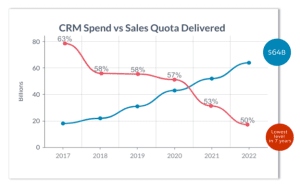
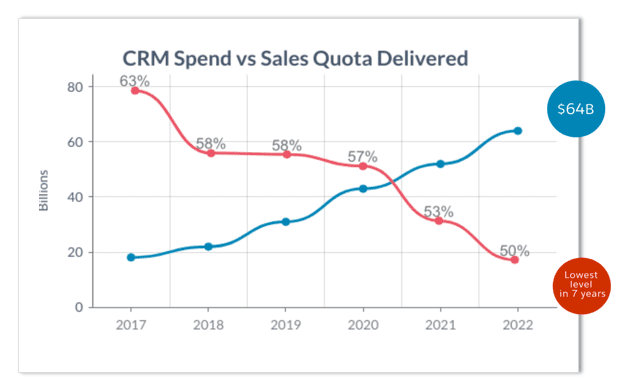
    Fast forward to today, and the paradox is still very much alive. In industries like customer relationship management (CRM), sales productivity has fallen by 25% in the last five years, even as spending on CRM software has tripled. This mirrors Solow’s paradox—technology is advancing at breakneck speed, but many organizations are still grappling with how to translate these advancements into productivity gains.

    Why Doesn’t Technology Always Improve Productivity?

    At the heart of this issue lies a misalignment between technology adoption and actual user needs. Let’s explore a few key reasons why technology, and especially enterprise software like CRMs and AI, often fails to drive the productivity it promises:

    Low User Adoption

    Despite significant investments in CRM software, a mere 26% of customer-facing teams actively use their CRM every day. This is a staggering statistic considering that CRM systems are designed to streamline sales and service processes, but if the majority of users are not engaging with the platform, it can never deliver on its promises of efficiency and productivity gains.

    Tool Overload

    Sales teams today are overwhelmed by tools—on average, they use 10 different applications just to close deals. Studies show that sales reps spend just 28% of their week actually selling, a number that has declined by 20% over the past five years. Much of this lost time is due to the juggling of tools and the associated administrative work.

    User Frustration

    The cognitive overload from having to switch between multiple applications is significant. 66% of sales reps report feeling “drowned” in tools, and 60% of staff in some studies admitted that they’ve considered leaving their jobs due to frustrations with their CRM software.

    The Solow Paradox in the AI Era

    As we enter the age of AI, the Solow Paradox takes on new dimensions. While AI promises to revolutionize productivity, we’re seeing similar patterns of investment without corresponding gains. Here’s how the paradox applies to AI today:

    1. Implementation Lag: Just as with computers in Solow’s time, there’s a significant lag between AI adoption and productivity gains. Organizations are investing heavily in AI, but many are still in the early stages of figuring out how to effectively integrate it into their workflows.
    2. Skill Mismatch: The rapid advancement of AI technology has created a skills gap. Many employees lack the necessary training to effectively use AI tools, leading to underutilization and reduced productivity.
    3. Overinvestment in Technology, Underinvestment in Complementary Factors: Companies often focus on acquiring the latest AI technology without investing sufficiently in the organizational changes, process redesigns, and employee training necessary to fully leverage these tools.
    4. Data Quality Issues: AI systems are only as good as the data they’re trained on. Many organizations struggle with data quality and integration issues, limiting the effectiveness of their AI implementations.
    5. Measurement Challenges: Traditional productivity metrics may not capture the full value of AI. Improvements in decision-making quality or customer experience, for instance, may not be immediately reflected in standard productivity measures.

    Chart: AI Investment vs. Productivity Growth

    Solow Paradox
     

    This chart illustrates the growing gap between AI investment and productivity growth, reminiscent of the original Solow Paradox.

    Moving Beyond the Paradox

    To break the cycle of unproductive technology spending, businesses need to focus on these core principles:

    1. User-Centric Design: Ensure AI solutions simplify day-to-day tasks and remove administrative burdens.
    2. Integrated Workflows: Seamlessly integrate AI with existing tools to reduce context switching.
    3. Focus on Real-Time, Actionable Insights: Emulate consumer apps by pushing relevant, timely information to users.
    4. Invest in Training and Change Management: Prioritize upskilling employees to effectively use AI tools.
    5. Redesign Processes: Rethink workflows to fully leverage AI capabilities, rather than simply automating existing processes.
    6. Improve Data Quality: Invest in data infrastructure and governance to ensure AI systems have high-quality inputs.
    7. Develop New Metrics: Create new ways to measure productivity that capture the full value of AI implementations.

    By addressing these factors, businesses can start to bridge the gap between AI investment and productivity gains, potentially breaking the cycle of the Solow Paradox in the AI era.

    For further research:

    1. McKinsey & Company: The Solow Paradox in the AI Age
    2. MIT Sloan Management Review: Productivity Paradox 2.0
    3. National Bureau of Economic Research: Artificial Intelligence and the Modern Productivity Paradox

    Lorem ipsum dolor sit amet, consectetur adipiscing elit. Ut elit tellus, luctus nec ullamcorper mattis, pulvinar dapibus leo.

  • LinkedIn Scraping User Data for AI Training. What you need to Know!

    LinkedIn Scraping User Data for AI Training. What you need to Know!

    LinkedIn, the world’s largest professional networking platform, is widely used for job hunting, networking, and sharing industry insights. However, there’s growing concern that LinkedIn is collecting and using vast amounts of user data to train its artificial intelligence (AI) models—largely without users being aware.

    What Is Data Scraping?

    Data scraping refers to the automated process of collecting data from websites. In LinkedIn’s case, the platform is extracting information from your profile, posts, interactions, and connections. This data, which is extremely valuable for AI development, is being used to train LinkedIn’s AI models—helping to power everything from job recommendations to predictive analytics.

    While LinkedIn is upfront about collecting data to improve the platform, most users are unaware that their activity is being used to train sophisticated AI systems behind the scenes.

    How LinkedIn Uses Your Data for AI Training

    LinkedIn’s AI models rely on vast amounts of data to function effectively. By scraping user profiles and interactions, LinkedIn gathers valuable data to:

    • Improve job matching algorithms: LinkedIn’s AI analyzes the skills and experiences of millions of users to make more accurate job recommendations.
    • Enhance search features: By learning from user behavior, the AI can provide better search results and suggest connections more intelligently.
    • Personalize content: LinkedIn uses AI to tailor the newsfeed to individual users, showing content that the platform predicts will be relevant or engaging.

    However, the scope of this data collection raises questions about how much information LinkedIn gathers and whether users are fully aware of how their data is being used.

    Can You Opt Out?

    While LinkedIn’s AI is powered by user data, there is a way to limit how much of your personal information is scraped for these purposes. The option to opt out is hidden within LinkedIn’s privacy settings, but you can adjust your preferences by following these steps:

    1. Go to your LinkedIn profile and click on your profile picture.
    2. Select Settings & Privacy from the dropdown menu.
    3. Navigate to the Data Privacy section.
    4. Here, you can adjust how your data is used, including whether it can be used to train AI models.

    Although opting out may reduce the personalization of some features, it’s a crucial step if you want more control over how LinkedIn uses your data.

    Why This Matters

    The use of user data to train AI models isn’t unique to LinkedIn, but it does raise concerns about transparency and consent. Many users join LinkedIn to network professionally, without realizing that their profiles, posts, and interactions are being used to develop AI systems. The fact that this data scraping happens without most users’ knowledge creates an ethical gray area.

    Training AI models requires massive amounts of data, and LinkedIn’s vast user base offers the perfect pool of information. But the practice leaves users with limited control over how their personal and professional details are being used.

    How AI Models Affect Your LinkedIn Experience

    The AI models trained using scraped data enhance the overall LinkedIn experience in many ways:

    • Smarter job recommendations: The more data LinkedIn collects, the better its AI can suggest jobs that align with your experience.
    • Improved search functionality: LinkedIn’s AI learns from user behavior to provide more relevant search results, making it easier to find the right people or companies.
    • Enhanced networking: The platform can suggest more accurate connections by analyzing user activity, helping users grow their professional networks.

    While these AI-driven features are beneficial, they come at the cost of user data being continuously mined for training purposes.

    What You Can Do

    If you’re concerned about LinkedIn scraping your data to train AI models, here are a few steps you can take:

    • Review and update your privacy settings: Go to your data privacy options in LinkedIn’s settings to see what’s being collected and adjust your preferences accordingly.
    • Limit the data you share: If you’re uncomfortable with LinkedIn using your information to train AI, consider limiting the amount of personal and professional details you post.
    • Stay informed: AI is a rapidly growing field, and platforms like LinkedIn are constantly evolving their use of user data. Keep an eye on updates to LinkedIn’s data practices to make sure you’re comfortable with how your information is being used.

    LinkedIn’s use of user data to train AI models highlights the complexities of data privacy in today’s digital world. While the platform uses AI to deliver smarter recommendations and a more personalized experience, most users are unaware of the extent to which their data is being harvested. By taking control of your privacy settings and staying informed, you can manage how much of your personal information LinkedIn uses, ensuring you remain in control of your data.

    tags: #linkedin #ai #dataprivacy #aitraining #genai

  • Agentic AI: The Next Big AI Breakthrough to Watch?

    Agentic AI: The Next Big AI Breakthrough to Watch?

    Agentic AI is strutting onto the tech scene like Mick Jagger rocking on the big stage.

    Unlike its older sibling, Generative AI, which is great at whipping up new content like a master chef, Agentic AI is the ultimate multitasker, ready to make decisions and tackle tasks with the finesse of Superman’s arch nemesis Brainiac. This shift towards goal-oriented and adaptive decision-making means Agentic AI can navigate complex environments like a pro gamer, executing actions in real-time and leveling up through continuous feedback.

    Imagine Agentic AI applications in fintech / financial services: it could be the ultimate stock market wizard, managing investment portfolios, executing trades faster than you can say “bull market,” and catching fraudsters red-handed like Batman and Robin protecting Gotham. This level of autonomy and adaptability could turn the finance world upside down, bringing efficiency and decision-making skills that would make even the sharpest Wall Street minds jealous.

    Agentic AI maybe the next big thing in the age of AI—it’s the AI equivalent of discovering fire. The implications for shared services and finance are mind-blowing, promising a future where AI can handle complex tasks and workflows like a boss, driving innovation and value creation in ways that would make even the Jetsons proud. So, buckle up AI Knowledge Seekers, because this journey is going to be one wild ride, and it’s one that professionals and organizations need to plan for, experiment, deploy, learn and evolve. AI isn’t set it and forget it software (yet?).

    As Spiderman would say to Mysterio – “that looks super cool – but I don’t believe it, what should I really be seeing?” Is that more marketing puffery, creating an image of success or something that actually works in the real world, that my boss will be super happy with? Lets jump in with five real world applications and then five examples of corporations that are developing Agentic AI right now.

    Five real-world applications across different sectors:

    1. Financial Services: Agentic AI is revolutionizing financial planning and analysis by autonomously managing investment portfolios and executing trades based on real-time market analysis. This not only enhances the accuracy of financial forecasting but also adapts to market changes dynamically, providing a significant edge in financial decision-making.

    2. Manufacturing: In the manufacturing sector, Agentic AI is being deployed for predictive maintenance of machinery, leading to a substantial reduction in downtime and maintenance costs. By autonomously managing inventory and overseeing robotic assembly, these intelligent agents are driving efficiency and productivity to new heights.

    3. B2C Sales: The power of Agentic AI in B2C sales lies in its ability to analyze vast datasets to personalize marketing campaigns with unprecedented precision. Understanding customer behavior and preferences allows for optimized advertising strategies, maximizing conversion rates and driving revenue growth.

    4. Banking: Agentic AI is being used in banking for advanced fraud detection by continuously monitoring transactions and flagging anomalies. This proactive approach significantly reduces financial losses and enhances security for both the institution and its customers.

    5. E-commerce: In e-commerce, Agentic AI is improving customer experiences by managing queries autonomously and providing 24/7 customer service. This not only improves resolution times but also ensures a consistent and personalized interaction for each customer, fostering loyalty and trust.

    These applications embody the versatility and potential of Agentic AI to enhance decision-making, optimize operations, and drive growth across various industries. As we continue to explore the capabilities of Agentic AI, it’s clear that its impact could be far-reaching, ushering in a new era of autonomous and intelligent systems. But is it different than what we already have in play today for businesses?

    With that question in mind. What are the big AI Players doing with Agentic AI you need to know about?

    Companies using Agentic AI with links:

    1. Microsoft: Through projects like Project AutoGen and Copilot, Microsoft is integrating Agentic AI to create more autonomous and action-based applications12. These tools help automate complex workflows and improve productivity by making independent decisions and executing tasks with minimal human intervention.
    2. Google: With initiatives like Project Astra, Google is focusing on developing AI systems that go beyond responding to user prompts, aiming for more proactive and autonomous functionalities1.
    3. OpenAI: Known for its advancements in AI, OpenAI is also investing in Agentic AI to enhance the capabilities of its models, enabling them to perform more complex and autonomous tasks1.
    4. Cognition Labs: This startup has developed Devin, an advanced Agentic AI that functions as a fully autonomous software engineer. Devin handles long-term reasoning, planning, and complex engineering tasks independently, collaborating with human engineers within a sandboxed environment3.
    5. Nagra DTV: A digital content company, Nagra DTV uses Agentic AI to support web, mobile, desktop, and API test automation, optimizing their testing processes and improving efficiency4.

    And there you have it fellow AI knowledge seekers. The latest on Agentic AI. For more on AI buzzwords, AI strategies and AI adoption techniques check out the 100’s of articles on www.sentia.community.

    Forbes Agentic AI: The Next Big Breakthrough

    Venture Beat Agentic AI is reshaping Development teams

    Andrew Ng on Agentic AI video

    Agentic AI https://www.agentic.ai/

    Gartner: The Top 10 Strategic Technology Trends For 2025

  • AI and Salesforce Einstein. Is it’s AI Ready for Deployment?

    AI and Salesforce Einstein. Is it’s AI Ready for Deployment?

    In the ever-evolving landscape of enterprise AI, Salesforce’s Einstein platform stands as an emerging enterprise grade comprehensive suite tailored for the modern corporate buyer. Yes, it has lots of room for improvement just like every other AI in the market, that being said if you are already a Salesforce customer and want to get some help evaluating it here is a high-level view of what exactly Einstein is and is not.

    Setting the table. As an enterprise leader, I recognize the critical importance of integrating AI capabilities that not only enhance operational efficiency but also secure a competitive edge.

    As a strategic thinker. It is important to go back to basics and remember MBA 101.

    It isn’t about the flashing AI sizzle, slick AI PowerPoint presentations or those “gee whiz you can do that,” features. It is about what can AI do, that I can’t do now, that will make an immediate impact on my business. Use the following before you start your AI buyer journey.

    AI Evaluation Checklist:

    1. Take AI out of the equation. What are the problems your company needs to solve.
    2. These specific problems can be solved by AI
    3. How long will it take to develop these AI tools?
    4. How much will it cost to develop, integrate and train employees?
    5. Are there internal resources to install it or will you need AI Implementation help?
    6. When will you see a return on your AI investment?

    Einstein 1 Platform serves as the cornerstone of Salesforce’s AI offerings, encompassing a wide array of tools from predictive analytics to advanced AI-driven actions. The inclusion of both legacy and cutting-edge features, such as Einstein for Developers, ensures a robust and versatile environment for any organization.

    The Einstein Copilot is particularly noteworthy for its user-friendly interface and customizable actions, providing a glimpse into the future of organization-wide AI chatbots. Its simplicity out of the box belies its potential for extensive customization, empowering users to tailor it to their unique business needs.

    The Einstein 1 Studio is where the magic of personalization happens. Here, you can fine-tune the Copilot’s actions, imbue it with a distinct personality, and meticulously test and debug to ensure seamless deployment.

    The Prompt Builder is a game-changer, offering unparalleled value by enabling the creation of sophisticated prompts that leverage both internal and external data sources. This tool is instrumental in harnessing the full power of the Data Cloud, akin to crafting an intricate email merge template on a grand scale.

    The Einstein Trust Layer is a robust set of features and guardrails that protect the privacy and security of your data, improve the safety and accuracy of your AI results, and promote the responsible use of AI across the Salesforce ecosystem. With features like dynamic grounding, zero data retention, and toxicity detection, the Einstein Trust Layer is designed to help you unleash the power of generative AI without compromising your safety or security standards.

    Lastly, the Model Builder may appear modest, but it is a fundamental component that grows in significance as one delves deeper into the AI models suitable for enhancing Copilot Actions.

    It’s essential to note that while Salesforce’s solutions provide a secure and structured approach to AI within an organization, they do not restrict the ingenuity and expertise of AI specialists. The safety measures in place are commendable, yet the flexibility remains for specialists to extract maximum value from AI, ensuring that the enterprise remains at the forefront of innovation and efficiency.

    Fortune 500 companies are testing, deploying and have been using AI for some time. From the field the number one issue I hear is that it takes time to get it right, it can produce amazing results but it isn’t set it and forget it software. To max the value it requires constant tweaking and enhancements from a knowledgeable team. This often requires mixing inside and outside talent to ensure outside best practices are brought in.

    There you go. Grab a certified Salesforce partner (like Sentia AI) to help understand how large enterprise businesses like yours, can evaluate how, when and where they can leverage the amazing potential of AI in their businesses, profitably.

    tags: #Salesforce #AI #Einstein #CRM #Salesforce.com #GenAI #AIadoption #AIRisk #CRMChecklist