Tag: technology

  • RevOps Acronyms: What do they Really Mean?

    RevOps Acronyms: What do they Really Mean?

    Executive Summary

    Drowning in RevOps alphabet soup? This guide decodes the top 25 industry acronyms—from ARR and CAC to the future of AIRO (Artificial Intelligence Revenue Optimization). Beyond the marketing hype, we explore how to align people, processes, and technology to eliminate the “AI Circle of Sorrow” and transform your CRM into a high-velocity revenue engine.

    Drowning in a sea of RevOps marketing & sales acronyms?

    Fear not! As your trusty Chief Confusion Officer (CCO), I’m here to help you navigate these murky waters with a dash of humor and a sprinkle of reality. Let’s dive into the world of RevOps marketing, where every letter promises to turn your business into a money-printing AI enhanced machine if you just buy our software!

    1. RevOps: The Magic Wand of Business?

    Marketers would have you believe that RevOps is the Hogwarts of the business world. Wave this wand, and poof! Your sales, marketing, and customer success teams are suddenly in perfect harmony. In reality, it’s less “Wingardium Leviosa” and more “We’ve got a lot of work to do-sa.”

    1. ARR: The Golden Goose

    Annual Recurring Revenue sounds like a promise of endless riches.

    “Implement our RevOps strategy, and you’ll have your own golden goose!” they say. But remember, even golden geese need feeding and care. ARR is powerful, but it’s not automatic.

    1. CAC: The Disappearing Act

    Customer Acquisition Cost is often marketed as something RevOps can make vanish.

    “Watch as we make your CAC disappear!” But unless your marketing team has mastered actual sorcery, CAC will always be there. The trick is putting a smart plan in place and managing it effectively.

    1. CLV: The Fountain of Youth

    Customer Lifetime Value is sold as the secret to eternal customer relationships.

    “Our RevOps approach will make your customers immortal!” While increasing CLV is crucial, it requires ongoing effort and genuine value delivery.

    1. KPI: The Magic Mirror

    Key Performance Indicators are often portrayed as a magic mirror that always shows success.

    “Mirror, mirror on the wall, who’s the most profitable of them all?” But KPIs are tools for insight, not guaranteed success stories. Crystal ball should I trust what the humans are telling me, my faithful CRM, AI, Ouija board or ?

    The Future of RevOps: Enter AIRO!

    But wait, there’s more! Get ready for the next big thing:

    AIRO (Artificial Intelligence Revenue Optimization). Imagine a world where AI doesn’t just assist your RevOps, it becomes your RevOps! And the second question? How fast can you replace your pesky humanoids with AIRO’s?*

    Picture this: AI-powered chatbots that not only close deals but also write your quarterly reports and order your coffee. Who needs human salespeople when you’ve got an army of charming AI agents ready to woo your clients 24/7?

    With AIRO, we promise to turn your sales funnel into a sales black hole, sucking in leads faster than you can say “revenue”! In this brave new world, ROI stands for

    “Robots Outperforming Individuals.”

    Yikes. Do you believe that?

    The Bottom Line

    While RevOps acronyms may sometimes be served with a side of exaggeration, the concepts behind them are powerful when applied correctly. The key is to approach these tools with a clear understanding of what they can realistically achieve, constantly measure goals and outcomes while adjusting faster than ever before (no choice in today’s market).

    So, the next time a marketer promises you the moon with their RevOps alphabet soup, remember to take it with a grain of salt (and maybe a chuckle). After all, in the world of business, there’s no such thing as a magic wand – but with the right strategy and execution, you can certainly work some magic of your own.

    What’s your favorite RevOps acronym?

    Please be so kind as to share your thoughts (and any humorous misuses you’ve encountered) in the comments below!

    *RevOps: Revenue Operations (RevOps) is a business strategy combining the best of sales, marketing, and customer service to increase revenue. It’s thought of as a holistic approach that involves aligning teams and processes to improve customer experience and drive revenue growth. 

    RevOps vs. CRM: CRM provides the foundation for customer data management, while RevOps provides a strategic framework for aligning teams and optimizing revenue growth. Together, CRM and RevOps can help businesses streamline processes, improve efficiency, and increase revenue.

    Top 25 Common Acronyms in RevOps Marketing and Sales:

    1. ABM – Account-Based Marketing
    2. ABS – Account-Based Selling
    3. ABX – Account-Based Experience
    4. ARR – Annual Recurring Revenue
    5. CAC – Customer Acquisition Cost
    6. CLV – Customer Lifetime Value
    7. CRM – Customer Relationship Management
    8. CX – Customer Experience
    9. DG – Demand Generation
    10. KPI – Key Performance Indicator
    11. LTV – Lifetime Value
    12. MQL – Marketing Qualified Lead
    13. NPS – Net Promoter Score
    14. PLG – Product-Led Growth
    15. RevOps – Revenue Operations
    16. ROI – Return on Investment
    17. SAL – Sales Accepted Lead
    18. SDR – Sales Development Representative
    19. SEM – Search Engine Marketing
    20. SEO – Search Engine Optimization
    21. SQL – Sales Qualified Lead
    22. TAM – Total Addressable Market
    23. TOFU – Top of Funnel
    24. MOFU – Middle of Funnel
    25. BOFU – Bottom of Funnel

    #RevOps #MarketingHumor #AIRO #FutureOfSales #RevenueOperations #CRM #AI #AgenticAI #marketing #Sales #strategy #revenuegrowth


  • Rise of the CAIEO: Navigating new AI Roles

    Rise of the CAIEO: Navigating new AI Roles

    AI continues to break new ground in many ways including new job titles for roles that didn’t exist a year ago. Let’s jump into the role of the CAIEO -part IT, HR, law, philosophy and business ethics rolled into one job in the age of AI.    

    Large complex organizations, that have embraced AI, are increasingly recognizing the need for ethical oversight in their AI initiatives. Enter the Chief AI Ethics Officer (CAIEO) -bridging the gap between technological innovation and ethical responsibility.

    What is a CAIEO?

    A Chief Artificial Intelligence Ethics Officer is a senior executive responsible for ensuring that an organization’s AI technologies and strategies align with ethical principles, legal requirements, and societal values. They play a pivotal role in developing, implementing and monitoring responsible AI practices across the company.

    10 Key Responsibilities of a CAIEO

    1. Develop, codify, train and enforce internal AI ethics policies and guidelines14.
    2. Oversee compliance with AI-related legal and regulatory frameworks4.
    3. Promote transparency, fairness, and accountability in AI systems4.
    4. Manage AI-related risks, including data privacy and security vulnerabilities4.
    5. Collaborate with various departments to establish AI performance evaluation standards4.
    6. Lead the creation and implementation of AI governance structures4.
    7. Ensure AI initiatives align with the company’s values and ethical standards14.
    8. Conduct regular reviews and updates of AI policies to reflect industry best practices4.
    9. Provide expert advice on navigating ethical challenges in AI development and deployment4.
    10. Foster a culture of responsible AI use throughout the organization14.

    Who Needs a CAIEO?

    Most businesses really don’t need a CAIEO, yet. Organizations that heavily rely on AI technologies, have outsize legal exposure to their use of AI, or are planning significant AI initiatives should consider appointing a CAIEO.

    This role is particularly crucial for:

    • Large tech companies developing AI products or services – Be Good, Do Good!
    • Financial institutions using AI for decision-making
    • Healthcare organizations implementing AI in patient care
    • Retail companies leveraging AI for customer insights and personalization
    • Manufacturing firms integrating AI into their production processes
    • Large service-based companies using AI in human resources, hiring, firing, compliance

    While the need for a CAIEO is more pronounced in larger corporations, mid-sized companies with significant AI investments should also consider this role (but can be a job that doesn’t necessarily require a C-Suite title). Startups focusing on AI-driven products or services may benefit from having a CAIEO or a similar role to ensure ethical considerations are built into their core offerings from the outset.

    CAIEO Necessity Checklist

    Consider appointing a CAIEO if your organization:

    • Develops or uses AI systems that impact decision-making processes
    • Handles sensitive data processed by AI algorithms
    • Operates in a highly regulated industry (e.g., finance, healthcare)
    • Has a global presence with diverse ethical and regulatory landscapes
    • Faces potential reputational risks related to AI use
    • Aims to be a leader in responsible AI practices
    • Lacks internal expertise in AI ethics and governance
    • Experiences rapid growth in AI adoption across multiple departments
    • Receives stakeholder inquiries about AI ethics and transparency
    • Plans to scale AI initiatives significantly in the near future

    Real-World CAIEO Use Cases by Industry

    1. Tech Giant: A leading social media company appoints a CAIEO to address concerns about algorithmic bias in content recommendation systems.
    2. Financial Services: A global bank hires a CAIEO to ensure fair lending practices in AI-driven credit scoring models.
    3. Healthcare Provider: A hospital network brings on a CAIEO to oversee the ethical implementation of AI in diagnostic tools and patient data management.
    4. E-commerce Platform: An online marketplace employs a CAIEO to manage the ethical implications of AI-powered pricing and product recommendation engines.
    5. Automotive Manufacturer: A car company appoints a CAIEO to guide the development of ethical AI systems for autonomous vehicles.

    As AI continues to shape our world, the role of the CAIEO becomes increasingly vital. By prioritizing ethical considerations in AI development and deployment, organizations can build trust, mitigate risks, and ensure their AI initiatives contribute positively to society.

    For More information on AI roles like CAIO please visit the Agentic AI Community site for AI enthusiasts and knowledge seekers.

    #AIEthics #ChiefAIEthicsOfficer #ResponsibleAI #TechLeadership #AIGovernance

    David is an investor and executive director at Sentia AI, a next generation AI sales enablement technology company and Salesforce partner. Dave’s passion for helping people with their AI, sales, marketing, business strategy, startup growth and strategic planning has taken him across the globe and spans numerous industries. You can follow him here on LinkedIn, X or YouTube for my interviews and videos.

  • AI in Big Pharma: How is it Being Applied in 2025?

    AI in Big Pharma: How is it Being Applied in 2025?

    Valued at $1.5 trillion, the pharmaceutical industry has long grappled with significant challenges. R&D development of a new drug costs $2 billion plus, takes over a decade, and faces a 90% failure rate in early stages. However, with AI adoption in life sciences growing at 29% annually, a unique opportunity emerges to address these inefficiencies and pain points in drug development12.

    Pain Points in Pharma

    Big Pharma executives and life sciences investors face uncertainty and risk due to four major issues:

    • Disconnected Data: Decision-making relies on vast volumes of structured and unstructured scientific data.
    • Knowledge Gaps: Significant gaps persist across scientific, clinical, regulatory, and commercial decision-making processes.
    • Inefficient Processes: Integrating and analyzing datasets is time-consuming and resource-intensive.
    • Lack of Standardization: Inconsistent evaluations hinder reproducibility in asset assessments.

    AI Applications in Drug Development – Recent Examples

    AI is transforming various stages of drug discovery, development, and commercialization:

    1. Target Identification and Validation: Atomwise and Pfizer’s partnership reduced initial drug discovery timeline from 4-6 years to approximately 18 months.
    2. Clinical Trial Optimization: Deep 6 AI’s implementation reduced patient recruitment time by 85% and increased trial enrollment rates.
    3. Manufacturing Process Optimization: GSK and Gatehouse Bio’s collaboration led to a 25% increase in production yield and $20 million annual cost savings at a single site.
    4. Post-Market Surveillance: FDA and Novartis’ AI-powered systems enabled earlier detection of safety signals and more proactive risk management.

    CRM & AI in Healthcare

    Customer Relationship Management (CRM) systems, enhanced by AI, are improving healthcare delivery and patient engagement:

    • Personalized Patient Care: AI-powered CRM systems analyze patient data to provide tailored treatment recommendations and follow-ups.
    • Predictive Analytics: These systems can forecast patient needs, potential health risks, and treatment outcomes.
    • Streamlined Administrative Tasks: AI automates appointment scheduling, billing, and record-keeping, allowing healthcare providers to focus more on patient care.
    • Enhanced Patient Engagement: AI-driven CRM tools facilitate better communication between patients and healthcare providers, improving adherence to treatment plans.

    The AI Solution

    AI addresses several critical issues in healthcare and pharma:

    1. Data Integration: AI can seamlessly integrate and analyze vast amounts of disparate data, providing comprehensive insights for decision-making.
    2. Accelerated Research: Machine learning algorithms can rapidly identify potential drug candidates and predict their efficacy, significantly reducing the time and cost of drug discovery6.
    3. Improved Clinical Trials: AI optimizes patient recruitment, monitors responses, and predicts potential side effects, making trials more efficient and reliable5.
    4. Personalized Medicine: By analyzing individual patient data, AI enables the selection of treatments tailored to each person, improving outcomes and reducing adverse reactions4.
    5. Operational Efficiency: AI automates routine tasks and provides insights into market trends and patient needs, streamlining pharmaceutical operations2.

    The Impact of AI on Drug Development

    The benefits of AI in pharmaceutical industry are clear:

    • 30-50% reduction in time-to-market for new drugs
    • Estimated $100-200 million cost savings per successful drug
    • Higher success rates in clinical trials due to better candidate selection
    • More efficient use of research resources
    • Improved safety monitoring and risk management
    • Faster response to emerging health threats through drug repurposing

    Looking Ahead

    2025 is the AI “Go Year” for the entire Pharmaceutical Industry.

    AI is expected to drive 30% of new drug discoveries, cutting costs and accelerating personalized treatments7. Challenges, including regulatory hurdles, data privacy concerns, and the need for specialized skills loom large! 3.

    The future of pharma lies in embracing these AI-driven innovations while navigating the complex regulatory landscape. As the industry evolves, collaboration between tech companies, pharmaceutical firms, and regulatory bodies will be crucial in realizing the full potential of AI in healthcare and drug development.

    What are your thoughts on AI’s role in transforming the pharmaceutical industry? How is AI changing your processes and workflows in pharma? Share your experiences and let’s continue this important conversation.

    Connect with me so you don’t miss any future articles!

    Please follow me on X (@Intmktentry) on Linkedin, YouTube or via our AI Community Site.

    Citations:

    1. https://www.zs.com/insights/pharmaceutical-trends-2025-outlook-ai-supplychain-and-beyond
    2. https://www.datacamp.com/blog/ai-in-pharmaceuticals
    3. https://www2.deloitte.com/us/en/insights/industry/health-care/life-sciences-and-health-care-industry-outlooks/2025-life-sciences-executive-outlook.html
    4. https://pmc.ncbi.nlm.nih.gov/articles/PMC10385763/
    5. https://www.clinicaltrialsarena.com/features/clinical-trials-challenges-expect-2025/
    6. https://www.mckinsey.com/industries/life-sciences/our-insights/generative-ai-in-the-pharmaceutical-industry-moving-from-hype-to-reality
    7. https://www.weforum.org/stories/2025/01/2025-can-be-a-pivotal-year-of-progress-for-pharma/
    8. https://www.scilife.io/blog/ai-pharma-innovation-challenges
  • Agentic AI: From Hype to Measurable Value in ’25

    Agentic AI: From Hype to Measurable Value in ’25

    Two short months into 2025, the marketing buzz around Agentic AI remains palpable, with a never-ending promise of transformative impact across every industry and job role.

    Yet to date, the reality of AI adoption reveals a far slower, more deliberate pace as enterprises grapple with implementation challenges. Businesses are now shifting focus from unrealistic pie in the sky expectations to measurable outcomes, emphasizing cost savings, ROI, and efficiency gains. To me that means AI as a technology is maturing and businesses are treating just like any new tool (which they should) and forcing a rigorous analysis of the tech before deploying it, training and change management.

    Speaking of AI, AI adoption and change management. I believe that we will see much more emphasis on AI training / change management to lock in any AI gains. Functional AI or the successful combining of AI and humans will be at the forefront of AI change management in 25.

    Measuring AI ROI Effectively

    To bridge the gap between AI hype and its real-world impact, businesses need to adopt structured approaches to measure ROI-just like any other part of their business. Here’s how:

    1. Clear Objectives Identified

    Set specific, measurable goals that align with your business strategy. For example:

    • Reduce customer churn by 15% using predictive analytics.
    • Increase operational efficiency by automating 30% of repetitive tasks.
    • Increase daily CRM use rates by 25%.
    • Reduce annual sales rep churn rate by 20% with AI enhanced training and retraining vs. firing.
    1. Identify Relevant AI Deployment KPIs

    Choose clear metrics that reflect both financial and non-financial benefits:

    • Financial Metrics: Cost savings, revenue growth, and productivity gains.
    • Non-Financial Metrics: Customer satisfaction scores, employee engagement, and decision-making improvements.
    1. Establish a Baseline before AI implementations

    Collect data on current performance metrics before implementing AI. This provides a benchmark for comparison and helps quantify the impact of AI solutions.

    1. Track Progress Continuously

    Monitor KPIs regularly to assess the effectiveness of AI initiatives. Use advanced analytics tools to generate insights and identify areas for improvement. Usually, you will see steady incremental gains after a likely initial big leap. Be ready to change AI functions if they are not doing better than the baseline.

    1. Consider Long-Term Value

    AI’s benefits often compound over time. While short-term gains like cost reductions are important, they also evaluate long-term impacts such as enhanced scalability, innovation, and customer loyalty.

    1. Leverage Advanced Techniques

    Employ methods like multi-touch attribution, incrementality testing, and machine learning-based analytics to gain deeper insights into ROI. These techniques help capture the nuanced effects of AI across different business functions 139.

    How can AI Impact Workers Differently?

    AI adoption has a varied impact on workers depending on their roles and experience levels:

    Boosting Productivity

    • Younger Workers: Often more tech-savvy, they adapt quickly to AI tools and see higher productivity gains.
    • Experienced Professionals: While they face a steeper learning curve, combining their expertise with AI insights can lead to superior decision-making. They are also more likely to know if AI is hallucinating or not based on their years of working without AI.

    Potential Challenges

    • Workers in roles requiring creativity or interpersonal interaction may find AI tools limiting.
    • Over-reliance on automation can hinder critical thinking skills.
    • Employees not understanding the Legal implications of AI vs. the yes you can do it but who actually owns what you just created with AI?

    Pushing for Measurable Outcomes in 2025

    As businesses continue investing in generative AI technologies, the focus is shifting toward tangible results:

    • Cost Reduction: Automating repetitive tasks and optimizing workflows.
    • Efficiency Gains: Streamlining operations across departments.
    • ROI Demonstration: Justifying investments through improved bottom-line results.

    By addressing these priorities and measuring ROI effectively, businesses can ensure that their AI investments deliver real-world value.

    #AgenticAI #ArtificialIntelligence #AIROI #EnterpriseTech #FutureOfWork #GenerativeAI #BusinessInnovation #DigitalTransformation #ProductivityGains

    Citations:

    1. https://aisera.com/blog/roi-with-ai/
    2. https://www.concur.com/blog/article/maximize-your-ai-roi-4-tips-from-industry-leaders
    3. https://rtslabs.com/measuring-ai-roi
    4. https://www.moveworks.com/us/en/resources/blog/measuring-ai-investment-roi
    5. https://www.techfunnel.com/martech/accurate-roi-measurement-tools-techniques/
    6. https://www.linkedin.com/pulse/path-value-guide-measuring-roi-ai-rahul-roy-chowdhury-symkc
    7. https://ignitetech.ai/about/blogs/why-measuring-roi-essential-ai-success
    8. https://tech-stack.com/blog/roi-of-ai/
    9. https://www.cprime.com/resources/blog/maximizing-ai-roi-business-success/
  • Salesforce AI Agents: Are they the next big AI breakthrough?

    Salesforce AI Agents: Are they the next big AI breakthrough?

    The Evolution of Salesforce AI Agents: Transforming Business Operations

    Unless you have been hiding under a proverbial rock and missed it, AI Agents are the big buzz in tech news right now. If you’re curious what the heck these AI Agent things are, where they came from and why marketing is pushing them so hard – this is the article for you!

    Let’s go way back in tech history to the “pre-AI days”, one long decade ago. Salesforce’s foray into AI began in 2014 when CEO Marc Benioff declared the company would become “AI-first.” This strategic shift aimed to revolutionize Salesforce from a system of recordings to a system of intelligence, making AI accessible to every company and employee.

    The Genesis of Salesforce AI

    The acquisition of RelateIQ in 2014 marked the beginning of Salesforce’s AI evolution, introducing machine learning capabilities to capture workplace communications data and provide valuable insights. Over the years, Salesforce has consistently invested in AI technologies, developing predictive AI tools and eventually venturing into generative AI.

    Agentforce: The Next Frontier

    In 2024, Salesforce introduced Agentforce, a suite of autonomous AI agents designed to enhance business operations across various domains. These agents, unlike traditional chatbots, are intelligent and dynamic, capable of understanding context and nuance in customer interactions.

    Current Applications of Salesforce AI Agents

    1. Customer Service: Agentforce Service Agent handles a wide range of service issues without preprogrammed scenarios, improving efficiency.
    2. Sales Development: The SDR Agent engages with inbound leads 24/7, answering questions and booking meetings for human sellers.
    3. Sales Coaching: AI agents provide personalized role-play sessions for sales teams, helping them practice pitches and handle objections.
    4. E-commerce: Merchandiser and Personal Shopper agents assist with site setup, personalized promotions, and enhance the buying experience.
    5. Marketing: Campaign Optimizer automates the full campaign lifecycle, from analysis to optimization.

    Future AI in ‘25

    Salesforce AI agents are expected to become more integrated into daily business operations with a big Q1 push. They will likely:

    – Enhance decision-making processes by providing real-time, data-driven insights.

    – Automate more complex tasks across various departments.

    – Offer more personalized customer experiences through advanced data analysis.

    – Collaborate more seamlessly with human workers, augmenting their capabilities.

    5 Compelling Salesforce AI Agent Use Cases for Consideration

    1. Autonomous Customer Service: The Service Agent can handle customer inquiries across multiple channels 24/7, resolving issues quickly and escalating complex cases to human agents when necessary.
    2. AI-Powered Sales Development: The SDR Agent qualifies leads, answers prospect questions, and schedules meetings, allowing human sales representatives to focus on high-value interactions.
    3. Personalized E-commerce Assistance: The Personal Shopper agent acts as a digital concierge, offering tailored product recommendations and assisting with search queries on e-commerce platforms.
    4. Automated Marketing Campaigns: The Campaign Optimizer agent analyzes, generates, personalizes, and optimizes marketing campaigns based on business goals and customer data.
    5. Continuous Employee Support: Agentforce assists employees with various tasks, from data retrieval to action plan creation and execution, boosting workplace efficiency.

    Real-World Examples of Successful Agentforce Implementation

    Looking for something done vs. talked about? Several companies have successfully implemented Salesforce AI agents. Here are five Examples with links:

    1. OpenTable: The restaurant reservation platform uses Agentforce for Service to handle common issues like account reactivations, reservation management, and loyalty point inquiries. This has boosted productivity for service representatives [3].
    2. Wiley: The educational publisher implemented Agentforce Service Agent to manage seasonal surges in service requests. This resulted in a 40-50% increase in case resolution, outperforming their previous chatbot. Additionally, Wiley reduced new agent onboarding time by 50% and achieved a 213% return on investment [2][3].
    3. 3. Precina Health: This healthcare innovator leverages Agentforce to improve diabetes care. In a pilot study, Agentforce and Salesforce technologies helped reduce the average blood sugar levels of 50 patients in Rural Louisiana from 9.6 to 6.4 (measured via an A1C test) in just twelve weeks [1].
    4. AAA Washington: The American Automobile Association used Salesforce Agentforce to create an autonomous agent capable of answering customer support requests, keeping clients informed about roadside updates, and offering personalized suggestions to customers [1].
    5. Saks Fifth Avenue: The luxury retailer utilizes AI service agents from Salesforce Agentforce to enhance their shopping experience. By integrating Customer 360, Commerce Cloud, and Slack, Saks has streamlined information flow for both staff and customers [3].

    These real-world examples demonstrate how Salesforce AI agents are being used to improve customer service, increase operational efficiency, and drive business growth across various industries.

    For businesses evaluating Salesforce AI agents, it’s crucial to understand that these tools offer more than just automation. They provide intelligent, context-aware assistance that can significantly enhance customer experiences, streamline operations, and drive growth. With the ability to customize agents, businesses can tailor AI solutions to their specific needs and industry requirements.

    As AI technology continues to evolve, Salesforce’s commitment to innovation ensures that its AI agents will remain at the forefront of business transformation, offering increasingly sophisticated and valuable solutions to enterprises of all sizes.

    Pick a strong AI enabled Salesforce consulting partner and see how you can successfully apply agents in ’25.

    Research Citations

    1. https://www.cxtoday.com/crm/agentforce-case-studies/
    2. https://www.salesforce.com/news/stories/data-ai-customer-stories/
    3. https://www.salesforce.com/customer-stories/?bc=OTH
    4. https://www.salesforce.com/news/stories/building-business-ai-agents/?bc=OTH
    5. https://digitaldefynd.com/IQ/salesforce-using-ai-case-study/
    6. https://www.salesforce.com/agentforce/use-cases/
    7. https://www.salesforce.com/artificial-intelligence/use-cases/
    8. https://www.salesforce.com/news/stories/video/agents-at-scale-within-salesforce-platform/
  • How to Select Top AI-Enabled Salesforce Consulting Partners in ’25

    How to Select Top AI-Enabled Salesforce Consulting Partners in ’25

    In 24 short months, AI has transformed from gee whiz isn’t that’s interesting-what can it do next? To must have software that can clearly create a competitive advantage when properly deployed. The question is no longer should you consider leveraging AI? It’s now what is the best way to do it, which processes are most apt to see immediate impact and ensure with proper planning that we create a competitive advantage with our AI instances in the process.
    For sales teams that rely on Salesforce, AI can be tricky to understand, plan for, implement and train without some outside best practice help.
    The challenge is finding the best Salesforce AI consulting partners that can guide businesses through the AI evaluation and adoption process, while ensuring that companies stay focused on AI that provides significant impact vs negligible to no discernible business value. Another big challenge is linking the new AI to the rest of the enterprise software stack while providing the extra layers of security (both human and software) that AI requires to reduce legal exposure.
    As we dig into ‘25, completely integrating AI into Salesforce has become crucial for businesses aiming to stay competitive or more often leapfrog competitors. That really isn’t up for argument anymore. However, selecting the right AI-enabled Salesforce consulting partner is critical to successful implementations and maximizing CRM potential. Here’s a comprehensive guide to help you make the best choice.
    Salesforce AI Consulting Best Practie Checklist
    When evaluating potential partners, ensure they possess:
    1. AI Expertise: Look for partners with proven AI implementation experience and relevant certifications.
    2. Salesforce Certifications: Verify that the partner holds up-to-date Salesforce certifications, especially in AI-related areas.
    3. Industry-Specific Knowledge: Choose a partner with experience in your industry for tailored solutions.
    4. Comprehensive Services: Opt for partners offering end-to-end services, from strategy to implementation and training. Buying AI and trying to “figure it out” is a recipe for trouble.
    5. Data Management Skills: Ensure they can handle data preparation and integration for AI analysis. Garbage in / Garbage out is more critical with AI than ever before. Clean, properly accessible data matters.
    6. Scalable Solutions: Look for partners providing scalable AI services to grow with your business. AI isn’t set it and forget it. You need partners that can jump in and help with short notice.
    7. Strong Client References: Request and verify references from clients who have implemented AI solutions.
    Watch-Out-For Checklist
    Be cautious of partners who:
    1. AI innovation capabilities: Look for partners who stay current with AI trends, best practices and can customize Salesforce to leverage cutting-edge AI technologies.
    2. Offer Generic Solutions: Avoid partners who don’t tailor their approach to your specific business needs. How can you make AI your competitive advantage AI if your competition use the exact same thing?
    3. Have Limited Post-Implementation Support: Ensure they offer long-term support, as AI solutions often require ongoing adjustments.
    4. Overemphasize Certifications: While important, certifications alone don’t guarantee practical expertise. Listen to them – can they easily answer questions? Do you want to work with them?
    5. Neglect Data Privacy: Verify their commitment to data security and compliance with relevant regulations. AI legal exposure is increasing. Must be legal and software privacy systems in place.
    6. Have a Narrow Focus: Be wary of partners who can’t integrate AI across multiple Salesforce clouds. They need to know business and software to succeed.
    7. Lack Transparency: Choose partners who are clear about their processes, timelines, and pricing.
    8. Neglecting to check client references: Request and verify references from clients who have specifically implemented AI solutions with the partner.
    9. Overlooking post-implementation support: Ensure the partner offers long-term support for AI solutions, as they often require ongoing adjustments.
    10. Rushing the selection process: Avoid making hasty decisions without thorough research on the partner’s AI capabilities, past projects, and client feedback.
    11. AI Case Studies: What have they done you can look at and play with.
    Certified Salesforce Consulting Partners
    Here’s a list of some top Salesforce consulting partners known for their AI capabilities:
    1. Accenture
    2. Deloitte Digital
    3. Capgemini
    4. IBM
    5. Cognizant
    Remember, the best partner for your organization will depend on your specific needs, industry, and scale of operations. Conduct thorough research and engage in detailed discussions before making your final decision.
    By following this guide and avoiding common pitfalls, you’ll be well-equipped to select an AI-enabled Salesforce consulting partner that can drive your business forward in 2025 and beyond.
    References
    1. Salesforce Partner Finder: https://www.salesforce.com/partners/find-a-partner/
    2. Salesforce AI Capabilities: https://www.salesforce.com/products/einstein/overview/
    3. Gartner Magic Quadrant for Salesforce Implementation Services: https://www.gartner.com/en/documents/3991199
    4. Forrester Wave: Salesforce Consulting Partners: https://www.forrester.com/report/The+Forrester+Wave+Salesforce+Consulting+Partners+Q2+2021/-/E-RES161624
    5. IDC MarketScape: Worldwide Salesforce Implementation Services: https://www.idc.com/getdoc.jsp?containerId=US46733820

  • 10 Best Practices from World Class Sales Teams, Beyond Exceeding Quota!

    10 Best Practices from World Class Sales Teams, Beyond Exceeding Quota!

    Not an AI Agent Dave here to check in and give you the latest in what I’ hearing on the AI strip from the C-Suite AI conference bandwagon gang.

    The C-Suite / BOD has educated themselves and starting to get it. AI is either a competitive advantage or something to watch competitors leapfrog ahead. Yes, it can be awesome! No it doesn’t replace sales reps. Instead, with autonomous AI agents it helps humans do what they do best, create ongoing relationships with companies, products and services their customers need.

    Yikes you say. Have you been drinking the AI Kool-Aid you keep warning readers about?   

    “Kinda.” AI is super cool and autonomous AI agents are most definitely the rage with Microsoft and Salesforce at AI “war” with each other over whether their AI agents actually work.

    TBS as always with my 100K View on sales / marketing perspectives, it isn’t what’s cool new tech, it’s what tech gives you that unfair advantage when you properly apply it to a proven process! More simply. Get back to your MBA strategy 101 thinking.

    What can I do better, faster, cheaper and / or how can I differentiate my company with this new technology. It doesn’t matter if its 100% AI or not. Make sure it is actually providing a solid ROI or can in the near future. Think about it from a non tech perspective. These are the top ten problems my company is facing. Tech isn’t the answer, its applying AI to things we know can work and doing it faster and better than our competitors.

    If you go beyond numbers, focusing on best practices that foster long-term growth, customer satisfaction, and team cohesion, you’ll discover what it is that makes a top team tick. Let’s explore these AI best practices with real-world examples and lessons learned. *{Every use case has an article and a link behind at the end of the article}.

    1. Data-Driven Decision Making

    Leading sales teams leverage data analytics to inform their strategies and tactics.

    Use Case: Google uses data from reviews and surveys to understand the need for managers and improve their leadership development programs. This approach has helped Google identify effective manager qualities and support their growth.

    2. Consistent Sales Process Adherence

    High-performing teams closely follow their established sales processes across all departments.

    Use Case: Coca-Cola has woven data analytics into the fabric of their operations, informing decisions in sourcing, distribution, sales, and production. This consistent approach ensures a unified strategy throughout the organization.

    3. Value-Based Selling

    Top sales teams focus on communicating the value and ROI of their solutions rather than competing on price.

    Use Case: Amazon uses data insights to make personalized product recommendations to customers, increasing sales and maintaining their position as the world’s leading e-commerce platform.

    4. Effective Questioning Strategies

    Successful teams use sophisticated discovery and questioning approaches to uncover client needs.

    Use Case: Netflix analyzes user data to understand what triggers people to subscribe, what makes them stay longer, and where to invest in improving services. This data-driven approach helps them ask the right questions and make informed decisions about content creation and user experience.

    5. Continuous Sales Coaching

    High-performing teams prioritize ongoing coaching as part of their training and development strategy.

    Use Case: Google’s data scientists analyzed qualitative data like performance reviews and surveys about managers within the organization to improve their internal hierarchies and coaching practices.

    6. Strategic Hiring Practices

    Top sales organizations use advanced hiring tools and assessments to build stronger teams.

    Use Case: While not specifically mentioned in the search results, companies like Unilever and IBM are known to use AI-powered tools and data analytics in their hiring processes to identify the best candidates for sales roles.

    7. Omnichannel Sales Strategy

    Leading sales teams implement a coordinated approach across multiple channels for a seamless customer experience.

    Use Case: Starbucks uses big data through mobile apps and reward programs to gather insights directly from customers, creating a better omnichannel customer experience and personalizing their marketing strategies.

    8. Personalized Sales Presentations

    Top performers customize their presentations for each prospect, demonstrating thorough research and understanding.

    Use Case: Red Roof Inn combined weather reports and flight cancellation data to identify marketing opportunities, targeting mobile users in the vicinity of airports during bad weather. This personalized approach led to a 10% increase in check-ins.

    9. Effective Use of AI and Technology

    Leading sales teams leverage AI and other advanced technologies to increase productivity and gain competitive advantages.

    Use Case: Uber uses predictive analytics and big data to bridge the demand-supply gap in real-time, catering to customer demands and solving supply issues efficiently.

    10. Post-Sale Relationship Nurturing

    Top sales organizations focus on building long-term relationships and nurturing customers after the initial sale.

    Use Case: Amazon’s use of data analytics extends beyond the initial sale, analyzing customer reviews, rankings, and post-purchase behavior to continually improve their service and maintain customer loyalty.

    Checklist for CROs

    To evaluate your organization’s alignment with these best practices, consider this checklist:

    •  Do we have a robust data analytics system in place like Google’s people analytics?
    •  Is our sales process clearly defined and consistently followed across departments like Coca-Cola’s?
    •  Are we focusing on value-based selling rather than price competition, similar to Amazon’s personalized approach?
    •  Have we implemented advanced questioning strategies in our discovery process, akin to Netflix’s data-driven content decisions?
    •  Do we have a structured, ongoing sales coaching program informed by data like Google’s manager quality analysis?
    •  Are we using advanced hiring tools and assessments?
    •  Have we implemented an omnichannel sales strategy like Starbucks?
    •  Do our sales presentations demonstrate thorough customization for each prospect, similar to Red Roof Inn’s targeted marketing?
    •  Are we effectively leveraging AI and other advanced technologies like Uber’s predictive analytics?
    •  Do we have a strong post-sale relationship nurturing program similar to Amazon’s continuous customer engagement?

    By comparing your current practices against this best practice checklist and these industry-leading examples, you can identify areas for improvement and align your sales organization with the best practices of top-performing teams.

    1. Google’s People Analytics
      URL: https://www.reddit.com/r/compsci/comments/15pub3z/datadriven_decision_making_case_studies/
    2. Starbucks’ Store Location Analysis
      URL: https://online.hbs.edu/blog/post/data-driven-decision-making
    3. Amazon’s Product Recommendation System
      URL: https://online.hbs.edu/blog/post/data-driven-decision-making
    4. Red Roof Inn’s Weather-Based Marketing
      URL: https://gapscout.com/blog/5-data-driven-decision-making-examples/
    5. Uber’s Real-Time Ride Pricing and Allocation
      URL: https://gapscout.com/blog/5-data-driven-decision-making-examples/
    6. Google’s Manager Quality Analysis
      URL: https://programs.online.utica.edu/resources/article/data-driven-decisions
    7. Amazon’s Customer Behavior Analysis for Recommendations
      URL: https://programs.online.utica.edu/resources/article/data-driven-decisions
    8. Southwest Airlines’ Customer Data Analysis for Service Optimization
      URL: https://programs.online.utica.edu/resources/article/data-driven-decisions
    9. Google’s Data Center Energy Optimization
      URL: https://www.reddit.com/r/compsci/comments/15pub3z/datadriven_decision_making_case_studies/
    10. Service Hotel’s Data-Driven Culture Implementation
      URL: https://www.reddit.com/r/compsci/comments/15pub3z/datadriven_decision_making_case_studies/

    Tags: #starbucks #amazon #salesforce #redroofin #Google #Uber #data #datascience #sales #bestpractice #AI

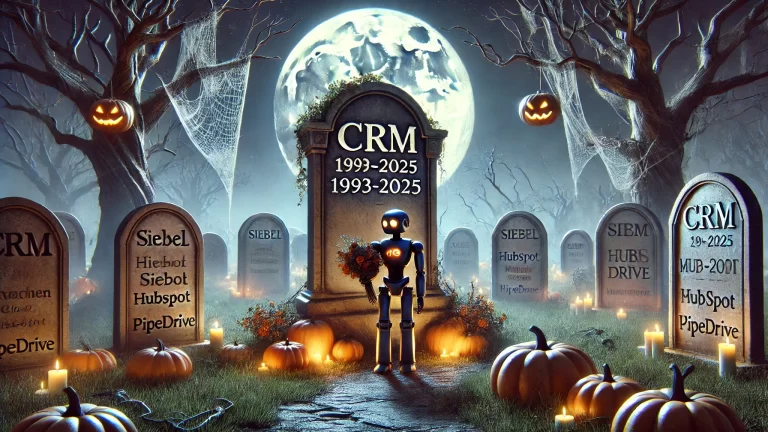
  • CRM Dead? Sherlock Holmes- AI the Perp?

    CRM Dead? Sherlock Holmes- AI the Perp?

    Will AI be the Perpetrator of CRMs demise?

    On a weekly basis I get C-Suite execs calling me after AI events like Dreamforce and any of the myriad AI “you name it conferences” asking me if they can replace their salespeople with AI agents right now, or…use AI to replace their pesky CRMs…Or both! Yikes – the Kool-Aid is flowing in AI land!

    I ask them to tell me about the last AI conference they attended, review the event marketing puffery and often outlandish claims of what AI can do “just by buying our XYZ AI Tool and sales will Soar,” and let out an inaudible sigh.

    These conferences are designed to get attendees to drink the Alice in Wonderland vision of an utopian AI and just like every other tech hype cycle before it (yep AI isn’t the first “revolutionary technology”) there is a kernel of truth in what AI “maybe able to do.”  That being said. I see a lot of could do vs. can do/doing right now in the AI adoption cycle.    

    So, let’s get it out of the way. AI is unlikely to fully replace CRM systems in the next few years. But top enterprise grade AI enabled CRMs are already doing far more than traditional CRMs ever could. Most significantly. The most advanced AI enabled CRMS are already enhancing and transforming enterprise CRM capabilities. This will accelerate as cutting-edge AI technologists and tech savvy AI enabled salespeople work together to enhance what AI does well and keep what was working. (See Blended AI).

    With that in mind, let’s look at what the research and our own inhouse AI fortune tellers have forecasted for AI CRM Advancements:

    AI Evolution Timeline for CRM Systems

    2024-2025: Enhanced AI Features

    In the next 12 months, we’ll see more widespread adoption of AI-powered features within existing CRM platforms:

    – Advanced predictive analytics for sales forecasting and lead scoring

    – Natural language processing for improved chatbots and virtual assistants

    – AI Agents deployed

    – Automated data entry and cleansing

    -Conversational sentiment analysis post call – heading to real-time

    -Training recommendations based on AI evaluation of seller daily actions

    -Email comprehension, writing, reply and auto CRM addition (no data entry)

    2026-2028: AI-First CRM Platforms

    Within 5 years, we’ll likely see the emergence of AI-centric CRM systems:

    – Full voice activated conversational interfaces for querying and updating CRM data

    – AI-driven workflow automation and task prioritization

    – Hyper-personalized customer interactions at scale

    – AI driven B2B sales without human intervention or approval

    – AI driven procurement – AI Agents talking to Agents lowest price, shipping

    -AI driven manufacturing risk mitigation in procurement, sales and maintenance  

    -Human involvement / need for “human” salespeople evolving with blended AI at its core

    2029 and beyond: Potential AI Dominance

    In 5+ years, AI could become the primary driver of CRM functionality / replace many CRM based features:

    – Autonomous decision-making for many customer-facing processes

    – Predictive modeling of complex market trends and customer behaviors

    – Seamless integration with other business systems for holistic insights

    -Significantly faster response times with AI driven reporting and customer centric personalization enhancing customer service while reducing costs

    AI Features Poised to Transform CRM

    Intelligent Automation

    AI will take over routine tasks, freeing up human workers for higher-value activities. This includes automated data entry, scheduling, and follow-ups [1].

    Hyper-Personalization

    AI-powered CRMs will analyze vast amounts of data to deliver truly personalized experiences for each customer, far beyond current segmentation capabilities [1].

    Predictive Analytics

    Advanced AI models will provide increasingly accurate forecasts of customer behavior, sales trends, and market shifts [2].

    Natural Language Interfaces

    Conversational AI will allow users to interact with CRM systems using natural language, dramatically improving ease of use and adoption rates [3].

    Autonomous Decision-Making

    As AI systems become more sophisticated, they’ll be able to make certain decisions without human intervention, such as adjusting pricing or inventory levels based on real-time data [4].

    Benefits of AI-Enhanced CRM Available Now

    1. Improved efficiency, data capture & access, with blended AI productivity gains
    2. More accurate sales forecasting and lead scoring – enhancing C-Suite confidence
    3. Gold standard customer service experiences through personalization
    4. Better data quality and insights
    5. Reduced human error in data entry and analysis
    6. Significantly reduced data entry and time devoted to CRM maintenance activities
    7. Email writing, reply and auto CRM entry based on sales rep skill & role personalization
    8. Personalized training based on AI assessment of activities and results for all reps
    9. Hyper focused AI enhanced sales processes based directly on CRO sales goals, tracking requirements and 24/7 view of all sales activities with AI driven recommendations
    10. AI enhanced reporting on rep performance with training recommendations, improvement opportunities, or other rolls the AI “sees” they could be much better at than sales
    11. Cull ranking based on unbiased review of performance, potential, opportunities, training performance and client recorded sentiment analysis
    12. Enhanced AI driven cross sell and upsell opportunities    

    Why AI Won’t Completely Replace CRMs

    As noted in the features and benefits previously, AI has enhanced CRM capabilities and will undoubtedly transform enterprise CRM systems in amazing ways we haven’t envisioned yet. With that as a base AI is unlikely to fully replace them in the next five years. This is a mix of legacy CRM systems already deployed, reluctance to change (IT and C-Suite) and legacy enterprise integrations which can slow transitions.

    Companies facing difficult situations that know they must change or go bankrupt, profitable with innovative leadership teams or emerging companies building their AI infrastructure now or in the coming years will be far more likely to be fully AI integrated / replace CRMs.  

    Here are the things that AI can’t do by itself and will require Blended AI to accomplish

    1. Human Touch: Many aspects of customer relationships require human empathy, understanding and perceptual judgment that AI cannot replicate
    2. Complex Decision-Making: High-stakes decisions often require human oversight and contextual understanding. Think internal politics – who know who and how to get things done
    3. Data Privacy Concerns: Regulations and customer trust issues may limit the extent of AI’s autonomy in handling sensitive data
    4. Integration Challenges: Fully replacing existing CRM systems with AI would be a massive undertaking for most organizations (see current legacy system replacement timelines)
    5. Ethical Considerations: The use of AI in customer relationships raises ethical questions that will need to be carefully addressed (see EU AI ACT and recent California AI Act)

    10 Things AI Can Do That Traditional CRMs Cannot

    AI Capability

    Traditional CRM

    Real-Time Sentiment Analysis

    Static Customer Data

    Automated Data Enrichment

    Manual Data Entry

    Predictive Lead Scoring

    Rule-based scoring

    Natural language querying

    Complex Query Languages

    Autonomous Task Prioritization

    Manual Task Management

    Adaptive Sales Forecasting

    Personalize Content Generation

    Anomaly detection in customer behavior

    Cross-Channel Interaction Analysis

    Continuous self-optimization

    Fixed Forecasting Models

    Template Based content Generation

    Threshold based alerts

    Siloed Channel data

    Periodic Manual Updates

    If we stick with the facts vs. the AI CRM enhanced industry marketing puffery CRM is here for the long run (at least for the next 5 years (see legacy systems like Siebel CRM on premise still running). While AI already is and will dramatically enhance CRM capabilities in the coming years, it’s more likely to augment rather than replace CRM systems entirely.

    The future of CRM lies in blended ai. The seamless integration of AI technologies with human expertise to deliver superior customer experiences and business outcomes.

    Thanks for reading and please add your thoughts and comments to the future of AI & CRM!

    Research and Citations:

    [1] https://ddi-dev.com/blog/programming/ai-in-crm-benefits-and-use-cases-of-ai-powered-crm-system/

    [2] https://www.itransition.com/ai/crm

    [3] https://blog.hubspot.com/sales/crm-with-ai

    [4] https://callhippo.com/blog/telephony/how-ai-technologies-are-changing-the-face-of-crm

    [5] https://www.cio.com/article/465624/5-ways-ai-will-transform-crm.html

    [6] https://technologyadvice.com/blog/information-technology/ai-crm/

    [7] https://foundationinc.co/lab/the-rise-of-ai-in-crm/

    [8] https://www.blobr.io/post/ai-crm-industry

    Social Media Hashtags:

    #CRM #AIadoption #AIenabledCRM #AICRM #AI2025 #IndustryInnovation #AIRobotics #TechTransformation #Manufacturing #SAP #AIadoption #AITools #Siebel 


  • Sync Siebel to Anything, Anywhere, Here’s How

    Sync Siebel to Anything, Anywhere, Here’s How

    Moving from on-premises CRM solutions to cloud-based systems can be a challenging but necessary transition in today’s continuously evolving, AI saturated, IT landscape.

    As cloud adoption accelerates, many businesses with long-standing on-premises CRM systems are recognizing the need to modernize their approach. Sentia Smart Mesh offers a powerful solution for organizations looking to bridge the gap between legacy systems and cloud-based CRM that have the flexibility to connect and communicate.

    On-premises and Cloud CRM

    While Oracle Siebel CRM has been a robust on-premise solution for many companies since its inception way back in 1993, it lacks some of the key features that modern cloud-based CRMs provide. Siebel can be complex to use and maintain, requiring specialized IT staff. It also runs in batches, limiting real-time data access and updates.

    The Sentia Smart Mesh Advantage

    Sentia Smart Mesh is designed to address these limitations and empower organizations with a flexible, cloud-native approach to CRM. Key benefits include:

    • Real-time data access across multiple platforms (including Siebel on premise and cloud)
    • Seamless integration with other cloud applications and services
    • Reduced IT maintenance and infrastructure costs
    • Scalability to grow with your business needs
    • Enterprise grade security

    Creating Connectivity

    One of the biggest challenges in moving to the cloud is migrating existing data and integrating with legacy systems. Sentia Smart Mesh excels at creating connectivity between on-premises and cloud applications. Unlike custom-built integrations that can become tangled and difficult to maintain, Sentia Smart Mesh offers a streamlined approach:

    • Simplified data integration from Siebel and other on-premises CRMs
    • Pre-built connectors for popular enterprise applications
    • A flexible integration platform that adapts as your IT ecosystem evolves
    • Reduced complexity and easier modifications to integrations

    Sentia Smart Mesh Migration Solutions

    Sentia offers a number of integration solutions to aid businesses with their move from Siebel on-premises to Salesforce cloud solutions and or Sentia.

    In addition, Sentia supports organizations during the initial phase of migration where Siebel and Salesforce CRM co-exist to provide real-time integration to the end of the migration.

    • Sentia Smart Mesh is a cloud integration platform as a service (iPaaS) that offers safe and secure connectivity between on-premise / legacy software and SaaS applications. Businesses can use Sentia Smart Mesh between Siebel CRM and Salesforce (or any other platform such as HubSpot, Microsoft, SAP, Sentia AI, Zoho ) to transfer information seamlessly. In addition, Sentia Smart Mesh offers numerous  additional connectors, allowing businesses to share data across applications, services, and systems with only a few clicks. Bottom line. Corporations can maintain legacy data within their older Siebel CRM / on-premises solution, with the ability to integrate it with other applications and services providing access to all parts of the organization.

    Sentia Smart Mesh provides a comprehensive suite of tools and services to facilitate a smooth transition from Siebel CRM.

    By leveraging Sentia Smart Mesh, organizations can modernize their CRM infrastructure while preserving their valuable historical data and processes. This approach enables businesses to take advantage of cloud benefits without sacrificing the investments made in their existing systems. It also allows businesses to keep Siebel for the teams that want to use and it upgrade the rest to Sentia’s AI enabled CRM.

    “A perfect integration for organizations concerned about migrating from their legacy systems to a tangible and safe future state.” – M. Small, AI Strategy and Salesforce SME

  • The AI Revolution in Customer Experience: How Chief Customer Officers Are Leveraging Technology in 2024 and Beyond

    The AI Revolution in Customer Experience: How Chief Customer Officers Are Leveraging Technology in 2024 and Beyond

    As the business landscape evolves, the role of Chief Customer Officer (CCO) has become increasingly crucial. These executives are responsible for overseeing and optimizing the entire customer experience, from initial contact to post-purchase support. In today’s digital age, CCOs are turning to artificial intelligence (AI) to revolutionize how they understand, engage with, and satisfy customers.

    The Role of a Chief Customer Officer

    A Chief Customer Officer is the executive responsible for creating a customer-centric culture within an organization. Their primary duties include:

    1. Developing and implementing customer experience strategies
    2. Analyzing customer data to drive insights
    3. Overseeing customer service operations
    4. Collaborating with other departments to ensure customer-centricity
    5. Measuring and reporting on customer satisfaction metrics

    10 Ways CCOs Are Using AI in 2024

    1. Predictive Analytics for Customer Behavior
      AI-powered predictive analytics to anticipate customer needs and behaviors, allowing for proactive engagement and personalized experiences.
    2. AI-Driven Personalization
      Machine learning algorithms, are creating hyper-personalized customer journeys across all touchpoints. Job title, function, purchasing power, experience can all be used to personalize each interaction.
    3. Chatbots and Virtual Assistants
      AI-powered chatbots are being deployed to provide 24/7 customer support, handling routine inquiries and freeing up human agents for more complex issues. This is one of the areas most AI enthusiasts see as low hanging fruit. The trick is making the customer experience better than with a well-trained human. That is still a goal.
    4. Sentiment Analysis
      Sales, Marketing and CCOs are all using AI to analyze customer feedback across various channels, gaining real-time insights into customer sentiment and satisfaction levels. Outliers – really good / bad customer interactions will be immediately flagged by AI and sent to management for review.
    5. Voice of Customer (VoC) Programs
      AI is enhancing VoC programs by processing and analyzing vast amounts of unstructured customer feedback data. The key is creating the right prompts to gain the best actionable insights. AI is perfect for this.
    6. Customer Churn Prediction
      Machine learning models are being employed to identify customers at risk of churning, allowing for targeted retention efforts. This has been done for a long time already. See Sentia.
    7. Automated Quality Assurance
      AI is being used to monitor and analyze customer interactions, ensuring consistent service quality across all channels. (See #4)
    8. Intelligent Routing
      CCOs are implementing AI-powered systems to route customer inquiries to the most appropriate agent or department based on the nature of the request. The most important calls (highest paying customers) usually have the top tier of service. Regardless getting customers to the right answers (AI or People) is critical to customer happiness and retention.
    9. Predictive Maintenance
      For product-based companies, AI is being used to predict when customers might need maintenance or support, enabling proactive outreach. They are also using IoT on machines to max output / maintenance downtime. Manufacturing is generally a bit behind in the AI race but will rapidly evolve.
    10. Customer Lifetime Value Optimization
      AI algorithms are helping CCOs identify high-value customers and optimize strategies to increase their lifetime value. The best customer is your current one. The cost of getting new clients is almost always higher than upselling, cross selling and keeping current customers happy!

    How AI Enhances Customer Satisfaction

    That sounds swell. Tell me how can AI play a crucial role in elevating customer satisfaction levels across various touchpoints? *(See research links at end of article and additional reading)

    Personalized Experiences at Scale

    AI enables businesses to deliver personalized experiences to each customer, regardless of the size of their customer base. By analyzing vast amounts of data, AI can tailor interactions, recommendations, and offers to individual preferences and behaviors. This level of personalization makes customers feel valued and understood, leading to higher satisfaction rates.

    Faster Resolution Times

    AI-powered chatbots and virtual assistants can provide instant responses to customer queries, significantly reducing wait times. For more complex issues, AI can quickly route customers to the most appropriate human agent, ensuring faster resolution. This efficiency in handling customer inquiries leads to improved satisfaction and reduced frustration.

    Proactive Customer Service

    By leveraging predictive analytics, AI can anticipate customer needs and potential issues before they arise. This allows businesses to reach out proactively with solutions or support, demonstrating attentiveness and care. Proactive service not only solves problems more efficiently but also shows customers that the company values their experience.

    24/7 Availability – When does AI Sleep?

    AI-driven customer service solutions offer round-the-clock support, catering to customers across different time zones and schedules. This constant availability ensures that customers can get help whenever they need it, enhancing their overall experience with the brand. It also doesn’t need to eat, sleep, have a bad day or take a break.  

    Consistent Quality of Service

    AI systems can maintain a consistent level of service quality across all interactions. Unlike human agents who may have varying levels of knowledge or experience, AI can provide standardized, accurate information every time. This consistency builds trust and reliability in the customer’s mind. However, the best approaches are almost always hybrid. Using Blended AI or the integration of humans and AI for optimal outcomes.

    Emotional Intelligence in Interactions

    Advanced AI systems are now capable of detecting customer sentiment and adjusting their responses accordingly. This emotional intelligence allows for more empathetic and appropriate interactions, which can significantly improve customer satisfaction, especially in challenging situations. (See #4 how sentiment analysis can be used)

    Seamless Omnichannel Experience

    AI facilitates a seamless experience across multiple channels by integrating data from various touchpoints. Customers can switch between channels (e.g., from chat to phone) without losing context, creating a more cohesive and satisfying journey.

    By implementing these AI-driven strategies, businesses can significantly enhance customer satisfaction, leading to increased loyalty, positive word-of-mouth, and ultimately, business growth. As AI technology continues to evolve, its potential to improve customer satisfaction will only grow, making it an essential tool for businesses focused on delivering exceptional customer experiences.

    Bonus: AI Innovations on the Horizon for 2025

    1. Emotion AI: Advanced systems that can detect and respond to customer emotions in real-time during interactions.
    2. Augmented Reality (AR) Customer Support: AI-powered AR solutions for visual, interactive customer assistance.
    3. Predictive Personalization: AI systems that can anticipate and fulfill customer needs before they’re expressed.
    4. Voice-First Customer Experiences: AI-driven voice interfaces becoming the primary mode of customer interaction for many services.
    5. Quantum Computing in CX: Leveraging quantum computing for unprecedented data processing and predictive capabilities in customer experience management.

    As we move towards 2025, CCOs who embrace these AI innovations will be well-positioned to deliver exceptional customer experiences and drive business growth.

    Tags: #CustomerExperience #AI #ChiefCustomerOfficer #CX #ArtificialIntelligence #CustomerService #BusinessInnovation #CCO #bestpractices #GenAI #ChatGPT

    Research Links:

    1. 13 Ways AI Will Improve the Customer Experience in 2024 – Zendesk
    2. 10 Excellent Ways AI Will Improve Customer Experience in 2024 – Survey Sparrow
    3. How AI Will Transform Customer Satisfaction in the Future – Delegate
    4. How AI is Transforming Customer Experience for Businesses – Full Story
    5. AI in Customer Service: All You Need to Know – Zendesk