Tag: Open AI

  • Enterprise Financial Orchestration: Five Critical Fractional CFO Challenges solved by Modern Artificial Intelligence

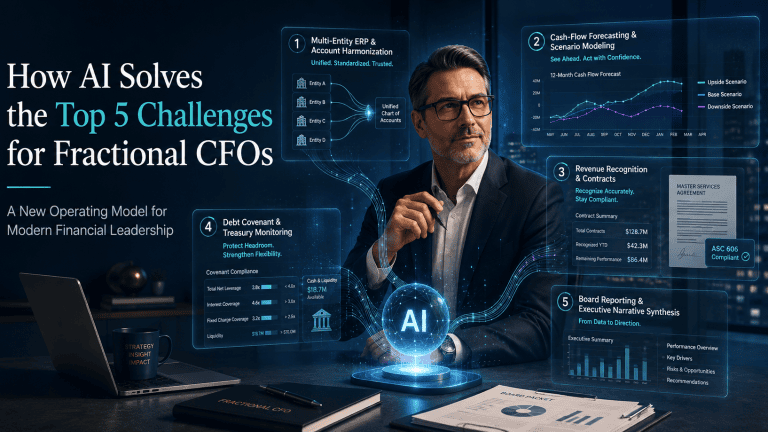
    Enterprise Financial Orchestration: Five Critical Fractional CFO Challenges solved by Modern Artificial Intelligence

    The rapid expansion of the fractional executive model has transformed corporate finance leadership, enabling high-growth startups, private equity portfolio companies, and middle-market enterprises to leverage tier-one financial stewardship without the fixed overhead of a full-time Chief Financial Officer. However, the operational reality of the Fractional CFO (fCFO) is defined by extreme structural complexity. Managing multiple client portfolios requires navigating disparate software ecosystems, fragmented data structures, unpredictable cash flows, and strict regulatory standards under severe time constraints.

    While early-generation automation focused on broad administrative workflows—such as basic CRM updates, email scheduling, and high-level sales pipeline tracking—these tools fail to address the core quantitative and analytical burdens of strategic corporate finance. Fractional CFOs do not merely manage relationship context; they hold fiduciary responsibility for financial integrity, capital allocation, risk mitigation, and strategic growth narrative.

    Artificial intelligence architectures have evolved beyond generic task assistants into specialized, autonomous operating layers capable of tackling the deep operational bottlenecks unique to corporate finance. This report examines the top five technical and operational challenges faced by Fractional CFOs that advanced AI systems solve, focusing on specialized financial execution domains distinct from general sales and revenue operations literature.

    Challenge 1: Multi-Entity Chart of Accounts Harmonization Across Disparate ERP Systems

    Fractional CFOs frequently oversee portfolio companies operating on completely heterogeneous enterprise resource planning (ERP) platforms—ranging from cloud-native software like QuickBooks Online and Xero to enterprise platforms such as NetSuite, Sage Intacct, and SAP. Each entity maintains its own custom Chart of Accounts (COA) with unique account numbering, naming conventions, and transaction categorizations.

    When delivering consolidated financial views for holding companies, private equity sponsors, or parent-subsidiary structures, the CFO must manually extract raw trial balances and perform cell-by-cell mapping into a standardized master taxonomy. This manual process introduces substantial human error, delays month-end closing cycles, and makes real-time financial comparisons across client business units nearly impossible.

    Modern artificial intelligence solves this systemic friction through semantic schema-mapping engines and natural language processing models fine-tuned on US GAAP and IFRS accounting frameworks. The pipeline begins when raw transaction data is continuously ingested via APIs from disparate client ERPs. Rather than relying on rigid, rule-based database queries that break whenever a client adds a new GL account, the AI engine evaluates the semantic intent, historical transaction behavior, and underlying metadata of atomic journal entries.

    The AI system autonomously categorizes incoming transaction lines into the master reporting taxonomy, reconciles intercompany eliminations, and flags mapping anomalies for executive approval. This transforms a manual mapping process into a dynamic, real-time consolidation architecture.

    Financial Operation DimensionLegacy Manual ParadigmAI-Native Semantic Engine Paradigm
    Data IngestionBatch CSV exports from individual client ERPsContinuous API telemetry ingestion across all platforms
    COA Standardized MappingManual spreadsheet VLOOKUPs and account re-classificationSemantic neural matching against standardized GAAP/IFRS taxonomies
    Intercompany ReconciliationsPeriodic end-of-month manual elimination entriesAutomated real-time matching of intercompany ledger balances
    Anomalous Entry DetectionRetrospective spot-checking during month-end auditsReal-time transaction evaluation with automated outlier flagging
    Consolidation Velocity10 to 15 business days post-month-endNear-real-time continuous financial reporting

    Challenge 2: Stochastic Cash Flow Forecasting and Multi-Scenario Capital Modeling

    Venture-backed and middle-market companies operate in high-volatility environments where liquidity management is the primary determinant of corporate survival. Fractional CFOs are routinely task-oriented around evaluating burn rate, projecting cash runway, and modeling dynamic capital allocation scenarios, such as aggressive hiring sprees, international expansion, product line pivots, or downside economic recessions.

    Traditional financial modeling relies on deterministic, spreadsheet-based driver models. These models are inherently rigid; a single formula error can cascade across tabs, and updating assumptions across five portfolio companies requires dozens of hours of manual recalibration. Furthermore, deterministic models fail to capture stochastic distribution—the probabilistic reality of how revenue collection delays, variable vendor costs, and macroeconomic shifts compound over time.

    Strategic corporate finance requires evaluating dynamic metrics, such as the Burn Multiple, defined as:

    To accurately evaluate capital efficiency under uncertain conditions, the probability-weighted runway  at time  must account for stochastic variance in cash receipts  and cash disbursements :

    Generative financial modeling engines solve this limitation by combining deterministic financial logic with Monte Carlo simulation capabilities. Instead of building static spreadsheet tabs, the fCFO defines core strategic parameters in natural language or baseline financial structures.

    The AI agent autonomously extracts historical cash volatility metrics, models thousands of probabilistic revenue and expense trajectories, and presents the CFO with distribution curves representing best-case, expected, and downside runway scenarios. When market conditions change, the AI agent updates the underlying assumptions across all portfolio financial models simultaneously, providing instantaneous scenario sensitivity analysis without manual cell manipulation.

    Challenge 3: Automated ASC 606 and IFRS 15 Revenue Recognition Decomposition

    For fractional CFOs advising high-growth Software-as-a-Service (SaaS), hybrid hardware-tech, or enterprise services companies, revenue recognition represents one of the most technically complex and risk-laden responsibilities. Under ASC 606 and IFRS 15, revenue must be recognized as performance obligations are satisfied, rather than when cash is received or contracts are signed.

    Enterprise contracts frequently contain non-standard terms, including:

    • Bundled software licenses and professional service hours
    • Variable usage-based pricing thresholds
    • Tiered discount structures and refund clauses
    • Custom milestone delivery sign-offs

    Unraveling these multi-element arrangements manually requires reading dozens of lengthy legal contracts, extracting specific performance obligations, assigning Standalone Selling Prices (SSP), and manually constructing amortization schedules in spreadsheets. Errors in revenue recognition distort financial statements, skew critical SaaS metrics like Annual Recurring Revenue (ARR) and Net Retention Rate (NRR), and create severe valuation write-downs during M&A due diligence or institutional fundraising rounds.

    Advanced multimodal document processing agents eliminate this accounting bottleneck by operating a multi-stage deconstruction pipeline. Executed customer contracts, master service agreements (MSAs), and statements of work (SOWs) in PDF format are ingested by optical character recognition and clause extraction modules. The AI engine parses the legal text to identify distinct performance obligations, calculate relative Standalone Selling Price (SSP) allocations, and flag variable consideration risks.

    The system then auto-generates the corresponding revenue amortization schedules and posts the required debits and credits directly to Deferred Revenue and Recognized Revenue accounts within the ERP, maintaining an immutable, audit-ready compliance trail.

    Challenge 4: Continuous Debt Covenant Monitoring and Treasury Capital Optimization

    As borrowing costs remain elevated, growth-stage enterprises increasingly rely on venture debt, asset-backed credit facilities, and commercial loans to fund operations. These credit facilities are bound by strict financial covenants—such as minimum liquidity balances, maximum leverage ratios, minimum trailing-three-month (TTM) EBITDA thresholds, and strict Fixed Charge Coverage Ratios (FCCR).

    The Fixed Charge Coverage Ratio is calculated as:

    For a Fractional CFO managing 5 to 10 companies, continuous monitoring of covenant health across all credit facilities is an operational challenge. Because financial statements are traditionally updated on a monthly or quarterly lag, a company can inadvertently breach a debt covenant mid-month due to unexpected operational expenditures or delayed receivables, triggering default rates, credit line freezes, or lender warrants.

    Continuous financial monitoring agents solve this visibility gap by establishing persistent API connections between banking institutions, credit card platforms, and ERP backends. Operating as autonomous guardians, these agents continuously calculate real-time covenant ratios and project financial trajectory against lender thresholds weeks into the future.

    If cash drawdowns or revenue deceleration indicate a prospective covenant breach 30 or 60 days out, the AI system triggers proactive executive alerts. It presents the CFO with prescriptive capital reallocation strategies—such as drawing down a secondary credit facility, shifting short-term vendor payments, or adjusting discretionary marketing burn—preventing default conditions long before traditional month-end reports would reveal the risk.

    Challenge 5: Automated Board Narrative Synthesis and Executive Reporting

    Financial data in isolation is ineffective for strategic decision-making. Boards of directors, investors, and founders rely on the Chief Financial Officer to translate complex financial statements, budget-to-actual variances, and operational metrics into actionable strategic insights.

    A significant portion of a Fractional CFO’s billable capacity is consumed by the administrative friction of executive presentation prep:

    • Exporting financial statements into design tools or slide software
    • Calculating period-over-period variance percentages across business units
    • Drafting narrative commentary explaining why gross margins compressed or CAC payback expanded
    • Structuring strategic recommendations for executive leadership

    This narrative synthesis bottleneck creates a structural ceiling on the number of clients a fractional CFO can serve without compromising output quality.

    Financial narrative orchestration engines resolve this friction by establishing an automated bridge between quantitative ledger telemetry and qualitative strategic reporting. The platform continuously ingests general ledger and operational metrics from ERP, payroll, and CRM backends. A quantitative variance engine performs automated bridge calculations, including price-volume-mix analysis and unit economics decomposition.

    The AI narrative engine then translates these variance outputs into concise executive commentary, populating investor presentations with formatted charts, critical risk callouts, and strategic recommendations. This reduces presentation preparation time from days to minutes, allowing the Fractional CFO to focus entirely on high-level advisory and strategic execution.

    Strategic Synthesis: Comparing Fractional CFO Operating Models

    The integration of artificial intelligence into corporate finance transforms the fractional CFO practice from a labor-constrained advisory service into a technology-amplified strategic platform. By moving beyond point-solution automations and adopting domain-specific AI orchestration, fractional executives can scale their client capacity while delivering higher-precision financial governance.

    Operational DomainTraditional Fractional CFO PracticeAI-Orchestrated Fractional CFO Practice
    Multi-Entity ConsolidationPeriodic manual spreadsheet exports; fragile cell-mapping rulesReal-time semantic schema matching and continuous cross-ERP consolidation
    Financial ModelingStatic, deterministic Excel models prone to broken formulasDynamic Monte Carlo scenario modeling with automated parameter updates
    Revenue RecognitionManual legal contract review and spreadsheet amortization schedulesAutonomous contract parsing, ASC 606 obligation extraction, and auto-GL posting
    Covenant ComplianceRetrospective monthly checking; high risk of mid-month defaultPersistent real-time telemetry monitoring with predictive breach forecasting
    Executive ReportingHours of manual chart creation and narrative drafting per clientAutomated variance decomposition and investor-ready narrative generation
    Leverage & Scale LimitHard capacity ceiling at 3–5 portfolio clients due to manual overheadScalable portfolio management (8–12+ clients) with enhanced strategic depth

    Nuanced Operational Risks and Governance Imperatives

    While artificial intelligence offers high operational leverage for financial professionals, deploying autonomous systems within corporate finance introduces specific compliance, legal, and fiduciary considerations that require strict operational governance.

    Hallucination and Financial Misstatement Risk

    Large language models operating strictly as generative probabilistic engines can output plausibly formatted but mathematically incorrect financial data. In corporate accounting, a misplaced decimal or miscalculated discount rate distorts GAAP compliance. Financial AI deployments must utilize deterministic calculation layers—where the AI performs entity extraction and task planning, but delegates mathematical computation to verified financial execution engines.

    Regulatory and Audit Lineage

    Regulatory frameworks, such as the EU AI Act and US SEC financial reporting mandates, emphasize auditability and data provenance. Financial models and automated GL entries generated by AI must maintain complete lineage tracking. Every automated entry posted to a general ledger or revenue schedule must link directly back to the source document—such as a specific clause in an executed PDF contract or a specific bank clearance ID—to ensure full external auditability.

    Human-in-the-Loop Governance Controls

    The architectural flow of financial AI must be gated by human verification before impacting official systems of record. Raw transaction inputs and contract documents undergo automated processing, validation, and preparation by AI agents. However, before outputs are committed to the general ledger or disclosed to external board members, they pass through a deterministic governance checkpoint requiring human-in-the-loop review.

    The Fractional CFO evaluates proposed journal entries, revenue schedules, and strategic narratives, serving as the ultimate fiduciary authority. This architecture ensures that autonomous speed and scale are strictly aligned with human judgment, legal accountability, and regulatory compliance.

    Conclusions

    The evolution of enterprise AI represents a fundamental shift in how fractional corporate finance is conducted. By directly addressing the high-complexity domains of multi-entity schema harmonization, stochastic capital modeling, contract-level revenue recognition, continuous debt covenant monitoring, and board narrative synthesis, financial executives can eliminate the structural manual bottlenecks that previously capped their professional capacity.

    Implementing these architectures transforms the Fractional CFO from a reactive manager of retrospective spreadsheet data into a proactive strategic growth partner equipped with real-time financial intelligence. Organizations that adopt these AI-native financial execution frameworks gain superior capital clarity, accelerated closing cycles, and robust risk governance in an increasingly dynamic market environment.

  • The Consent Reckoning: AI Data Regulatory Minefields You Need to Know About

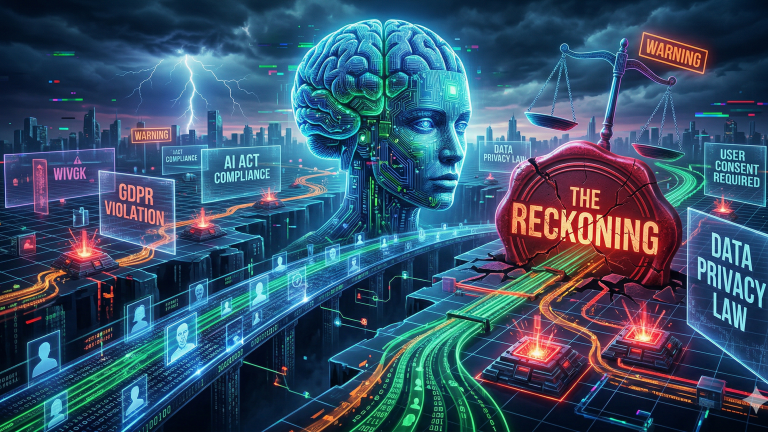
    The Consent Reckoning: AI Data Regulatory Minefields You Need to Know About

    Executive Summary

    The “Consent Reckoning” of 2026 represents a critical inflection point for the global Artificial Intelligence industry. As organizations transition from pilot programs to production at scale, they must navigate a landscape where legacy data practices are no longer legally defensible.

    • Algorithmic Disgorgement: The Federal Trade Commission (FTC) is increasingly mandating “model deletion” for AI assets built on non-consensual data.
    • Regulatory Maturity: The EU AI Act becomes fully applicable in August 2026, imposing strict conformity assessments for high-risk RevOps systems.
    • Financial Scrutiny: Forrester predicts that enterprises will defer 25% of planned AI spend as CFO oversight demands clear, non-speculative ROI.
    • Architecture Shift: The rise of Privacy-First CRM and Data Lineage tools is essential to avoid the “legally toxic” classification of enterprise datasets.
    • Agentic Evolution: Agentic AI is replacing static automation, requiring autonomous systems that are both self-correcting and compliant.
    • Security Risks: Gartner forecasts that 40% of AI-related data breaches by 2027 will stem from cross-border Generative AI misuse.

    The Rise of Legally Toxic AI

    We have entered a “wild west” era of legislation where the biggest threat to any CRM strategy is not the technology—it is the legal fallout. For years, businesses have fed decades of customer data into Large Language Models (LLMs) without explicit consent for “AI processing.” This oversight has created a reservoir of “legally toxic” models that are now considered liabilities by regulatory bodies.

    Most organizations assumed that broad “service improvement” clauses in legacy privacy policies covered the development of Neural Networks. However, 2026 regulators have clarified that training machine learning models is a distinct, high-risk activity requiring specific disclosure. Companies are discovering that their most valuable intellectual property may be one lawsuit away from a total deletion order.

    The focus of the C-suite has shifted from data volume to data purity. Leaders must recognize that a model’s long-term value is tethered to its Data Lineage and the ethical provenance of its training sets. Organizations that continue to ignore these compliance boundaries are operating on borrowed time.

    Algorithmic Disgorgement: The Nuclear Option

    The most significant shift in enforcement is the rise of Algorithmic Disgorgement. This remedy requires companies to delete not only the illegally obtained data but also any weights and parameters derived from that data. The FTC has pioneered this approach as a way to strip firms of the competitive advantage gained through deceptive harvesting.

    A landmark March 2026 settlement involving Match Group and OkCupid highlights the retroactive risk to legacy datasets. The FTC alleged that OkCupid shared nearly 3 million user photos and location tags with an outside firm, Clarifai, to train facial recognition software. Because this data transfer occurred without informing consumers, the resulting models were declared non-compliant.

    Retraining a state-of-the-art model to satisfy a disgorgement order is often financially ruinous. While researchers are exploring Machine Unlearning to remove specific data influences, these techniques often cause Concept Drift, making the model’s performance unpredictable. This makes proactive compliance the only sustainable strategy for RevOps leaders.

    The 2026 Regulatory Landscape

    The EU AI Act is now the global benchmark for AI governance, having entered full applicability in August 2026. It classifies AI systems based on their potential for harm, with “high-risk” applications facing mandatory documentation and human oversight. This includes systems used for recruitment, lead scoring, and automated financial decisions.

    In the United States, a complex patchwork of state laws like the CCPA and CPRA continues to evolve. California’s SB 351, effective January 1, 2026, has further fortified the “Corporate Practice of Medicine” doctrine. This law prohibits management platforms from using AI to exercise undue control over clinical decisions or diagnostic protocols.

    Organizations must also account for the stand taken by global knowledge commons. Wikipedia has officially banned the use of LLMs for generating or rewriting article content to protect the neutrality of the human-led ecosystem. This move signals a broader trend where “scraped” data is becoming a significant legal and ethical liability.

    The Market Correction and CFO Mandate

    By early 2026, the era of experimental “AI Hype” has officially ended. Forrester reports that enterprises are deferring 25% of their planned AI spend into 2027 as they recalibrate for ROI. CEOs are now leaning on their CFOs to approve only those projects with measurable financial growth or efficiency gains.

    Paradigm2024 Innovation Era2026 Financial Rigor
    Approval BodyCTO / Innovation LabCFO / Chief Privacy Officer
    Primary MetricToken Speed / AccuracyROI / Net Revenue Retention
    Risk Tolerance“Move Fast, Break Things”“Sovereign & Compliant”

    This rigor is driving the adoption of “Neoclouds”—specialized cloud providers that focus on high-performance GPUs and sovereign AI. These platforms allow organizations to maintain strict control over where their data is processed and stored.

    Agentic AI: Autonomous RevOps Workflows

    The focus of 2026 has shifted from conversational chatbots to Agentic AI. Unlike static automation, an Agentic AI system can reason about a goal, plan a sequence of actions, and execute them across multiple systems. According to Gartner, 40% of enterprise applications will embed task-specific agents by the end of 2026.

    These agents are particularly transformative for Revenue Operations. An agentic system doesn’t just flag a stalled deal; it analyzes sentiment, identifies missing stakeholders, and triggers a personalized re-engagement sequence. This autonomy allows RevOps teams to focus on relationship strategy while the AI handles high-velocity execution.

    However, the autonomy of Agentic AI requires new governance frameworks. Organizations are implementing TRiSM (Trust, Risk, and Security Management) to ensure that agents operate within ethical guardrails. By 2026, enterprises using TRiSM controls are predicted to consume 50% less illegitimate or inaccurate information.

    Privacy-First CRM and Data Lineage

    To survive the “Consent Reckoning,” the transition to a Privacy-First CRM is mandatory. This architecture prioritizes transparent collection and auditable Data Lineage. It moves away from the “data lake” model toward a system where every customer record is tagged with its specific AI processing permissions.

    Harvard Business Review notes that while 80% of leaders believe high-quality data is essential for AI, only 10% feel their organizations are “completely ready.” A compliant 2026 architecture must include:

    • Granular Consent Tagging: Distinguishing between data used for inference and data used for model training.
    • Differential Privacy: Adding mathematical noise to datasets to protect individual identities during analysis.
    • Sovereign Infrastructure: Ensuring that data for specific regions stays within those geographic and legal boundaries.

    Strategy: Building Trustworthy AI

    The goal for the next 24 months is the deployment of “Trustworthy AI” that serves as a sentinel for privacy rather than an intruder. Organizations must integrate privacy, cybersecurity, and AI governance into a single, unified enterprise risk structure. Siloing these disciplines is now considered a high-risk operational failure.

    Senior leadership should prioritize the following:

    1. Audit Legacy Models: Identify and mitigate risks in any model trained on data collected before 2024.
    2. Update Vendor MSAs: Revise contracts to explicitly address AI training rights and the allocation of liability for model disgorgement.
    3. Pivot to ROI-Centric AI: Stop funding speculative pilots; focus on agentic workflows that drive Net Revenue Retention (NRR).
    4. Implement Explainability: Use tools like LIME or SHAP to ensure AI decisions are transparent and auditable.

    As the era of volatility continues, the organizations that recalibrate their investments under tight legal scrutiny will be the only ones to thrive.

    10-Part FAQ

    1. What is “Algorithmic Disgorgement” and why is it dangerous?

    Algorithmic disgorgement is a legal remedy where a regulator, like the FTC, forces a company to delete an AI model built on improperly obtained data. It is considered the “nuclear option” because it can destroy years of R&D and render your core product or operational system useless.

    2. How does the EU AI Act impact U.S. SaaS companies in 2026?

    If a U.S. company provides AI services to European citizens, it must comply with the EU AI Act. This involves categorizing the AI’s risk level and ensuring that “high-risk” systems—like those used in recruitment or financial scoring—meet strict transparency and security standards.

    3. What makes an AI model “legally toxic”?

    An AI model is “legally toxic” if it was trained using personal data without explicit, informed consent for that specific use. Legacy “service improvement” clauses are generally insufficient in 2026. If the training data is tainted, the model becomes a regulatory liability subject to deletion.

    4. Why is Forrester predicting a 25% deferral in AI spending?

    Enterprises are slowing down because they cannot link speculative AI pilots to actual financial growth. CFOs are now requiring strict ROI proof before approving new production deployments, leading to a market correction where “hype-based” spending is replaced by rigorous financial accountability.

    5. What is the difference between standard automation and Agentic AI?

    Standard automation follows rigid “if/then” rules. Agentic AI is autonomous and goal-oriented; it can reason about a task, plan its own steps, and adapt its behavior based on the outcomes it sees. It functions more like a digital employee than a script.

    6. How can a Privacy-First CRM prevent model deletion orders?

    A Privacy-First CRM provides clear “data lineage,” allowing you to prove exactly when and how consent was obtained for every piece of data in your model. This audit trail protects your AI assets from being declared “ill-gotten” during regulatory investigations or litigation.

    7. Is it still safe to use web-scraped data for AI training?

    Scraped data is increasingly risky. Platforms like Wikipedia have banned AI-generated content and prohibited LLMs from rewriting their articles to protect human scholarship. Using scraped data from platforms that have explicitly opted out can lead to “legally toxic” model designations.

    8. What are the penalties for violating the EU AI Act?

    Penalties for severe non-compliance can reach €35 million or up to 7% of a company’s annual global turnover, whichever is higher. Beyond fines, regulators can also ban the use of the AI system entirely within the European Union, leading to a total loss of market access.

    9. What is “Machine Unlearning” and can it replace retraining?

    Machine unlearning is a technical attempt to remove the influence of specific data from a trained model without a full retrain. However, it is still experimental and often leads to “Concept Drift,” where the model’s performance becomes unpredictable and potentially useless for business operations.

    10. How should a CMO respond to the “Consent Reckoning”?

    CMOs should immediately audit their data pipelines to identify any “toxic” legacy data. They must pivot to “clean,” first-party data strategies and work closely with legal and technical teams to ensure that all future AI initiatives are built on a foundation of explicit consent.

  • What the Hell are / is / an: AI Agent(s)?

    What the Hell are / is / an: AI Agent(s)?

    AI Agents the next Frontier in artificial intelligence or just more AI Hype?

    With Billions of venture capital dollars already sunk into it, the AI marketing buzz continues to build. The latest excitement centers around a term many cannot agree upon. AI agents are becoming increasingly prevalent or at least written and hyped more and more. Ask most people what an AI Agent is, and the first thing they think of is chatbot type things. But what exactly are AI agents, and how are they shaping our technological landscape or is it just a bunch of tech marketing hype?

    What are AI Agents?

    AI agents are autonomous systems or programs capable of performing tasks on behalf of users or other systems. They go beyond simple chatbots, incorporating advanced decision-making, problem-solving, and execution capabilities1. These agents utilize large language models (LLMs) as their core, enabling them to understand and respond to complex inputs while adapting to user expectations over time1.

    Definitions Across Industries

    While there’s no universally agreed-upon definition, several key players offer their interpretations:

    • IBM defines AI agents as systems that can autonomously perform tasks by designing workflows and utilizing available tools1.
    • OpenAI describes them as automated systems that can independently accomplish tasks for users2.
    • Microsoft distinguishes agents from AI assistants, positioning agents as more specialized and tailored to specific expertise2.
    • Salesforce definition: AI agents are a type of AI system that can understand and respond to customer inquiries without human intervention. They are created using an agent builder, like Agentforce, and rely on machine learning and natural language processing (NLP) to handle a wide range of tasks. These intelligent agents can include anything from answering simple questions to resolving complex issues — even multi-tasking. Most importantly, AI agents can continuously improve their own performance through self-learning. This is distinct from traditional AI, which requires human input for specific tasks.

    Companies Developing AI Agents

    Several tech giants are at the forefront of AI agent development:

    1. OpenAI: Developing the Operator agent2.
    2. Google: Working on Project Mariner2.
    3. Anthropic: Claude – a generative AI chatbot and family of large language models (LLMs).
    4. Perplexity: Created a shopping agent2.
    5. Amazon: Developing AI agents for e-commerce applications4.
    6. Salesforce: Aiming to become a leading provider of “digital labor” through various agentic services2. See Agentforce.

    5 Real-World AI Agent Use Cases

    1. E-Commerce: AI agents on platforms like Amazon provide personalized product recommendations, automatically place orders, and track shipping, contributing significantly to revenue generation4.
    2. Sales and Marketing: AI agents like Find AI build lead lists, send personalized communications, and qualify leads, often outperforming human counterparts in lead generation4.
    3. Customer Support: Advanced AI agents, such as those developed by Chatbase, can handle complex technical support issues, process refunds, and provide product recommendations, leading to substantial reductions in support tickets4.
    4. Autonomous Vehicles: Self-driving cars represent a complex application of AI agents, combining multiple agent types for navigation, decision-making, and real-time responses. Companies like Waymo are pioneering this technology in cities like San Francisco and across the United States4.
    5. Healthcare: AI agents assist in diagnosing medical conditions, analyzing medical images, and creating personalized treatment plans. For instance, Google’s AI agent has demonstrated superior accuracy in diagnosing skin cancer compared to human dermatologists4.

    As AI agents continue to evolve, they promise to revolutionize various sectors, enhancing efficiency and providing personalized experiences. However, challenges remain in standardizing definitions and managing user expectations. The coming years will likely see further advancements and refinements in this exciting field of artificial intelligence.124

    Citations:

    1. https://www.ibm.com/think/topics/ai-agents
    2. https://www.glean.com/blog/ai-agents-how-they-work
    3. https://deviniti.com/blog/enterprise-software/best-ai-agent-development-companies/
    4. https://www.chatbase.co/blog/ai-agent-examples
    5. https://anth.us/blog/null/
    6. https://zapier.com/blog/ai-agent/
    7. https://www.youtube.com/watch?v=ZZ2QUCePgYw
    8. https://cloud.google.com/discover/what-are-ai-agents
    9. https://www.forbes.com/councils/forbestechcouncil/2025/03/07/ai-agents-in-2025-transforming-business-redefining-leadership-and-accelerating-digital-transformation/
    10. https://www.teneo.ai/blog/5-companies-leading-the-way-in-ai-agent-technology
    11. https://a16z.com/ai-voice-agents-2025-update/
    12. https://www.salesforce.com/agentforce/what-are-ai-agents/
    13. https://botpress.com/blog/real-world-applications-of-ai-agents
    14. https://aws.amazon.com/what-is/ai-agents/
    15. https://openai.com/index/new-tools-for-building-agents/
    16. https://www.reddit.com/r/AI_Agents/comments/1hhlzkh/whats_your_use_case_for_ai_agents_what_problems/
    17. https://direct.mit.edu/isal/article/doi/10.1162/isal_a_00605/116885/Towards-a-Theory-of-Mind-for-Artificial
    18. https://hallmark.libguides.com/c.php?g=1312147&p=9645253
    19. https://www.reddit.com/r/OpenAI/comments/1hk4d8h/eli5_what_exactly_is_an_ai_agent_with_examples/
    20. https://botpress.com/blog/what-is-an-ai-agent
    21. https://devrev.ai/blog/ai-agents
    22. https://en.wikipedia.org/wiki/Intelligent_agent
    23. https://github.com/resources/articles/ai/what-are-ai-agents
    24. https://www.geekwire.com/2025/microsoft-unveils-ai-agents-for-sales-striking-back-at-salesforce/
    25. https://www.businessinsider.com/generative-ai-evolution-software-companies-develop-ai-agents-workforce-2025-3
    26. https://tech.co/news/microsoft-new-ai-sales-agents
    27. https://cloud.google.com/transform/101-real-world-generative-ai-use-cases-from-industry-leaders
    28. https://www.techradar.com/pro/openai-wants-to-help-your-business-build-its-next-generation-of-ai-agents
    29. https://iblnews.org/microsoft-announces-two-sales-ai-agents-in-competition-with-salesforce/
    30. https://www.teneo.ai/blog/what-are-ai-agents-6-powerful-examples-in-action
    31. https://martech.org/ai-agents-2025-predictions/
    32. https://www.salesforce.com/news/stories/future-of-ai-agents-2025/
    33. https://guides.lib.purdue.edu/c.php?g=1371380&p=10135074
    34. https://papers.ssrn.com/sol3/papers.cfm?abstract_id=4772956
    35. https://customgpt.ai/sources-citations-observability/
    36. https://www.moveworks.com/us/en/resources/blog/what-is-an-ai-agent
    37. https://open.mitchellhamline.edu/mhlr/vol46/iss5/2/
    38. https://www.reddit.com/r/n8n/comments/1gxkf9c/ai_agent_pinecone_source_citations/
  • AI in Big Pharma: How is it Being Applied in 2025?

    AI in Big Pharma: How is it Being Applied in 2025?

    Valued at $1.5 trillion, the pharmaceutical industry has long grappled with significant challenges. R&D development of a new drug costs $2 billion plus, takes over a decade, and faces a 90% failure rate in early stages. However, with AI adoption in life sciences growing at 29% annually, a unique opportunity emerges to address these inefficiencies and pain points in drug development12.

    Pain Points in Pharma

    Big Pharma executives and life sciences investors face uncertainty and risk due to four major issues:

    • Disconnected Data: Decision-making relies on vast volumes of structured and unstructured scientific data.
    • Knowledge Gaps: Significant gaps persist across scientific, clinical, regulatory, and commercial decision-making processes.
    • Inefficient Processes: Integrating and analyzing datasets is time-consuming and resource-intensive.
    • Lack of Standardization: Inconsistent evaluations hinder reproducibility in asset assessments.

    AI Applications in Drug Development – Recent Examples

    AI is transforming various stages of drug discovery, development, and commercialization:

    1. Target Identification and Validation: Atomwise and Pfizer’s partnership reduced initial drug discovery timeline from 4-6 years to approximately 18 months.
    2. Clinical Trial Optimization: Deep 6 AI’s implementation reduced patient recruitment time by 85% and increased trial enrollment rates.
    3. Manufacturing Process Optimization: GSK and Gatehouse Bio’s collaboration led to a 25% increase in production yield and $20 million annual cost savings at a single site.
    4. Post-Market Surveillance: FDA and Novartis’ AI-powered systems enabled earlier detection of safety signals and more proactive risk management.

    CRM & AI in Healthcare

    Customer Relationship Management (CRM) systems, enhanced by AI, are improving healthcare delivery and patient engagement:

    • Personalized Patient Care: AI-powered CRM systems analyze patient data to provide tailored treatment recommendations and follow-ups.
    • Predictive Analytics: These systems can forecast patient needs, potential health risks, and treatment outcomes.
    • Streamlined Administrative Tasks: AI automates appointment scheduling, billing, and record-keeping, allowing healthcare providers to focus more on patient care.
    • Enhanced Patient Engagement: AI-driven CRM tools facilitate better communication between patients and healthcare providers, improving adherence to treatment plans.

    The AI Solution

    AI addresses several critical issues in healthcare and pharma:

    1. Data Integration: AI can seamlessly integrate and analyze vast amounts of disparate data, providing comprehensive insights for decision-making.
    2. Accelerated Research: Machine learning algorithms can rapidly identify potential drug candidates and predict their efficacy, significantly reducing the time and cost of drug discovery6.
    3. Improved Clinical Trials: AI optimizes patient recruitment, monitors responses, and predicts potential side effects, making trials more efficient and reliable5.
    4. Personalized Medicine: By analyzing individual patient data, AI enables the selection of treatments tailored to each person, improving outcomes and reducing adverse reactions4.
    5. Operational Efficiency: AI automates routine tasks and provides insights into market trends and patient needs, streamlining pharmaceutical operations2.

    The Impact of AI on Drug Development

    The benefits of AI in pharmaceutical industry are clear:

    • 30-50% reduction in time-to-market for new drugs
    • Estimated $100-200 million cost savings per successful drug
    • Higher success rates in clinical trials due to better candidate selection
    • More efficient use of research resources
    • Improved safety monitoring and risk management
    • Faster response to emerging health threats through drug repurposing

    Looking Ahead

    2025 is the AI “Go Year” for the entire Pharmaceutical Industry.

    AI is expected to drive 30% of new drug discoveries, cutting costs and accelerating personalized treatments7. Challenges, including regulatory hurdles, data privacy concerns, and the need for specialized skills loom large! 3.

    The future of pharma lies in embracing these AI-driven innovations while navigating the complex regulatory landscape. As the industry evolves, collaboration between tech companies, pharmaceutical firms, and regulatory bodies will be crucial in realizing the full potential of AI in healthcare and drug development.

    What are your thoughts on AI’s role in transforming the pharmaceutical industry? How is AI changing your processes and workflows in pharma? Share your experiences and let’s continue this important conversation.

    Connect with me so you don’t miss any future articles!

    Please follow me on X (@Intmktentry) on Linkedin, YouTube or via our AI Community Site.

    Citations:

    1. https://www.zs.com/insights/pharmaceutical-trends-2025-outlook-ai-supplychain-and-beyond
    2. https://www.datacamp.com/blog/ai-in-pharmaceuticals
    3. https://www2.deloitte.com/us/en/insights/industry/health-care/life-sciences-and-health-care-industry-outlooks/2025-life-sciences-executive-outlook.html
    4. https://pmc.ncbi.nlm.nih.gov/articles/PMC10385763/
    5. https://www.clinicaltrialsarena.com/features/clinical-trials-challenges-expect-2025/
    6. https://www.mckinsey.com/industries/life-sciences/our-insights/generative-ai-in-the-pharmaceutical-industry-moving-from-hype-to-reality
    7. https://www.weforum.org/stories/2025/01/2025-can-be-a-pivotal-year-of-progress-for-pharma/
    8. https://www.scilife.io/blog/ai-pharma-innovation-challenges
  • Agentic AI: From Hype to Measurable Value in ’25

    Agentic AI: From Hype to Measurable Value in ’25

    Two short months into 2025, the marketing buzz around Agentic AI remains palpable, with a never-ending promise of transformative impact across every industry and job role.

    Yet to date, the reality of AI adoption reveals a far slower, more deliberate pace as enterprises grapple with implementation challenges. Businesses are now shifting focus from unrealistic pie in the sky expectations to measurable outcomes, emphasizing cost savings, ROI, and efficiency gains. To me that means AI as a technology is maturing and businesses are treating just like any new tool (which they should) and forcing a rigorous analysis of the tech before deploying it, training and change management.

    Speaking of AI, AI adoption and change management. I believe that we will see much more emphasis on AI training / change management to lock in any AI gains. Functional AI or the successful combining of AI and humans will be at the forefront of AI change management in 25.

    Measuring AI ROI Effectively

    To bridge the gap between AI hype and its real-world impact, businesses need to adopt structured approaches to measure ROI-just like any other part of their business. Here’s how:

    1. Clear Objectives Identified

    Set specific, measurable goals that align with your business strategy. For example:

    • Reduce customer churn by 15% using predictive analytics.
    • Increase operational efficiency by automating 30% of repetitive tasks.
    • Increase daily CRM use rates by 25%.
    • Reduce annual sales rep churn rate by 20% with AI enhanced training and retraining vs. firing.
    1. Identify Relevant AI Deployment KPIs

    Choose clear metrics that reflect both financial and non-financial benefits:

    • Financial Metrics: Cost savings, revenue growth, and productivity gains.
    • Non-Financial Metrics: Customer satisfaction scores, employee engagement, and decision-making improvements.
    1. Establish a Baseline before AI implementations

    Collect data on current performance metrics before implementing AI. This provides a benchmark for comparison and helps quantify the impact of AI solutions.

    1. Track Progress Continuously

    Monitor KPIs regularly to assess the effectiveness of AI initiatives. Use advanced analytics tools to generate insights and identify areas for improvement. Usually, you will see steady incremental gains after a likely initial big leap. Be ready to change AI functions if they are not doing better than the baseline.

    1. Consider Long-Term Value

    AI’s benefits often compound over time. While short-term gains like cost reductions are important, they also evaluate long-term impacts such as enhanced scalability, innovation, and customer loyalty.

    1. Leverage Advanced Techniques

    Employ methods like multi-touch attribution, incrementality testing, and machine learning-based analytics to gain deeper insights into ROI. These techniques help capture the nuanced effects of AI across different business functions 139.

    How can AI Impact Workers Differently?

    AI adoption has a varied impact on workers depending on their roles and experience levels:

    Boosting Productivity

    • Younger Workers: Often more tech-savvy, they adapt quickly to AI tools and see higher productivity gains.
    • Experienced Professionals: While they face a steeper learning curve, combining their expertise with AI insights can lead to superior decision-making. They are also more likely to know if AI is hallucinating or not based on their years of working without AI.

    Potential Challenges

    • Workers in roles requiring creativity or interpersonal interaction may find AI tools limiting.
    • Over-reliance on automation can hinder critical thinking skills.
    • Employees not understanding the Legal implications of AI vs. the yes you can do it but who actually owns what you just created with AI?

    Pushing for Measurable Outcomes in 2025

    As businesses continue investing in generative AI technologies, the focus is shifting toward tangible results:

    • Cost Reduction: Automating repetitive tasks and optimizing workflows.
    • Efficiency Gains: Streamlining operations across departments.
    • ROI Demonstration: Justifying investments through improved bottom-line results.

    By addressing these priorities and measuring ROI effectively, businesses can ensure that their AI investments deliver real-world value.

    #AgenticAI #ArtificialIntelligence #AIROI #EnterpriseTech #FutureOfWork #GenerativeAI #BusinessInnovation #DigitalTransformation #ProductivityGains

    Citations:

    1. https://aisera.com/blog/roi-with-ai/
    2. https://www.concur.com/blog/article/maximize-your-ai-roi-4-tips-from-industry-leaders
    3. https://rtslabs.com/measuring-ai-roi
    4. https://www.moveworks.com/us/en/resources/blog/measuring-ai-investment-roi
    5. https://www.techfunnel.com/martech/accurate-roi-measurement-tools-techniques/
    6. https://www.linkedin.com/pulse/path-value-guide-measuring-roi-ai-rahul-roy-chowdhury-symkc
    7. https://ignitetech.ai/about/blogs/why-measuring-roi-essential-ai-success
    8. https://tech-stack.com/blog/roi-of-ai/
    9. https://www.cprime.com/resources/blog/maximizing-ai-roi-business-success/
  • How to Select Top AI-Enabled Salesforce Consulting Partners in ’25

    How to Select Top AI-Enabled Salesforce Consulting Partners in ’25

    In 24 short months, AI has transformed from gee whiz isn’t that’s interesting-what can it do next? To must have software that can clearly create a competitive advantage when properly deployed. The question is no longer should you consider leveraging AI? It’s now what is the best way to do it, which processes are most apt to see immediate impact and ensure with proper planning that we create a competitive advantage with our AI instances in the process.
    For sales teams that rely on Salesforce, AI can be tricky to understand, plan for, implement and train without some outside best practice help.
    The challenge is finding the best Salesforce AI consulting partners that can guide businesses through the AI evaluation and adoption process, while ensuring that companies stay focused on AI that provides significant impact vs negligible to no discernible business value. Another big challenge is linking the new AI to the rest of the enterprise software stack while providing the extra layers of security (both human and software) that AI requires to reduce legal exposure.
    As we dig into ‘25, completely integrating AI into Salesforce has become crucial for businesses aiming to stay competitive or more often leapfrog competitors. That really isn’t up for argument anymore. However, selecting the right AI-enabled Salesforce consulting partner is critical to successful implementations and maximizing CRM potential. Here’s a comprehensive guide to help you make the best choice.
    Salesforce AI Consulting Best Practie Checklist
    When evaluating potential partners, ensure they possess:
    1. AI Expertise: Look for partners with proven AI implementation experience and relevant certifications.
    2. Salesforce Certifications: Verify that the partner holds up-to-date Salesforce certifications, especially in AI-related areas.
    3. Industry-Specific Knowledge: Choose a partner with experience in your industry for tailored solutions.
    4. Comprehensive Services: Opt for partners offering end-to-end services, from strategy to implementation and training. Buying AI and trying to “figure it out” is a recipe for trouble.
    5. Data Management Skills: Ensure they can handle data preparation and integration for AI analysis. Garbage in / Garbage out is more critical with AI than ever before. Clean, properly accessible data matters.
    6. Scalable Solutions: Look for partners providing scalable AI services to grow with your business. AI isn’t set it and forget it. You need partners that can jump in and help with short notice.
    7. Strong Client References: Request and verify references from clients who have implemented AI solutions.
    Watch-Out-For Checklist
    Be cautious of partners who:
    1. AI innovation capabilities: Look for partners who stay current with AI trends, best practices and can customize Salesforce to leverage cutting-edge AI technologies.
    2. Offer Generic Solutions: Avoid partners who don’t tailor their approach to your specific business needs. How can you make AI your competitive advantage AI if your competition use the exact same thing?
    3. Have Limited Post-Implementation Support: Ensure they offer long-term support, as AI solutions often require ongoing adjustments.
    4. Overemphasize Certifications: While important, certifications alone don’t guarantee practical expertise. Listen to them – can they easily answer questions? Do you want to work with them?
    5. Neglect Data Privacy: Verify their commitment to data security and compliance with relevant regulations. AI legal exposure is increasing. Must be legal and software privacy systems in place.
    6. Have a Narrow Focus: Be wary of partners who can’t integrate AI across multiple Salesforce clouds. They need to know business and software to succeed.
    7. Lack Transparency: Choose partners who are clear about their processes, timelines, and pricing.
    8. Neglecting to check client references: Request and verify references from clients who have specifically implemented AI solutions with the partner.
    9. Overlooking post-implementation support: Ensure the partner offers long-term support for AI solutions, as they often require ongoing adjustments.
    10. Rushing the selection process: Avoid making hasty decisions without thorough research on the partner’s AI capabilities, past projects, and client feedback.
    11. AI Case Studies: What have they done you can look at and play with.
    Certified Salesforce Consulting Partners
    Here’s a list of some top Salesforce consulting partners known for their AI capabilities:
    1. Accenture
    2. Deloitte Digital
    3. Capgemini
    4. IBM
    5. Cognizant
    Remember, the best partner for your organization will depend on your specific needs, industry, and scale of operations. Conduct thorough research and engage in detailed discussions before making your final decision.
    By following this guide and avoiding common pitfalls, you’ll be well-equipped to select an AI-enabled Salesforce consulting partner that can drive your business forward in 2025 and beyond.
    References
    1. Salesforce Partner Finder: https://www.salesforce.com/partners/find-a-partner/
    2. Salesforce AI Capabilities: https://www.salesforce.com/products/einstein/overview/
    3. Gartner Magic Quadrant for Salesforce Implementation Services: https://www.gartner.com/en/documents/3991199
    4. Forrester Wave: Salesforce Consulting Partners: https://www.forrester.com/report/The+Forrester+Wave+Salesforce+Consulting+Partners+Q2+2021/-/E-RES161624
    5. IDC MarketScape: Worldwide Salesforce Implementation Services: https://www.idc.com/getdoc.jsp?containerId=US46733820

  • Composite AI: The Synergy of Multiple Artificial Intelligence Techniques

    Composite AI: The Synergy of Multiple Artificial Intelligence Techniques

    There are so many AI buzzwords being thrown about it is hard to keep up at times.

    The majority of terms aren’t so much “new things,” its more like a novel way of using AI on a old process then being first to name the new version with AI. With that in mind lets dive into Composite AI. What is it? How is it being used and is it something you should be using at your company now or in the near future?

    Composite AI stands out as a blended approach that integrates various AI techniques to tackle complex challenges. Unlike traditional AI, which often relies on a single methodology, Composite AI creates a cohesive system by combining strategies such as machine learning, natural language processing, and computer vision. This integrated approach enhances problem-solving capabilities, allowing for the addressal of more intricate issues with greater precision. Blended AI is the mesh of human and AI.

    What is Composite AI?

    The term refers to the systematic integration of different AI technologies into a unified solution pipeline. It brings together diverse analytical techniques, including machine learning (ML), natural language processing (NLP), computer vision (CV), knowledge graphs, and more, based on their strengths to build an end-to-end AI solution tailored to the problem at hand. It isn’t just one thing rather a combination of AI tech.

    How is it being used?

    The use of Composite AI is growing swiftly, with its market value projected to reach USD 4.4 billion by 2028. This growth underscores the increasing recognition of Composite AI’s potential across various business sectors, including healthcare, finance, and manufacturing. Organizations are leveraging Composite AI to enhance diagnostics, improve customer service, and optimize manufacturing processes, among other applications.

    5 Use Cases for your Review

    1. Healthcare Diagnostics: Companies like Leeway Hertz are using Composite AI to improve medical diagnostics by combining imaging analysis with patient data, leading to more accurate and timely treatment decisions.

    2. Finance Fraud Detection: In the financial sector, Composite AI is utilized for fraud detection by integrating various techniques such as anomaly detection algorithms and predictive analytics to identify fraudulent activities.

    3. Retail Customer Experience: Retailers are enhancing customer service by using Composite AI to analyze customer behavior, predict purchasing patterns, and personalize shopping experiences.

    4. Urban Planning: Smart city management is another area where Composite AI is applied, using a combination of spatial analysis, predictive modeling, and sensor data interpretation to optimize urban development and services.

    5. Manufacturing Optimization: In manufacturing, Composite AI is employed to monitor equipment, predict failures, and adjust production processes, thereby improving efficiency and reducing downtime.

    Lessons Learned?

    Composite AI represents a significant leap forward in the AI domain, offering a more sophisticated, flexible, and intelligent system. By strategically combining various AI methods, Composite AI addresses complex problems more effectively and is set to transform industries with its robust decision-making capabilities. As we continue to witness its adoption and growth, Composite AI is poised to become an indispensable tool in the enterprise AI toolkit.

    At the end of the day, it isn’t about AI or tech – it is about what business problems can you tech solve for me?

    For further information on Composite AI and its applications, please take a look at the following articles and resources for your perusal.

    Gartner Information Technology – This is Composite AI

    Blended AI – How can Blended AI make an impact on Sellers

  • The Future of AI in Sales Tech. What’s Coming you Need to Know

    The Future of AI in Sales Tech. What’s Coming you Need to Know

    The Future of AI in Sales Tech: What to Expect by 2025

    As the year winds down, every C-Suite executive I work with is eager to leverage AI in sales tech to stay ahead. Board meetings today prioritize shareholder expectations and the pressing question: “How will AI drive our growth faster than competitors?”

    The challenge for corporate strategists is navigating the “Irrational Exuberance of AI.”

    Just because AI “can” do something doesn’t mean it “should.” ROI remains crucial – that will never be a passing fad. It’s vital to create realistic AI adoption timelines, implement risk mitigation strategies, and plan for inevitable failures as tech teams learn to optimize AI.

    Looking ahead to 2025, AI is set to transform sales technology with hyper-personalized outreach, advanced predictive analytics, live sentiment analysis, and PCLV models. AI will continue to revolutionize sales operations—and it will be an adapt or get left behind activity. The future belongs to those who embrace blended AI.

    Based on my research, the most impactful AI features aren’t always the flashiest. Focus on those with significant ROI potential. Make safe bets, stretch goals, and a few long shots in your AI strategy. Remember, AI isn’t a set-it-and-forget-it tool; it requires ongoing tuning and parallel operation with current systems for risk mitigation and maximization.

    Here are the top ten AI features to consider, evaluated on their potential ROI impact.

    Top Ten AI Sales Tech Features for 2025

    1. AI-Driven Sales Strategy Optimization
    2. Advanced Sentiment Analysis
    3. AI-Powered Virtual Reality (VR) Sales Demos
    4. Predictive Customer Lifetime Value (CLV) Models
    5. AI-Enhanced Sales Training Programs
    6. Dynamic Pricing Algorithms
    7. AI-Generated Sales Scripts
    8. Automated Contract Generation and Management
    9. AI-Driven Market Segmentation
    10. Real-Time Competitive Analysis

    AI Sales Tech in Manufacturing

    The manufacturing sector is rapidly adopting AI technologies, often outpacing other industries in terms of investment and implementation. According to a study by MIT Technology Review Insights, 64% of manufacturers are currently researching or experimenting with AI, and 35% have begun to put AI use cases into production2. This sector’s focus on AI is driven by the need for enhanced product and process innovation, reduced cycle times, and improved operational efficiency. Compared to other verticals, manufacturing shows a higher rate of AI adoption, with significant investments expected to continue growing over the next few years1.

    Top 3 AI Features in AI-Enabled Sales Tech for Manufacturing

    1. Predictive Maintenance Sales Solutions
    2. AI-Enhanced Supply Chain Optimization
    3. Intelligent Product Recommendations

    Conclusion

    The integration of AI in sales technology is set to bring unprecedented efficiency and effectiveness to sales processes. From hyper-personalized outreach to advanced predictive analytics, these innovations will empower sales teams to better understand and serve their customers.

    In the manufacturing sector, AI will play a crucial role in predictive maintenance, supply chain optimization, and intelligent product recommendations, driving significant improvements in sales strategies and outcomes.

    Stay tuned as we continue to explore the exciting developments in AI and their impact on the future of sales!

    David is an investor and executive director at Sentia, a next generation AI sales enablement technology company and Salesforce partner. Dave’s passion for helping people with their AI, sales, marketing, business strategy, startup growth and strategic planning has taken him across the globe and spans numerous industries. You can follow him on Twitter LinkedIn or on Sentia Says.

    Tags: #manufacturing #CEO #BOD #AI #AIadoption #AIRisk #AIStrategy #Boardofdirectors #AItesting #AIusecase #AIplan #AIConsulting

  • What is an Autonomous AI Agent? How is it being used Right Now??

    What is an Autonomous AI Agent? How is it being used Right Now??

    The Advantages, Risks, and Applications of Autonomous AI
    Agents

    Autonomous AI agents are at the forefront of technological innovation, transforming industries and redefining how we solve complex tasks.

    However, like any powerful tool, they come with both benefits and risks. In this article, we’ll explore the advantages and risks of using autonomous AI agents, delve into their diverse applications, and highlight companies that are harnessing their potential.

    Advantages of Autonomous AI Agents

    Autonomous AI agents are intelligent software programs designed to perform tasks without constant human supervision. They can sense their environment, reason, learn from their experiences, and take actions12. Here are some of the key advantages:

    1. Autonomy: AI agents can operate independently without human intervention1.
    2. Perception: They can sense their environment through various input methods such as cameras, sensors, and data streams1.
    3. Reasoning: They use algorithms and models to process information and make decisions1.
    4. Learning: Many AI agents are capable of learning from their experiences using machine learning techniques1.
    5. Action: They can take actions or provide recommendations based on their reasoning1.
    6. Efficiency: AI agents can automate complex workflows, enhancing operational efficiency3.
    7. Time-saving: They free up human employees to focus on higher-value tasks by automating repetitive tasks3.
    8. Adaptability: AI agents can adjust their actions according to changes in the environment or new data2.
    9. Collaboration: One of the most significant advantages of AI agents is their ability to work together in multi-agent systems1.
    10. Applications: AI agents have a wide range of applications across various domains, from customer service to finance4. 

    Companies Using Autonomous AI Agents

    Several companies are leveraging the power of autonomous AI agents to drive efficiency and innovation:

    1. Significant Gravitas Ltd.: Developed AutoGPT, one of the early autonomous AI agents5.
    2. Untapped Capital: Published the concept of autonomous AI agents5.
    3. Microsoft: Known for its AI agent, JARVIS6.
    4. Google: Utilizes AI agents in various applications7.
    5. Broadcom: Employs AI agents for different tasks7.

    Risks of Using Autonomous AI Agents

    While autonomous AI agents offer numerous benefits, they also present potential risks:

    1. Overlooking Rare Cases: As AI agents are based on statistical models, they might overlook rare cases and abnormalities, potentially leading to operational errors3.
    2. Complex Algorithms: The complex algorithms powering autonomous AI agents can be esoteric, making it challenging for users to understand or predict their behavior. This raises trust and transparency issues3.
    3. Ethical and Societal Considerations: The advent of autonomous AI agents brings to the forefront critical ethical and societal considerations. Issues such as privacy, security, and the impact on employment and social structures are paramount8.

    In conclusion, autonomous AI agents are transforming the way we approach complex tasks and decision-making processes. While they offer numerous advantages, it’s crucial to be aware of the potential risks and implement responsible usage strategies. As we continue to innovate and evolve, autonomous AI agents will undoubtedly play a significant role in shaping our future.

    Tags: #AI #automonousai #AIAgents #AITrust #aisecurity #GenAI

  • Private LLM vs. ChatGPT, Which is Better Right Now?

    Private LLM vs. ChatGPT, Which is Better Right Now?

    In the rapidly evolving landscape of artificial intelligence, businesses are increasingly faced with the choice between leveraging commercial AI solutions like ChatGPT and developing their own private Large Language Models (LLMs). Each option presents a unique set of benefits and challenges, impacting areas such as data privacy, continuity, security, and cost management. While commercial AI services offer convenience, they often come with hidden risks related to data exposure and dependency on external providers. On the other hand, private LLMs, though requiring a significant initial investment, promise enhanced control, customization, and long-term value. This article delves into a detailed comparison of these two approaches, highlighting the critical factors that businesses need to consider to make an informed decision.

    Data Privacy

    One of the primary advantages of using a private LLM (Large Language Model) over a commercial AI solution like ChatGPT is data privacy. Commercial AI providers, even though they might not explicitly use your data to train their models, still collect and analyze the information you input. This can include what questions are being asked, how often, and on what topics. Such insights can inadvertently leak sensitive information about your business’s activity, growth, and market positioning. Competitors might glean valuable insights from this aggregated data, potentially putting your strategic advantages at risk.

    In contrast, a private LLM ensures that all data remains within your business’s control. By claiming a private LLM, you can offer a more secure and private experience for your clients, reinforcing trust and confidentiality. This level of privacy is especially crucial for industries handling sensitive information, such as finance, healthcare, and legal services.

    Continuity & Security

    Reliability is another significant consideration. Commercial AI providers, despite their robustness, are not immune to market fluctuations, service outages, or even potential collapses. Dependency on these providers can expose your business to unforeseen risks, including forced outages or disruptions.

    Private LLMs, on the other hand, offer greater control over continuity and security. Since the infrastructure is managed internally or through a dedicated provider, you can mitigate risks associated with external service dependencies. This ensures uninterrupted access to AI capabilities, enhancing operational stability and customer satisfaction.

    Quality of Answers

    The quality of responses from private LLMs can be meticulously controlled. These models can be trained exclusively on curated datasets pertinent to your industry, ensuring that the information is accurate, up-to-date, and relevant. For instance, a private LLM in the medical field can be trained using the latest medical resources, avoiding outdated or erroneous information commonly found on the broader web.

    Moreover, private LLMs can be programmed to acknowledge the limits of their knowledge, offering responses like “I don’t know, seek medical advice” when they encounter questions beyond their training scope. This ensures that users receive reliable and responsible guidance, enhancing trust in your AI solutions.

    Asset Not an Expense

    Investing in a private LLM transforms it from a recurring expense into a valuable business asset. Unlike commercial AI services that incur ongoing subscription costs, a private LLM can be developed, trained, and optimized over time, becoming an intellectual property asset on your balance sheet. This asset can appreciate in value as it continuously learns and adapts to your business needs, providing a long-term return on investment.

    Directed Responses

    Private LLMs offer the flexibility to align responses with your business preferences. They can be engineered to recommend specific products, vendors, or service providers, tailoring interactions to support your strategic goals. This directed approach ensures that the AI’s output consistently aligns with your business objectives and customer service standards.

    Visible & Recognized Costs

    The cost predictability of private LLMs is another advantage. With a private LLM, you can establish a clear cost structure, such as costing per response, making it easier to forecast and manage expenses. In contrast, commercial AI services often have variable pricing models, which can result in unpredictable costs over time. Every interaction with a commercial AI incurs a fee, which can quickly accumulate and become a significant, often underrepresented, expense.

    Future Marketable Data

    A private LLM, trained on user interactions, complaints, and concerns, becomes a valuable repository of marketable data. This data can provide insights into consumer trends, interests, and pain points, which can be leveraged for additional revenue streams. For example, insights derived from a healthcare-focused LLM can inform product development, marketing strategies, and customer engagement approaches, enhancing your competitive edge.

    Additional Benefits

    1. Compliance: For businesses operating in highly regulated industries, a private LLM can be tailored to comply with specific regulatory requirements, ensuring that data handling and processing meet all necessary legal standards.
    2. Performance Optimization: Private LLMs can be optimized for performance based on the unique usage patterns of your business. This can result in faster response times and more efficient processing.
    3. Integration with Proprietary Systems: Private LLMs can be seamlessly integrated with proprietary systems and databases, ensuring that all relevant information is accessible and that the AI can provide the most accurate and contextually appropriate responses.

    Conclusion

    While commercial AI solutions like ChatGPT offer convenience, the benefits of a private LLM are compelling for businesses seeking enhanced privacy, security, and control. By investing in a private LLM, you not only safeguard sensitive information but also create a valuable business asset that can be tailored to your specific needs. The ability to manage costs predictably, ensure the quality of responses, and leverage future marketable data further underscores the strategic advantages of opting for a private LLM over a commercial alternative.

    #ChatGPT #PrivateLLM #OpenAI #AI #GenAI #AIRisk #RiskMitigation #Bestpractices #ROI