Tag: openai

  • What the Hell are / is / an: AI Agent(s)?

    What the Hell are / is / an: AI Agent(s)?

    AI Agents the next Frontier in artificial intelligence or just more AI Hype?

    With Billions of venture capital dollars already sunk into it, the AI marketing buzz continues to build. The latest excitement centers around a term many cannot agree upon. AI agents are becoming increasingly prevalent or at least written and hyped more and more. Ask most people what an AI Agent is, and the first thing they think of is chatbot type things. But what exactly are AI agents, and how are they shaping our technological landscape or is it just a bunch of tech marketing hype?

    What are AI Agents?

    AI agents are autonomous systems or programs capable of performing tasks on behalf of users or other systems. They go beyond simple chatbots, incorporating advanced decision-making, problem-solving, and execution capabilities1. These agents utilize large language models (LLMs) as their core, enabling them to understand and respond to complex inputs while adapting to user expectations over time1.

    Definitions Across Industries

    While there’s no universally agreed-upon definition, several key players offer their interpretations:

    • IBM defines AI agents as systems that can autonomously perform tasks by designing workflows and utilizing available tools1.
    • OpenAI describes them as automated systems that can independently accomplish tasks for users2.
    • Microsoft distinguishes agents from AI assistants, positioning agents as more specialized and tailored to specific expertise2.
    • Salesforce definition: AI agents are a type of AI system that can understand and respond to customer inquiries without human intervention. They are created using an agent builder, like Agentforce, and rely on machine learning and natural language processing (NLP) to handle a wide range of tasks. These intelligent agents can include anything from answering simple questions to resolving complex issues — even multi-tasking. Most importantly, AI agents can continuously improve their own performance through self-learning. This is distinct from traditional AI, which requires human input for specific tasks.

    Companies Developing AI Agents

    Several tech giants are at the forefront of AI agent development:

    1. OpenAI: Developing the Operator agent2.
    2. Google: Working on Project Mariner2.
    3. Anthropic: Claude – a generative AI chatbot and family of large language models (LLMs).
    4. Perplexity: Created a shopping agent2.
    5. Amazon: Developing AI agents for e-commerce applications4.
    6. Salesforce: Aiming to become a leading provider of “digital labor” through various agentic services2. See Agentforce.

    5 Real-World AI Agent Use Cases

    1. E-Commerce: AI agents on platforms like Amazon provide personalized product recommendations, automatically place orders, and track shipping, contributing significantly to revenue generation4.
    2. Sales and Marketing: AI agents like Find AI build lead lists, send personalized communications, and qualify leads, often outperforming human counterparts in lead generation4.
    3. Customer Support: Advanced AI agents, such as those developed by Chatbase, can handle complex technical support issues, process refunds, and provide product recommendations, leading to substantial reductions in support tickets4.
    4. Autonomous Vehicles: Self-driving cars represent a complex application of AI agents, combining multiple agent types for navigation, decision-making, and real-time responses. Companies like Waymo are pioneering this technology in cities like San Francisco and across the United States4.
    5. Healthcare: AI agents assist in diagnosing medical conditions, analyzing medical images, and creating personalized treatment plans. For instance, Google’s AI agent has demonstrated superior accuracy in diagnosing skin cancer compared to human dermatologists4.

    As AI agents continue to evolve, they promise to revolutionize various sectors, enhancing efficiency and providing personalized experiences. However, challenges remain in standardizing definitions and managing user expectations. The coming years will likely see further advancements and refinements in this exciting field of artificial intelligence.124

    Citations:

    1. https://www.ibm.com/think/topics/ai-agents
    2. https://www.glean.com/blog/ai-agents-how-they-work
    3. https://deviniti.com/blog/enterprise-software/best-ai-agent-development-companies/
    4. https://www.chatbase.co/blog/ai-agent-examples
    5. https://anth.us/blog/null/
    6. https://zapier.com/blog/ai-agent/
    7. https://www.youtube.com/watch?v=ZZ2QUCePgYw
    8. https://cloud.google.com/discover/what-are-ai-agents
    9. https://www.forbes.com/councils/forbestechcouncil/2025/03/07/ai-agents-in-2025-transforming-business-redefining-leadership-and-accelerating-digital-transformation/
    10. https://www.teneo.ai/blog/5-companies-leading-the-way-in-ai-agent-technology
    11. https://a16z.com/ai-voice-agents-2025-update/
    12. https://www.salesforce.com/agentforce/what-are-ai-agents/
    13. https://botpress.com/blog/real-world-applications-of-ai-agents
    14. https://aws.amazon.com/what-is/ai-agents/
    15. https://openai.com/index/new-tools-for-building-agents/
    16. https://www.reddit.com/r/AI_Agents/comments/1hhlzkh/whats_your_use_case_for_ai_agents_what_problems/
    17. https://direct.mit.edu/isal/article/doi/10.1162/isal_a_00605/116885/Towards-a-Theory-of-Mind-for-Artificial
    18. https://hallmark.libguides.com/c.php?g=1312147&p=9645253
    19. https://www.reddit.com/r/OpenAI/comments/1hk4d8h/eli5_what_exactly_is_an_ai_agent_with_examples/
    20. https://botpress.com/blog/what-is-an-ai-agent
    21. https://devrev.ai/blog/ai-agents
    22. https://en.wikipedia.org/wiki/Intelligent_agent
    23. https://github.com/resources/articles/ai/what-are-ai-agents
    24. https://www.geekwire.com/2025/microsoft-unveils-ai-agents-for-sales-striking-back-at-salesforce/
    25. https://www.businessinsider.com/generative-ai-evolution-software-companies-develop-ai-agents-workforce-2025-3
    26. https://tech.co/news/microsoft-new-ai-sales-agents
    27. https://cloud.google.com/transform/101-real-world-generative-ai-use-cases-from-industry-leaders
    28. https://www.techradar.com/pro/openai-wants-to-help-your-business-build-its-next-generation-of-ai-agents
    29. https://iblnews.org/microsoft-announces-two-sales-ai-agents-in-competition-with-salesforce/
    30. https://www.teneo.ai/blog/what-are-ai-agents-6-powerful-examples-in-action
    31. https://martech.org/ai-agents-2025-predictions/
    32. https://www.salesforce.com/news/stories/future-of-ai-agents-2025/
    33. https://guides.lib.purdue.edu/c.php?g=1371380&p=10135074
    34. https://papers.ssrn.com/sol3/papers.cfm?abstract_id=4772956
    35. https://customgpt.ai/sources-citations-observability/
    36. https://www.moveworks.com/us/en/resources/blog/what-is-an-ai-agent
    37. https://open.mitchellhamline.edu/mhlr/vol46/iss5/2/
    38. https://www.reddit.com/r/n8n/comments/1gxkf9c/ai_agent_pinecone_source_citations/
  • How to Assess if you Need an AI Risk Audit

    How to Assess if you Need an AI Risk Audit

    AI is amazing and if you have worked with it you know what the future holds. However as the Amazing Spiderman’s uncle said “With Great Power, Comes Great Responsibility.” Truer words were never spoken when it comes to AI! Just last week the

    Head of Open AI Sam Altman dissolved the group he setup just one year ago to protect us from the risks of AI. So, who is in charge of guarding the proverbial Open AI hen house when the boss doesn’t seem to care about anything but profits?

    You should. If you’re in the C-Suite or management you have already seen the power of AI. Some of the risks are quite apparent and obvious. Many of the risks are unknowable but many more have been identified and AI Risk Management best practices are becoming a “thing.”  So what is an AI Risk Mitigation audit? What do they do? How do I know if I need one?

    Let’s go back to the future as Michael J Fox would say! An AI Risk Audit is a comprehensive assessment of the risks associated with the deployment and use of artificial intelligence (AI) systems within an organization. It aims to identify potential vulnerabilities, ethical concerns, and operational risks related to AI technologies. Let’s delve into the details:

    An AI Risk Audit involves evaluating the entire AI lifecycle, from development to deployment, to ensure that your AI systems are trustworthy, secure, and aligned with organizational goals.

    Here are the key components of an AI Risk Audit:

    1. Risk Assessment:
      • Identify and assess risks specific to AI technologies, including biases, privacy violations, security breaches, and unintended consequences.
      • Evaluate the impact of AI on stakeholders, such as customers, employees, and the broader society.
    2. Governance and Policies:
      • Review existing policies and governance frameworks related to AI.
      • Develop or enhance policies that address AI risks, ethical considerations, and compliance requirements.
      • Prepare human resource guidelines for AI use by employees and get written sign off they understand the policies.
    3. Data Quality and Bias:
      • Analyze training data for biases and fairness issues. (Especially in HR)
      • Ensure that data used for AI model training is accurate, representative, and free from discriminatory patterns.
      • Where is the data going? Where is it coming from? How are you protecting your data from intrusive AI?
    4. Model Validation and Testing:
      • Validate AI models using robust testing methodologies.
      • Assess model performance, interpretability, and robustness.
    5. Explainability and Transparency:
      • Evaluate the transparency of AI decision-making processes.
      • Implement techniques to make AI models more interpretable.
    6. Security and Privacy:
      • Assess the security of AI systems, including protection against adversarial attacks.
      • Address privacy concerns related to data handling and model outputs.
      • Review employee use of data, what software they are authorized to use and what they are using that is not authorized – potentially harmful.
    7. Complete Scorecard of AI Risk
      • Rank all AI’s being authorized for risk.
      • Rank all AI’s being used but not authorized for risk.
      • Current state AI Risk scorecard and score after applying risk mitigation strategies.
    8. Ethical Considerations:
      • Examine the ethical implications of AI, such as fairness, accountability, and transparency.
      • Ensure that AI aligns with organizational values and societal norms.

    The majority of companies have not completed an AI risk assessment and many of the corporate lawyers are trying to figure out what is “going to be legal” vs. what won’t. Since there is so little precedent and many of the laws are being written, how do you know if you should complete an AI audit?

    Five ways to assess if your organization should consider an AI audit:

    1. Complexity of AI Systems:
      • If your business relies on complex AI models, such as deep learning neural networks, natural language processing (NLP), or reinforcement learning, an audit is essential.
      • Complex models are more prone to biases, errors, and unintended consequences. An audit helps identify and mitigate these risks.
    2. Data Sensitivity and Impact:
      • Consider the sensitivity of the data used by your AI systems. If they handle personally identifiable information (PII), financial data, or health records, an audit is critical. Government compliance is coming…
      • Assess the potential impact of AI decisions on individuals or society. High-impact decisions warrant thorough scrutiny. Ethics are important.
    3. Regulatory Compliance:
      • States are putting their own laws in place before the fed does. Until then there will be a patchwork of AI laws (like in Colorado last month) that are going to be easy to trip over.
      • Stay informed about AI-related regulations in your industry and region. Many sectors have specific requirements for AI transparency, fairness, and accountability.
      • If your business operates in a regulated environment, an audit ensures compliance.
    4. Ethical and Social Implications:
      • Evaluate the ethical implications of your AI systems. Are they aligned with your organization’s values and societal norms?
      • Consider the impact on fairness, privacy, and human rights. An audit helps address these concerns.
    5. Business Goals and Risk Tolerance:
      • Align AI audit decisions with your business goals. If AI plays a critical role in achieving those goals, an audit is necessary.
      • Assess your risk tolerance. If your organization cannot afford AI failures (financially, legally, or reputation-wise), prioritize an audit.

    Five Legal Reasons an AI Risk Audit maybe Needed:

    1. Mitigate Legal and Reputational Risks:
      • Organizations face legal consequences if AI systems violate privacy laws or discriminate against certain groups.
      • A thorough audit helps prevent legal disputes and protects the organization’s reputation.
    2. Avoid Bias and Discrimination:
      • Human resources must monitor and ensure their AI is not discriminating in hiring or firing. The consequences of failure will be legally expensive.
      • Biased AI models can perpetuate discrimination and harm marginalized communities.
      • An audit identifies bias and allows corrective actions to be taken.
    3. Enhance Trust and Stakeholder Confidence:
      • Transparent and accountable AI systems build trust among customers, employees, and investors.
      • An audit demonstrates commitment to responsible AI practices. Employees see it as well as customers
    4. Optimize Performance and Efficiency:
      • Identifying risks early allows for timely adjustments, improving AI system performance. This needs to be ongoing. It isn’t set it and forget it.
      • Efficient AI systems lead to better business outcomes.
    5. Stay Ahead of Regulatory Changes:
      • Governments are increasingly regulating AI technologies.
      • Europe is first up with AI Laws, US States second and Fed likely last.
      • An audit ensures compliance with evolving regulations.
      • Piece of mind for C-Suite – An AI Risk Audit allows a good sleep with fewer Terminators popping up in bad places.

    Remember that AI Risk Audits are not one-time events; they should be conducted periodically to adapt to changing risks and advancements in AI technology.

    Evaluating whether your business needs an AI audit is crucial for ensuring responsible and effective AI deployment. The tips we provided for understanding where risk maybe, what to look for and then a score card type risk assessment needs to be maintained and upgraded on a regular basis.

    AI is here to stay (unless the Dune movie scenario takes out all the “thinking machines”). Prepare appropriately or suffer the consequences of AI gone rogue (shudder).

    AI is amazing and if you have worked with it you know what the future holds. However as the Amazing Spiderman’s uncle said “With Great Power, Comes Great Responsibility.” Truer words were never spoken when it comes to AI! Just last week the

    Head of Open AI Sam Altman dissolved the group he setup just one year ago to protect us from the risks of AI. So, who is in charge of guarding the proverbial Open AI hen house when the boss doesn’t seem to care about anything but profits?

    You should. If you’re in the C-Suite or management you have already seen the power of AI. Some of the risks are quite apparent and obvious. Many of the risks are unknowable but many more have been identified and AI Risk Management best practices are becoming a “thing.”  So what is an AI Risk Mitigation audit? What do they do? How do I know if I need one?

    Let’s go back to the future as Michael J Fox would say! An AI Risk Audit is a comprehensive assessment of the risks associated with the deployment and use of artificial intelligence (AI) systems within an organization. It aims to identify potential vulnerabilities, ethical concerns, and operational risks related to AI technologies. Let’s delve into the details:

    An AI Risk Audit involves evaluating the entire AI lifecycle, from development to deployment, to ensure that your AI systems are trustworthy, secure, and aligned with organizational goals.

    Here are the key components of an AI Risk Audit:

    1. Risk Assessment:
      • Identify and assess risks specific to AI technologies, including biases, privacy violations, security breaches, and unintended consequences.
      • Evaluate the impact of AI on stakeholders, such as customers, employees, and the broader society.
    2. Governance and Policies:
      • Review existing policies and governance frameworks related to AI.
      • Develop or enhance policies that address AI risks, ethical considerations, and compliance requirements.
      • Prepare human resource guidelines for AI use by employees and get written sign off they understand the policies.
    3. Data Quality and Bias:
      • Analyze training data for biases and fairness issues. (Especially in HR)
      • Ensure that data used for AI model training is accurate, representative, and free from discriminatory patterns.
      • Where is the data going? Where is it coming from? How are you protecting your data from intrusive AI?
    4. Model Validation and Testing:
      • Validate AI models using robust testing methodologies.
      • Assess model performance, interpretability, and robustness.
    5. Explainability and Transparency:
      • Evaluate the transparency of AI decision-making processes.
      • Implement techniques to make AI models more interpretable.
    6. Security and Privacy:
      • Assess the security of AI systems, including protection against adversarial attacks.
      • Address privacy concerns related to data handling and model outputs.
      • Review employee use of data, what software they are authorized to use and what they are using that is not authorized – potentially harmful.
    7. Complete Scorecard of AI Risk
      • Rank all AI’s being authorized for risk.
      • Rank all AI’s being used but not authorized for risk.
      • Current state AI Risk scorecard and score after applying risk mitigation strategies.
    8. Ethical Considerations:
      • Examine the ethical implications of AI, such as fairness, accountability, and transparency.
      • Ensure that AI aligns with organizational values and societal norms.

    The majority of companies have not completed an AI risk assessment and many of the corporate lawyers are trying to figure out what is “going to be legal” vs. what won’t. Since there is so little precedent and many of the laws are being written, how do you know if you should complete an AI audit?

    Five ways to assess if your organization should consider an AI audit:

    1. Complexity of AI Systems:
      • If your business relies on complex AI models, such as deep learning neural networks, natural language processing (NLP), or reinforcement learning, an audit is essential.
      • Complex models are more prone to biases, errors, and unintended consequences. An audit helps identify and mitigate these risks.
    2. Data Sensitivity and Impact:
      • Consider the sensitivity of the data used by your AI systems. If they handle personally identifiable information (PII), financial data, or health records, an audit is critical. Government compliance is coming…
      • Assess the potential impact of AI decisions on individuals or society. High-impact decisions warrant thorough scrutiny. Ethics are important.
    3. Regulatory Compliance:
      • States are putting their own laws in place before the fed does. Until then there will be a patchwork of AI laws (like in Colorado last month) that are going to be easy to trip over.
      • Stay informed about AI-related regulations in your industry and region. Many sectors have specific requirements for AI transparency, fairness, and accountability.
      • If your business operates in a regulated environment, an audit ensures compliance.
    4. Ethical and Social Implications:
      • Evaluate the ethical implications of your AI systems. Are they aligned with your organization’s values and societal norms?
      • Consider the impact on fairness, privacy, and human rights. An audit helps address these concerns.
    5. Business Goals and Risk Tolerance:
      • Align AI audit decisions with your business goals. If AI plays a critical role in achieving those goals, an audit is necessary.
      • Assess your risk tolerance. If your organization cannot afford AI failures (financially, legally, or reputation-wise), prioritize an audit.

    Five Legal Reasons an AI Risk Audit maybe Needed:

    1. Mitigate Legal and Reputational Risks:
      • Organizations face legal consequences if AI systems violate privacy laws or discriminate against certain groups.
      • A thorough audit helps prevent legal disputes and protects the organization’s reputation.
    2. Avoid Bias and Discrimination:
      • Human resources must monitor and ensure their AI is not discriminating in hiring or firing. The consequences of failure will be legally expensive.
      • Biased AI models can perpetuate discrimination and harm marginalized communities.
      • An audit identifies bias and allows corrective actions to be taken.
    3. Enhance Trust and Stakeholder Confidence:
      • Transparent and accountable AI systems build trust among customers, employees, and investors.
      • An audit demonstrates commitment to responsible AI practices. Employees see it as well as customers
    4. Optimize Performance and Efficiency:
      • Identifying risks early allows for timely adjustments, improving AI system performance. This needs to be ongoing. It isn’t set it and forget it.
      • Efficient AI systems lead to better business outcomes.
    5. Stay Ahead of Regulatory Changes:
      • Governments are increasingly regulating AI technologies.
      • Europe is first up with AI Laws, US States second and Fed likely last.
      • An audit ensures compliance with evolving regulations.
      • Piece of mind for C-Suite – An AI Risk Audit allows a good sleep with fewer Terminators popping up in bad places.

    Remember that AI Risk Audits are not one-time events; they should be conducted periodically to adapt to changing risks and advancements in AI technology.

    Evaluating whether your business needs an AI audit is crucial for ensuring responsible and effective AI deployment. The tips we provided for understanding where risk maybe, what to look for and then a score card type risk assessment needs to be maintained and upgraded on a regular basis.

    AI is here to stay (unless the Dune movie scenario takes out all the “thinking machines”). Prepare appropriately or suffer the consequences of AI gone rogue (shudder).  

    Tags: #OpenAI #SamAltman #AI #AIRisk #AIRiskmitigation #technology #humanresources #CEO #lawyer #AILaw #AILawyer


     

  • The Risks & Legal Perils of AI Right Now

    The Risks & Legal Perils of AI Right Now

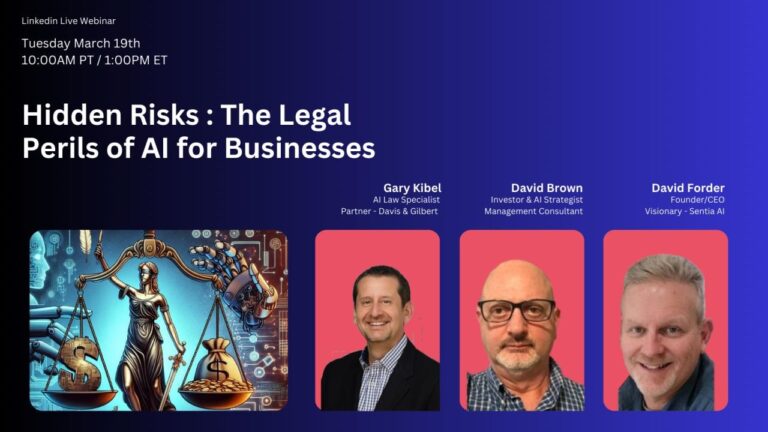
    In this impressive AI Legal Panel review top NYC AI Lawyer Gary Kibel JD/MBA and AI Startup SME CEO David Forder are interviewed by David Brown MBA on the legal Risks and Rewards of AI right now.

    AI Legal Risk Topics Include:

    What are corporate employees doing that is illegal and they probably don’t know it?

    How does the C-Suite View AI from a Legal Perspective?

    What can CEO’s do right now to significantly mitigate AI Legal Risk?

    What has Europe done around AI, Data Privacy and business use, the USA may follow?

    How can you evaluate your AI software use internally?

    How do you legally protect your data against AI malfeasance?

    How do you evaluate AI from a legal perspective before deployment?

    Should Corporate AI Lawyers create new Human Resource policies specific to employee AI use?

    These are just some of the many AI legal topics we reviewed in this fascinating AI panel discussion.

  • Unlocking the Mysterious World of Private LLMs

    Unlocking the Mysterious World of Private LLMs

    By Sentia AI’s Word Sorcerer & AI Jargon Decipherer

    What’s the Buzz About Private LLMs?

    Ah, my fellow digital wanderers! Gather ’round the virtual campfire, for today we delve into the clandestine realm of Private Large Language Models (LLMs). Picture this: a secret society of linguistic marketing and sales wizards, huddled in dimly lit chatrooms, whispering magic AI incantations to protect our words from prying algorithms. Yes, my friends, it’s time to demystify the enigma that is the Private LLM, lets see if the mystical golden dragon can protect your Castles AI Database.

    Chapter 1: The Quest for Privacy

    In the age of oversharing and data breaches, privacy is our golden fleece. Publicly available LLMs like GPT-3 are like chatty parrots—repeating everything they hear. But fear not! The Private LLM is a trusty invisibility cloak (TM Doctor Strange). It’s like whispering secrets to a mime—only you know what’s being said.

    Chapter 2: Crafting Your Own LLM

    1. Set Your Objectives: Before embarking on this epic journey, ask yourself: What’s your LLM’s purpose? Internal memos? Content creation? Or perhaps decoding ancient hieroglyphs? Define your quest, young linguist!
    2. Choose Your Architecture: Imagine LLMs as magical Unicorn like creatures. You can fine-tune existing beasts, birth a new one from scratch, or adopt a friendly neighborhood open-source model (like GPT-2). Choose wisely, for your LLM shall inherit its lineage.
    3. Data Collection and Preprocessing: Ah, the potion-making phase! Gather texts, poems, and cat memes (for err… balance). Cleanse them of typos, heresies, and misplaced semicolons. Tokenize like a caffeinated squirrel.
    4. Training Your Model: Picture a wizard’s tower, filled with humming GPUs and mystical incantations. Training your LLM takes time—days, weeks, or until your beard grows longer than Gandalf’s. Did you say prompts create the best answers?
    5. Securing the Model: Guard your LLM like Smaug guards his gold. Encrypt it, set traps, and hire a digital Cerberus. Remember, loose LLMs sink ships. AI risk is everywhere – every company wants to steal your data and learn your secrets! Your brave Private LLM – stands tall like a giant risk wall!

    Chapter 3: The Legal Scroll

    Why is this arcane knowledge legally crucial?

    Well, my friends, imagine a world where LLMs spill secrets like gossiping witches. Legal contracts, confidential emails, and classified cat videos—all exposed! Private LLMs keep our secrets safe, like a dragon guarding its hoard. Lawyers nod approvingly. Yes, “this is the way” echo the Mandalorians.

    Chapter 4: Marketing and Sales Sorcery

    Behold, the five ways marketers and sales wizards wield Private LLMs:

    1. Hyper-Personalized Emails: Picture an email that knows your soul better than your therapist. Private LLMs craft personalized pitches, making you feel like the protagonist of your own epic saga. With your magic AI marketing quill, you leap castle moats like King Arthur & Merlin– no mortal can ignore you anymore!
    2. Content Generation Spells: Blogs, social media posts, and product descriptions—Private LLMs churn them out faster than a caffeinated scribe. Quality? As high as a dragon’s eyrie.
    3. Sentiment Analysis Potions: LLMs sip from the cauldron of sentiment. They gauge customer feelings, predicting whether they’ll dance a jig or summon a storm. Like Sun Tzu said if you know your target, you know how to win.  
    4. Chatbot Enchantments: Ever chatted with a bot that understands your existential crisis? Thank the Private LLM. It’s like having a digital therapist who doesn’t judge your sock choices. Nor take a nap during your session.
    5. Market Research Wizardry: LLMs analyze trends, decipher cryptic hashtags, and predict the next unicorn startup. They’re the Merlin to your Arthur.

    And there you have it, dear reader! The Private LLM—a magical quill in our digital spell book. So go forth, build your LLM fortress, and remember: “With great language comes great responsibility.”

    SEO Tags: #LLMs #LLM #PrivateLLM #AI #ChatGPT #OpenAI #marketing #digitalmarketing

  • AI Gold Mining: 10 Reasons Why a Private LLM is Critical to AI Data Security!

    AI Gold Mining: 10 Reasons Why a Private LLM is Critical to AI Data Security!

    Let’s face it, AI & Data is the new 49er gold rush!

    But unlike prospectors of yore, most companies are stuck panning for insights in a kiddie pool. That’s where Private LLMs swoop in, like a magnificent AI-powered scuba team, ready to dive deep into your sea of data and unearth a treasure trove of buried secrets.

    Ah but what about Microsoft Co-Pilot and Salesforce Einstein I hear you say? Why aren’t they good enough?

    As any intrepid reporter that doesn’t know the answer would do, I asked a verified AI & Salesforce Expert David Forder CEO of Sentia AI.

    What does Microsoft Co-Pilot offer in terms of data privacy and is it enough? David replied: “Not even close. Although your team is better protected with MS Copilot than say, Chat GPT, there are still serious risks inherent with their offer. Cross-client data leakage, poor control of sensitive information leading to data loss or inappropriate sharing of information and loads more are all still real issues with these shared AI tools. The safest solution is to deploy for your team your own private AI, dedicated solely to you and your teams’ use.” *AI Legal Panel Discussion link

    So if public AI’s are problematic because of where & how data is used outside my company-Why are Private LLMs different or better?

    Private LLMs Are the Missing Piece in Your AI Data Security Puzzle

    Public LLMs are great, but they’re like chatty robots trained on the internet – good for trivia nights, not exactly insightful for your business. Here’s why a Private LLM, trained on your proprietary data, is the real deal:

    1. Security – Fort Knox ain’t got nothin’ on this. Your data stays safely locked away, like your grandma’s secret pecan pie recipe.

    2. Industry Expertise – Your LLM speaks fluent “your-company-ese,” understanding the nuances of your industry like a seasoned veteran.

    3. Competitive Advantage – Insights from your private data become your secret weapon, giving you an edge sharper than a samurai sword.

    4. Customization – Bend it, shape it, mold it to your specific needs. This LLM is your data marionette, ready to perform your bidding.

    5. Compliance Champion – Regulations are no match for this LLM. It waltzes through data privacy laws like a champion ballroom dancer.

    Bonus Advantages!

    • Say Goodbye to Manual Tasks – Repetitive data chores? Let your LLM handle them, while you sip margaritas on the beach (metaphorically speaking).
    • Unleash the Power of Automation – Automate complex processes and workflows, freeing up your team to focus on more strategic initiatives.
    • Boost Innovation – Unearth hidden patterns and trends, inspiring groundbreaking ideas that will leave your competitors in the dust.
    • Supercharge Customer Experience – Gain a deeper understanding of your customers, leading to hyper-personalized interactions that make them sing your praises.
    • The Future is Now – Get ahead of the curve by embracing cutting-edge AI technology. Be the envy of your industry, the talk of the town, and the winner of all the data-driven awards (we’re manifesting it for you).

    Ready to Dive Into your AI Gold Pile?

    We’re here to help you unlock the power of your data with a custom-built Private AI LLM. Get in touch, and let’s chat about how we can turn your data into a gushing geyser of actionable, saleable insights.

    #privateLLM #datasecurity #AI #innovation #competitiveadvantage #LLM #AIsecurity #AIData

    PS Want to see our Private LLM in action? Leave a comment below and we’ll be happy to give you a sneak peek!

  • What CEOs need to know to Mitigate AI Legal Exposure & Avert an AI Disaster

    What CEOs need to know to Mitigate AI Legal Exposure & Avert an AI Disaster

    Law Firms across the country are building up their AI legal teams and licking their proverbial chops at the legal opportunities coming with AI based business lawsuits! Its the wild west of both Artificial Intelligence and the legal system. Every CEO must have a plan or face the consequences down the line.

    Lets not go all doom and gloom. It’s important to approach the topic of AI misuse in the workplace with caution. Framing it as “things employees are doing” may inadvertently shift blame and lead to unproductive finger-pointing. At this stage in AI growth we’re all learning what it can do, should do and perhaps most importantly should not do. One look at this image shows you what can go right with AI (the image) and wrong – the text.

    Right or wrong, Ignoring AI use in the workplace is like putting your head in the sand. Your competitors and employees are using it daily – so accept that and understand what that means for your business going forward.

    Let’s focus on unforeseen consequences of AI implementation that CEOs should be aware of and address proactively. Here are five areas where AI use in the workplace could lead to negative outcomes, along with actions CEOs can take to mitigate risks:

    1. Unconscious Bias Amplification: AI algorithms trained on biased data can amplify existing prejudices in hiring, performance evaluations, and other sensitive areas.

    • CEO Action: Implement rigorous data audits and bias detection tools to identify and mitigate bias in AI systems. Prioritize diverse data sets and develop fairness guidelines for algorithm development and deployment.

    2. Algorithmic Espionage and Privacy Breaches: Unmonitored AI-powered surveillance tools used for employee monitoring can lead to privacy violations and erode trust.

    • CEO Action: Establish clear policies on data collection, storage, and access. Prioritize transparency by informing employees about AI monitoring practices and provide opt-out options where appropriate. Implement robust cybersecurity measures to prevent data breaches.

    3. Automation-Driven Dehumanization: Overreliance on AI for tasks like communication, performance management, or decision-making can create impersonal and dehumanizing experiences for employees.

    • CEO Action: Promote a human-in-the-loop approach, where AI complements human judgment and facilitates communication, rather than replacing them. Prioritize upskilling and training programs to ensure employees adapt to changing roles alongside AI integration.

    4. Algorithm-Induced Stress and Workload Creep: Improperly designed AI tools can increase workload and pressure on employees, leading to stress, burnout, and reduced productivity.

    • CEO Action: Conduct user research and pilot tests to assess the impact of AI tools on employee workload and well-being. Implement safeguards like automated task scheduling and flexible work arrangements to prevent AI-induced stress.
    • Before implementing any new tools (AI or any software) complete an audit to ensure the new AI software isn’t just replacing what is working already. Only bring in new AI that solves a problem, saves money or reduces the number of Apps / software licenses your CFO has to pay.

    5. Lack of Accountability and Oversight: Unclear lines of responsibility and accountability for AI decisions can exacerbate existing power imbalances and create ethical dilemmas.

    • CEO Action: Establish clear governance structures for AI development and deployment. Appoint responsible AI leads and implement ethical review processes to ensure responsible decision-making and fair outcomes.
    • Put the CIO in charge of all new AI or hire an AI Seer that keeps track of all uses of AI in the company and ensures all employees are in AI legal compliance. This person also needs to review with CIO the current tech stack, current limitations and the current IT strategy.

    Bonus Considerations:

    Organizations over 250 Employees will need to appoint an AI Seer. This person will be tip of the spear for all AI related work. They will need to have the knowledge of a CIO with the business savvy of a CRO and legal chops to boot. They will be very expensive.

    We’re living in the Wild West of AI right now and there is no lawyer or IT pro that can protect your organization from every AI related problem.

    However, by proactively addressing these potential pitfalls, CEOs can foster a responsible and ethical AI environment that benefits both the company and its employees going forward. Remember, the key is to leverage AI’s potential while mitigating its risks to create a thriving workplace for everyone. Every business will be using AI in the very near future. Just like any business tool ever made the key is how and when to use the tool in a ethical and legally nuanced way.

    AI is changing faster than the laws. CEO’s must look to mitigate future legal liability by addressing good use vs. bad use of AI in their organizations right now. Ignorance isn’t accepted in court.