
Tag: llm

  • Is AI capable of Breaking the Solow Paradox?

    Is AI capable of Breaking the Solow Paradox?

    Breaking the Solow Paradox: Unlocking AI’s Productivity Potential in the Enterprise

    In 1987, Nobel Prize-winning economist Robert Solow famously quipped, “You can see the computer age everywhere but in the productivity statistics.” This statement, known as the Solow Paradox, encapsulates a dilemma that still resonates today: despite massive investments in technology, particularly in AI and enterprise software, measurable productivity improvements remain elusive for many businesses.

    The Solow Paradox: A Persistent Challenge

    Solow’s observation was based on decades of studying business performance. During the period from the 1960s through the 1990s, companies dramatically increased their spending on technology—by 25% year-over-year in some cases. Despite this investment, productivity, measured by outputs per unit of input, didn’t follow suit. In fact, it often declined, with productivity dropping as much as 3% annually over that time frame.

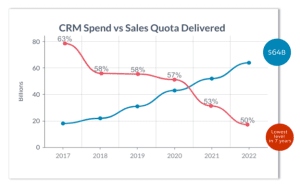
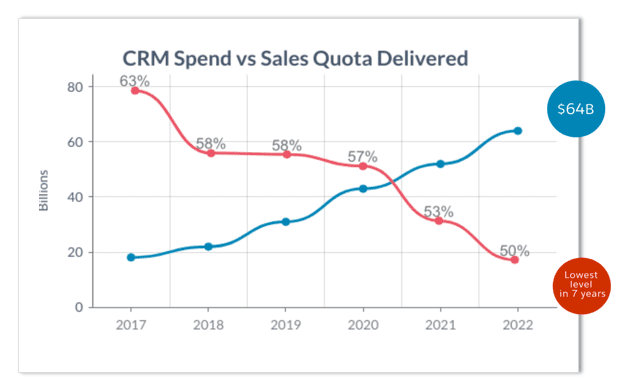
    Fast forward to today, and the paradox is still very much alive. In industries like customer relationship management (CRM), sales productivity has fallen by 25% in the last five years, even as spending on CRM software has tripled. This mirrors Solow’s paradox—technology is advancing at breakneck speed, but many organizations are still grappling with how to translate these advancements into productivity gains.

    Why Doesn’t Technology Always Improve Productivity?

    At the heart of this issue lies a misalignment between technology adoption and actual user needs. Let’s explore a few key reasons why technology, and especially enterprise software like CRMs and AI, often fails to drive the productivity it promises:

    Low User Adoption

    Despite significant investments in CRM software, a mere 26% of customer-facing teams actively use their CRM every day. This is a staggering statistic considering that CRM systems are designed to streamline sales and service processes, but if the majority of users are not engaging with the platform, it can never deliver on its promises of efficiency and productivity gains.

    Tool Overload

    Sales teams today are overwhelmed by tools—on average, they use 10 different applications just to close deals. Studies show that sales reps spend just 28% of their week actually selling, a number that has declined by 20% over the past five years. Much of this lost time is due to the juggling of tools and the associated administrative work.

    User Frustration

    The cognitive overload from having to switch between multiple applications is significant. 66% of sales reps report feeling “drowned” in tools, and 60% of staff in some studies admitted that they’ve considered leaving their jobs due to frustrations with their CRM software.

    The Solow Paradox in the AI Era

    As we enter the age of AI, the Solow Paradox takes on new dimensions. While AI promises to revolutionize productivity, we’re seeing similar patterns of investment without corresponding gains. Here’s how the paradox applies to AI today:

    1. Implementation Lag: Just as with computers in Solow’s time, there’s a significant lag between AI adoption and productivity gains. Organizations are investing heavily in AI, but many are still in the early stages of figuring out how to effectively integrate it into their workflows.
    2. Skill Mismatch: The rapid advancement of AI technology has created a skills gap. Many employees lack the necessary training to effectively use AI tools, leading to underutilization and reduced productivity.
    3. Overinvestment in Technology, Underinvestment in Complementary Factors: Companies often focus on acquiring the latest AI technology without investing sufficiently in the organizational changes, process redesigns, and employee training necessary to fully leverage these tools.
    4. Data Quality Issues: AI systems are only as good as the data they’re trained on. Many organizations struggle with data quality and integration issues, limiting the effectiveness of their AI implementations.
    5. Measurement Challenges: Traditional productivity metrics may not capture the full value of AI. Improvements in decision-making quality or customer experience, for instance, may not be immediately reflected in standard productivity measures.

    Chart: AI Investment vs. Productivity Growth
    Solow Paradox

    This chart illustrates the growing gap between AI investment and productivity growth, reminiscent of the original Solow Paradox.

    Moving Beyond the Paradox

    To break the cycle of unproductive technology spending, businesses need to focus on these core principles:

    1. User-Centric Design: Ensure AI solutions simplify day-to-day tasks and remove administrative burdens.
    2. Integrated Workflows: Seamlessly integrate AI with existing tools to reduce context switching.
    3. Focus on Real-Time, Actionable Insights: Emulate consumer apps by pushing relevant, timely information to users.
    4. Invest in Training and Change Management: Prioritize upskilling employees to effectively use AI tools.
    5. Redesign Processes: Rethink workflows to fully leverage AI capabilities, rather than simply automating existing processes.
    6. Improve Data Quality: Invest in data infrastructure and governance to ensure AI systems have high-quality inputs.
    7. Develop New Metrics: Create new ways to measure productivity that capture the full value of AI implementations.

    By addressing these factors, businesses can start to bridge the gap between AI investment and productivity gains, potentially breaking the cycle of the Solow Paradox in the AI era.

    For further research:

    1. McKinsey & Company: The Solow Paradox in the AI Age
    2. MIT Sloan Management Review: Productivity Paradox 2.0
    3. National Bureau of Economic Research: Artificial Intelligence and the Modern Productivity Paradox
    Lorem ipsum dolor sit amet, consectetur adipiscing elit. Ut elit tellus, luctus nec ullamcorper mattis, pulvinar dapibus leo.


  • AI and Salesforce Einstein. Is it’s AI Ready for Deployment?

    AI and Salesforce Einstein. Is it’s AI Ready for Deployment?

    In the ever-evolving landscape of enterprise AI, Salesforce’s Einstein platform stands as an emerging enterprise grade comprehensive suite tailored for the modern corporate buyer. Yes, it has lots of room for improvement just like every other AI in the market, that being said if you are already a Salesforce customer and want to get some help evaluating it here is a high-level view of what exactly Einstein is and is not.

    Setting the table. As an enterprise leader, I recognize the critical importance of integrating AI capabilities that not only enhance operational efficiency but also secure a competitive edge.

    As a strategic thinker. It is important to go back to basics and remember MBA 101.

    It isn’t about the flashing AI sizzle, slick AI PowerPoint presentations or those “gee whiz you can do that,” features. It is about what can AI do, that I can’t do now, that will make an immediate impact on my business. Use the following before you start your AI buyer journey.

    AI Evaluation Checklist:

    1. Take AI out of the equation. What are the problems your company needs to solve.
    2. These specific problems can be solved by AI
    3. How long will it take to develop these AI tools?
    4. How much will it cost to develop, integrate and train employees?
    5. Are there internal resources to install it or will you need AI Implementation help?
    6. When will you see a return on your AI investment?

    Einstein 1 Platform serves as the cornerstone of Salesforce’s AI offerings, encompassing a wide array of tools from predictive analytics to advanced AI-driven actions. The inclusion of both legacy and cutting-edge features, such as Einstein for Developers, ensures a robust and versatile environment for any organization.

    The Einstein Copilot is particularly noteworthy for its user-friendly interface and customizable actions, providing a glimpse into the future of organization-wide AI chatbots. Its simplicity out of the box belies its potential for extensive customization, empowering users to tailor it to their unique business needs.

    The Einstein 1 Studio is where the magic of personalization happens. Here, you can fine-tune the Copilot’s actions, imbue it with a distinct personality, and meticulously test and debug to ensure seamless deployment.

    The Prompt Builder is a game-changer, offering unparalleled value by enabling the creation of sophisticated prompts that leverage both internal and external data sources. This tool is instrumental in harnessing the full power of the Data Cloud, akin to crafting an intricate email merge template on a grand scale.

    The Einstein Trust Layer is a robust set of features and guardrails that protect the privacy and security of your data, improve the safety and accuracy of your AI results, and promote the responsible use of AI across the Salesforce ecosystem. With features like dynamic grounding, zero data retention, and toxicity detection, the Einstein Trust Layer is designed to help you unleash the power of generative AI without compromising your safety or security standards.

    Lastly, the Model Builder may appear modest, but it is a fundamental component that grows in significance as one delves deeper into the AI models suitable for enhancing Copilot Actions.

    It’s essential to note that while Salesforce’s solutions provide a secure and structured approach to AI within an organization, they do not restrict the ingenuity and expertise of AI specialists. The safety measures in place are commendable, yet the flexibility remains for specialists to extract maximum value from AI, ensuring that the enterprise remains at the forefront of innovation and efficiency.

    Fortune 500 companies are testing, deploying and have been using AI for some time. From the field the number one issue I hear is that it takes time to get it right, it can produce amazing results but it isn’t set it and forget it software. To max the value it requires constant tweaking and enhancements from a knowledgeable team. This often requires mixing inside and outside talent to ensure outside best practices are brought in.

    There you go. Grab a certified Salesforce partner (like Sentia AI) to help understand how large enterprise businesses like yours, can evaluate how, when and where they can leverage the amazing potential of AI in their businesses, profitably.

    tags: #Salesforce #AI #Einstein #CRM #Salesforce.com #GenAI #AIadoption #AIRisk #CRMChecklist

  • Private LLM vs. ChatGPT, Which is Better Right Now?

    Private LLM vs. ChatGPT, Which is Better Right Now?

    In the rapidly evolving landscape of artificial intelligence, businesses are increasingly faced with the choice between leveraging commercial AI solutions like ChatGPT and developing their own private Large Language Models (LLMs). Each option presents a unique set of benefits and challenges, impacting areas such as data privacy, continuity, security, and cost management. While commercial AI services offer convenience, they often come with hidden risks related to data exposure and dependency on external providers. On the other hand, private LLMs, though requiring a significant initial investment, promise enhanced control, customization, and long-term value. This article delves into a detailed comparison of these two approaches, highlighting the critical factors that businesses need to consider to make an informed decision.

    Data Privacy

    One of the primary advantages of using a private LLM (Large Language Model) over a commercial AI solution like ChatGPT is data privacy. Commercial AI providers, even though they might not explicitly use your data to train their models, still collect and analyze the information you input. This can include what questions are being asked, how often, and on what topics. Such insights can inadvertently leak sensitive information about your business’s activity, growth, and market positioning. Competitors might glean valuable insights from this aggregated data, potentially putting your strategic advantages at risk.

    In contrast, a private LLM ensures that all data remains within your business’s control. By claiming a private LLM, you can offer a more secure and private experience for your clients, reinforcing trust and confidentiality. This level of privacy is especially crucial for industries handling sensitive information, such as finance, healthcare, and legal services.

    Continuity & Security

    Reliability is another significant consideration. Commercial AI providers, despite their robustness, are not immune to market fluctuations, service outages, or even potential collapses. Dependency on these providers can expose your business to unforeseen risks, including forced outages or disruptions.

    Private LLMs, on the other hand, offer greater control over continuity and security. Since the infrastructure is managed internally or through a dedicated provider, you can mitigate risks associated with external service dependencies. This ensures uninterrupted access to AI capabilities, enhancing operational stability and customer satisfaction.

    Quality of Answers

    The quality of responses from private LLMs can be meticulously controlled. These models can be trained exclusively on curated datasets pertinent to your industry, ensuring that the information is accurate, up-to-date, and relevant. For instance, a private LLM in the medical field can be trained using the latest medical resources, avoiding outdated or erroneous information commonly found on the broader web.

    Moreover, private LLMs can be programmed to acknowledge the limits of their knowledge, offering responses like “I don’t know, seek medical advice” when they encounter questions beyond their training scope. This ensures that users receive reliable and responsible guidance, enhancing trust in your AI solutions.

    Asset Not an Expense

    Investing in a private LLM transforms it from a recurring expense into a valuable business asset. Unlike commercial AI services that incur ongoing subscription costs, a private LLM can be developed, trained, and optimized over time, becoming an intellectual property asset on your balance sheet. This asset can appreciate in value as it continuously learns and adapts to your business needs, providing a long-term return on investment.

    Directed Responses

    Private LLMs offer the flexibility to align responses with your business preferences. They can be engineered to recommend specific products, vendors, or service providers, tailoring interactions to support your strategic goals. This directed approach ensures that the AI’s output consistently aligns with your business objectives and customer service standards.

    Visible & Recognized Costs

    The cost predictability of private LLMs is another advantage. With a private LLM, you can establish a clear cost structure, such as costing per response, making it easier to forecast and manage expenses. In contrast, commercial AI services often have variable pricing models, which can result in unpredictable costs over time. Every interaction with a commercial AI incurs a fee, which can quickly accumulate and become a significant, often underrepresented, expense.

    Future Marketable Data

    A private LLM, trained on user interactions, complaints, and concerns, becomes a valuable repository of marketable data. This data can provide insights into consumer trends, interests, and pain points, which can be leveraged for additional revenue streams. For example, insights derived from a healthcare-focused LLM can inform product development, marketing strategies, and customer engagement approaches, enhancing your competitive edge.

    Additional Benefits

    1. Compliance: For businesses operating in highly regulated industries, a private LLM can be tailored to comply with specific regulatory requirements, ensuring that data handling and processing meet all necessary legal standards.
    2. Performance Optimization: Private LLMs can be optimized for performance based on the unique usage patterns of your business. This can result in faster response times and more efficient processing.
    3. Integration with Proprietary Systems: Private LLMs can be seamlessly integrated with proprietary systems and databases, ensuring that all relevant information is accessible and that the AI can provide the most accurate and contextually appropriate responses.

    Conclusion

    While commercial AI solutions like ChatGPT offer convenience, the benefits of a private LLM are compelling for businesses seeking enhanced privacy, security, and control. By investing in a private LLM, you not only safeguard sensitive information but also create a valuable business asset that can be tailored to your specific needs. The ability to manage costs predictably, ensure the quality of responses, and leverage future marketable data further underscores the strategic advantages of opting for a private LLM over a commercial alternative.

    #ChatGPT #PrivateLLM #OpenAI #AI #GenAI #AIRisk #RiskMitigation #Bestpractices #ROI

  • How do Salesforce CRM, Microsoft Dynamics, and Hubspot CRM Compare according to Copilot?

    How do Salesforce CRM, Microsoft Dynamics, and Hubspot CRM Compare according to Copilot?

    As a leader in the AI CRM Sales tech space I was curious how AI’s would evaluate competitive CRM/AI enhanced offerings and how likely it would be that it would be factual vs. the usual CRM marketing puffery we see on a daily basis. I was also curious how much AI “hallucination” would take place and whether or not it would be to the advantage of the AI parent company (in this case Microsoft) or just generalized AI hallucinations or perhaps non at all.

    Copilot comparison of AI capabilities and features across Microsoft Dynamics, Salesforce CRM, Hubspot CRM:

    FeatureMicrosoft DynamicsSalesforce CRMHubspot CRM
    AI-Assisted SalesAdvanced AI for sales insights and personalization1AI with Einstein for predictive analytics and recommendations1Basic AI functionalities for sales insights2
    Automated Data CaptureComprehensive automation in data entry1Automation with a focus on sales productivity1Automation for basic tasks2
    Intelligent ForecastingDetailed forecasting using AI1Predictive forecasting with Einstein AI1Forecasting based on standard sales data2
    Performance RecommendationsPersonalized suggestions for sales actions1Recommendations for next best actions1General guidance based on performance metrics2
    Conversation IntelligenceConversation analysis for actionable insights3Detailed conversation insights with Einstein Call Coaching1Basic conversation tracking2
    Lead & Opportunity ScoringAI-driven scoring to prioritize leads4Predictive lead scoring with AI1Lead scoring based on user-defined criteria2
    CustomizationHighly customizable with AI applications1Extensive customization options with AI1Customizable to a lesser extent compared to others2
    Ease of UseRequires some technical expertise4Complex, with a steep learning curve1User-friendly and intuitive interface2
    CostStarts at $65 per user per month2Starts at $25 per user per month1Free for basic features; pay for more as you go2
    Copilot generated table comparing Dynamics, Salesforce & Hubspot

    This table provides a high-level overview of how each CRM utilizes AI to enhance the sales process. Microsoft Dynamics and Salesforce CRM offer more advanced AI capabilities, which are suitable for larger organizations or those with complex sales processes.

    The challenge with this table is not knowing what is the “latest” and most correct information vs. what Copilot was able to access (and the time period). If I look at the cost, I think the research is a bit *old however, I look to my readers to help out and tell me what they think. How accurate is this table and what is AI marketing puffery vs. what these three CRM platforms can actually deliver.

    *Microsoft Dynamics Official Seat Pricing Page

    Salesforce CRM Official Seat Pricing Page

    HubSpot – I went to their website looking for a HubSpot pricing page (like Microsoft and Salesforce) and was intercepted by the worst AI chatbot I have seen this year. It refused to answer my questions, no matter my change in prompt, instead it was just sell, give me your email address, sell, sign up for demo, sell and my last contact with it was “Thanks Hubspot Chatbot – your performance has been so horrid that I have just taken your CRM off my consideration list.”

    As my dear readers know AI must be constantly monitored by humanoids. In this case my guess is they turned up the aggressive sell chatbot feature and forgot the sentiment / human part of the CX equation. Will check back in a week to see if it was an AI hallucination or programmed in.

    This is your average Blended AI SME Homosapien signing off and respectfully requesting your comments and perspective. Who is going to win or will it be a dark house like Sentia AI – that will take over the CRM landscape. Stay tuned!  

  • 10 Ways Banks are Using Generative Artificial Intelligence Right Now!

    10 Ways Banks are Using Generative Artificial Intelligence Right Now!

    Banks are the life blood for many small and medium-sized businesses across North America. They often know the community, business leaders and local business environment better than anyone else.

    Their typically fiscally conservative but willing to try new business practices or technology if they can see a clear value proposition for their customers and their bottom line.  Is AI something that could differentiate their businesses?

    The answer is a resounding YES!

    Savvy, forward thinking bankers are increasingly turning to Generative AI to enhance their competitive edge. Here are ten ways they’re doing it, complete with real-world examples: 

    AI in Banks (see use links below)

    1. Personalized Customer Experiences: Banks like Wells Fargo are pioneering Large Language Models (LLMs) to create multimodal banking experiences, offering personalized services [3]. 
    2. Efficient Risk Assessment: Commonwealth Bank of Australia (CBA) uses Generative AI for enhanced customer experience and combating financial abuse [3]. 
    3. Fraud Detection: JPMorgan Chase employs Generative AI to analyze emails for signs of fraud, improving their detection systems [5]. 
    4. Automated Customer Service: Bunq has introduced a GenAI bot for its banking app, streamlining customer service interactions [3]. 
    5. Market Trend Analysis: Deutsche Bank provides AI-powered personalized investment guidance, helping customers navigate market trends [3]. 
    6. Regulatory Compliance: HSBC is training AI software to manage back-office functions, ensuring compliance with regulations [4]. 
    7. Operational Efficiency: Royal Bank of Canada (RBC) uses AI to automate process-heavy tasks, increasing operational efficiency [4]. 
    8. Credit Scoring Models: Banks are refining credit scoring with AI, though specific examples are under proprietary use and not publicly disclosed. 
    9. Investment Strategies: AI-driven models assist banks like Deutsche Bank in developing robust investment strategies [3]. 
    10. Customized Banking Products: Generative AI helps banks create financial products tailored to their community’s needs, as seen with Wells Fargo‘s LLMs [3]. 

    5 Ways Community Banks Can Integrate Private LLMs to Safeguard Corporate Content 

    Community banks are also cautiously adopting Private LLMs to protect sensitive data and reduce AI Liability exposure. Here’s how they’re doing it: 

    1. Data Control: Morgan Stanley Wealth Management uses an advanced chatbot powered by OpenAI’s technology to leverage the bank’s research and data library while maintaining data control [7]. 
    2. Customized Solutions: Banks can develop bespoke tools that align with their operational models, similar to ABN AMRO‘s use of Generative AI to summarize conversations between bank staff and customers [7]. 
    3. Secure Customer Interaction: By managing customer data securely, banks like ABN AMRO ensure privacy and build trust with their customers [7]. 
    4. In-House Expertise: Developing in-house expertise with Private LLMs allows banks to produce more accurate and relevant insights, as demonstrated by Morgan Stanley [7]. 
    5. Strategic Innovation: Private LLMs enable banks to innovate strategically, developing unique services that differentiate them from competitors, much like Morgan Stanley‘s approach [7]. 

    In conclusion, banks are not just keeping pace—they’re setting the pace, using Generative AI and Private LLMs to redefine the banking experience for their customers and secure a competitive edge in the digital age. However, they do need to keep pace on the evolving AI Legal Landscape as new precedents are set and new laws hit the book. See this video for more on AI Legal Challenges.  

    This article includes specific examples of large banks and community banks using Generative AI, Private LLMs, Data Security and with references to further information on their applications. 

    Article Link Source: Conversation with Copilot 

    1. Generative AI in Banking Best Practices in 2024 [With Examples] 
    2. Here’s how banks are using and experimenting with generative AI 
    3. Leading banks rolling out more generative AI – Oracle 
    4. Generative AI in finance: How banks are using LLMs in 2023 
    5. Generative AI in banking and financial services | McKinsey 
    6. Generative AI’s unfolding transformation of banking 
    7. Top 4 Use Cases of Generative AI in Banking [2024] – AIMultiple 
    8. Bridging the AI Divide: How Banks Can Responsibly Adopt Large Language … 
    9. Private LLMs on Your Local Machine and in the Cloud With LangChain … 
    10. Private LLMs: Key to Business Innovation and Secure AI Integration 

    Tags: #banks #banking #communitybanks #finance #OpenAI #LLM #LLMs #AI #usecase #CEO #CFO #CMO #technology #WallStreet #financialservices #loans

  • Unlocking the Mysterious World of Private LLMs

    Unlocking the Mysterious World of Private LLMs

    By Sentia AI’s Word Sorcerer & AI Jargon Decipherer

    What’s the Buzz About Private LLMs?

    Ah, my fellow digital wanderers! Gather ’round the virtual campfire, for today we delve into the clandestine realm of Private Large Language Models (LLMs). Picture this: a secret society of linguistic marketing and sales wizards, huddled in dimly lit chatrooms, whispering magic AI incantations to protect our words from prying algorithms. Yes, my friends, it’s time to demystify the enigma that is the Private LLM, lets see if the mystical golden dragon can protect your Castles AI Database.

    Chapter 1: The Quest for Privacy

    In the age of oversharing and data breaches, privacy is our golden fleece. Publicly available LLMs like GPT-3 are like chatty parrots—repeating everything they hear. But fear not! The Private LLM is a trusty invisibility cloak (TM Doctor Strange). It’s like whispering secrets to a mime—only you know what’s being said.

    Chapter 2: Crafting Your Own LLM

    1. Set Your Objectives: Before embarking on this epic journey, ask yourself: What’s your LLM’s purpose? Internal memos? Content creation? Or perhaps decoding ancient hieroglyphs? Define your quest, young linguist!
    2. Choose Your Architecture: Imagine LLMs as magical Unicorn like creatures. You can fine-tune existing beasts, birth a new one from scratch, or adopt a friendly neighborhood open-source model (like GPT-2). Choose wisely, for your LLM shall inherit its lineage.
    3. Data Collection and Preprocessing: Ah, the potion-making phase! Gather texts, poems, and cat memes (for err… balance). Cleanse them of typos, heresies, and misplaced semicolons. Tokenize like a caffeinated squirrel.
    4. Training Your Model: Picture a wizard’s tower, filled with humming GPUs and mystical incantations. Training your LLM takes time—days, weeks, or until your beard grows longer than Gandalf’s. Did you say prompts create the best answers?
    5. Securing the Model: Guard your LLM like Smaug guards his gold. Encrypt it, set traps, and hire a digital Cerberus. Remember, loose LLMs sink ships. AI risk is everywhere – every company wants to steal your data and learn your secrets! Your brave Private LLM – stands tall like a giant risk wall!

    Chapter 3: The Legal Scroll

    Why is this arcane knowledge legally crucial?

    Well, my friends, imagine a world where LLMs spill secrets like gossiping witches. Legal contracts, confidential emails, and classified cat videos—all exposed! Private LLMs keep our secrets safe, like a dragon guarding its hoard. Lawyers nod approvingly. Yes, “this is the way” echo the Mandalorians.

    Chapter 4: Marketing and Sales Sorcery

    Behold, the five ways marketers and sales wizards wield Private LLMs:

    1. Hyper-Personalized Emails: Picture an email that knows your soul better than your therapist. Private LLMs craft personalized pitches, making you feel like the protagonist of your own epic saga. With your magic AI marketing quill, you leap castle moats like King Arthur & Merlin– no mortal can ignore you anymore!
    2. Content Generation Spells: Blogs, social media posts, and product descriptions—Private LLMs churn them out faster than a caffeinated scribe. Quality? As high as a dragon’s eyrie.
    3. Sentiment Analysis Potions: LLMs sip from the cauldron of sentiment. They gauge customer feelings, predicting whether they’ll dance a jig or summon a storm. Like Sun Tzu said if you know your target, you know how to win.  
    4. Chatbot Enchantments: Ever chatted with a bot that understands your existential crisis? Thank the Private LLM. It’s like having a digital therapist who doesn’t judge your sock choices. Nor take a nap during your session.
    5. Market Research Wizardry: LLMs analyze trends, decipher cryptic hashtags, and predict the next unicorn startup. They’re the Merlin to your Arthur.

    And there you have it, dear reader! The Private LLM—a magical quill in our digital spell book. So go forth, build your LLM fortress, and remember: “With great language comes great responsibility.”

    SEO Tags: #LLMs #LLM #PrivateLLM #AI #ChatGPT #OpenAI #marketing #digitalmarketing

  • AI Gold Mining: 10 Reasons Why a Private LLM is Critical to AI Data Security!

    AI Gold Mining: 10 Reasons Why a Private LLM is Critical to AI Data Security!

    Let’s face it, AI & Data is the new 49er gold rush!

    But unlike prospectors of yore, most companies are stuck panning for insights in a kiddie pool. That’s where Private LLMs swoop in, like a magnificent AI-powered scuba team, ready to dive deep into your sea of data and unearth a treasure trove of buried secrets.

    Ah but what about Microsoft Co-Pilot and Salesforce Einstein I hear you say? Why aren’t they good enough?

    As any intrepid reporter that doesn’t know the answer would do, I asked a verified AI & Salesforce Expert David Forder CEO of Sentia AI.

    What does Microsoft Co-Pilot offer in terms of data privacy and is it enough? David replied: “Not even close. Although your team is better protected with MS Copilot than say, Chat GPT, there are still serious risks inherent with their offer. Cross-client data leakage, poor control of sensitive information leading to data loss or inappropriate sharing of information and loads more are all still real issues with these shared AI tools. The safest solution is to deploy for your team your own private AI, dedicated solely to you and your teams’ use.” *AI Legal Panel Discussion link

    So if public AI’s are problematic because of where & how data is used outside my company-Why are Private LLMs different or better?

    Private LLMs Are the Missing Piece in Your AI Data Security Puzzle

    Public LLMs are great, but they’re like chatty robots trained on the internet – good for trivia nights, not exactly insightful for your business. Here’s why a Private LLM, trained on your proprietary data, is the real deal:

    1. Security – Fort Knox ain’t got nothin’ on this. Your data stays safely locked away, like your grandma’s secret pecan pie recipe.

    2. Industry Expertise – Your LLM speaks fluent “your-company-ese,” understanding the nuances of your industry like a seasoned veteran.

    3. Competitive Advantage – Insights from your private data become your secret weapon, giving you an edge sharper than a samurai sword.

    4. Customization – Bend it, shape it, mold it to your specific needs. This LLM is your data marionette, ready to perform your bidding.

    5. Compliance Champion – Regulations are no match for this LLM. It waltzes through data privacy laws like a champion ballroom dancer.

    Bonus Advantages!

    • Say Goodbye to Manual Tasks – Repetitive data chores? Let your LLM handle them, while you sip margaritas on the beach (metaphorically speaking).
    • Unleash the Power of Automation – Automate complex processes and workflows, freeing up your team to focus on more strategic initiatives.
    • Boost Innovation – Unearth hidden patterns and trends, inspiring groundbreaking ideas that will leave your competitors in the dust.
    • Supercharge Customer Experience – Gain a deeper understanding of your customers, leading to hyper-personalized interactions that make them sing your praises.
    • The Future is Now – Get ahead of the curve by embracing cutting-edge AI technology. Be the envy of your industry, the talk of the town, and the winner of all the data-driven awards (we’re manifesting it for you).

    Ready to Dive Into your AI Gold Pile?

    We’re here to help you unlock the power of your data with a custom-built Private AI LLM. Get in touch, and let’s chat about how we can turn your data into a gushing geyser of actionable, saleable insights.

    #privateLLM #datasecurity #AI #innovation #competitiveadvantage #LLM #AIsecurity #AIData

    PS Want to see our Private LLM in action? Leave a comment below and we’ll be happy to give you a sneak peek!

  • How can Manufacturing CIO’s Unleash the AI Kraken in 2024

    How can Manufacturing CIO’s Unleash the AI Kraken in 2024

    Forget flying cars and robot overlords for a sec, Manufacturing CIOs. Let’s talk about the real AI revolution happening right under our hard hats – right now, in 2024!

    This ain’t no sci-fi pipe dream, this is industrial-grade, grease-stained, game-changing stuff. So strap on your data goggles, fire up the algorithms, and prepare to conquer the factory floor with these top 10 AI tactics:

    1. Predict the Unpredictable: Think your machines are invincible? Think again. AI can sniff out equipment gremlins before they turn your production line into a spaghetti junction. No more surprise breakdowns, just smooth sailing into profit town.

    2. Quality Control on Steroids: Human inspectors? So 20th century. AI hawk-eyes can spot defects smaller than a gnat’s toenail, 24/7, ensuring your products are so flawless, Michelangelo would weep with envy.

    3. Inventory? More Like I-Know-Ventory: Ditch the dusty spreadsheets and embrace the AI oracle. It’ll predict demand with spooky accuracy, keeping your shelves stocked without overflowing, saving you storage space and sanity.

    4. Supply Chains that Sing: Gone are the days of frantic phone calls and crossed fingers. AI can navigate the global logistics labyrinth, optimizing routes, prices, and deliveries, making your supply chain sing like a well-oiled machine (or maybe a well-oiled, well-organized opera singer).

    5. Maintenance Magic: Forget clunky maintenance schedules. AI can listen to your machines whisper their woes, pinpointing issues before they become disasters. Think of it as preventative medicine for your factory floor.

    6. The Efficiency Whisperer: Your production line may think it’s running at peak, but the AI efficiency whisperer knows better. It’ll tweak processes, suggest micro-adjustments, and squeeze every ounce of productivity out of your operation, like a fuel-efficient Formula One pit crew for your robots.

    7. The Customer Whisperer (Yes, Another One): AI can analyze customer data like a seasoned therapist, uncovering hidden desires and predicting future needs. Use this intel to personalize marketing, predict demand, and basically become the Willy Wonka of your industry.

    8. Safety First, Always: AI can be your guardian angel on the factory floor. It can monitor safety protocols, spot hazards before they happen, and even help train your workforce, making your workplace safer than a bubble-wrapped bouncy castle factory.

    9. Upskilling, Not Replacing: Don’t fear the robot uprising, embrace the AI collaboration. Use AI to upskill your workforce, freeing them from tedious tasks and letting them focus on the stuff that truly requires human ingenuity. Think of it as giving your team rocket boots for their brains.

    10. Remember, You’re the Captain: AI is a powerful tool, but it’s not a magic wand. Keep control, define clear goals, and ensure your AI initiatives align with your overall strategy. You’re still the captain of this ship, CIO, just make sure your AI first mate is pulling its weight (and not plotting a mutiny).

    So there you have it, Manufacturing CIOs, the top 10 ways to unleash the AI kraken and transform your factory floor into a profit-churning, efficiency-blasting oasis. Just remember, with great AI power comes great responsibility. Use it wisely, and you’ll be laughing all the way to the bank (or at least the break room for some celebratory donuts). Now go forth and conquer!

    #manufacturing #ai #chatgpt #openai #cio #technology

  • Top 10 New Applications of AI in Sales tech ’23

    Top 10 New Applications of AI in Sales tech ’23

    2023 will go down as the year of AI in business school history books. Rarely has a new technology evolved so quickly, gained wide spread use nor stirred as much concern as Artificial Intelligence. Regardless of where people stand on the use of AI (see 1984 “The Terminator“) it is already well entrenched in the business world and its use is only going to expand.

    In this regard I’m going to focus on the top ten applications of AI in Sales systems so far. Sales tech stacks are usually the first ones impacted in any business organization because it is the most visible profit (or loss center). There is zero doubt that AI is rapidly transforming the sales landscape. We’re seeing the introduction of so many innovative applications that enhance efficiency, improve customer experiences, and boost sales performance its hard to know where to start, nor completely understand what is coming.

    With that being said I’m going to put a stake in the proverbial ground and start with what I think are the top 10 things I see AI doing right now that are dramatically affecting sales systems:

    2023’s Top 10 new applications of AI in sales tech:

    1. AI-powered Sales Coaching and Training: Coaching tools can analyze every sales conversation or interaction, identify areas for improvement, and provide real-time feedback for sales reps. This AI augmented and personalized approach helps reps refine their communication skills, build stronger relationships with potential customers, and close more deals. It does this without a manager, trainer or supervisor needing to spend “time” with a sales rep. It can be self sourced and used when the rep wants it or by a manager to see how a rep is performing without having to have those “difficult conversations” where a customer calls and says XYZ is terrible, you need to get rid of them! It is no longer a she said, he said as it is all recorded.
    2. AI-driven Predictive Sales Forecasting: AI algorithms analyze historical sales data, market trends, and customer behavior to predict future sales performance with greater accuracy (this assumes clean data!). This enables sales teams to make informed decisions about resource allocation, target customer segments, and sales strategies. As always the better the data that is input (Sales Reps are notorious for not using their CRMs) the more likely AI can improve predictive forecasting.
    3. AI-enabled Lead Qualification and Prioritization: AI models assess leads based on various factors, such as firmographic data, website behavior, and engagement patterns, to identify the most promising leads. This helps sales reps focus their efforts on the most qualified leads, increasing their chances of closing deals.
    4. AI-powered Sales Content Generation and Personalization: AI tools can generate personalized sales and marketing content, such as email templates, social media posts, and sales pitches, tailored to the specific needs and interests of each buyer persona/prospect. This personalized approach can increase engagement and conversion rates.
    5. AI-driven Conversational Sales Chatbots: AI chatbots can engage in real-time conversations with potential customers, answering questions, providing product information, and scheduling demos. This 24/7 availability and personalized interaction can enhance customer experience and capture leads early in the sales cycle.
    6. AI-powered Sales Incentive Compensation and Optimization: AI algorithms can analyze sales data and performance metrics to determine optimal incentive compensation plans that motivate reps and drive sales growth.
    7. AI-enabled Sales Territory Planning and Optimization: AI models can analyze market data, customer demographics, and sales performance to identify optimal sales territories that maximize revenue potential.
    8. AI-powered Sales Prospecting and Discovery: AI tools can identify and prioritize potential customers based on various factors, such as firmographic data, website behavior, and social media engagement, helping sales reps uncover new opportunities.
    9. AI-driven Sales Opportunity Management and Deal Coaching: AI can analyze sales opportunities, identify buyer intent, potential risks and roadblocks, and provide real-time coaching to sales reps to increase their chances of closing deals.
    10. AI-powered Sales Workflow Automation: AI tools can automate repetitive sales tasks, such as data entry, email follow-ups, and scheduling appointments, freeing up reps to focus on more strategic activities.

    The key element to all ten of these AI use case applications is “CAN.” Every single one of these requires a blended AI experience to make it work. None of these can successfully operate without human interaction either in the development, use or tweaking of them. In fact AI is so new in most of these applications that if you don’t have a trained human available to constantly watch, improve and tweak any of these AI’s on a regular basis I would be very concerned about deploying them.

    With that in mind we need to focus on the number one tool that most sales reps both hate and must use on a fairly regular basis, CRM (Salesforce says 26% daily usage for CRMs). CRMs or Customer Relationship Management software is an $80Billion dollar business but the failure rates are surprisingly high. I wondered if AI could solve this problem and turned to CRM experts for the answer.

    I spoke with renowned CRM expert and best selling Author Mike Hudlow (see “How not to F*CK up a CRM system“) on these top ten AI solutions and asked him – What is the biggest problem with CRM systems right now?

    Mike said: “”Human Change Management” is the key reason systems fail. But, unfortunately there are many reasons that this can occur. The reality is that people like to blame the technical system itself but any modern CRM system is capable of improving a companies CRM process/workflow. The challenge for any program/product/project manager, CIO, CTO, CMO or person in charge of the CRM to make it both welcomed and desired. Sounds scary human doesn’t it? A CRM can and will be resisted by: 1) those that don’t trust it, think its needed and/or believe that others will steal their own personal IP, 2) those divisions within a company that think it is too expensive, 3) People or teams that believe that the system will replace another system to which they are attached (career or emotionally ), 3) or people that actually or perceptually believe it creates more work, and 4) leaders that feel it infringes upon their own autonomy.”

    My second question to Michael was can any of these top ten AI enhancements solve those problems?

    Mike replied: “At the end of the day an AI supplemental tool can improve many of these as it makes the native CRM tool “bend” to their own style and will make them more comfortable with the AI’s ability to bridge the gap, bend to their own style, and allow them to let the CRM system they don’t feel comfortable with be more “human” and meet their own specific needs”

    I then turned to AI Visionary and Sales Process Expert David Forder for an AI perspective on CRMs and AI. My question was simple yet nuanced. Can AI solve the biggest problems in CRM i.e., no sales rep wants to use it?

    David replied: “The biggest issue that CRMs face is a lack of user adoption. 74% of customer facing staff refuse to use their CRM every single day. Yet companies spend billions of dollars on it! Adding AI into the mix has the potential to make this even worse! Unless any AI integration improves the underlying complexity of using a CRM and makes them simpler and more effective it will definitely make it worse not better! This has to be the focus of AI.”

    I then asked Mr. Forder – how do you make it simpler? Get sellers using it?

    David’s reply: “The key to making the CRM simpler is to ignore what will appeal to C-Suite i.e. ignore the focus on data heavy screens, reports and dashboards and re-engineer the CRM to meet the needs of the bulk of the users – those customer facing teams. Design the CRM to meet their daily needs, so they want to use it as it does the work for them. If you do this they will embrace their CRM and it can then work effectively for C-Suite as the data will actually be in the system! That’s our focus at Sentia AI! Have your CRM do most of the work for them, tell them what to do next and watch usage rates explode!”

    Both Mike’s and David’s battle scars, extensive CRM implementations, sales experience and knowledge made me think I should interview both of them and get their thoughts on video for everyone to learn from. So we’re going to do it and here is the link:

    How Not to F*CK Up your CRM with AI

    This may turn into two video segments as the topic is so timely, important and I found that the breadth and depth of their CRM and AI system implementation experience was quite simply amazing!

    These gentlemen have their finger on the pulse of sales, AI & CRM implementation success. It will be a great how to “fix it” roundtable.

    Please join us on November 29th for an in-dept on how not to F*CK up A CRM system with AI!

    David is an investor and executive director at Sentia AI – The Intelligence Engine, a next generation AI sales enablement technology company and Salesforce partner. Dave’s passion for helping people with their AI, sales, marketing, business strategy, startup growth and strategic planning has taken him across the globe and spans numerous industries. You can follow him on Twitter LinkedIn or on Sentia Says.