
Tag: GenAI

  • The Risks & Legal Perils of AI Right Now

    The Risks & Legal Perils of AI Right Now

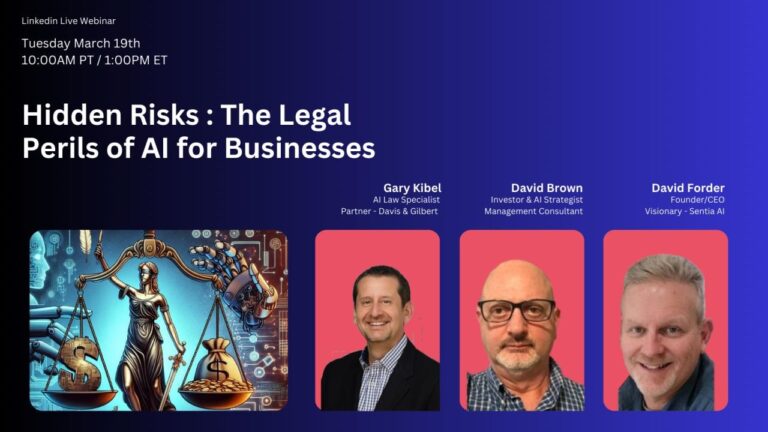
    In this impressive AI Legal Panel review top NYC AI Lawyer Gary Kibel JD/MBA and AI Startup SME CEO David Forder are interviewed by David Brown MBA on the legal Risks and Rewards of AI right now.

    AI Legal Risk Topics Include:

    What are corporate employees doing that is illegal and they probably don’t know it?

    How does the C-Suite View AI from a Legal Perspective?

    What can CEO’s do right now to significantly mitigate AI Legal Risk?

    What has Europe done around AI, Data Privacy and business use, the USA may follow?

    How can you evaluate your AI software use internally?

    How do you legally protect your data against AI malfeasance?

    How do you evaluate AI from a legal perspective before deployment?

    Should Corporate AI Lawyers create new Human Resource policies specific to employee AI use?

    These are just some of the many AI legal topics we reviewed in this fascinating AI panel discussion.

  • Paul O’Sullivan, Salesforce: Transforming work

    Paul O’Sullivan, Salesforce: Transforming work

    In the wake of the generative AI (GenAI) revolution, UK businesses find themselves at a crossroads between unprecedented opportunities and inherent challenges.

    Paul O’Sullivan, Senior Vice President of Solution Engineering (UKI) at Salesforce, sheds light on the complexities of this transformative landscape, urging businesses to tread cautiously while embracing the potential of artificial intelligence.

    Generative AI has stormed the scene with remarkable speed. ChatGPT, for example, amassed 100 million users in a mere two months.

    “If you put that into context, it took 10 years to reach 100 million users on Netflix,” says O’Sullivan.

    This rapid adoption signals a seismic shift, promising substantial economic growth. O’Sullivan estimates that generative AI has the potential to contribute a staggering £3.5 trillion ($4.4 trillion) to the global economy.

    “Again, if you put that into context, that’s about as much tax as the entire US takes in,” adds O’Sullivan.

    One of its key advantages lies in driving automation, with the prospect of automating up to 40 percent of the average workday—leading to significant productivity gains for businesses.

    Read More