Tag: AI

  • Why Skills-Based Hiring is 5X More Predictive Than Degrees (And How AI Makes It Scale)

    Why Skills-Based Hiring is 5X More Predictive Than Degrees (And How AI Makes It Scale)

    Here’s a statistic that should fundamentally change how you think about recruitment: McKinsey research shows that skills-based hiring is five times more predictive of job success than education-based hiring.

    Let that sink in for a moment. The college degree that’s been the cornerstone of hiring decisions for decades? It’s five times less effective at predicting whether someone will actually succeed in the role.

    Yet despite this overwhelming evidence, most recruitment processes still start with degree requirements and educational filters. Why? Because until now, assessing skills at scale has been nearly impossible.

    That’s changing—and AI is the catalyst.

    The Great Degree Deception

    For years, we’ve used degrees as a convenient proxy for capability. A bachelor’s degree became shorthand for “this person can learn, work hard, and follow instructions.” An MBA suggested leadership potential. Advanced degrees implied specialized knowledge.

    But proxies are just that—approximations that often miss the mark entirely.

    The Reality Check:

    • 43% of college graduates are underemployed in their first job

    • Skills gaps exist even among highly credentialed candidates

    • Career paths are increasingly non-linear, making traditional credentials less relevant

    • The half-life of learned skills continues to shrink in our rapidly evolving economy

    Meanwhile, some of the most successful professionals in tech, sales, marketing, and operations never completed traditional degree programs—or studied something completely unrelated to their current expertise.

    What Skills-Based Hiring Actually Measures

    When McKinsey found that skills-based hiring is 5X more predictive, they weren’t just talking about technical competencies. Skills-based hiring evaluates:

    Hard Skills: Programming languages, data analysis, project management methodologies, language fluencies Soft Skills: Communication, leadership, adaptability, emotional intelligence Learning Agility: Ability to acquire new skills quickly and apply them effectively Problem-Solving Approaches: How candidates tackle complex, ambiguous challenges Cultural Alignment: Working styles and values that predict team integration

    This holistic view of capability provides a much richer understanding of whether someone will thrive in a specific role and organization.

    The Scale Problem (And How AI Solves It)

    Here’s where most recruitment firms hit a wall: skills assessment is resource-intensive. Properly evaluating a candidate’s capabilities across multiple dimensions traditionally requires:

    • Custom assessments for each role

    • Multiple interview rounds

    • Portfolio reviews

    • Reference checks focused on specific competencies

    • Trial projects or simulations

    For high-volume hiring, this approach becomes prohibitively expensive and slow.

    Enter AI-powered skills assessment.

    How AI Makes Skills-Based Hiring Scalable

    1. Automated Skills Extraction

    AI can analyze resumes, portfolios, and application materials to identify skills that humans might miss. Instead of just seeing “Marketing Manager at Company X,” AI identifies specific competencies: growth marketing, A/B testing, conversion optimization, cross-functional collaboration.

    2. Dynamic Assessment Creation

    AI platforms can generate role-specific assessments that test both technical skills and problem-solving approaches. These aren’t generic personality tests—they’re customized evaluations that mirror actual job challenges.

    3. Portfolio and Work Sample Analysis

    AI can evaluate code repositories, writing samples, design portfolios, and project outcomes to assess quality and approach—providing insights that go far beyond what a degree can tell you.

    4. Predictive Matching

    By analyzing successful employee profiles, AI can identify the skills combinations that predict success in specific roles, teams, and company cultures.

    Real-World Applications

    Tech Companies: Instead of requiring computer science degrees, firms are using AI to assess coding ability, problem-solving approach, and learning agility through practical challenges.

    Sales Organizations: Rather than filtering for business degrees, AI evaluates communication skills, resilience patterns, and relationship-building capabilities through simulation exercises.

    Healthcare: Beyond medical credentials, AI assesses empathy, stress management, and continuous learning behaviors that predict patient care quality.

    Financial Services: AI evaluates analytical thinking, ethical decision-making, and regulatory understanding through scenario-based assessments.

    The Competitive Advantage

    Recruitment firms that master skills-based hiring using AI gain several advantages:

    Expanded Talent Pools: You’re no longer limited to candidates with specific educational backgrounds Higher Success Rates: 5X better prediction means fewer failed placements and higher client satisfaction Faster Placements: AI assessment scales across hundreds of candidates simultaneously Premium Positioning: Clients pay more for recruiting that delivers measurably better outcomes

    The Implementation Reality

    The shift to skills-based hiring isn’t just a nice-to-have—it’s becoming a necessity. With 39% of current skillsets expected to be outdated by 2030, the ability to identify transferable skills and learning potential is more valuable than ever.

    Forward-thinking clients are already demanding this approach. They’ve seen the data. They know that skills-based hiring delivers better results. The question is whether your firm can deliver it at scale.

    Making the Transition

    Start Small: Choose one client or role type to pilot skills-based assessment Partner Smart: Work with AI platforms that specialize in skills evaluation Train Your Team: Help recruiters understand how to interpret and act on skills data Educate Clients: Share the McKinsey research and help clients understand the ROI of skills-based hiring

    The Bottom Line

    The evidence is overwhelming: skills-based hiring works better. With AI making it scalable and cost-effective, there’s no longer any excuse for relying on degree-based filtering as your primary assessment method.

    The recruitment firms that embrace this shift won’t just improve their placement success rates—they’ll fundamentally change their value proposition from “talent finder” to “capability predictor.”

    In a world where skills matter 5X more than degrees, which approach is your firm taking?


    This transformation in hiring methodology is just one of many disruptions reshaping recruitment. For a comprehensive analysis of how AI is revolutionizing talent acquisition—including implementation frameworks, technology selection guides, and competitive positioning strategies—download our complete white paper: “Navigating the AI Disruption in Recruitment: A Strategic Guide for Forward-Thinking Firms.”

    Learn how leading firms are leveraging skills-based hiring, AI assessment tools, and predictive analytics to deliver measurably better outcomes for their clients. The 30-page guide includes practical implementation roadmaps and real-world case studies.

    Download your white paper here and discover how to turn the shift to skills-based hiring into your competitive advantage.


  • Why do CROs Get Fired Faster Than Any Other Role? Can AI help?

    Why do CROs Get Fired Faster Than Any Other Role? Can AI help?

    The role of Chief Revenue Officer (CRO) remains one of the most volatile and high-pressure positions in the C-suite. Despite its rapid rise as one of the fastest-growing executive titles, the average tenure of a CRO is now just 18–25 months—the shortest among all C-level roles123. In the age of AI and relentless growth expectations, the clock is ticking even faster for today’s CROs.

    Why Do CROs Have Such Short Tenure?

    Several factors contribute to the high turnover rate:

    • Unrealistic Growth Expectations: CROs are often hired to deliver rapid revenue growth or to turn around struggling companies. Boards and investors expect quick, visible results, and patience is in short supply. If growth stalls, the CRO is usually the first to go—replacing them is easier and less disruptive than overhauling company strategy or leadership at the CEO or CFO level123.
    • Boardroom Dynamics: Other senior leaders may lobby for the CRO’s job or undermine their efforts, especially in high-pressure environments. The CRO’s performance is highly visible, and their results are scrutinized more than most C-suite peers1.
    • Misalignment with the CEO or Board: A lack of ongoing alignment with the CEO or board is a top reason for CRO exits. Any strategic shift or loss of confidence can quickly lead to a change at the top of the revenue organization134.
    • Failure to Embrace Technology—Especially AI: In 2025, AI is not just a buzzword; it’s a board-level mandate. CROs who fail to integrate AI into sales, marketing, and customer success processes are seen as laggards. Boards expect CROs to leverage AI for efficiency, forecasting, lead generation, and customer engagement—or risk being replaced by someone who will15.
    • Quick Fix Mentality: When a company is struggling, firing the CRO is often the fastest, least controversial way to signal change to investors and employees13.

    The High Cost of CRO Turnover

    Recent research highlights the organizational cost of frequent CRO changes. In 2024, 62% of companies saw their revenue growth rate decline or remain flat in the fiscal year following a CRO change, with a median growth rate drop of nearly four percentage points3. Despite this, boards continue to pull the trigger quickly: CRO turnover accelerated by more than 50% from 2022 to 2023, and 70% of CRO departures were involuntary3.

    The New AI-Driven CRO Mandate

    AI is fundamentally reshaping the CRO role. Today’s top CROs are expected to:

    • Integrate AI into Every Revenue Function: From sales forecasting and pipeline management to customer segmentation and personalized outreach, AI is now central to the CRO’s toolkit15.
    • Accelerate Onboarding and Training: AI-powered tools can drastically reduce ramp times for new sales reps, identify skill gaps, and match talent to roles more efficiently1.
    • Drive Cross-Functional Alignment: Success now depends on breaking down silos between sales, marketing, and customer success—often by using shared AI-driven insights and platforms4.
    • Deliver Quick Wins: Boards want to see immediate impact from AI investments—CROs must prioritize tools that solve real problems fast, not just add complexity1.
    • Reduce Headcount and Turnover: AI can automate routine tasks, allowing smaller, more agile teams to outperform larger, less tech-enabled competitors1.

    Five Reasons CROs Get Fired in 2025

    1. Missing Revenue Targets: The primary, non-negotiable metric for CROs.
    2. Lack of Alignment with Leadership: Poor relationships with the CEO or board remain fatal.
    3. Underperforming Teams: CROs are held accountable for sales, marketing, and customer success performance.
    4. Failure to Lead AI Transformation: Boards expect CROs to be AI champions, not skeptics.
    5. Company Needs a Quick Turnaround: CROs are often seen as the most “expendable” C in times of crisis134.

    How CROs Can Use AI to Extend Their Tenure

    • Automate Sales Forecasting and Reporting: Free up time for strategic work.
    • Personalize Customer Engagement: Use AI to deliver insights and recommendations tailored to each account.
    • Accelerate Lead Qualification: AI can score and prioritize leads faster and more accurately than traditional methods.
    • Upskill Teams Continuously: AI-driven training identifies and addresses skill gaps in real time.
    • Identify New Revenue Opportunities: Spot trends and cross-sell/upsell opportunities invisible to manual analysis15.

    The Bottom Line

    The CRO role is more demanding—and less forgiving—than ever. In today’s AI-driven economy, CROs must deliver results fast, align with leadership, and lead digital transformation. Those who fail to adapt are quickly replaced, often at great cost to the organization’s momentum and growth. For CROs, embracing AI is no longer optional—it’s essential for survival and success1354.

    Note: The CRO is responsible for all aspects of revenue generation, including sales, marketing, and customer success. The CSO typically focuses more narrowly on sales productivity and execution. The distinction matters more than ever as AI blurs traditional functional boundaries and demands a holistic, data-driven approach to growth.

    Frequently Asked Questions: CRO Tenure and the AI Mandate

    What is the average tenure of a Chief Revenue Officer (CRO)? The average tenure of a CRO is currently between 18 and 25 months, which is the shortest among all C-suite roles. This volatility is driven by high-pressure growth expectations and the high visibility of revenue performance to boards and investors.

    Why do CROs have such high turnover rates? The primary reasons for high turnover include unrealistic growth expectations, misalignment with the CEO or Board of Directors, and a “quick fix” mentality where firing the CRO is seen as an easy signal of change. In 2025, a failure to lead an organization’s AI transformation has also become a leading cause of dismissal.

    What is the organizational cost of firing a CRO? Frequent CRO turnover is highly disruptive. Research indicates that 62% of companies see their revenue growth decline or remain flat in the fiscal year following a CRO change. The median growth rate often drops by nearly four percentage points during these transitions.

    How is AI reshaping the role of the Chief Revenue Officer? AI has transformed the CRO role into a tech-driven mandate. Modern CROs are expected to use AI to automate sales forecasting, reduce rep ramp times through AI coaching, and break down data silos between sales, marketing, and customer success to drive a unified revenue engine.

    Can AI help a CRO extend their job security? Yes. By leveraging AI to deliver “quick wins”—such as more accurate lead qualification, personalized account engagement, and real-time skill gap analysis—CROs can prove immediate ROI to the board. Automating routine reporting also allows the CRO to focus on long-term strategy, improving their alignment with leadership.

    What is the difference between a CRO and a CSO? While the terms are often used interchangeably, a Chief Revenue Officer (CRO) is responsible for the entire revenue lifecycle, including sales, marketing, and customer success. A Chief Sales Officer (CSO) typically has a narrower focus on sales productivity and execution.

    1. https://ppl-ai-file-upload.s3.amazonaws.com/web/direct-files/attachments/32891158/ae67612d-23cd-4625-ad81-7a164f8dd2ee/paste.txt
    2. https://www.linkedin.com/posts/jameskaikis_the-average-cro-tenure-is-just-18-24-months-activity-7315746581914218498-f_8R
    3. https://hbr.org/2024/10/the-high-costs-of-chief-revenue-officer-turnover?trk=public_post_main-feed-card-text&deliveryName=NL_DailyAlert_20241011
    4. https://www.linkedin.com/posts/darenlauda_cro-turnover-is-high-and-tenure-is-short-activity-7271908991880822784-qUYH
    5. https://huntscanlon.com/preparing-the-c-suite-for-success-in-the-2025-ai-driven-economy/
    6. https://www.linkedin.com/pulse/ai-automation-redefining-sales-leadership-2025-john-lombardi-for6e
    7. https://cxl.com/blog/ai-and-conversion-rate-optimization-strategy/
    8. https://www.revenueoperationsalliance.com/keeping-your-board-happy-as-a-cro/
    9. https://www.revenuefactors.com/post/high-costs-of-chief-revenue-officer-turnover
    10. https://complexchaos.ai/the-future-of-chief-revenue-officer-cro
    11. https://hbr.org/2024/10/the-high-costs-of-chief-revenue-officer-turnover
    12. https://www.boyden.com/media/preparing-the-c-suite-for-the-ai-economy-in-2025-45024418/
    13. https://www.linkedin.com/pulse/why-cros-must-embrace-ai-now-thomas-ross-pfa1c
    14. https://www.aibusinessnetwork.ai/blog/the-evolving-role-of-the-chief-revenue-officer-cro
    15. https://www.linkedin.com/pulse/90-day-window-when-new-cros-need-fractional-allies-pavel-nov%C3%A1k-mpv5e
    16. https://www.spencerstuart.com/research-and-insight/chro-2025
    17. https://behindtheproject.com/what-is-the-average-tenure-of-a-cro/
    18. https://www.linkedin.com/posts/vinnie-smith-csg-talent_cro-clinicalresearch-jobsearch-activity-7266820493570183168-SjuH
    19. https://fortune.com/2025/05/30/nearly-20-chros-are-staying-in-role-for-less-than-2-years/
    20. https://www.mckinsey.com/capabilities/mckinsey-digital/our-insights/superagency-in-the-workplace-empowering-people-to-unlock-ais-full-potential-at-work
    21. https://lbbonline.com/news/cro-in-2025-how-ai-personalisation-and-micro-conversions-are-changing-the-game
  • AI and Human Errors: The “Who’s on First?” of Modern Communication

    AI and Human Errors: The “Who’s on First?” of Modern Communication

    Why AI-Human Mix-Ups Could Turn Future Sales Calls into Comedy Shows

  • The Current State of AI Agents—and What Comes Next

    The Current State of AI Agents—and What Comes Next

    We’re witnessing a pivotal moment in the evolution of AI—from passive systems to active, decision-making agents. This post dives deep into the latest advancements in agentic AI, what it really takes to move from prototype to production, and why 2025 may be the year these systems finally prove their enterprise value.

    Let’s unpack where AI agents stand today.


    From LLMs to Agents: The Evolution of Intelligent Action

    Large Language Models (LLMs) like GPT-4 are remarkable at generating human-like text. But their usefulness has limits. On their own, they’re like genius interns locked in a library—full of knowledge but unable to browse the web, use tools, or remember past tasks.

    To bridge this gap, developers began linking LLMs with external components: APIs, databases, file systems, custom functions, and memory structures. These integrations enabled what we now call “chains”—predefined flows that guide the model step by step through a task. LangChain emerged as a leading framework to build these modular workflows.

    But chains are rigid. They assume we always know in advance what steps to take.

    This realization gave birth to AI Agents—LLM-powered systems that are autonomous, tool-using, context-aware, and goal-directed. They aren’t just executing prewritten playbooks; they’re writing and adapting the playbook in real time.


    What Are AI Agents?

    At their core, AI agents are systems designed to operate semi-autonomously in pursuit of a goal. They’re equipped with:

    • Tools: APIs, databases, file systems, custom functions
    • Memory: for tracking prior decisions and context
    • Reasoning abilities: to choose actions based on outcomes
    • Planning capabilities: to sequence tasks intelligently

    Agents can take initiative, recover from failure, and adapt mid-task. Think of them not just as chatbots, but as digital collaborators—capable of retrieving documents, updating spreadsheets, analyzing trends, and even initiating follow-up tasks, all with minimal human input.


    Four Pillars of Production-Ready Agents

    To move from demos to dependable systems, developers must master four critical domains:

    1. Planning: Orchestrating Multi-Step Logic

    LLMs handle single requests well. But multi-step tasks—especially those involving conditional logic, external APIs, and dynamic data—require a more sophisticated planning stack.

    Emerging strategies include:

    • Tree of Thoughts: Agents evaluate multiple reasoning paths before committing—like a chess player simulating moves.
    • Self-Reflection: Agents review past steps and outcomes, sometimes with the help of another LLM, to improve their performance over time.
    • Domain-Specific Flows: Coding agents, research agents, and ops agents require unique task structures—no one-size-fits-all.
    • Specialized Reasoners: New models optimized for planning and strategy (e.g., DeepSeek, Claude Opus) are often paired with faster LLMs for execution.
    • LangGraph and Graph-Based Agents: These frameworks allow developers to build stateful, branching, looping logic flows—ideal for tasks like data cleaning, report generation, and multi-agent collaboration.

    2. Reliability: Ensuring Consistent, Trustworthy Performance

    Despite the hype, many agents still fail in the real world. Why?

    • Ambiguous instructions: Vague prompts lead to unpredictable results.
    • LLM non-determinism: The same input doesn’t always yield the same output.
    • Tool misuse: Agents call the wrong tools, or use them incorrectly.

    Solutions are emerging:

    • LangSmith provides detailed observability—tracking every agent decision, tool call, and intermediate result.
    • Guardrails and Evaluators help enforce constraints and spot hallucinations.
    • Fallback logic and retry mechanisms add resilience.

    Still, full reliability remains an open challenge—especially in high-stakes domains like finance, healthcare, or law.

    3. UX: The Interface Between Humans and Agents

    Classic chat interfaces work—but they’re not enough. We’re now seeing:

    • Generative UI (GenUI): Combining LLMs with rich front-end elements like dropdowns, carousels, and tables for mixed-input workflows.
    • Agent Inboxes: Think of this as your digital assistant’s outbox—a place to review, approve, or redirect tasks the agent wants to perform.
    • Conversational Builders: Interfaces where users can train, correct, or debug agents in real-time.

    The future UX of agents will blur the lines between no-code, low-code, and natural language interaction—turning intent into structured action with minimal friction.

    4. Memory: The Context Engine

    Memory is where today’s agents still feel primitive. But the conceptual framework is maturing, drawing from cognitive science:

    • Semantic Memory: Persistent facts—names, preferences, company data. Usually stored in vector databases or key-value stores.
    • Episodic Memory: Logs of interactions and decisions—used for reflection, debugging, and personalization.
    • Procedural Memory: How-to instructions—like policy documents or embedded behavioral rules.

    Frameworks are experimenting with hybrid memory stores, allowing agents to reason across sessions, learn user habits, and even develop “personalities” or behavioral norms over time.


    The Road Ahead: What Comes Next

    While the buzz is everywhere, the field is still early. Today’s AI agents are capable, but fragile. They’re smart—yet unaware of their surroundings. Fast—yet easily derailed. In short: they’re toddlers with PhDs.

    Here’s where we’re headed next:

    • Long-Running Agent Infrastructure: Support for persistent state, bursty workloads, background scheduling, and system-level orchestration.
    • Multi-Agent Collaboration: Think supply chains of agents—each with a role, personality, and set of capabilities—cooperating toward a shared goal.
    • Human-in-the-Loop Systems: Agents won’t replace humans; they’ll amplify them. Expect approval queues, fallback workflows, and co-pilot paradigms to stick around.
    • Secure, auditable AI: Enterprises need transparency, traceability, and compliance baked into their AI layers from day one.

    If 2024 was about showing that agents can work, 2025 is about showing that they can scale—securely, reliably, and at the speed of business.

  • If Your Sales Pipeline Data Isn’t Accurate, Your Forecasts, Strategies, and Growth Plans Are Built on Vapor

    If Your Sales Pipeline Data Isn’t Accurate, Your Forecasts, Strategies, and Growth Plans Are Built on Vapor

    We’ve all seen it: the pipeline review that reveals more fiction than fact.
    ❌ Opportunities that should have been closed months ago
    ❌ Close dates long passed
    ❌ Values wildly overstated or understated
    ❌ Stages that don’t match reality
    ❌ Fields that are blank or outdated

    The result? Leaders are building forecasts, strategies, and growth plans on unstable ground. And when the foundation is shaky, everything above it is at risk of collapse.

    The High Cost of Bad Data

    Bad pipeline data isn’t just an internal headache-it’s a business-wide domino effect. When your sales forecast is built on bad data, every department feels the impact:

    • Finance may misjudge budgets or cash flow, risking over- or under-investment.
    • Operations might over hire or understaff, leading to inefficiencies.
    • Marketing could double down on campaigns that don’t actually drive high-value opportunities.

    Even small data inconsistencies can have massive consequences. If just 10% of your opportunities are missing amounts, and the average deal is $100,000, a pipeline of 1,000 deals could be undervalued by $10 million. That’s not a rounding error-it’s a gap that can swallow your quota whole.

    But perhaps worst of all, bad data erodes trust. When forecasts miss the mark quarter after quarter, stakeholders lose faith in sales leadership, making it harder to secure resources, align teams, or drive change.

    Why Data Integrity Is So Hard

    Let’s be honest: no salesperson dreams of updating CRM fields. Their passion-and their value-comes from being in front of customers, not wrestling with dropdown menus and mandatory fields. Expecting meticulous data entry as a natural behavior is unrealistic.

    Data integrity in sales is not a default setting; it’s a discipline. Without leadership and process, pipeline data will always decay.

    Lead the Way: Building a Culture of Data Integrity

    If you want reliable data, you have to lead it. Here’s how:

    1. Frequent, Structured Pipeline Reviews

    Don’t settle for monthly, surface-level check-ins. Hold structured, opportunity-by-opportunity reviews at least every fortnight. Ask tough questions:

    • Is the opportunity real?
    • Is the close date credible?
    • Is the value accurate?
    • Is it in the right stage?
    • What does the salesperson need to move it forward?
    1. Evidence-Based Accountability

    Push reps for evidence, not just opinions. “I think we’re moving forward” isn’t enough-ask for proof, like stakeholder feedback or documented next steps.

    1. Regular Data Cleanups

    Schedule routine audits to remove dead leads, update outdated info, and validate key fields. Automation can help, but human review is essential for context and accuracy.

    1. Embrace Data Governance

    Establish clear policies, assign data stewards, and provide ongoing training. Make data quality everyone’s responsibility, not just sales ops.

    The Payoff: Forecasts You Can Trust

    When you build a culture of data integrity, your forecasts become credible, your strategies become actionable, and your growth plans rest on a foundation as solid as bedrock-not sand.

    What you focus on grows. If you focus on data discipline, you’ll see not just better numbers, but better outcomes across your business.

    Are you ready to stop building on Vapor? Share your experiences and tips for pipeline data integrity in the comments below!

    #SalesLeadership #PipelineManagement #DataIntegrity #SalesForecasting #CRM #SalesOps

    Add Your Heading Text Here

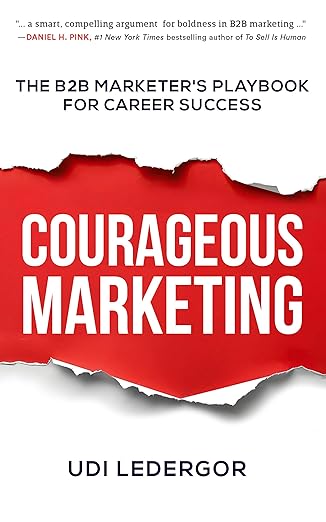
  • Courageous Marketing: The B2B Marketer’s Playbook for Career Success

    Courageous Marketing: The B2B Marketer’s Playbook for Career Success

    Book Review & Synopsis

    Udi Ledergor’s Courageous Marketing is a transformative guide for B2B marketers seeking to break free from conventional, uninspired strategies. Drawing on over two decades of experience, including his role as CMO at Gong, Ledergor advocates for boldness and creativity as essential tools for driving business success. The book challenges the prevailing “play-it-safe” mentality in B2B marketing, arguing that taking calculated risks and embracing originality are critical for standing out in a crowded marketplace. Released on April 10, 2025, it serves as both a manifesto and a practical playbook for marketers aiming to make a lasting impact.

    Through vivid examples—such as Gong’s innovative Super Bowl-adjacent commercial stunt—Ledergor demonstrates how unconventional approaches can deliver outsized results even on limited budgets. The book is structured around actionable strategies designed to empower marketers to craft compelling content, leverage guerrilla marketing tactics, create memorable events, and establish thought leadership.

    Key Points from the Book

    Core Themes

    • Boldness as a Strategy: Playing it safe is portrayed as the riskiest approach in today’s competitive marketing landscape.

    • Creativity Over Conformity: The book emphasizes the importance of originality and human creativity, especially in an era dominated by AI-generated content.

    • Marketing with Impact: Campaigns should not only be creative but also drive tangible business results.

    Actionable Strategies

    1. Craft Compelling Content: Develop material so engaging that audiences would pay for it.

    2. Leverage Guerrilla Marketing: Use unconventional tactics to amplify brand presence without large budgets.

    3. Establish Product Categories: Position offerings strategically to dominate new market segments.

    4. Design Memorable Events: Create experiences that resonate deeply with attendees and foster brand loyalty.

    5. Champion Industry Issues: Take bold stands on pivotal topics to establish thought leadership.

    6. Advance Careers and Teams: Cultivate personal growth and build high-performing teams through intentional strategies.

    Why It Matters Now

    • With AI flooding the market with generic content, human creativity has become a key differentiator.

    • The book provides a roadmap for marketers to navigate this landscape by embracing audacity and innovation.

    Endorsements

    • Industry leaders like Neil Patel, Robert Cialdini, and Daniel H. Pink praise the book for its practical advice and bold vision.

    • Michelle Taite (CMO of Intuit Mailchimp) highlights its transformative potential for marketers tired of conventional approaches.

    Real-World Examples

    • Gong’s viral marketing stunts, such as cost-effective yet impactful Super Bowl-related campaigns, illustrate how bold ideas can succeed without excessive spending.

    Availability

    Courageous Marketing is available through major retailers like Amazon and Barnes & Noble. Udi Ledergor will also be speaking at upcoming events, including Canva Create (Los Angeles), Pavilion CMO Summit (Atlanta), and The Brand Tech Summit (Tel Aviv).

    This book is not just a guide—it’s a call to action for marketers seeking to challenge the status quo and redefine what’s possible in B2B marketing.

    This is the heading

    Lorem ipsum dolor sit amet, consectetur adipiscing elit. Ut elit tellus, luctus nec ullamcorper mattis, pulvinar dapibus leo.

  • Transforming In-Store Execution with AI: Introducing the Sentia Smart Layer

    Transforming In-Store Execution with AI: Introducing the Sentia Smart Layer

    Transforming In-Store Execution with AI: Introducing the Sentia Smart Layer

    Sentia’s AI seers here to give you the latest in the CPG wars where margins are tighter than a.. well you know and the slightest edge is fought for like the beaches of Normandy. Fear not faithful CPG warrior – we have the scoop on what’s shaking in, in store merchandising and what you need to know you’re competitors are already doing and why your numbers are dropping faster than tariff threats.

    Let’s get back to basics. In today’s hyper charged consumer goods industry, staying ahead in retail execution is not a option it’s win or bust.

    Enter Sentia Smart Layer, a groundbreaking AI-powered platform designed to revolutionize how field teams and visual merchandisers operate. With cutting-edge AI enhanced technologies, Sentia transforms images and voice inputs into actionable insights in real-time, empowering teams to deliver unparalleled in-store performance.

    Your Question?

    “There is a bit of AI marketing “fluffier” around AI App capabilities. What makes Sentia AI different from all these AI VC backed startups that claim to uncover every target, upsell, cross sell, website pixel generated lead that was never possible before Alexander Grahm Bell and the telephone.” – Frustrated not willing to go on record CEO (4X in past 5 days).  But as Sentia says, I digress.

    Why are these CEO, COO, CFOs feeling so much frustration when their CRMs can be enhanced with AI?

    What real world problems can it solve – that I will be willing to pay for?   

    Why Sentia Smart Layer is a Game-Changer

    Here’s how Sentia is redefining retail execution:

    1. Effortless Field Reporting
      Say goodbye to tedious typing! Field teams can now create detailed reports simply by speaking. Sentia’s AI extracts insights from photos of shelves, fixtures, and displays, enabling real-time data capture and reducing administrative burdens.
    2. In-Store Visual Analysis
      Sentia analyzes store images to ensure planogram compliance, measure stock levels, assess POS material quality, and validate shelf allocations—all while suggesting layout improvements to optimize shopper flow and visibility.
    3. Competitive Intelligence
      Beyond monitoring your own products, Sentia tracks competitor share of shelf, promotional displays, and stock levels—providing visual benchmarking to keep you ahead of the competition.
    4. Real-Time Prioritization
      Incoming reports are scored for urgency and relevance, surfacing critical issues like compliance gaps or stock shortages as actionable Smart Cards. Teams can act fast to fix problems before they escalate.
    5. Continuous Monitoring
      Every submitted image is vetted for out-of-stocks, non-compliant POS materials, competitor intrusions, and execution quality—ensuring proactive alerts for rapid resolution.
    6. On-Demand Summaries
      Get concise visual summaries by store, region, or retailer with execution scores, competitor trends, and actionable recommendations—all at your fingertips.
    7. Natural Language Chat Interface
      Just ask questions like “What stores have execution issues this week?” or “Summarize merchandising problems in Region Y,” and Sentia delivers instant answers through conversational AI.

    Why It Matters

    The Sentia Smart Layer empowers brands with unparalleled control and visibility across thousands of retail locations—without relying on outdated manual reporting or delayed audits. By enabling faster decision-making and smarter execution strategies:

    • Teams act swiftly on opportunities to improve share at the shelf.
    • Brands gain deeper insights into competitor activities and trends.
    • Execution quality reaches new heights with real-time monitoring and actionable insights.

    Key Features That Set Sentia Apart

    • Trend Detection: Spot long-term patterns in competitor movements or display quality.
    • Predictive Alerts: Receive warnings about potential stock-outs or compliance gaps before they happen.
    • Integration-Ready: Sync seamlessly with retail apps, CRMs, and BI dashboards for streamlined workflows.
    • Gamification: Motivate field teams with scorecards and leaderboards to drive performance excellence.

    Revolutionizing Retail Execution Starts Here

    The Sentia Smart Layer isn’t just an innovation—it’s a transformation of how consumer goods brands approach in-store execution. From empowering field teams to delivering competitive intelligence at scale, this platform is the ultimate tool for winning at retail.

    Are you ready to elevate your brand’s in-store presence? Let Sentia lead the way into the future of smarter retail execution!

    Keywords for Visibility:

    #AI #RetailExecution #ConsumerGoods #VisualMerchandising #PlanogramCompliance #CompetitiveIntelligence #SmartTechnology #FieldTeams #RetailInnovation #SentiaSmartLayer


    Add Your Heading Text Here

  • How do Field Sales Reps Gain an Edge with AI? 10 AI Features to Know

    How do Field Sales Reps Gain an Edge with AI? 10 AI Features to Know

    AI in Field Sales: Current Impact and Future Potential

    Field sales reps have both the coolest (on the road!) and most stressful jobs out there. Sales in general can be an extremely monetarily rewarding field yet also has equally high job churn rates. Salespeople by nature are competive, always looking for an edge and they were some of the first to truly embrace AI and quickly leverage it.

    Let’s start with the statistics. Today’s field sales representatives spend approximately 65% of their time on non-selling activities—a ratio that AI technologies are now flipping by handling administrative burdens and enabling reps to focus on relationship building and closing deals1. Organizations implementing AI-powered sales tools are experiencing remarkable results: leads increasing by over 50%, call times reducing by 60-70%, and operational costs decreasing by 40-60%3. Lots of opportunities to apply AI – But how, who and which tools are delivering?

    Today’s Top 10 AI Features for Field Sales Representatives

    1. AI Meeting Note-Taking and Transcription

    Use Case: Field sales representatives can focus entirely on customer conversations while AI automatically captures, transcribes, and summarizes meetings.
    Example: Fireflies.ai integrates with video conferencing platforms to record, transcribe, and summarize customer interactions, then syncs these notes directly to your CRM2.

    1. AI-Driven Conversation Intelligence

    Use Case: Reps receive real-time feedback and coaching on their sales conversations based on patterns from top performers.
    Example: Gong.io analyzes sales calls to provide actionable insights and suggestions for improvement, such as optimal question patterns for discovery calls2.

    3. Prospect Personality Assessment

    Use Case: Before making contact, sales representatives gain insights into a prospect’s communication style and preferences.
    Example: Crystal uses compliant customer data to predict a prospect’s personality using the DISC methodology, then provides communication recommendations tailored to that individual2.

    4. AI-Powered Sales Forecasting

    Use Case: Field sales teams leverage predictive analytics for more accurate territory planning and goal setting.
    Example: InsightSquared offers 350 pre-built reports and identifies data gaps affecting forecast accuracy, helping reps better predict monthly bookings and opportunity values2.

    5. Automated Meeting Preparation

    Use Case: Reps receive comprehensive pre-meeting intelligence without manual research.
    Example: Cirrus Insight’s Meeting AI automatically compiles company and contact information ahead of scheduled meetings, eliminating hours of preparation time2.

    6. Territory Management and Route Optimization

    Use Case: AI optimizes travel routes between customer locations, maximizing productive selling time.
    Example: Field sales organizations using AI for territory management report 20-30% increases in productivity by optimizing customer visit sequencing1.

    7. Lead Prioritization and Scoring

    Use Case: Representatives focus on prospects most likely to convert based on AI analysis of customer behavior patterns.
    Example: AI systems analyze website visitor behavior and can send automatic “trigger reports” when high-quality leads are identified3.

    8. AI-Enhanced CRM Assistance

    Use Case: Sales reps receive guided selling recommendations throughout the sales process.
    Example: Salesforce Sales Cloud’s Einstein Copilot leverages customer data to guide sellers, generate personalized emails, and suggest actions most likely to move deals forward2.

    9. Automated Follow-up Management

    Use Case: AI ensures consistent post-meeting follow-up by automatically generating and scheduling communications.
    Example: AI SDR agents like Artisan AI’s Ava handle email outreach by drafting responses and automating follow-ups to streamline sales activities3.

    10. Real-time Competitive and Product Information

    Use Case: Field reps instantly access relevant product specifications and competitive information during customer conversations.
    Example: In real estate sales, AI agents process MLS listings, tax records, school ratings, and neighborhood information in real-time during client interactions1.

    Top 5 AI Features Coming in the Next Six Months

    1. Advanced AI Sales Development Representatives

    Expected Impact: Complete automation of early-stage sales processes, with AI agents handling lead generation, qualification, and initial outreach across multiple channels (email, voice, social) with increasingly human-like interaction capabilities3.

    2. Real-time Conversation Coaching

    Expected Impact: AI will provide live, in-ear guidance during customer conversations, suggesting responses to objections, identifying upsell opportunities, and recommending optimal negotiation strategies based on real-time conversation analysis2.

    3. Predictive Opportunity Management

    Expected Impact: AI systems will forecast not just overall sales but individual opportunity outcomes with greater precision, recommending specific actions to improve close probability for each deal in a rep’s pipeline2.

    4. Cross-platform Customer Intelligence

    Expected Impact: AI will aggregate and analyze customer signals across disparate platforms (social media, website visits, email engagement, purchase history) to create comprehensive engagement profiles accessible to field reps in real-time3.

    5. Industry-Specific AI Sales Assistants

    Expected Impact: Rather than generic AI tools, field sales representatives will have access to specialized AI assistants trained on industry-specific knowledge, regulations, and selling patterns, particularly in complex sectors like healthcare, financial services, and manufacturing1.

    Caution: When AI Over-Promises and Under-Delivers

    Field sales leaders should be cautious about several common pitfalls when adopting AI technologies:

    Integration Challenges

    Many AI tools promise seamless integration with existing systems but require significant customization and technical resources to deliver value. Before implementing new solutions, evaluate whether they truly connect with your existing tech stack without creating data silos1.

    Training Requirements

    Some AI systems require extensive training with your specific sales data before providing accurate recommendations. Be realistic about the volume of quality data required and the time needed before seeing meaningful results3.

    Human Oversight Needs

    While automation is valuable, tools that promise to eliminate human involvement entirely often create new forms of work in verification and exception handling. The most effective AI implementations augment rather than replace human expertise1.

    Cost vs. Value Assessment

    Sophisticated AI tools often come with premium pricing. Carefully evaluate whether the promised efficiency gains justify the investment, particularly for smaller sales teams or those with limited technology budgets2.

    Security and Compliance Concerns

    AI tools that access customer data or record conversations may create privacy vulnerabilities or compliance risks in regulated industries. Thoroughly vet vendors’ security practices and compliance certifications3.

    Field Sales Tech Stack Assessment Checklist

    Capability Current Tech Stack AI-Enhanced Potential
    Meeting Documentation Manual note-taking, inconsistent CRM updates Automated transcription, AI-generated summaries, CRM integration without manual entry
    Lead Prioritization Intuition-based or simple scoring models Behavioral analysis, predictive conversion modeling, real-time engagement tracking
    Territory Management Static assignments, manual routing Dynamic territory optimization, predictive customer value mapping, automated route planning
    Customer Intelligence Limited to CRM data, manually researched Real-time aggregation across platforms, personality insights, competitive intelligence
    Conversation Effectiveness Limited coaching, periodic reviews Real-time guidance, pattern recognition from top performers, automated improvement suggestions
    Follow-up Management Manual tracking, template-based Automated, personalized follow-ups with optimal timing recommendations
    Sales Forecasting Experience-based, often inaccurate AI-driven predictions with specific deal-level insights and improvement recommendations
    Competitive Intelligence Static battlecards, limited updates Real-time market intelligence, personalized competitive positioning suggestions
    Product Knowledge Manual research, limited accessibility Instant access to relevant specifications, AI-suggested positioning based on customer needs
    Performance Analytics Lagging indicators, manual analysis Real-time performance tracking, AI-recommended improvement areas, predictive coaching

    What’s Coming Next?

    Despite the hype we’re on the fringes of AI in business. As is typical in most tech cycles the marketing and sales drumbeat is louder than the actual successful implementations to date. I’m predicting that 2025 will be the year that AI starts taking hold and becomes accountable for real ROI just like any tech tool. That will force the pretenders out and the rest focus on real world solutions that have a clear and demonstratable impact.

    With that as a base there is no doubt that AI can fundamentally transform field sales by addressing core inefficiencies in the traditional selling model and field store visit teams. The most successful implementations to date pair AI capabilities with human expertise (“Functional AI) rather than attempting to replace it. As these technologies continue to evolve over the next six to nine months, field sales organizations that strategically evaluate and integrate AI tools while maintaining focus on relationship building will create sustainable competitive advantages.

    The key to successful AI adoption is to treat like any other new technology. Do this by starting small with focused use cases, to known easy to see problems that can deliver immediate value, then gradually expanding to more complex processes as teams build confidence in their digital teammates. If your analysis shows only incremental improvements (less than 20% ROI) look for bigger impact opportunities.

    Citations:

    1. https://relevanceai.com/agent-templates-roles/field-sales-representative-ai-agents
    2. https://www.cognism.com/blog/ai-sales-tools
    3. https://research.aimultiple.com/sales-ai/
    4. https://goconsensus.com/blog/best-ai-sales-tools/
    5. https://relevanceai.com/agent-templates-roles/sales-forecasting-analyst-ai-agents
    6. https://www.leadbeam.ai/blog/how-automation-ai-agents-ai-sdrs-impact-field-sales
    7. https://makesocialmediasell.com/ai-in-sales-examples/
    8. https://www.mailmodo.com/guides/ai-tools-for-sales/
    9. https://www.copy.ai/blog/field-sales-representatives
    10. https://www.close.com/blog/ai-sales-tools
    11. https://www.stackmoxie.com/blog/ai-readiness-checklist-for-marketing-ops-revops/
    12. https://www.avoma.com/blog/sales-forecasting-tools
    13. https://www.mdm.com/article/featured/featured-blog/ai-in-the-field-the-secret-to-success-in-outside-sales/
    14. https://www.glideapps.com/use-cases/field-sales
    15. https://www.mentimeter.com/blog/business/ai-sales-tools
    16. https://huble.com/blog/ai-use-cases
    17. https://www.getassistive.com/blog/field-sales-crm-solution-checklist-of-essential-features
    18. https://www.clappia.com/blog/how-ai-can-help-with-field-sales-tracking
    19. https://zapier.com/blog/ai-sales-assistant/
    20. https://cloud.google.com/transform/101-real-world-generative-ai-use-cases-from-industry-leaders
    21. https://skaled.com/insights/generative-ai-sales-checklist/
    22. https://veloxy.io/sales-ai/field-sales-software/
    23. https://spotio.com/blog/ai-sales-tools/
    24. https://www.fullestop.com/blog/ai-in-sales-use-cases-benefits-and-challenges
    25. https://www.quantified.ai/blog/sales-readiness-checklist/
    26. https://www.techpowerup.com/forums/threads/report-ai-software-sales-to-experience-massive-growth-with-40-6-cagr-over-the-next-five-years.325039/
    27. https://www.mckinsey.com/capabilities/growth-marketing-and-sales/our-insights/an-unconstrained-future-how-generative-ai-could-reshape-b2b-sales
    28. https://www.gartner.com/peer-community/post/ai-improve-sales-operations
    29. https://www.salesmate.io/blog/ai-sales-assistant/
    30. https://learnprompting.org/blog/ai-tools-for-sales-teams
    31. https://www.mindtheproduct.com/order-promising-the-secret-sauce-of-multi-channel-fulfillment/
    32. https://www.pwc.com/us/en/tech-effect/ai-analytics/ai-predictions.html
    33. https://www.vivun.com/blog/5-ai-trends-shaping-the-future-of-sales
    34. https://www.linkedin.com/pulse/ai-agents-overpromising-underdelivering-closer-look-richard-hn2pc
    35. https://veloxy.io/sales-ai/software-comparison/