Tag: AI Strategy

  • Mixed Intelligence: The Future of Agentic AI & RevOps

    Mixed Intelligence: The Future of Agentic AI & RevOps

    Key Takeaways

    • Mixed Intelligence Synergy: The “Both/And” principle combines machine scale with human judgment to create 10x productivity gains in architecture and radiology.
    • Agentic Shift: Transitioning from passive chatbots to active Agentic AI that executes tasks autonomously within RevOps and IT operations.
    • Wisdom Worker Evolution: Human roles are shifting toward “agent management,” prioritizing creativity, intuition, and discernment over rote execution.
    • Technical Governance: Implementation of Explainable AI (XAI) frameworks like LIME is mandatory to ensure transparency and trust in automated decision-making.
    • Economic Realignment: The “SaaS-pocalypse” of 2026 is driving a shift from horizontal point solutions to vertical, AI-native infrastructure.
    • Operational Velocity: AI handles the volume and complexity, allowing humans to handle judgment, connection, and curiosity.

    Table of Contents

    • mixed-intelligence
    • zha-architecture
    • radiology
    • engineering
    • revops
    • saas-pocalypse
    • aeo-strategy
    • technical-dive
    • leadership

    The prevailing narrative concerning technology and labor has frequently been bifurcated between total automation and human-centric resistance. However, the emergence of Mixed Intelligence suggests a third path based on the “Both/And” Principle, where the strengths of both domains are synthesized. This principle rejects the binary choice between opposites, instead practicing integrative thinking to create solutions that neither humans nor machines could achieve independently.

    In this framework, Artificial Intelligence functions as a cognitive amplifier, handling the volume and complexity that often drains human energy. This allows the human professional to focus on judgment, connection, and curiosity—attributes that remain uniquely resistant to algorithmic replication. By 2030, the organizations that dominate their respective markets will be those that have mastered the synergy between human intuition and machine scale.

    Leaders must recognize that while Neural Networks can identify patterns in seconds that would take humans hours to uncover, they lack the contextual awareness required for ethical decision-making. In banking, for instance, AI analytics identifies risks and opportunities, but the human advisor remains the differentiator by translating those insights into strategic, trust-based guidance. This collaborative model transforms technology from a perceived threat into a primary competitive advantage for the modern enterprise.

    The risk of the current era is not automation itself, but waiting too long to adapt to these shifting dynamics. Those who lead with foresight will anticipate the “Hard Trend” of human-AI synergy and seize the exponential opportunities it provides. Technology futurist(https://www.burrus.com/ai-human-augmentation-leadership-advantage/) that if a task can be automated, it will be, necessitating a shift in the workforce conversation from job elimination to skill elevation.

    Architecture has historically been a profession of long timelines and manual drafting, but Zaha Hadid Architects (ZHA) has fundamentally rewired the design process. Between 2024 and 2026, ZHA integrated machine learning and parametric systems into its core workflows to transform how buildings are conceived. In 2025, the majority of the firm’s design concepts began not with a physical sketch, but with a strategic AI Prompt.

    The firm utilizes text-to-image tools like DALL-E and Midjourney to explore thousands of visual directions in minutes. Designers prompt these systems using ZHA’s signature formal language—fluid curves and organic transitions—generating dozens of iterations during early competition phases. However, the human architect remains the primary filter, selecting only 10% to 15% of machine outputs to advance into 3D modeling.

    Beyond aesthetics, ZHA’s Computational Design Research Group (CODE) applies machine learning for floorplate optimization and environmental performance. This allows the firm to validate structural behavior and pedestrian flow digitally before any physical construction begins. The KAFD Metro Station in Riyadh, which opened in late 2024, stands as a testament to this process; its facade perforations were calculated via AI to minimize solar gain.

    Performance MetricTraditional WorkflowZHA AI-Integrated WorkflowImprovement
    Early-Stage Iterations10-20 concepts / week100+ concepts / day10x Velocity
    Client Feedback Loop7 days1 day / Real-time85% Reduction
    Daylight Access Opt.Rule of thumb+20% AccuracyEvidence-based
    Structural EfficiencyManual calculationML-optimized geometryMaterial reduction

    Principal Patrik Schumacher maintains that while AI generates the options, the authorship and accountability for the building’s performance remain strictly with the human architect. The architect is responsible for selecting, refining, and deciding, as accountability for structural, environmental, and civic performance cannot be delegated to an algorithm. This is a prime example of why we must(https://sentia.community/how-to-eliminate-crm-data-silos-with-agentic-ai-in-2026/).

    In the healthcare sector, particularly within radiology, the integration of AI has moved from experimental pilot programs to daily clinical practice. By 2025, over 70% of radiology departments in the United States reported an increased reliance on AI-driven diagnostic tools. These systems do not replace the radiologist but instead handle the cognitive and administrative load that frequently leads to burnout.

    Radiologists now use AI to detect abnormalities faster, prioritize urgent cases, and reduce diagnostic errors. While a human radiologist can identify markers of disease on a chest X-ray in as little as 250 milliseconds, they are often bogged down by transcribing reports. AI agents are now stepping into this pre- and post-interpretive space, preparing patient summaries and surfacing missing clinical context.

    The shift toward Value-Based Care means that imaging departments are increasingly evaluated on patient outcomes rather than scan volume. This transition prioritizes technologists and physicians who can integrate AI insights with patient history and ethical judgment. According to(https://theimagingwire.com/2026/01/07/the-top-trends-shaping-radiology-in-2026/), multimodal fusion that integrates clinical context with imaging will be the primary differentiator for winning medical solutions in 2026.

    The field of software engineering has experienced a radical disruption through the widespread adoption of GitHub Copilot and similar AI-assisted coding tools. By 2025, 90% of Fortune 100 companies had deployed these systems to their development teams. Data indicates that developers are now completing tasks 55% faster on average, representing a significant reduction in the development lifecycle.

    GitHub Copilot currently generates approximately 46% of all code written by its users, with this figure rising to 61% for Java projects. This shift is transforming the role of the developer from a manual writer of code to an orchestrator of logic. While the AI excels at generating boilerplate and test cases, it lacks the architectural judgment required for complex business logic.

    Engineering MetricWithout AI AssistantWith AI Assistant (2026)Efficiency Gain
    Task Completion Time2 hours 41 minutes1 hour 11 minutes55% Faster
    Time to First PR9.6 days2.4 days75% Reduction
    Successful Build RateBase+84%Reliability Jump
    Code RetentionN/A88%High Accuracy

    The introduction of these tools has also significantly impacted developer satisfaction, with 90% reporting feeling more fulfilled. However, there is an emerging risk of dependency, as 67% of developers use these tools five or more days per week. Furthermore, security remains a critical concern, with Accenture research finding that 29.1% of Python code generated by AI contains potential security weaknesses.

    Revenue Operations (RevOps) has emerged as the central nervous system for modern B2B SaaS organizations. Historically, marketing, sales, and customer success departments operated in silos, leading to fragmented data and inconsistent customer experiences. The RevOps model unifies these functions under a single operational strategy, often overseen by a Chief Revenue Officer (CRO).

    By 2026, the Agentic Paradigm is redefining RevOps from a set of reactive processes to a proactive system of autonomous intent. Gartner predicts that by 2028, 75% of RevOps tasks will be executed by AI agents. These agents do not merely suggest actions; they execute them independently within defined guardrails, such as performing agentic quote-to-revenue operations.

    RevOps PillarTraditional RoleAgentic Evolution (2026)
    OperationsReactive monitoring & manual ticketingProactive autonomous remediation
    EnablementGeneric training and static playbooksAI-curated learning paths & dynamic scripts
    InsightsMonthly reporting and manual dashboardsReal-time predictive analytics & pattern detection
    ToolsDisconnected SaaS point solutionsUnified AI infrastructure and SSOT

    The transition to agentic IT operations is particularly visible in DevOps and FinOps. A June 2025 study found that IT operations represent 52% of all agentic AI use cases, far outperforming marketing and finance. These agents can monitor hardware characteristics to predict component failures six months in advance. For a deeper dive into this infrastructure, see our(https://sentia.community/ai-enablement-engines-for-revops-complete-guide/).

    The broader software market is currently undergoing a period of collapse and consolidation. Forrester reports that in early 2026, a massive sell-off in SaaS stocks erased over $1 trillion in market capitalization. This “SaaS-pocalypse” is driven by a shift away from horizontal point solutions toward vertical-specific software that addresses complex industries like healthcare or manufacturing.

    Enterprises are now renegotiating contracts, prioritizing vendors with clear AI Agent roadmaps. The market for AI coding tools alone reached $7.37 billion in 2025, with GitHub Copilot holding a 42% market share. As Agentic AI matures, the traditional “software-as-a-service” model is being replaced by “results-as-a-service.”

    Economic Indicator2025 Baseline2026-2029 Forecast
    Global SaaS Spending$318 Billion$576 Billion (2029)
    Vertical Software Market$133.5 Billion$194.0 Billion (2029)
    AI Carbon EmissionsBase1.3 – 1.7 Gigatons annually
    Buyer InteractionHuman-led discovery30% view GenAI as meaningful

    Forrester guidance recommends that leaders re-architect their SaaS investments to prioritize domain-specific vendors. B2B buyers are increasingly using private engines to support purchasing decisions, with one in five sellers now forced to engage in agent-led quote negotiations. Success will hinge on investing in AI governance and balancing human expertise with AI tools.

    As search behavior shifts from “ten blue links” to interactive AI answers, traditional SEO tactics are becoming insufficient. In 2026, the search landscape is dominated by AI Overviews and answer cards that often appear above organic results. This evolution has given rise to Answer Engine Optimization (AEO) and Generative Engine Optimization (GEO).

    AEO helps your business show up in AI-driven answers instead of just search listings. If your content isn’t structured for AI readability, you are effectively invisible to tools like ChatGPT and Perplexity. To capture these results, brands must structure content to directly answer questions—listing tools or steps immediately before diving into technical details.

    Organizations must prioritize Schema and Structured Data Engineering to ensure AI can recognize, recommend, and rank them. A well-structured FAQ page is one of the best formats to provide these answers to new discovery tools. Using full questions as headings and providing the answer in the first sentence makes it easy for AI to “lift” your content.

    At the core of the AI transformation are Neural Networks, simulations of biological brain functions that process information through layers of interconnected nodes. While powerful, these models often operate as “black boxes,” making it difficult for humans to understand how a specific decision was reached. This lack of transparency is a significant barrier to enterprise adoption in high-stakes fields.

    To address this, researchers utilize Explainable AI (XAI) frameworks, with LIME (Local Interpretable Model-agnostic Explanations) being one of the most prominent. LIME works by perturbing the input data—making small changes to features—and observing how those changes affect the model’s prediction. It then trains a simpler, interpretable model to provide a local explanation of the original model’s behavior.

    Consider a model predicting credit risk. To explain a specific rejection, LIME might generate a mathematical relationship like:

    $$f(x) \approx g(z) = w_0 + w_1 z_1 + w_2 z_2 + \dots + w_n z_n$$

    Where $g(z)$ is the interpretable surrogate model and $w_i$ indicate feature importance. In medical diagnostics, DLIME (Deterministic LIME) utilizes Hierarchical Clustering to ensure that the same prediction always receives the same explanation. This stability is critical for earning the trust of medical professionals who require repeatable results.

    For C-suite executives, the priority must shift from simply buying licenses to re-architecting the organization around Mixed Intelligence. This requires a “45-Day Agentic Readiness Checklist” to ensure the enterprise is prepared for autonomous execution. The first step is the appointment of an AI Orchestrator, a leader responsible for ensuring data liquidity across the stack.

    HR and people leaders must simultaneously shift their investment toward “Change Fitness.” 31 that success with AI relies less on technology alone and more on the talent strategies that support it. This involves developing human capabilities that AI cannot replicate: critical thinking, ethical judgment, and complex relationship management.

    RoleImmediate ActionLong-Term Strategic Move
    Board Members / CEOsIdentify functions for automationRedirect human capacity to strategy
    HR / People LeadersAudit AI-relevant skillsInvest in “Change Fitness” training
    Functional ManagersList 10 most time-consuming tasksImplement 90-day content/IT pilots
    RevOps LeadersConsolidate data into an SSOTBuild an AI Agent roadmap

    Functional managers should involve employees early in the process to allay fears of displacement. By demonstrating AI’s potential to remove the “least interesting tasks,” leaders can build a culture that embraces technological ambition. The Wisdom Worker isn’t a theoretical future employee; they are the hire you are making this quarter.

    Q1: Will AI replace my job in 2026?

    AI is more likely to change jobs rather than eliminate them entirely. Roles requiring human creativity, critical thinking, and interpersonal skills will be more secure. Instead of viewing AI as a threat, see it as a tool that can make your future job more interesting and efficient.

    Q2: What is “Mixed Intelligence”? Mixed Intelligence is a framework where human judgment and machine intelligence work together. Developed by futurist Daniel Burrus, it relies on the “Both/And” principle, combining machine scale with human intuition to create solutions that neither could achieve independently.

    Q3: How much faster can developers code with AI? Research shows developers complete tasks 55% faster when using tools like GitHub Copilot. In controlled tests, a task that took 2 hours and 41 minutes without AI was completed in just 1 hour and 11 minutes with AI assistance.

    Q4: What is “Agentic AI” vs. a Chatbot?

    A chatbot primarily talks and generates text, while an agent acts. If you ask a chatbot to research competitors, it gives you a list; an agent opens a browser, visits sites, screenshots pricing, and compiles a report autonomously.

    Q5: What is the “SaaS-pocalypse”?

    This refers to a 2026 market sell-off where horizontal point solutions lost over $1 trillion in value. Enterprises are now shifting toward vertical-specific software and AI-native platforms that offer integrated agentic workflows and proprietary data.

    Q6: What is Answer Engine Optimization (AEO)? AEO is a strategy to ensure your brand is seen in AI-generated search results like Google’s AI Overview or ChatGPT. It involves structuring your content into clear, authoritative blocks that AI models can easily extract and cite.

    Q7: How does AI improve radiology?

    AI handles repetitive tasks like draft report generation and finding markers of disease, allowing radiologists to focus on clinical judgment. By 2025, over 70% of radiology departments reported increasing their reliance on these AI tools.

    Q8: What are the risks of using AI agents?

    Key risks include data privacy, weakened human oversight, and potential security vulnerabilities. Experts recommend using agents that operate in “sandboxed” environments and maintaining a “human-in-the-loop” governance framework to ensure accountability and safety.

    Q9: What is “Local Interpretable Model-agnostic Explanations” (LIME)? LIME is a technique used to make black-box machine learning models more transparent. It creates a simpler, interpretable model locally around a specific prediction to show which features most influenced the AI’s decision.

    Q10: What is a “Wisdom Worker”? A wisdom worker is a professional who combines technical AI fluency with human judgment, curiosity, and strategic intent. They focus on directing AI agents toward better outcomes rather than executing repetitive manual tasks themselves.


  • AI Doctor in the House: How to Tailor Your AI Strategy to Fit Your Company’s Goals and Size

    AI Doctor in the House: How to Tailor Your AI Strategy to Fit Your Company’s Goals and Size

    We’re often asked, does size matter when it comes to deploying AI? How big should a company be before evaluating or deploying AI? Where should we start? How much should we budget? Should we wait for our competitors to do it first, then deploy our AI with best practice results? So many great questions! Here’s where to start:

    Aligning your AI strategy with your company’s unique objectives and scale is essential for maximizing value and minimizing risk. Here’s a practical approach to ensure your AI initiatives are both effective and relevant:

    1. Define Clear, Business-Specific Objectives

    Start by identifying what you want AI to achieve for your company. Consider:

    • Cost reduction or workforce optimization
    • Competitive differentiation or market leadership
    • Enhanced customer experience
    • Operational efficiency and process improvement
    • Faster innovation or improved forecasting

    Your goals should reflect your company’s mission, current challenges, and future ambitions.

    2. Assess Your Company’s Readiness and Resources

    Your company’s size and current capabilities will shape your AI journey:

    Company SizeTypical AI Approach
    Small BusinessesLeverage pre-built AI features in existing software (e.g., accounting, CRM, HR tools). Focus on easy wins.
    Mid-Sized FirmsExplore automation (RPA), workflow tools, and packaged AI solutions.
    Large EnterprisesInvest in custom AI development, proof-of-concept projects, and advanced analytics.
    • Small firms: Prioritize solutions embedded in your current platforms to avoid heavy investment in data science talent.
    • Mid-sized firms: Use automation and workflow tools to drive efficiency before considering more advanced AI.
    • Large enterprises: Pursue strategic, innovative AI projects that can transform your industry position. Push the envelope and look for major advancements while simultaneously doing incremental, easily defined projects with crystal clear ROI.

    3. Evaluate and Prepare Your Data

    AI success depends on data quality and accessibility. Take these steps:

    • Audit where your data lives (cloud, on-premises, spreadsheets, etc.).
    • Cleanse and standardize your data to ensure consistency.
    • Integrate data sources for a unified view.
    • Consider acquiring external datasets if needed for benchmarking or enrichment.

    4. Map and Benchmark Key Processes

    Document your business processes to find where AI can deliver the most impact:

    • Use process mapping tools to visualize workflows, rules, and exceptions.
    • Benchmark current performance (e.g., error rates, processing times).
    • Identify inefficiencies or bottlenecks AI could address.

    5. Prioritize AI Opportunities Based on Value and Feasibility

    Not all AI projects are equal. Prioritize by:

    • Potential impact on your goals
    • Ease of implementation given your resources
    • Return on investment (ROI) and risk profile

    Focus first on projects that are achievable and deliver measurable value.

    6. Start Small—Pilot and Learn

    Begin with a pilot or proof-of-concept project:

    • Involve a cross-functional team to build internal knowledge.
    • Set clear success metrics aligned with your business objectives.
    • Use lessons learned to refine your broader AI strategy.

    7. Address Organizational Change

    Prepare your team for AI adoption:

    • Communicate the vision and benefits of AI.
    • Invest in training and reskilling as needed.
    • Anticipate and manage resistance or anxiety about change.

    8. Continuously Review and Adapt

    AI and business needs evolve—so should your strategy:

    • Regularly review project outcomes and ROI.
    • Adjust your roadmap as new opportunities or challenges emerge.
    • Stay informed about advances in AI relevant to your industry.

    By aligning your AI strategy with your company’s unique goals and size, you ensure that each initiative is purposeful, practical, and positioned for success.

    #AI #AIAdoption #AIStrategy #AIPlanning #AIROI #CAIO

  • How do Field Sales Reps Gain an Edge with AI? 10 AI Features to Know

    How do Field Sales Reps Gain an Edge with AI? 10 AI Features to Know

    AI in Field Sales: Current Impact and Future Potential

    Field sales reps have both the coolest (on the road!) and most stressful jobs out there. Sales in general can be an extremely monetarily rewarding field yet also has equally high job churn rates. Salespeople by nature are competive, always looking for an edge and they were some of the first to truly embrace AI and quickly leverage it.

    Let’s start with the statistics. Today’s field sales representatives spend approximately 65% of their time on non-selling activities—a ratio that AI technologies are now flipping by handling administrative burdens and enabling reps to focus on relationship building and closing deals1. Organizations implementing AI-powered sales tools are experiencing remarkable results: leads increasing by over 50%, call times reducing by 60-70%, and operational costs decreasing by 40-60%3. Lots of opportunities to apply AI – But how, who and which tools are delivering?

    Today’s Top 10 AI Features for Field Sales Representatives

    1. AI Meeting Note-Taking and Transcription

    Use Case: Field sales representatives can focus entirely on customer conversations while AI automatically captures, transcribes, and summarizes meetings.
    Example: Fireflies.ai integrates with video conferencing platforms to record, transcribe, and summarize customer interactions, then syncs these notes directly to your CRM2.

    1. AI-Driven Conversation Intelligence

    Use Case: Reps receive real-time feedback and coaching on their sales conversations based on patterns from top performers.
    Example: Gong.io analyzes sales calls to provide actionable insights and suggestions for improvement, such as optimal question patterns for discovery calls2.

    3. Prospect Personality Assessment

    Use Case: Before making contact, sales representatives gain insights into a prospect’s communication style and preferences.
    Example: Crystal uses compliant customer data to predict a prospect’s personality using the DISC methodology, then provides communication recommendations tailored to that individual2.

    4. AI-Powered Sales Forecasting

    Use Case: Field sales teams leverage predictive analytics for more accurate territory planning and goal setting.
    Example: InsightSquared offers 350 pre-built reports and identifies data gaps affecting forecast accuracy, helping reps better predict monthly bookings and opportunity values2.

    5. Automated Meeting Preparation

    Use Case: Reps receive comprehensive pre-meeting intelligence without manual research.
    Example: Cirrus Insight’s Meeting AI automatically compiles company and contact information ahead of scheduled meetings, eliminating hours of preparation time2.

    6. Territory Management and Route Optimization

    Use Case: AI optimizes travel routes between customer locations, maximizing productive selling time.
    Example: Field sales organizations using AI for territory management report 20-30% increases in productivity by optimizing customer visit sequencing1.

    7. Lead Prioritization and Scoring

    Use Case: Representatives focus on prospects most likely to convert based on AI analysis of customer behavior patterns.
    Example: AI systems analyze website visitor behavior and can send automatic “trigger reports” when high-quality leads are identified3.

    8. AI-Enhanced CRM Assistance

    Use Case: Sales reps receive guided selling recommendations throughout the sales process.
    Example: Salesforce Sales Cloud’s Einstein Copilot leverages customer data to guide sellers, generate personalized emails, and suggest actions most likely to move deals forward2.

    9. Automated Follow-up Management

    Use Case: AI ensures consistent post-meeting follow-up by automatically generating and scheduling communications.
    Example: AI SDR agents like Artisan AI’s Ava handle email outreach by drafting responses and automating follow-ups to streamline sales activities3.

    10. Real-time Competitive and Product Information

    Use Case: Field reps instantly access relevant product specifications and competitive information during customer conversations.
    Example: In real estate sales, AI agents process MLS listings, tax records, school ratings, and neighborhood information in real-time during client interactions1.

    Top 5 AI Features Coming in the Next Six Months

    1. Advanced AI Sales Development Representatives

    Expected Impact: Complete automation of early-stage sales processes, with AI agents handling lead generation, qualification, and initial outreach across multiple channels (email, voice, social) with increasingly human-like interaction capabilities3.

    2. Real-time Conversation Coaching

    Expected Impact: AI will provide live, in-ear guidance during customer conversations, suggesting responses to objections, identifying upsell opportunities, and recommending optimal negotiation strategies based on real-time conversation analysis2.

    3. Predictive Opportunity Management

    Expected Impact: AI systems will forecast not just overall sales but individual opportunity outcomes with greater precision, recommending specific actions to improve close probability for each deal in a rep’s pipeline2.

    4. Cross-platform Customer Intelligence

    Expected Impact: AI will aggregate and analyze customer signals across disparate platforms (social media, website visits, email engagement, purchase history) to create comprehensive engagement profiles accessible to field reps in real-time3.

    5. Industry-Specific AI Sales Assistants

    Expected Impact: Rather than generic AI tools, field sales representatives will have access to specialized AI assistants trained on industry-specific knowledge, regulations, and selling patterns, particularly in complex sectors like healthcare, financial services, and manufacturing1.

    Caution: When AI Over-Promises and Under-Delivers

    Field sales leaders should be cautious about several common pitfalls when adopting AI technologies:

    Integration Challenges

    Many AI tools promise seamless integration with existing systems but require significant customization and technical resources to deliver value. Before implementing new solutions, evaluate whether they truly connect with your existing tech stack without creating data silos1.

    Training Requirements

    Some AI systems require extensive training with your specific sales data before providing accurate recommendations. Be realistic about the volume of quality data required and the time needed before seeing meaningful results3.

    Human Oversight Needs

    While automation is valuable, tools that promise to eliminate human involvement entirely often create new forms of work in verification and exception handling. The most effective AI implementations augment rather than replace human expertise1.

    Cost vs. Value Assessment

    Sophisticated AI tools often come with premium pricing. Carefully evaluate whether the promised efficiency gains justify the investment, particularly for smaller sales teams or those with limited technology budgets2.

    Security and Compliance Concerns

    AI tools that access customer data or record conversations may create privacy vulnerabilities or compliance risks in regulated industries. Thoroughly vet vendors’ security practices and compliance certifications3.

    Field Sales Tech Stack Assessment Checklist

    Capability Current Tech Stack AI-Enhanced Potential
    Meeting Documentation Manual note-taking, inconsistent CRM updates Automated transcription, AI-generated summaries, CRM integration without manual entry
    Lead Prioritization Intuition-based or simple scoring models Behavioral analysis, predictive conversion modeling, real-time engagement tracking
    Territory Management Static assignments, manual routing Dynamic territory optimization, predictive customer value mapping, automated route planning
    Customer Intelligence Limited to CRM data, manually researched Real-time aggregation across platforms, personality insights, competitive intelligence
    Conversation Effectiveness Limited coaching, periodic reviews Real-time guidance, pattern recognition from top performers, automated improvement suggestions
    Follow-up Management Manual tracking, template-based Automated, personalized follow-ups with optimal timing recommendations
    Sales Forecasting Experience-based, often inaccurate AI-driven predictions with specific deal-level insights and improvement recommendations
    Competitive Intelligence Static battlecards, limited updates Real-time market intelligence, personalized competitive positioning suggestions
    Product Knowledge Manual research, limited accessibility Instant access to relevant specifications, AI-suggested positioning based on customer needs
    Performance Analytics Lagging indicators, manual analysis Real-time performance tracking, AI-recommended improvement areas, predictive coaching

    What’s Coming Next?

    Despite the hype we’re on the fringes of AI in business. As is typical in most tech cycles the marketing and sales drumbeat is louder than the actual successful implementations to date. I’m predicting that 2025 will be the year that AI starts taking hold and becomes accountable for real ROI just like any tech tool. That will force the pretenders out and the rest focus on real world solutions that have a clear and demonstratable impact.

    With that as a base there is no doubt that AI can fundamentally transform field sales by addressing core inefficiencies in the traditional selling model and field store visit teams. The most successful implementations to date pair AI capabilities with human expertise (“Functional AI) rather than attempting to replace it. As these technologies continue to evolve over the next six to nine months, field sales organizations that strategically evaluate and integrate AI tools while maintaining focus on relationship building will create sustainable competitive advantages.

    The key to successful AI adoption is to treat like any other new technology. Do this by starting small with focused use cases, to known easy to see problems that can deliver immediate value, then gradually expanding to more complex processes as teams build confidence in their digital teammates. If your analysis shows only incremental improvements (less than 20% ROI) look for bigger impact opportunities.

    Citations:

    1. https://relevanceai.com/agent-templates-roles/field-sales-representative-ai-agents
    2. https://www.cognism.com/blog/ai-sales-tools
    3. https://research.aimultiple.com/sales-ai/
    4. https://goconsensus.com/blog/best-ai-sales-tools/
    5. https://relevanceai.com/agent-templates-roles/sales-forecasting-analyst-ai-agents
    6. https://www.leadbeam.ai/blog/how-automation-ai-agents-ai-sdrs-impact-field-sales
    7. https://makesocialmediasell.com/ai-in-sales-examples/
    8. https://www.mailmodo.com/guides/ai-tools-for-sales/
    9. https://www.copy.ai/blog/field-sales-representatives
    10. https://www.close.com/blog/ai-sales-tools
    11. https://www.stackmoxie.com/blog/ai-readiness-checklist-for-marketing-ops-revops/
    12. https://www.avoma.com/blog/sales-forecasting-tools
    13. https://www.mdm.com/article/featured/featured-blog/ai-in-the-field-the-secret-to-success-in-outside-sales/
    14. https://www.glideapps.com/use-cases/field-sales
    15. https://www.mentimeter.com/blog/business/ai-sales-tools
    16. https://huble.com/blog/ai-use-cases
    17. https://www.getassistive.com/blog/field-sales-crm-solution-checklist-of-essential-features
    18. https://www.clappia.com/blog/how-ai-can-help-with-field-sales-tracking
    19. https://zapier.com/blog/ai-sales-assistant/
    20. https://cloud.google.com/transform/101-real-world-generative-ai-use-cases-from-industry-leaders
    21. https://skaled.com/insights/generative-ai-sales-checklist/
    22. https://veloxy.io/sales-ai/field-sales-software/
    23. https://spotio.com/blog/ai-sales-tools/
    24. https://www.fullestop.com/blog/ai-in-sales-use-cases-benefits-and-challenges
    25. https://www.quantified.ai/blog/sales-readiness-checklist/
    26. https://www.techpowerup.com/forums/threads/report-ai-software-sales-to-experience-massive-growth-with-40-6-cagr-over-the-next-five-years.325039/
    27. https://www.mckinsey.com/capabilities/growth-marketing-and-sales/our-insights/an-unconstrained-future-how-generative-ai-could-reshape-b2b-sales
    28. https://www.gartner.com/peer-community/post/ai-improve-sales-operations
    29. https://www.salesmate.io/blog/ai-sales-assistant/
    30. https://learnprompting.org/blog/ai-tools-for-sales-teams
    31. https://www.mindtheproduct.com/order-promising-the-secret-sauce-of-multi-channel-fulfillment/
    32. https://www.pwc.com/us/en/tech-effect/ai-analytics/ai-predictions.html
    33. https://www.vivun.com/blog/5-ai-trends-shaping-the-future-of-sales
    34. https://www.linkedin.com/pulse/ai-agents-overpromising-underdelivering-closer-look-richard-hn2pc
    35. https://veloxy.io/sales-ai/software-comparison/
  • Is AI capable of Breaking the Solow Paradox?

    Is AI capable of Breaking the Solow Paradox?

    Breaking the Solow Paradox: Unlocking AI’s Productivity Potential in the Enterprise

    In 1987, Nobel Prize-winning economist Robert Solow famously quipped, “You can see the computer age everywhere but in the productivity statistics.” This statement, known as the Solow Paradox, encapsulates a dilemma that still resonates today: despite massive investments in technology, particularly in AI and enterprise software, measurable productivity improvements remain elusive for many businesses.

    The Solow Paradox: A Persistent Challenge

    Solow’s observation was based on decades of studying business performance. During the period from the 1960s through the 1990s, companies dramatically increased their spending on technology—by 25% year-over-year in some cases. Despite this investment, productivity, measured by outputs per unit of input, didn’t follow suit. In fact, it often declined, with productivity dropping as much as 3% annually over that time frame.

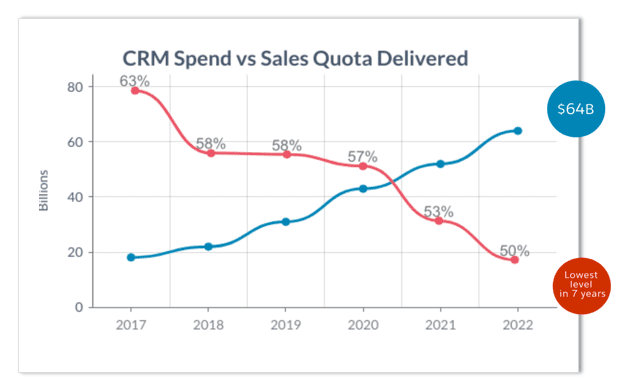
    Fast forward to today, and the paradox is still very much alive. In industries like customer relationship management (CRM), sales productivity has fallen by 25% in the last five years, even as spending on CRM software has tripled. This mirrors Solow’s paradox—technology is advancing at breakneck speed, but many organizations are still grappling with how to translate these advancements into productivity gains.

    Why Doesn’t Technology Always Improve Productivity?

    At the heart of this issue lies a misalignment between technology adoption and actual user needs. Let’s explore a few key reasons why technology, and especially enterprise software like CRMs and AI, often fails to drive the productivity it promises:

    Low User Adoption

    Despite significant investments in CRM software, a mere 26% of customer-facing teams actively use their CRM every day. This is a staggering statistic considering that CRM systems are designed to streamline sales and service processes, but if the majority of users are not engaging with the platform, it can never deliver on its promises of efficiency and productivity gains.

    Tool Overload

    Sales teams today are overwhelmed by tools—on average, they use 10 different applications just to close deals. Studies show that sales reps spend just 28% of their week actually selling, a number that has declined by 20% over the past five years. Much of this lost time is due to the juggling of tools and the associated administrative work.

    User Frustration

    The cognitive overload from having to switch between multiple applications is significant. 66% of sales reps report feeling “drowned” in tools, and 60% of staff in some studies admitted that they’ve considered leaving their jobs due to frustrations with their CRM software.

    The Solow Paradox in the AI Era

    As we enter the age of AI, the Solow Paradox takes on new dimensions. While AI promises to revolutionize productivity, we’re seeing similar patterns of investment without corresponding gains. Here’s how the paradox applies to AI today:

    1. Implementation Lag: Just as with computers in Solow’s time, there’s a significant lag between AI adoption and productivity gains. Organizations are investing heavily in AI, but many are still in the early stages of figuring out how to effectively integrate it into their workflows.
    2. Skill Mismatch: The rapid advancement of AI technology has created a skills gap. Many employees lack the necessary training to effectively use AI tools, leading to underutilization and reduced productivity.
    3. Overinvestment in Technology, Underinvestment in Complementary Factors: Companies often focus on acquiring the latest AI technology without investing sufficiently in the organizational changes, process redesigns, and employee training necessary to fully leverage these tools.
    4. Data Quality Issues: AI systems are only as good as the data they’re trained on. Many organizations struggle with data quality and integration issues, limiting the effectiveness of their AI implementations.
    5. Measurement Challenges: Traditional productivity metrics may not capture the full value of AI. Improvements in decision-making quality or customer experience, for instance, may not be immediately reflected in standard productivity measures.

    Chart: AI Investment vs. Productivity Growth

    Solow Paradox
     

    This chart illustrates the growing gap between AI investment and productivity growth, reminiscent of the original Solow Paradox.

    Moving Beyond the Paradox

    To break the cycle of unproductive technology spending, businesses need to focus on these core principles:

    1. User-Centric Design: Ensure AI solutions simplify day-to-day tasks and remove administrative burdens.
    2. Integrated Workflows: Seamlessly integrate AI with existing tools to reduce context switching.
    3. Focus on Real-Time, Actionable Insights: Emulate consumer apps by pushing relevant, timely information to users.
    4. Invest in Training and Change Management: Prioritize upskilling employees to effectively use AI tools.
    5. Redesign Processes: Rethink workflows to fully leverage AI capabilities, rather than simply automating existing processes.
    6. Improve Data Quality: Invest in data infrastructure and governance to ensure AI systems have high-quality inputs.
    7. Develop New Metrics: Create new ways to measure productivity that capture the full value of AI implementations.

    By addressing these factors, businesses can start to bridge the gap between AI investment and productivity gains, potentially breaking the cycle of the Solow Paradox in the AI era.

    For further research:

    1. McKinsey & Company: The Solow Paradox in the AI Age
    2. MIT Sloan Management Review: Productivity Paradox 2.0
    3. National Bureau of Economic Research: Artificial Intelligence and the Modern Productivity Paradox

    Lorem ipsum dolor sit amet, consectetur adipiscing elit. Ut elit tellus, luctus nec ullamcorper mattis, pulvinar dapibus leo.

  • Top 7 Things AI Will Do in Sales Tech 2024: Buckle Up, Sales Superheroes!

    Top 7 Things AI Will Do in Sales Tech 2024: Buckle Up, Sales Superheroes!

    Hey there, Sales Champions! DB here, your AI sales tech advisor in the quest for revenue dominance. Remember that sci-fi movie where robots took over the world?

    Relax, this ain’t that. Think of AI as your ultimate sales wingman, amplifying your skills and crushing those sales quotas like a Kryptonian on its first bowl of Frosted Flakes! They’re Great!!!

    So, what’s our trusty AI crystal ball whispering about 2024 sales tech you ask? Buckle up, because AI is about to unleash a seven-course feast of awesome sauce in the sales tech arena:

    1. Hyper-Personalized Prospecting: Say goodbye to cold calls that send shivers down spines. AI will sift through oceans of data, unearthing ideal prospects who fit your buyer persona like a glove. Imagine targeted outreach that feels like a warm introduction from a mutual friend, not a robot on autopilot.

    2. Predictive Pipeline Power: Forget gut feelings and crossed fingers. AI will analyze your pipeline with laser focus, pinpointing deals at risk and predicting future outcomes with uncanny accuracy. No more scrambling at the end of the quarter – you’ll be proactively steering deals to close like a seasoned captain navigating calm seas.

    3. Conversational Conquering: Ditch the robotic scripts and embrace the power of natural language processing. AI-powered chatbots will engage prospects in real-time, answering questions, scheduling demos, and qualifying leads, all while you’re busy closing that big deal. Think of them as your tireless assistants, freeing you up for the high-impact stuff.

    4. Content Craft master: Struggling to churn out killer content that resonates with your audience? AI will be your secret weapon. It can analyze trends, craft personalized messaging, and even generate different content formats (think blog posts, social media captions, even video scripts!) tailored to your ideal customers. Just add your sales magic, and boom – content goldmine.

    5. Objection Obliteration: Dealing with objections can be like wrestling a greased pig. But AI can be your jiu-jitsu master, analyzing customer sentiment and predicting potential objections before they even surface. Armed with this intel, you can craft pre-emptive responses that turn roadblocks into steppingstones.

    6. Automated After-Sales Awesomeness: The sale doesn’t end at the closing line. AI can automate post-sales tasks like sending personalized onboarding emails, scheduling follow-up calls, and even analyzing customer sentiment to nip churn in the bud. Think of it as building lasting relationships, on autopilot.

    7. Sales Coaching Sensei: Want to become a sales rockstar? AI can be your Yoda, analyzing your calls, emails, and presentations to identify areas for improvement. Get personalized feedback on your communication style, objection handling, and even body language. It’s like having a 24/7 sales coach in your pocket, pushing you to reach your full potential.

    Lightning – Not AI

    So, are you ready to unleash the power of AI in your sales game? Remember, it’s not about replacing you, it’s about augmenting your awesomeness. Embrace the tech, stay ahead of the curve, and watch your sales soar like an eagle with rocket boots. Onward to revenue utopia, Sales Champions!

    And hey, if you have any questions about how AI can supercharge your sales game, hit me up on LinkedIn (https://www.linkedin.com/in/davidbrown07/). Let’s chat!

    P.S. Don’t forget to share this post with your fellow sales warriors. Knowledge is power, and sharing is caring!

    David is an investor and executive director at Sentia, a next generation AI sales enablement technology company and Salesforce partner. Dave’s passion for helping people with their AI, sales, marketing, business strategy, startup growth and strategic planning has taken him across the globe and spans numerous industries. You can follow him on Twitter LinkedIn or on Sentia AI Community.