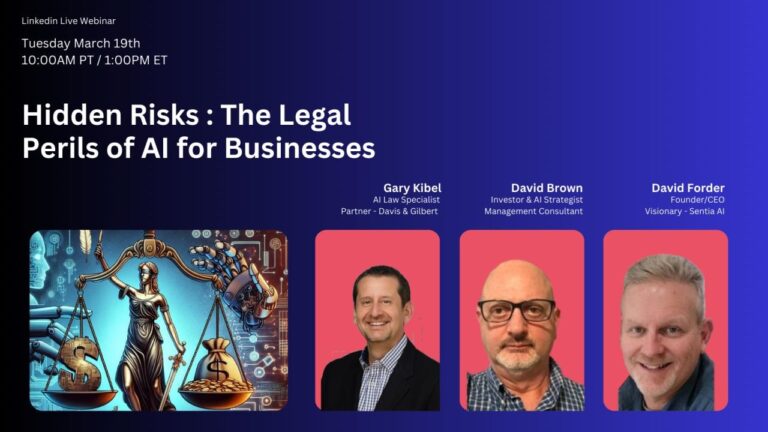
AI is amazing and if you have worked with it you know what the future holds. However as the Amazing Spiderman’s uncle said “With Great Power, Comes Great Responsibility.” Truer words were never spoken when it comes to AI! Just last week the
Head of Open AI Sam Altman dissolved the group he setup just one year ago to protect us from the risks of AI. So, who is in charge of guarding the proverbial Open AI hen house when the boss doesn’t seem to care about anything but profits?
You should. If you’re in the C-Suite or management you have already seen the power of AI. Some of the risks are quite apparent and obvious. Many of the risks are unknowable but many more have been identified and AI Risk Management best practices are becoming a “thing.” So what is an AI Risk Mitigation audit? What do they do? How do I know if I need one?
Let’s go back to the future as Michael J Fox would say! An AI Risk Audit is a comprehensive assessment of the risks associated with the deployment and use of artificial intelligence (AI) systems within an organization. It aims to identify potential vulnerabilities, ethical concerns, and operational risks related to AI technologies. Let’s delve into the details:
An AI Risk Audit involves evaluating the entire AI lifecycle, from development to deployment, to ensure that your AI systems are trustworthy, secure, and aligned with organizational goals.
Here are the key components of an AI Risk Audit:
- Risk Assessment:
- Identify and assess risks specific to AI technologies, including biases, privacy violations, security breaches, and unintended consequences.
- Evaluate the impact of AI on stakeholders, such as customers, employees, and the broader society.
- Governance and Policies:
- Review existing policies and governance frameworks related to AI.
- Develop or enhance policies that address AI risks, ethical considerations, and compliance requirements.
- Prepare human resource guidelines for AI use by employees and get written sign off they understand the policies.
- Data Quality and Bias:
- Analyze training data for biases and fairness issues. (Especially in HR)
- Ensure that data used for AI model training is accurate, representative, and free from discriminatory patterns.
- Where is the data going? Where is it coming from? How are you protecting your data from intrusive AI?
- Model Validation and Testing:
- Validate AI models using robust testing methodologies.
- Assess model performance, interpretability, and robustness.
- Explainability and Transparency:
- Evaluate the transparency of AI decision-making processes.
- Implement techniques to make AI models more interpretable.
- Security and Privacy:
- Assess the security of AI systems, including protection against adversarial attacks.
- Address privacy concerns related to data handling and model outputs.
- Review employee use of data, what software they are authorized to use and what they are using that is not authorized – potentially harmful.
- Complete Scorecard of AI Risk
- Rank all AI’s being authorized for risk.
- Rank all AI’s being used but not authorized for risk.
- Current state AI Risk scorecard and score after applying risk mitigation strategies.
- Ethical Considerations:
- Examine the ethical implications of AI, such as fairness, accountability, and transparency.
- Ensure that AI aligns with organizational values and societal norms.
The majority of companies have not completed an AI risk assessment and many of the corporate lawyers are trying to figure out what is “going to be legal” vs. what won’t. Since there is so little precedent and many of the laws are being written, how do you know if you should complete an AI audit?
Five ways to assess if your organization should consider an AI audit:
- Complexity of AI Systems:
- If your business relies on complex AI models, such as deep learning neural networks, natural language processing (NLP), or reinforcement learning, an audit is essential.
- Complex models are more prone to biases, errors, and unintended consequences. An audit helps identify and mitigate these risks.
- Data Sensitivity and Impact:
- Consider the sensitivity of the data used by your AI systems. If they handle personally identifiable information (PII), financial data, or health records, an audit is critical. Government compliance is coming…
- Assess the potential impact of AI decisions on individuals or society. High-impact decisions warrant thorough scrutiny. Ethics are important.
- Regulatory Compliance:
- States are putting their own laws in place before the fed does. Until then there will be a patchwork of AI laws (like in Colorado last month) that are going to be easy to trip over.
- Stay informed about AI-related regulations in your industry and region. Many sectors have specific requirements for AI transparency, fairness, and accountability.
- If your business operates in a regulated environment, an audit ensures compliance.
- Ethical and Social Implications:
- Evaluate the ethical implications of your AI systems. Are they aligned with your organization’s values and societal norms?
- Consider the impact on fairness, privacy, and human rights. An audit helps address these concerns.
- Business Goals and Risk Tolerance:
- Align AI audit decisions with your business goals. If AI plays a critical role in achieving those goals, an audit is necessary.
- Assess your risk tolerance. If your organization cannot afford AI failures (financially, legally, or reputation-wise), prioritize an audit.
Five Legal Reasons an AI Risk Audit maybe Needed:
- Mitigate Legal and Reputational Risks:
- Organizations face legal consequences if AI systems violate privacy laws or discriminate against certain groups.
- A thorough audit helps prevent legal disputes and protects the organization’s reputation.
- Avoid Bias and Discrimination:
- Human resources must monitor and ensure their AI is not discriminating in hiring or firing. The consequences of failure will be legally expensive.
- Biased AI models can perpetuate discrimination and harm marginalized communities.
- An audit identifies bias and allows corrective actions to be taken.
- Enhance Trust and Stakeholder Confidence:
- Transparent and accountable AI systems build trust among customers, employees, and investors.
- An audit demonstrates commitment to responsible AI practices. Employees see it as well as customers
- Optimize Performance and Efficiency:
- Identifying risks early allows for timely adjustments, improving AI system performance. This needs to be ongoing. It isn’t set it and forget it.
- Efficient AI systems lead to better business outcomes.
- Stay Ahead of Regulatory Changes:
- Governments are increasingly regulating AI technologies.
- Europe is first up with AI Laws, US States second and Fed likely last.
- An audit ensures compliance with evolving regulations.
- Piece of mind for C-Suite – An AI Risk Audit allows a good sleep with fewer Terminators popping up in bad places.
Remember that AI Risk Audits are not one-time events; they should be conducted periodically to adapt to changing risks and advancements in AI technology.
Evaluating whether your business needs an AI audit is crucial for ensuring responsible and effective AI deployment. The tips we provided for understanding where risk maybe, what to look for and then a score card type risk assessment needs to be maintained and upgraded on a regular basis.
AI is here to stay (unless the Dune movie scenario takes out all the “thinking machines”). Prepare appropriately or suffer the consequences of AI gone rogue (shudder).
Tags: #OpenAI #SamAltman #AI #AIRisk #AIRiskmitigation #technology #humanresources #CEO #lawyer #AILaw #AILawyer