Category: Training

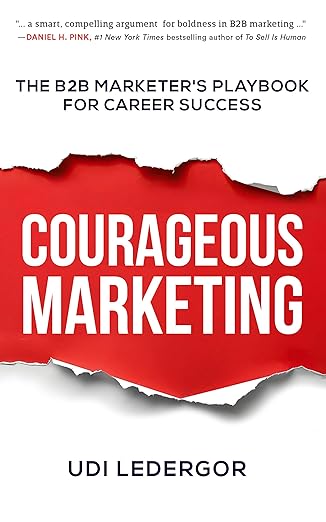
  • Courageous Marketing: The B2B Marketer’s Playbook for Career Success

    Courageous Marketing: The B2B Marketer’s Playbook for Career Success

    Book Review & Synopsis

    Udi Ledergor’s Courageous Marketing is a transformative guide for B2B marketers seeking to break free from conventional, uninspired strategies. Drawing on over two decades of experience, including his role as CMO at Gong, Ledergor advocates for boldness and creativity as essential tools for driving business success. The book challenges the prevailing “play-it-safe” mentality in B2B marketing, arguing that taking calculated risks and embracing originality are critical for standing out in a crowded marketplace. Released on April 10, 2025, it serves as both a manifesto and a practical playbook for marketers aiming to make a lasting impact.

    Through vivid examples—such as Gong’s innovative Super Bowl-adjacent commercial stunt—Ledergor demonstrates how unconventional approaches can deliver outsized results even on limited budgets. The book is structured around actionable strategies designed to empower marketers to craft compelling content, leverage guerrilla marketing tactics, create memorable events, and establish thought leadership.

    Key Points from the Book

    Core Themes

    • Boldness as a Strategy: Playing it safe is portrayed as the riskiest approach in today’s competitive marketing landscape.

    • Creativity Over Conformity: The book emphasizes the importance of originality and human creativity, especially in an era dominated by AI-generated content.

    • Marketing with Impact: Campaigns should not only be creative but also drive tangible business results.

    Actionable Strategies

    1. Craft Compelling Content: Develop material so engaging that audiences would pay for it.

    2. Leverage Guerrilla Marketing: Use unconventional tactics to amplify brand presence without large budgets.

    3. Establish Product Categories: Position offerings strategically to dominate new market segments.

    4. Design Memorable Events: Create experiences that resonate deeply with attendees and foster brand loyalty.

    5. Champion Industry Issues: Take bold stands on pivotal topics to establish thought leadership.

    6. Advance Careers and Teams: Cultivate personal growth and build high-performing teams through intentional strategies.

    Why It Matters Now

    • With AI flooding the market with generic content, human creativity has become a key differentiator.

    • The book provides a roadmap for marketers to navigate this landscape by embracing audacity and innovation.

    Endorsements

    • Industry leaders like Neil Patel, Robert Cialdini, and Daniel H. Pink praise the book for its practical advice and bold vision.

    • Michelle Taite (CMO of Intuit Mailchimp) highlights its transformative potential for marketers tired of conventional approaches.

    Real-World Examples

    • Gong’s viral marketing stunts, such as cost-effective yet impactful Super Bowl-related campaigns, illustrate how bold ideas can succeed without excessive spending.

    Availability

    Courageous Marketing is available through major retailers like Amazon and Barnes & Noble. Udi Ledergor will also be speaking at upcoming events, including Canva Create (Los Angeles), Pavilion CMO Summit (Atlanta), and The Brand Tech Summit (Tel Aviv).

    This book is not just a guide—it’s a call to action for marketers seeking to challenge the status quo and redefine what’s possible in B2B marketing.

    This is the heading

    Lorem ipsum dolor sit amet, consectetur adipiscing elit. Ut elit tellus, luctus nec ullamcorper mattis, pulvinar dapibus leo.

  • How do Field Sales Reps Gain an Edge with AI? 10 AI Features to Know

    How do Field Sales Reps Gain an Edge with AI? 10 AI Features to Know

    AI in Field Sales: Current Impact and Future Potential

    Field sales reps have both the coolest (on the road!) and most stressful jobs out there. Sales in general can be an extremely monetarily rewarding field yet also has equally high job churn rates. Salespeople by nature are competive, always looking for an edge and they were some of the first to truly embrace AI and quickly leverage it.

    Let’s start with the statistics. Today’s field sales representatives spend approximately 65% of their time on non-selling activities—a ratio that AI technologies are now flipping by handling administrative burdens and enabling reps to focus on relationship building and closing deals1. Organizations implementing AI-powered sales tools are experiencing remarkable results: leads increasing by over 50%, call times reducing by 60-70%, and operational costs decreasing by 40-60%3. Lots of opportunities to apply AI – But how, who and which tools are delivering?

    Today’s Top 10 AI Features for Field Sales Representatives

    1. AI Meeting Note-Taking and Transcription

    Use Case: Field sales representatives can focus entirely on customer conversations while AI automatically captures, transcribes, and summarizes meetings.
    Example: Fireflies.ai integrates with video conferencing platforms to record, transcribe, and summarize customer interactions, then syncs these notes directly to your CRM2.

    1. AI-Driven Conversation Intelligence

    Use Case: Reps receive real-time feedback and coaching on their sales conversations based on patterns from top performers.
    Example: Gong.io analyzes sales calls to provide actionable insights and suggestions for improvement, such as optimal question patterns for discovery calls2.

    3. Prospect Personality Assessment

    Use Case: Before making contact, sales representatives gain insights into a prospect’s communication style and preferences.
    Example: Crystal uses compliant customer data to predict a prospect’s personality using the DISC methodology, then provides communication recommendations tailored to that individual2.

    4. AI-Powered Sales Forecasting

    Use Case: Field sales teams leverage predictive analytics for more accurate territory planning and goal setting.
    Example: InsightSquared offers 350 pre-built reports and identifies data gaps affecting forecast accuracy, helping reps better predict monthly bookings and opportunity values2.

    5. Automated Meeting Preparation

    Use Case: Reps receive comprehensive pre-meeting intelligence without manual research.
    Example: Cirrus Insight’s Meeting AI automatically compiles company and contact information ahead of scheduled meetings, eliminating hours of preparation time2.

    6. Territory Management and Route Optimization

    Use Case: AI optimizes travel routes between customer locations, maximizing productive selling time.
    Example: Field sales organizations using AI for territory management report 20-30% increases in productivity by optimizing customer visit sequencing1.

    7. Lead Prioritization and Scoring

    Use Case: Representatives focus on prospects most likely to convert based on AI analysis of customer behavior patterns.
    Example: AI systems analyze website visitor behavior and can send automatic “trigger reports” when high-quality leads are identified3.

    8. AI-Enhanced CRM Assistance

    Use Case: Sales reps receive guided selling recommendations throughout the sales process.
    Example: Salesforce Sales Cloud’s Einstein Copilot leverages customer data to guide sellers, generate personalized emails, and suggest actions most likely to move deals forward2.

    9. Automated Follow-up Management

    Use Case: AI ensures consistent post-meeting follow-up by automatically generating and scheduling communications.
    Example: AI SDR agents like Artisan AI’s Ava handle email outreach by drafting responses and automating follow-ups to streamline sales activities3.

    10. Real-time Competitive and Product Information

    Use Case: Field reps instantly access relevant product specifications and competitive information during customer conversations.
    Example: In real estate sales, AI agents process MLS listings, tax records, school ratings, and neighborhood information in real-time during client interactions1.

    Top 5 AI Features Coming in the Next Six Months

    1. Advanced AI Sales Development Representatives

    Expected Impact: Complete automation of early-stage sales processes, with AI agents handling lead generation, qualification, and initial outreach across multiple channels (email, voice, social) with increasingly human-like interaction capabilities3.

    2. Real-time Conversation Coaching

    Expected Impact: AI will provide live, in-ear guidance during customer conversations, suggesting responses to objections, identifying upsell opportunities, and recommending optimal negotiation strategies based on real-time conversation analysis2.

    3. Predictive Opportunity Management

    Expected Impact: AI systems will forecast not just overall sales but individual opportunity outcomes with greater precision, recommending specific actions to improve close probability for each deal in a rep’s pipeline2.

    4. Cross-platform Customer Intelligence

    Expected Impact: AI will aggregate and analyze customer signals across disparate platforms (social media, website visits, email engagement, purchase history) to create comprehensive engagement profiles accessible to field reps in real-time3.

    5. Industry-Specific AI Sales Assistants

    Expected Impact: Rather than generic AI tools, field sales representatives will have access to specialized AI assistants trained on industry-specific knowledge, regulations, and selling patterns, particularly in complex sectors like healthcare, financial services, and manufacturing1.

    Caution: When AI Over-Promises and Under-Delivers

    Field sales leaders should be cautious about several common pitfalls when adopting AI technologies:

    Integration Challenges

    Many AI tools promise seamless integration with existing systems but require significant customization and technical resources to deliver value. Before implementing new solutions, evaluate whether they truly connect with your existing tech stack without creating data silos1.

    Training Requirements

    Some AI systems require extensive training with your specific sales data before providing accurate recommendations. Be realistic about the volume of quality data required and the time needed before seeing meaningful results3.

    Human Oversight Needs

    While automation is valuable, tools that promise to eliminate human involvement entirely often create new forms of work in verification and exception handling. The most effective AI implementations augment rather than replace human expertise1.

    Cost vs. Value Assessment

    Sophisticated AI tools often come with premium pricing. Carefully evaluate whether the promised efficiency gains justify the investment, particularly for smaller sales teams or those with limited technology budgets2.

    Security and Compliance Concerns

    AI tools that access customer data or record conversations may create privacy vulnerabilities or compliance risks in regulated industries. Thoroughly vet vendors’ security practices and compliance certifications3.

    Field Sales Tech Stack Assessment Checklist

    Capability Current Tech Stack AI-Enhanced Potential
    Meeting Documentation Manual note-taking, inconsistent CRM updates Automated transcription, AI-generated summaries, CRM integration without manual entry
    Lead Prioritization Intuition-based or simple scoring models Behavioral analysis, predictive conversion modeling, real-time engagement tracking
    Territory Management Static assignments, manual routing Dynamic territory optimization, predictive customer value mapping, automated route planning
    Customer Intelligence Limited to CRM data, manually researched Real-time aggregation across platforms, personality insights, competitive intelligence
    Conversation Effectiveness Limited coaching, periodic reviews Real-time guidance, pattern recognition from top performers, automated improvement suggestions
    Follow-up Management Manual tracking, template-based Automated, personalized follow-ups with optimal timing recommendations
    Sales Forecasting Experience-based, often inaccurate AI-driven predictions with specific deal-level insights and improvement recommendations
    Competitive Intelligence Static battlecards, limited updates Real-time market intelligence, personalized competitive positioning suggestions
    Product Knowledge Manual research, limited accessibility Instant access to relevant specifications, AI-suggested positioning based on customer needs
    Performance Analytics Lagging indicators, manual analysis Real-time performance tracking, AI-recommended improvement areas, predictive coaching

    What’s Coming Next?

    Despite the hype we’re on the fringes of AI in business. As is typical in most tech cycles the marketing and sales drumbeat is louder than the actual successful implementations to date. I’m predicting that 2025 will be the year that AI starts taking hold and becomes accountable for real ROI just like any tech tool. That will force the pretenders out and the rest focus on real world solutions that have a clear and demonstratable impact.

    With that as a base there is no doubt that AI can fundamentally transform field sales by addressing core inefficiencies in the traditional selling model and field store visit teams. The most successful implementations to date pair AI capabilities with human expertise (“Functional AI) rather than attempting to replace it. As these technologies continue to evolve over the next six to nine months, field sales organizations that strategically evaluate and integrate AI tools while maintaining focus on relationship building will create sustainable competitive advantages.

    The key to successful AI adoption is to treat like any other new technology. Do this by starting small with focused use cases, to known easy to see problems that can deliver immediate value, then gradually expanding to more complex processes as teams build confidence in their digital teammates. If your analysis shows only incremental improvements (less than 20% ROI) look for bigger impact opportunities.

    Citations:

    1. https://relevanceai.com/agent-templates-roles/field-sales-representative-ai-agents
    2. https://www.cognism.com/blog/ai-sales-tools
    3. https://research.aimultiple.com/sales-ai/
    4. https://goconsensus.com/blog/best-ai-sales-tools/
    5. https://relevanceai.com/agent-templates-roles/sales-forecasting-analyst-ai-agents
    6. https://www.leadbeam.ai/blog/how-automation-ai-agents-ai-sdrs-impact-field-sales
    7. https://makesocialmediasell.com/ai-in-sales-examples/
    8. https://www.mailmodo.com/guides/ai-tools-for-sales/
    9. https://www.copy.ai/blog/field-sales-representatives
    10. https://www.close.com/blog/ai-sales-tools
    11. https://www.stackmoxie.com/blog/ai-readiness-checklist-for-marketing-ops-revops/
    12. https://www.avoma.com/blog/sales-forecasting-tools
    13. https://www.mdm.com/article/featured/featured-blog/ai-in-the-field-the-secret-to-success-in-outside-sales/
    14. https://www.glideapps.com/use-cases/field-sales
    15. https://www.mentimeter.com/blog/business/ai-sales-tools
    16. https://huble.com/blog/ai-use-cases
    17. https://www.getassistive.com/blog/field-sales-crm-solution-checklist-of-essential-features
    18. https://www.clappia.com/blog/how-ai-can-help-with-field-sales-tracking
    19. https://zapier.com/blog/ai-sales-assistant/
    20. https://cloud.google.com/transform/101-real-world-generative-ai-use-cases-from-industry-leaders
    21. https://skaled.com/insights/generative-ai-sales-checklist/
    22. https://veloxy.io/sales-ai/field-sales-software/
    23. https://spotio.com/blog/ai-sales-tools/
    24. https://www.fullestop.com/blog/ai-in-sales-use-cases-benefits-and-challenges
    25. https://www.quantified.ai/blog/sales-readiness-checklist/
    26. https://www.techpowerup.com/forums/threads/report-ai-software-sales-to-experience-massive-growth-with-40-6-cagr-over-the-next-five-years.325039/
    27. https://www.mckinsey.com/capabilities/growth-marketing-and-sales/our-insights/an-unconstrained-future-how-generative-ai-could-reshape-b2b-sales
    28. https://www.gartner.com/peer-community/post/ai-improve-sales-operations
    29. https://www.salesmate.io/blog/ai-sales-assistant/
    30. https://learnprompting.org/blog/ai-tools-for-sales-teams
    31. https://www.mindtheproduct.com/order-promising-the-secret-sauce-of-multi-channel-fulfillment/
    32. https://www.pwc.com/us/en/tech-effect/ai-analytics/ai-predictions.html
    33. https://www.vivun.com/blog/5-ai-trends-shaping-the-future-of-sales
    34. https://www.linkedin.com/pulse/ai-agents-overpromising-underdelivering-closer-look-richard-hn2pc
    35. https://veloxy.io/sales-ai/software-comparison/
  • Salesforce AI Agents: Are they the next big AI breakthrough?

    Salesforce AI Agents: Are they the next big AI breakthrough?

    The Evolution of Salesforce AI Agents: Transforming Business Operations

    Unless you have been hiding under a proverbial rock and missed it, AI Agents are the big buzz in tech news right now. If you’re curious what the heck these AI Agent things are, where they came from and why marketing is pushing them so hard – this is the article for you!

    Let’s go way back in tech history to the “pre-AI days”, one long decade ago. Salesforce’s foray into AI began in 2014 when CEO Marc Benioff declared the company would become “AI-first.” This strategic shift aimed to revolutionize Salesforce from a system of recordings to a system of intelligence, making AI accessible to every company and employee.

    The Genesis of Salesforce AI

    The acquisition of RelateIQ in 2014 marked the beginning of Salesforce’s AI evolution, introducing machine learning capabilities to capture workplace communications data and provide valuable insights. Over the years, Salesforce has consistently invested in AI technologies, developing predictive AI tools and eventually venturing into generative AI.

    Agentforce: The Next Frontier

    In 2024, Salesforce introduced Agentforce, a suite of autonomous AI agents designed to enhance business operations across various domains. These agents, unlike traditional chatbots, are intelligent and dynamic, capable of understanding context and nuance in customer interactions.

    Current Applications of Salesforce AI Agents

    1. Customer Service: Agentforce Service Agent handles a wide range of service issues without preprogrammed scenarios, improving efficiency.
    2. Sales Development: The SDR Agent engages with inbound leads 24/7, answering questions and booking meetings for human sellers.
    3. Sales Coaching: AI agents provide personalized role-play sessions for sales teams, helping them practice pitches and handle objections.
    4. E-commerce: Merchandiser and Personal Shopper agents assist with site setup, personalized promotions, and enhance the buying experience.
    5. Marketing: Campaign Optimizer automates the full campaign lifecycle, from analysis to optimization.

    Future AI in ‘25

    Salesforce AI agents are expected to become more integrated into daily business operations with a big Q1 push. They will likely:

    – Enhance decision-making processes by providing real-time, data-driven insights.

    – Automate more complex tasks across various departments.

    – Offer more personalized customer experiences through advanced data analysis.

    – Collaborate more seamlessly with human workers, augmenting their capabilities.

    5 Compelling Salesforce AI Agent Use Cases for Consideration

    1. Autonomous Customer Service: The Service Agent can handle customer inquiries across multiple channels 24/7, resolving issues quickly and escalating complex cases to human agents when necessary.
    2. AI-Powered Sales Development: The SDR Agent qualifies leads, answers prospect questions, and schedules meetings, allowing human sales representatives to focus on high-value interactions.
    3. Personalized E-commerce Assistance: The Personal Shopper agent acts as a digital concierge, offering tailored product recommendations and assisting with search queries on e-commerce platforms.
    4. Automated Marketing Campaigns: The Campaign Optimizer agent analyzes, generates, personalizes, and optimizes marketing campaigns based on business goals and customer data.
    5. Continuous Employee Support: Agentforce assists employees with various tasks, from data retrieval to action plan creation and execution, boosting workplace efficiency.

    Real-World Examples of Successful Agentforce Implementation

    Looking for something done vs. talked about? Several companies have successfully implemented Salesforce AI agents. Here are five Examples with links:

    1. OpenTable: The restaurant reservation platform uses Agentforce for Service to handle common issues like account reactivations, reservation management, and loyalty point inquiries. This has boosted productivity for service representatives [3].
    2. Wiley: The educational publisher implemented Agentforce Service Agent to manage seasonal surges in service requests. This resulted in a 40-50% increase in case resolution, outperforming their previous chatbot. Additionally, Wiley reduced new agent onboarding time by 50% and achieved a 213% return on investment [2][3].
    3. 3. Precina Health: This healthcare innovator leverages Agentforce to improve diabetes care. In a pilot study, Agentforce and Salesforce technologies helped reduce the average blood sugar levels of 50 patients in Rural Louisiana from 9.6 to 6.4 (measured via an A1C test) in just twelve weeks [1].
    4. AAA Washington: The American Automobile Association used Salesforce Agentforce to create an autonomous agent capable of answering customer support requests, keeping clients informed about roadside updates, and offering personalized suggestions to customers [1].
    5. Saks Fifth Avenue: The luxury retailer utilizes AI service agents from Salesforce Agentforce to enhance their shopping experience. By integrating Customer 360, Commerce Cloud, and Slack, Saks has streamlined information flow for both staff and customers [3].

    These real-world examples demonstrate how Salesforce AI agents are being used to improve customer service, increase operational efficiency, and drive business growth across various industries.

    For businesses evaluating Salesforce AI agents, it’s crucial to understand that these tools offer more than just automation. They provide intelligent, context-aware assistance that can significantly enhance customer experiences, streamline operations, and drive growth. With the ability to customize agents, businesses can tailor AI solutions to their specific needs and industry requirements.

    As AI technology continues to evolve, Salesforce’s commitment to innovation ensures that its AI agents will remain at the forefront of business transformation, offering increasingly sophisticated and valuable solutions to enterprises of all sizes.

    Pick a strong AI enabled Salesforce consulting partner and see how you can successfully apply agents in ’25.

    Research Citations

    1. https://www.cxtoday.com/crm/agentforce-case-studies/
    2. https://www.salesforce.com/news/stories/data-ai-customer-stories/
    3. https://www.salesforce.com/customer-stories/?bc=OTH
    4. https://www.salesforce.com/news/stories/building-business-ai-agents/?bc=OTH
    5. https://digitaldefynd.com/IQ/salesforce-using-ai-case-study/
    6. https://www.salesforce.com/agentforce/use-cases/
    7. https://www.salesforce.com/artificial-intelligence/use-cases/
    8. https://www.salesforce.com/news/stories/video/agents-at-scale-within-salesforce-platform/
  • How to Select Top AI-Enabled Salesforce Consulting Partners in ’25

    How to Select Top AI-Enabled Salesforce Consulting Partners in ’25

    In 24 short months, AI has transformed from gee whiz isn’t that’s interesting-what can it do next? To must have software that can clearly create a competitive advantage when properly deployed. The question is no longer should you consider leveraging AI? It’s now what is the best way to do it, which processes are most apt to see immediate impact and ensure with proper planning that we create a competitive advantage with our AI instances in the process.
    For sales teams that rely on Salesforce, AI can be tricky to understand, plan for, implement and train without some outside best practice help.
    The challenge is finding the best Salesforce AI consulting partners that can guide businesses through the AI evaluation and adoption process, while ensuring that companies stay focused on AI that provides significant impact vs negligible to no discernible business value. Another big challenge is linking the new AI to the rest of the enterprise software stack while providing the extra layers of security (both human and software) that AI requires to reduce legal exposure.
    As we dig into ‘25, completely integrating AI into Salesforce has become crucial for businesses aiming to stay competitive or more often leapfrog competitors. That really isn’t up for argument anymore. However, selecting the right AI-enabled Salesforce consulting partner is critical to successful implementations and maximizing CRM potential. Here’s a comprehensive guide to help you make the best choice.
    Salesforce AI Consulting Best Practie Checklist
    When evaluating potential partners, ensure they possess:
    1. AI Expertise: Look for partners with proven AI implementation experience and relevant certifications.
    2. Salesforce Certifications: Verify that the partner holds up-to-date Salesforce certifications, especially in AI-related areas.
    3. Industry-Specific Knowledge: Choose a partner with experience in your industry for tailored solutions.
    4. Comprehensive Services: Opt for partners offering end-to-end services, from strategy to implementation and training. Buying AI and trying to “figure it out” is a recipe for trouble.
    5. Data Management Skills: Ensure they can handle data preparation and integration for AI analysis. Garbage in / Garbage out is more critical with AI than ever before. Clean, properly accessible data matters.
    6. Scalable Solutions: Look for partners providing scalable AI services to grow with your business. AI isn’t set it and forget it. You need partners that can jump in and help with short notice.
    7. Strong Client References: Request and verify references from clients who have implemented AI solutions.
    Watch-Out-For Checklist
    Be cautious of partners who:
    1. AI innovation capabilities: Look for partners who stay current with AI trends, best practices and can customize Salesforce to leverage cutting-edge AI technologies.
    2. Offer Generic Solutions: Avoid partners who don’t tailor their approach to your specific business needs. How can you make AI your competitive advantage AI if your competition use the exact same thing?
    3. Have Limited Post-Implementation Support: Ensure they offer long-term support, as AI solutions often require ongoing adjustments.
    4. Overemphasize Certifications: While important, certifications alone don’t guarantee practical expertise. Listen to them – can they easily answer questions? Do you want to work with them?
    5. Neglect Data Privacy: Verify their commitment to data security and compliance with relevant regulations. AI legal exposure is increasing. Must be legal and software privacy systems in place.
    6. Have a Narrow Focus: Be wary of partners who can’t integrate AI across multiple Salesforce clouds. They need to know business and software to succeed.
    7. Lack Transparency: Choose partners who are clear about their processes, timelines, and pricing.
    8. Neglecting to check client references: Request and verify references from clients who have specifically implemented AI solutions with the partner.
    9. Overlooking post-implementation support: Ensure the partner offers long-term support for AI solutions, as they often require ongoing adjustments.
    10. Rushing the selection process: Avoid making hasty decisions without thorough research on the partner’s AI capabilities, past projects, and client feedback.
    11. AI Case Studies: What have they done you can look at and play with.
    Certified Salesforce Consulting Partners
    Here’s a list of some top Salesforce consulting partners known for their AI capabilities:
    1. Accenture
    2. Deloitte Digital
    3. Capgemini
    4. IBM
    5. Cognizant
    Remember, the best partner for your organization will depend on your specific needs, industry, and scale of operations. Conduct thorough research and engage in detailed discussions before making your final decision.
    By following this guide and avoiding common pitfalls, you’ll be well-equipped to select an AI-enabled Salesforce consulting partner that can drive your business forward in 2025 and beyond.
    References
    1. Salesforce Partner Finder: https://www.salesforce.com/partners/find-a-partner/
    2. Salesforce AI Capabilities: https://www.salesforce.com/products/einstein/overview/
    3. Gartner Magic Quadrant for Salesforce Implementation Services: https://www.gartner.com/en/documents/3991199
    4. Forrester Wave: Salesforce Consulting Partners: https://www.forrester.com/report/The+Forrester+Wave+Salesforce+Consulting+Partners+Q2+2021/-/E-RES161624
    5. IDC MarketScape: Worldwide Salesforce Implementation Services: https://www.idc.com/getdoc.jsp?containerId=US46733820

  • AI in Sales Manufacturing. This is what you need to know

    AI in Sales Manufacturing. This is what you need to know

    AI in Manufacturing Sales: Revolutionizing the Industry

    The manufacturing sector is undergoing a significant transformation, with artificial intelligence (AI) playing a pivotal role in reshaping sales strategies and operations. As we delve into the world of AI-powered sales in manufacturing, it’s crucial for C-Suite Manufacturing Sales Leaders to understand the impact and potential of these technologies.

    According to recent studies, the adoption of AI in manufacturing is growing at an unprecedented rate. A report by McKinsey & Company reveals that AI has the potential to create between $1.2 trillion and $2 trillion in value for manufacturing and supply chain management. This staggering figure underscores the importance of embracing AI technologies in sales processes.

    Manufacturing Sector by the numbers (Selling Power Research ’24):

    • 439,537 salespeople employed
    • $6.1 trillion in total sale
    • $14 million average sales per salesperson
    • 11.7% increase in productivity from previous year
    • 1% decline in overall manufacturing employees

    Top 10 AI-Powered Strategies for Manufacturing Sales Professionals

    1. Leverage Predictive Analytics for Sales Forecasting
    2. Implement AI-Driven Lead Scoring
    3. Utilize AI for Personalized Customer Interactions
    4. Employ AI-Powered Sales Assistants
    5. Optimize Pricing Strategies with AI
    6. Enhance Product Recommendations
    7. Automate Sales Reporting and Analytics
    8. Implement AI-Driven Inventory Management
    9. Utilize AI for Competitive Analysis
    10. Implement AI-Powered Sales Training

    Manufacturing Trends: The Growing Impact of AI

    The manufacturing industry is witnessing a significant surge in AI adoption. Here are some key trends and data points:

    As AI continues to revolutionize the manufacturing sales landscape, it’s imperative for C-Suite Manufacturing Sales Leaders to stay ahead of the curve. By embracing these AI-powered strategies and keeping abreast of the latest trends, sales professionals can drive unprecedented growth and efficiency in their organizations.

    Key Phrases: AI-powered sales, predictive analytics, lead scoring, personalized customer interactions, dynamic pricing, AI-driven inventory management

    Keywords: Artificial Intelligence, Manufacturing Sales, Sales Forecasting, Customer Personalization, Competitive Analysis, Sales Training

    Hashtags: #AIinManufacturing #SalesAI #ManufacturingTrends #AIAdoption #SalesTech

    Add Your Heading Text Here

  • 10 Best Practices from World Class Sales Teams, Beyond Exceeding Quota!

    10 Best Practices from World Class Sales Teams, Beyond Exceeding Quota!

    Not an AI Agent Dave here to check in and give you the latest in what I’ hearing on the AI strip from the C-Suite AI conference bandwagon gang.

    The C-Suite / BOD has educated themselves and starting to get it. AI is either a competitive advantage or something to watch competitors leapfrog ahead. Yes, it can be awesome! No it doesn’t replace sales reps. Instead, with autonomous AI agents it helps humans do what they do best, create ongoing relationships with companies, products and services their customers need.

    Yikes you say. Have you been drinking the AI Kool-Aid you keep warning readers about?   

    “Kinda.” AI is super cool and autonomous AI agents are most definitely the rage with Microsoft and Salesforce at AI “war” with each other over whether their AI agents actually work.

    TBS as always with my 100K View on sales / marketing perspectives, it isn’t what’s cool new tech, it’s what tech gives you that unfair advantage when you properly apply it to a proven process! More simply. Get back to your MBA strategy 101 thinking.

    What can I do better, faster, cheaper and / or how can I differentiate my company with this new technology. It doesn’t matter if its 100% AI or not. Make sure it is actually providing a solid ROI or can in the near future. Think about it from a non tech perspective. These are the top ten problems my company is facing. Tech isn’t the answer, its applying AI to things we know can work and doing it faster and better than our competitors.

    If you go beyond numbers, focusing on best practices that foster long-term growth, customer satisfaction, and team cohesion, you’ll discover what it is that makes a top team tick. Let’s explore these AI best practices with real-world examples and lessons learned. *{Every use case has an article and a link behind at the end of the article}.

    1. Data-Driven Decision Making

    Leading sales teams leverage data analytics to inform their strategies and tactics.

    Use Case: Google uses data from reviews and surveys to understand the need for managers and improve their leadership development programs. This approach has helped Google identify effective manager qualities and support their growth.

    2. Consistent Sales Process Adherence

    High-performing teams closely follow their established sales processes across all departments.

    Use Case: Coca-Cola has woven data analytics into the fabric of their operations, informing decisions in sourcing, distribution, sales, and production. This consistent approach ensures a unified strategy throughout the organization.

    3. Value-Based Selling

    Top sales teams focus on communicating the value and ROI of their solutions rather than competing on price.

    Use Case: Amazon uses data insights to make personalized product recommendations to customers, increasing sales and maintaining their position as the world’s leading e-commerce platform.

    4. Effective Questioning Strategies

    Successful teams use sophisticated discovery and questioning approaches to uncover client needs.

    Use Case: Netflix analyzes user data to understand what triggers people to subscribe, what makes them stay longer, and where to invest in improving services. This data-driven approach helps them ask the right questions and make informed decisions about content creation and user experience.

    5. Continuous Sales Coaching

    High-performing teams prioritize ongoing coaching as part of their training and development strategy.

    Use Case: Google’s data scientists analyzed qualitative data like performance reviews and surveys about managers within the organization to improve their internal hierarchies and coaching practices.

    6. Strategic Hiring Practices

    Top sales organizations use advanced hiring tools and assessments to build stronger teams.

    Use Case: While not specifically mentioned in the search results, companies like Unilever and IBM are known to use AI-powered tools and data analytics in their hiring processes to identify the best candidates for sales roles.

    7. Omnichannel Sales Strategy

    Leading sales teams implement a coordinated approach across multiple channels for a seamless customer experience.

    Use Case: Starbucks uses big data through mobile apps and reward programs to gather insights directly from customers, creating a better omnichannel customer experience and personalizing their marketing strategies.

    8. Personalized Sales Presentations

    Top performers customize their presentations for each prospect, demonstrating thorough research and understanding.

    Use Case: Red Roof Inn combined weather reports and flight cancellation data to identify marketing opportunities, targeting mobile users in the vicinity of airports during bad weather. This personalized approach led to a 10% increase in check-ins.

    9. Effective Use of AI and Technology

    Leading sales teams leverage AI and other advanced technologies to increase productivity and gain competitive advantages.

    Use Case: Uber uses predictive analytics and big data to bridge the demand-supply gap in real-time, catering to customer demands and solving supply issues efficiently.

    10. Post-Sale Relationship Nurturing

    Top sales organizations focus on building long-term relationships and nurturing customers after the initial sale.

    Use Case: Amazon’s use of data analytics extends beyond the initial sale, analyzing customer reviews, rankings, and post-purchase behavior to continually improve their service and maintain customer loyalty.

    Checklist for CROs

    To evaluate your organization’s alignment with these best practices, consider this checklist:

    •  Do we have a robust data analytics system in place like Google’s people analytics?
    •  Is our sales process clearly defined and consistently followed across departments like Coca-Cola’s?
    •  Are we focusing on value-based selling rather than price competition, similar to Amazon’s personalized approach?
    •  Have we implemented advanced questioning strategies in our discovery process, akin to Netflix’s data-driven content decisions?
    •  Do we have a structured, ongoing sales coaching program informed by data like Google’s manager quality analysis?
    •  Are we using advanced hiring tools and assessments?
    •  Have we implemented an omnichannel sales strategy like Starbucks?
    •  Do our sales presentations demonstrate thorough customization for each prospect, similar to Red Roof Inn’s targeted marketing?
    •  Are we effectively leveraging AI and other advanced technologies like Uber’s predictive analytics?
    •  Do we have a strong post-sale relationship nurturing program similar to Amazon’s continuous customer engagement?

    By comparing your current practices against this best practice checklist and these industry-leading examples, you can identify areas for improvement and align your sales organization with the best practices of top-performing teams.

    1. Google’s People Analytics
      URL: https://www.reddit.com/r/compsci/comments/15pub3z/datadriven_decision_making_case_studies/
    2. Starbucks’ Store Location Analysis
      URL: https://online.hbs.edu/blog/post/data-driven-decision-making
    3. Amazon’s Product Recommendation System
      URL: https://online.hbs.edu/blog/post/data-driven-decision-making
    4. Red Roof Inn’s Weather-Based Marketing
      URL: https://gapscout.com/blog/5-data-driven-decision-making-examples/
    5. Uber’s Real-Time Ride Pricing and Allocation
      URL: https://gapscout.com/blog/5-data-driven-decision-making-examples/
    6. Google’s Manager Quality Analysis
      URL: https://programs.online.utica.edu/resources/article/data-driven-decisions
    7. Amazon’s Customer Behavior Analysis for Recommendations
      URL: https://programs.online.utica.edu/resources/article/data-driven-decisions
    8. Southwest Airlines’ Customer Data Analysis for Service Optimization
      URL: https://programs.online.utica.edu/resources/article/data-driven-decisions
    9. Google’s Data Center Energy Optimization
      URL: https://www.reddit.com/r/compsci/comments/15pub3z/datadriven_decision_making_case_studies/
    10. Service Hotel’s Data-Driven Culture Implementation
      URL: https://www.reddit.com/r/compsci/comments/15pub3z/datadriven_decision_making_case_studies/

    Tags: #starbucks #amazon #salesforce #redroofin #Google #Uber #data #datascience #sales #bestpractice #AI

  • CRM Dead? Sherlock Holmes- AI the Perp?

    CRM Dead? Sherlock Holmes- AI the Perp?

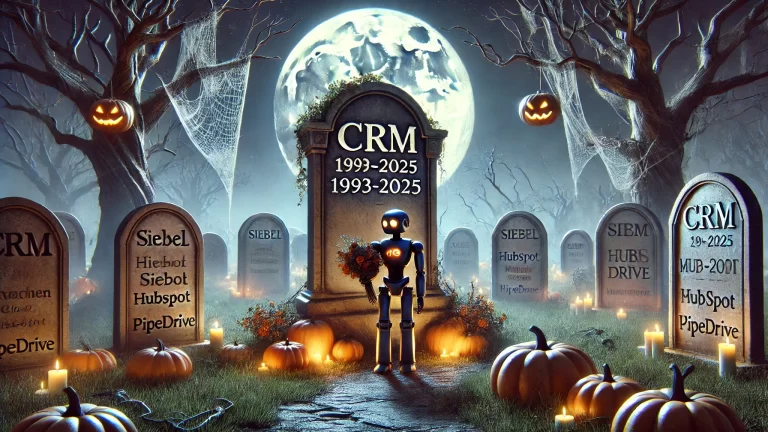
    Will AI be the Perpetrator of CRMs demise?

    On a weekly basis I get C-Suite execs calling me after AI events like Dreamforce and any of the myriad AI “you name it conferences” asking me if they can replace their salespeople with AI agents right now, or…use AI to replace their pesky CRMs…Or both! Yikes – the Kool-Aid is flowing in AI land!

    I ask them to tell me about the last AI conference they attended, review the event marketing puffery and often outlandish claims of what AI can do “just by buying our XYZ AI Tool and sales will Soar,” and let out an inaudible sigh.

    These conferences are designed to get attendees to drink the Alice in Wonderland vision of an utopian AI and just like every other tech hype cycle before it (yep AI isn’t the first “revolutionary technology”) there is a kernel of truth in what AI “maybe able to do.”  That being said. I see a lot of could do vs. can do/doing right now in the AI adoption cycle.    

    So, let’s get it out of the way. AI is unlikely to fully replace CRM systems in the next few years. But top enterprise grade AI enabled CRMs are already doing far more than traditional CRMs ever could. Most significantly. The most advanced AI enabled CRMS are already enhancing and transforming enterprise CRM capabilities. This will accelerate as cutting-edge AI technologists and tech savvy AI enabled salespeople work together to enhance what AI does well and keep what was working. (See Blended AI).

    With that in mind, let’s look at what the research and our own inhouse AI fortune tellers have forecasted for AI CRM Advancements:

    AI Evolution Timeline for CRM Systems

    2024-2025: Enhanced AI Features

    In the next 12 months, we’ll see more widespread adoption of AI-powered features within existing CRM platforms:

    – Advanced predictive analytics for sales forecasting and lead scoring

    – Natural language processing for improved chatbots and virtual assistants

    – AI Agents deployed

    – Automated data entry and cleansing

    -Conversational sentiment analysis post call – heading to real-time

    -Training recommendations based on AI evaluation of seller daily actions

    -Email comprehension, writing, reply and auto CRM addition (no data entry)

    2026-2028: AI-First CRM Platforms

    Within 5 years, we’ll likely see the emergence of AI-centric CRM systems:

    – Full voice activated conversational interfaces for querying and updating CRM data

    – AI-driven workflow automation and task prioritization

    – Hyper-personalized customer interactions at scale

    – AI driven B2B sales without human intervention or approval

    – AI driven procurement – AI Agents talking to Agents lowest price, shipping

    -AI driven manufacturing risk mitigation in procurement, sales and maintenance  

    -Human involvement / need for “human” salespeople evolving with blended AI at its core

    2029 and beyond: Potential AI Dominance

    In 5+ years, AI could become the primary driver of CRM functionality / replace many CRM based features:

    – Autonomous decision-making for many customer-facing processes

    – Predictive modeling of complex market trends and customer behaviors

    – Seamless integration with other business systems for holistic insights

    -Significantly faster response times with AI driven reporting and customer centric personalization enhancing customer service while reducing costs

    AI Features Poised to Transform CRM

    Intelligent Automation

    AI will take over routine tasks, freeing up human workers for higher-value activities. This includes automated data entry, scheduling, and follow-ups [1].

    Hyper-Personalization

    AI-powered CRMs will analyze vast amounts of data to deliver truly personalized experiences for each customer, far beyond current segmentation capabilities [1].

    Predictive Analytics

    Advanced AI models will provide increasingly accurate forecasts of customer behavior, sales trends, and market shifts [2].

    Natural Language Interfaces

    Conversational AI will allow users to interact with CRM systems using natural language, dramatically improving ease of use and adoption rates [3].

    Autonomous Decision-Making

    As AI systems become more sophisticated, they’ll be able to make certain decisions without human intervention, such as adjusting pricing or inventory levels based on real-time data [4].

    Benefits of AI-Enhanced CRM Available Now

    1. Improved efficiency, data capture & access, with blended AI productivity gains
    2. More accurate sales forecasting and lead scoring – enhancing C-Suite confidence
    3. Gold standard customer service experiences through personalization
    4. Better data quality and insights
    5. Reduced human error in data entry and analysis
    6. Significantly reduced data entry and time devoted to CRM maintenance activities
    7. Email writing, reply and auto CRM entry based on sales rep skill & role personalization
    8. Personalized training based on AI assessment of activities and results for all reps
    9. Hyper focused AI enhanced sales processes based directly on CRO sales goals, tracking requirements and 24/7 view of all sales activities with AI driven recommendations
    10. AI enhanced reporting on rep performance with training recommendations, improvement opportunities, or other rolls the AI “sees” they could be much better at than sales
    11. Cull ranking based on unbiased review of performance, potential, opportunities, training performance and client recorded sentiment analysis
    12. Enhanced AI driven cross sell and upsell opportunities    

    Why AI Won’t Completely Replace CRMs

    As noted in the features and benefits previously, AI has enhanced CRM capabilities and will undoubtedly transform enterprise CRM systems in amazing ways we haven’t envisioned yet. With that as a base AI is unlikely to fully replace them in the next five years. This is a mix of legacy CRM systems already deployed, reluctance to change (IT and C-Suite) and legacy enterprise integrations which can slow transitions.

    Companies facing difficult situations that know they must change or go bankrupt, profitable with innovative leadership teams or emerging companies building their AI infrastructure now or in the coming years will be far more likely to be fully AI integrated / replace CRMs.  

    Here are the things that AI can’t do by itself and will require Blended AI to accomplish

    1. Human Touch: Many aspects of customer relationships require human empathy, understanding and perceptual judgment that AI cannot replicate
    2. Complex Decision-Making: High-stakes decisions often require human oversight and contextual understanding. Think internal politics – who know who and how to get things done
    3. Data Privacy Concerns: Regulations and customer trust issues may limit the extent of AI’s autonomy in handling sensitive data
    4. Integration Challenges: Fully replacing existing CRM systems with AI would be a massive undertaking for most organizations (see current legacy system replacement timelines)
    5. Ethical Considerations: The use of AI in customer relationships raises ethical questions that will need to be carefully addressed (see EU AI ACT and recent California AI Act)

    10 Things AI Can Do That Traditional CRMs Cannot

    AI Capability

    Traditional CRM

    Real-Time Sentiment Analysis

    Static Customer Data

    Automated Data Enrichment

    Manual Data Entry

    Predictive Lead Scoring

    Rule-based scoring

    Natural language querying

    Complex Query Languages

    Autonomous Task Prioritization

    Manual Task Management

    Adaptive Sales Forecasting

    Personalize Content Generation

    Anomaly detection in customer behavior

    Cross-Channel Interaction Analysis

    Continuous self-optimization

    Fixed Forecasting Models

    Template Based content Generation

    Threshold based alerts

    Siloed Channel data

    Periodic Manual Updates

    If we stick with the facts vs. the AI CRM enhanced industry marketing puffery CRM is here for the long run (at least for the next 5 years (see legacy systems like Siebel CRM on premise still running). While AI already is and will dramatically enhance CRM capabilities in the coming years, it’s more likely to augment rather than replace CRM systems entirely.

    The future of CRM lies in blended ai. The seamless integration of AI technologies with human expertise to deliver superior customer experiences and business outcomes.

    Thanks for reading and please add your thoughts and comments to the future of AI & CRM!

    Research and Citations:

    [1] https://ddi-dev.com/blog/programming/ai-in-crm-benefits-and-use-cases-of-ai-powered-crm-system/

    [2] https://www.itransition.com/ai/crm

    [3] https://blog.hubspot.com/sales/crm-with-ai

    [4] https://callhippo.com/blog/telephony/how-ai-technologies-are-changing-the-face-of-crm

    [5] https://www.cio.com/article/465624/5-ways-ai-will-transform-crm.html

    [6] https://technologyadvice.com/blog/information-technology/ai-crm/

    [7] https://foundationinc.co/lab/the-rise-of-ai-in-crm/

    [8] https://www.blobr.io/post/ai-crm-industry

    Social Media Hashtags:

    #CRM #AIadoption #AIenabledCRM #AICRM #AI2025 #IndustryInnovation #AIRobotics #TechTransformation #Manufacturing #SAP #AIadoption #AITools #Siebel 
     

  • Sync Siebel to Anything, Anywhere, Here’s How

    Sync Siebel to Anything, Anywhere, Here’s How

    Moving from on-premises CRM solutions to cloud-based systems can be a challenging but necessary transition in today’s continuously evolving, AI saturated, IT landscape.

    As cloud adoption accelerates, many businesses with long-standing on-premises CRM systems are recognizing the need to modernize their approach. Sentia Smart Mesh offers a powerful solution for organizations looking to bridge the gap between legacy systems and cloud-based CRM that have the flexibility to connect and communicate.

    On-premises and Cloud CRM

    While Oracle Siebel CRM has been a robust on-premise solution for many companies since its inception way back in 1993, it lacks some of the key features that modern cloud-based CRMs provide. Siebel can be complex to use and maintain, requiring specialized IT staff. It also runs in batches, limiting real-time data access and updates.

    The Sentia Smart Mesh Advantage

    Sentia Smart Mesh is designed to address these limitations and empower organizations with a flexible, cloud-native approach to CRM. Key benefits include:

    • Real-time data access across multiple platforms (including Siebel on premise and cloud)
    • Seamless integration with other cloud applications and services
    • Reduced IT maintenance and infrastructure costs
    • Scalability to grow with your business needs
    • Enterprise grade security

    Creating Connectivity

    One of the biggest challenges in moving to the cloud is migrating existing data and integrating with legacy systems. Sentia Smart Mesh excels at creating connectivity between on-premises and cloud applications. Unlike custom-built integrations that can become tangled and difficult to maintain, Sentia Smart Mesh offers a streamlined approach:

    • Simplified data integration from Siebel and other on-premises CRMs
    • Pre-built connectors for popular enterprise applications
    • A flexible integration platform that adapts as your IT ecosystem evolves
    • Reduced complexity and easier modifications to integrations

    Sentia Smart Mesh Migration Solutions

    Sentia offers a number of integration solutions to aid businesses with their move from Siebel on-premises to Salesforce cloud solutions and or Sentia.

    In addition, Sentia supports organizations during the initial phase of migration where Siebel and Salesforce CRM co-exist to provide real-time integration to the end of the migration.

    • Sentia Smart Mesh is a cloud integration platform as a service (iPaaS) that offers safe and secure connectivity between on-premise / legacy software and SaaS applications. Businesses can use Sentia Smart Mesh between Siebel CRM and Salesforce (or any other platform such as HubSpot, Microsoft, SAP, Sentia AI, Zoho ) to transfer information seamlessly. In addition, Sentia Smart Mesh offers numerous  additional connectors, allowing businesses to share data across applications, services, and systems with only a few clicks. Bottom line. Corporations can maintain legacy data within their older Siebel CRM / on-premises solution, with the ability to integrate it with other applications and services providing access to all parts of the organization.

    Sentia Smart Mesh provides a comprehensive suite of tools and services to facilitate a smooth transition from Siebel CRM.

    By leveraging Sentia Smart Mesh, organizations can modernize their CRM infrastructure while preserving their valuable historical data and processes. This approach enables businesses to take advantage of cloud benefits without sacrificing the investments made in their existing systems. It also allows businesses to keep Siebel for the teams that want to use and it upgrade the rest to Sentia’s AI enabled CRM.

    “A perfect integration for organizations concerned about migrating from their legacy systems to a tangible and safe future state.” – M. Small, AI Strategy and Salesforce SME

  • Reclaiming Lost Time: The Power of Effective Meeting Strategies

    Reclaiming Lost Time: The Power of Effective Meeting Strategies

    Reclaiming Lost Time: The Power of Effective Meeting Strategies

    In today’s fast-paced business world, time is our most precious resource. Yet, countless hours are squandered in unproductive meetings. Did you know that employees spend approximately 31 hours in unproductive meetings each month? That’s nearly four full workdays lost to ineffective gatherings.

    The cost of this inefficiency is staggering. Unproductive meetings cost businesses $34 billion annually, a figure that continues to rise.  Yet, there is hope. By implementing smarter meeting strategies, companies can reclaim this lost time and significantly boost productivity.

    The Current State of Meetings

    Before we dive into solutions, let’s examine the scope of the problem:

    • Managers spend over 50% of their week in meetings, a 66% increase from previous years.
    • More than 22% of meetings have at least 8 attendees, leading to an average of 15 hours of meetings per week.
    • 65% of employees agree that frequent meetings impact their productivity.

    Strategies for Meeting Excellence

    To combat these issues, here are 10 best practices for meeting excellence:

    1. Have a Clear Purpose: Every meeting should have a well-defined objective communicated in advance.
    2. Create and Share a Detailed Agenda: Distribute a focused agenda before the meeting, including time allocations for each topic.
    3. Invite Only Essential Participants: Limit attendees to those crucial for achieving the meeting’s objectives.
    4. Prepare Pre-work: Ensure attendees come prepared by providing necessary information or tasks beforehand.
    5. Start and End on Time: Respect everyone’s time by beginning and concluding meetings as scheduled.
    6. Assign Clear Roles: Designate a facilitator, note-taker, and timekeeper for each meeting.
    7. Stay Focused: Use a “parking lot” for off-topic items and adhere to the agenda.
    8. Encourage Participation: Facilitate inclusive discussions and draw input from all attendees.
    9. Summarize Actions and Decisions: Conclude by recapping key decisions and assigning clear next steps with deadlines.
    10. Follow Up Promptly: Distribute meeting notes and action items within 24 hours of the meeting’s conclusion.

    Meeting Request Format

    To ensure meetings are purposeful from the start, use this format when requesting a meeting:

    Subject: [Meeting Type] – [Brief Topic]

    1. Purpose: [Clear statement of meeting objective]
    2. Desired Outcome: [Specific goals or decisions to be made]
    3. Agenda: [List topics with time allocations]
    4. Attendees: [List of essential participants]
    5. Date, Time, and Duration: [Proposed meeting details]
    6. Pre-work: [Any preparation required from attendees]
    7. Additional Context: [Brief background information if needed]

    By implementing these strategies, organizations can transform their meeting culture, reclaim lost time, and drive productivity. Remember, every minute saved in an unnecessary meeting is a minute gained for meaningful work.

    For further research on optimizing your meeting strategy, check out these resources:

    What strategies have you found effective in improving meeting productivity?

    Share your thoughts in the comments below!

    #MeetingEfficiency #ProductivityHacks #BusinessStrategy #TimeManagement #LeadershipSkills #WorkplaceCulture #OrganizationalEffectiveness #CorporateCommunication #TeamCollaboration #BusinessOptimization

  • The AI Revolution in Customer Experience: How Chief Customer Officers Are Leveraging Technology in 2024 and Beyond

    The AI Revolution in Customer Experience: How Chief Customer Officers Are Leveraging Technology in 2024 and Beyond

    As the business landscape evolves, the role of Chief Customer Officer (CCO) has become increasingly crucial. These executives are responsible for overseeing and optimizing the entire customer experience, from initial contact to post-purchase support. In today’s digital age, CCOs are turning to artificial intelligence (AI) to revolutionize how they understand, engage with, and satisfy customers.

    The Role of a Chief Customer Officer

    A Chief Customer Officer is the executive responsible for creating a customer-centric culture within an organization. Their primary duties include:

    1. Developing and implementing customer experience strategies
    2. Analyzing customer data to drive insights
    3. Overseeing customer service operations
    4. Collaborating with other departments to ensure customer-centricity
    5. Measuring and reporting on customer satisfaction metrics

    10 Ways CCOs Are Using AI in 2024

    1. Predictive Analytics for Customer Behavior
      AI-powered predictive analytics to anticipate customer needs and behaviors, allowing for proactive engagement and personalized experiences.
    2. AI-Driven Personalization
      Machine learning algorithms, are creating hyper-personalized customer journeys across all touchpoints. Job title, function, purchasing power, experience can all be used to personalize each interaction.
    3. Chatbots and Virtual Assistants
      AI-powered chatbots are being deployed to provide 24/7 customer support, handling routine inquiries and freeing up human agents for more complex issues. This is one of the areas most AI enthusiasts see as low hanging fruit. The trick is making the customer experience better than with a well-trained human. That is still a goal.
    4. Sentiment Analysis
      Sales, Marketing and CCOs are all using AI to analyze customer feedback across various channels, gaining real-time insights into customer sentiment and satisfaction levels. Outliers – really good / bad customer interactions will be immediately flagged by AI and sent to management for review.
    5. Voice of Customer (VoC) Programs
      AI is enhancing VoC programs by processing and analyzing vast amounts of unstructured customer feedback data. The key is creating the right prompts to gain the best actionable insights. AI is perfect for this.
    6. Customer Churn Prediction
      Machine learning models are being employed to identify customers at risk of churning, allowing for targeted retention efforts. This has been done for a long time already. See Sentia.
    7. Automated Quality Assurance
      AI is being used to monitor and analyze customer interactions, ensuring consistent service quality across all channels. (See #4)
    8. Intelligent Routing
      CCOs are implementing AI-powered systems to route customer inquiries to the most appropriate agent or department based on the nature of the request. The most important calls (highest paying customers) usually have the top tier of service. Regardless getting customers to the right answers (AI or People) is critical to customer happiness and retention.
    9. Predictive Maintenance
      For product-based companies, AI is being used to predict when customers might need maintenance or support, enabling proactive outreach. They are also using IoT on machines to max output / maintenance downtime. Manufacturing is generally a bit behind in the AI race but will rapidly evolve.
    10. Customer Lifetime Value Optimization
      AI algorithms are helping CCOs identify high-value customers and optimize strategies to increase their lifetime value. The best customer is your current one. The cost of getting new clients is almost always higher than upselling, cross selling and keeping current customers happy!

    How AI Enhances Customer Satisfaction

    That sounds swell. Tell me how can AI play a crucial role in elevating customer satisfaction levels across various touchpoints? *(See research links at end of article and additional reading)

    Personalized Experiences at Scale

    AI enables businesses to deliver personalized experiences to each customer, regardless of the size of their customer base. By analyzing vast amounts of data, AI can tailor interactions, recommendations, and offers to individual preferences and behaviors. This level of personalization makes customers feel valued and understood, leading to higher satisfaction rates.

    Faster Resolution Times

    AI-powered chatbots and virtual assistants can provide instant responses to customer queries, significantly reducing wait times. For more complex issues, AI can quickly route customers to the most appropriate human agent, ensuring faster resolution. This efficiency in handling customer inquiries leads to improved satisfaction and reduced frustration.

    Proactive Customer Service

    By leveraging predictive analytics, AI can anticipate customer needs and potential issues before they arise. This allows businesses to reach out proactively with solutions or support, demonstrating attentiveness and care. Proactive service not only solves problems more efficiently but also shows customers that the company values their experience.

    24/7 Availability – When does AI Sleep?

    AI-driven customer service solutions offer round-the-clock support, catering to customers across different time zones and schedules. This constant availability ensures that customers can get help whenever they need it, enhancing their overall experience with the brand. It also doesn’t need to eat, sleep, have a bad day or take a break.  

    Consistent Quality of Service

    AI systems can maintain a consistent level of service quality across all interactions. Unlike human agents who may have varying levels of knowledge or experience, AI can provide standardized, accurate information every time. This consistency builds trust and reliability in the customer’s mind. However, the best approaches are almost always hybrid. Using Blended AI or the integration of humans and AI for optimal outcomes.

    Emotional Intelligence in Interactions

    Advanced AI systems are now capable of detecting customer sentiment and adjusting their responses accordingly. This emotional intelligence allows for more empathetic and appropriate interactions, which can significantly improve customer satisfaction, especially in challenging situations. (See #4 how sentiment analysis can be used)

    Seamless Omnichannel Experience

    AI facilitates a seamless experience across multiple channels by integrating data from various touchpoints. Customers can switch between channels (e.g., from chat to phone) without losing context, creating a more cohesive and satisfying journey.

    By implementing these AI-driven strategies, businesses can significantly enhance customer satisfaction, leading to increased loyalty, positive word-of-mouth, and ultimately, business growth. As AI technology continues to evolve, its potential to improve customer satisfaction will only grow, making it an essential tool for businesses focused on delivering exceptional customer experiences.

    Bonus: AI Innovations on the Horizon for 2025

    1. Emotion AI: Advanced systems that can detect and respond to customer emotions in real-time during interactions.
    2. Augmented Reality (AR) Customer Support: AI-powered AR solutions for visual, interactive customer assistance.
    3. Predictive Personalization: AI systems that can anticipate and fulfill customer needs before they’re expressed.
    4. Voice-First Customer Experiences: AI-driven voice interfaces becoming the primary mode of customer interaction for many services.
    5. Quantum Computing in CX: Leveraging quantum computing for unprecedented data processing and predictive capabilities in customer experience management.

    As we move towards 2025, CCOs who embrace these AI innovations will be well-positioned to deliver exceptional customer experiences and drive business growth.

    Tags: #CustomerExperience #AI #ChiefCustomerOfficer #CX #ArtificialIntelligence #CustomerService #BusinessInnovation #CCO #bestpractices #GenAI #ChatGPT

    Research Links:

    1. 13 Ways AI Will Improve the Customer Experience in 2024 – Zendesk
    2. 10 Excellent Ways AI Will Improve Customer Experience in 2024 – Survey Sparrow
    3. How AI Will Transform Customer Satisfaction in the Future – Delegate
    4. How AI is Transforming Customer Experience for Businesses – Full Story
    5. AI in Customer Service: All You Need to Know – Zendesk