Hey there, Sales Champions! DB here, your AI sales tech advisor in the quest for revenue dominance. Remember that sci-fi movie where robots took over the world?
Relax, this ain’t that. Think of AI as your ultimate sales wingman, amplifying your skills and crushing those sales quotas like a Kryptonian on its first bowl of Frosted Flakes! They’re Great!!!
So, what’s our trusty AI crystal ball whispering about 2024 sales tech you ask? Buckle up, because AI is about to unleash a seven-course feast of awesome sauce in the sales tech arena:
1. Hyper-Personalized Prospecting: Say goodbye to cold calls that send shivers down spines. AI will sift through oceans of data, unearthing ideal prospects who fit your buyer persona like a glove. Imagine targeted outreach that feels like a warm introduction from a mutual friend, not a robot on autopilot.
2. Predictive Pipeline Power: Forget gut feelings and crossed fingers. AI will analyze your pipeline with laser focus, pinpointing deals at risk and predicting future outcomes with uncanny accuracy. No more scrambling at the end of the quarter – you’ll be proactively steering deals to close like a seasoned captain navigating calm seas.
3. Conversational Conquering: Ditch the robotic scripts and embrace the power of natural language processing. AI-powered chatbots will engage prospects in real-time, answering questions, scheduling demos, and qualifying leads, all while you’re busy closing that big deal. Think of them as your tireless assistants, freeing you up for the high-impact stuff.
4. Content Craft master: Struggling to churn out killer content that resonates with your audience? AI will be your secret weapon. It can analyze trends, craft personalized messaging, and even generate different content formats (think blog posts, social media captions, even video scripts!) tailored to your ideal customers. Just add your sales magic, and boom – content goldmine.
5. Objection Obliteration: Dealing with objections can be like wrestling a greased pig. But AI can be your jiu-jitsu master, analyzing customer sentiment and predicting potential objections before they even surface. Armed with this intel, you can craft pre-emptive responses that turn roadblocks into steppingstones.
6. Automated After-Sales Awesomeness: The sale doesn’t end at the closing line. AI can automate post-sales tasks like sending personalized onboarding emails, scheduling follow-up calls, and even analyzing customer sentiment to nip churn in the bud. Think of it as building lasting relationships, on autopilot.
7. Sales Coaching Sensei: Want to become a sales rockstar? AI can be your Yoda, analyzing your calls, emails, and presentations to identify areas for improvement. Get personalized feedback on your communication style, objection handling, and even body language. It’s like having a 24/7 sales coach in your pocket, pushing you to reach your full potential.
Lightning – Not AI
So, are you ready to unleash the power of AI in your sales game? Remember, it’s not about replacing you, it’s about augmenting your awesomeness. Embrace the tech, stay ahead of the curve, and watch your sales soar like an eagle with rocket boots. Onward to revenue utopia, Sales Champions!
P.S. Don’t forget to share this post with your fellow sales warriors. Knowledge is power, and sharing is caring!
David is an investor and executive director at Sentia, a next generation AI sales enablement technology company and Salesforce partner. Dave’s passion for helping people with their AI, sales, marketing, business strategy, startup growth and strategic planning has taken him across the globe and spans numerous industries. You can follow him on TwitterLinkedIn or on Sentia AI Community.
Google Gemini AI is a new technology that allows companies to create their own internal search engines without any coding. Gemini AI is a powerful and general AI model that can understand and generate text, images, video, audio, and code. It can also handle complex tasks that require reasoning, math, and logic.
With Gemini AI, companies can create custom search engines that can answer complex queries, analyze data, and provide insights. For example, a company can use Gemini AI to create a search engine that can answer questions such as “What are the sales trends for product X in region Y?” or “How can we optimize our inventory based on demand and supply?”.
Gemini AI is based on the latest research from Google DeepMind, the AI division of Google that is behind breakthroughs such as AlphaGo and AlphaFold. Gemini AI is the first model to outperform human experts on a wide range of benchmarks, such as reading comprehension, code generation, and infographic understanding.
Google is making Gemini AI available for developers and businesses through its AI Studio and Vertex AI platforms. AI Studio is a new tool that simplifies the process of building and deploying Gemini AI models. Vertex AI is a unified platform that offers end-to-end solutions for machine learning and AI.
Gemini AI is part of Google’s vision to make AI more helpful and accessible for everyone. Google CEO Sundar Pichai said that Gemini AI represents one of the biggest science and engineering efforts the company has undertaken, and that he is excited for the opportunities it will unlock for people and society.
Google’s new Gemini AI model has received mixed reviews after its debut yesterday. However, the most impressive demo of Gemini was pretty much faked.
A video called “Hands-on with Gemini: Interacting with multimodal AI” hit a million views over the last day, and it’s not hard to see why. The impressive demo “highlights some of our favorite interactions with Gemini,” showing how the multimodal model (i.e., it understands and mixes language and visual understanding) can be flexible and responsive to a variety of inputs.
However, the video didn’t seem to be real. According to Parmi Olson at Bloomberg, “We created the demo by capturing footage in order to test Gemini’s capabilities on a wide range of challenges. Then we prompted Gemini using still image frames from the footage, and prompting via text.” So although it might kind of do the things Google shows in the video, it didn’t, and maybe couldn’t, do them live and in the way they implied.
2023 will go down as the year of AI in business school history books. Rarely has a new technology evolved so quickly, gained wide spread use nor stirred as much concern as Artificial Intelligence. Regardless of where people stand on the use of AI (see 1984 “The Terminator“) it is already well entrenched in the business world and its use is only going to expand.
In this regard I’m going to focus on the top ten applications of AI in Sales systems so far. Sales tech stacks are usually the first ones impacted in any business organization because it is the most visible profit (or loss center). There is zero doubt that AI is rapidly transforming the sales landscape. We’re seeing the introduction of so many innovative applications that enhance efficiency, improve customer experiences, and boost sales performance its hard to know where to start, nor completely understand what is coming.
With that being said I’m going to put a stake in the proverbial ground and start with what I think are the top 10 things I see AI doing right now that are dramatically affecting sales systems:
2023’s Top 10 new applications of AI in sales tech:
AI-powered Sales Coaching and Training: Coaching tools can analyze every sales conversation or interaction, identify areas for improvement, and provide real-time feedback for sales reps. This AI augmented and personalized approach helps reps refine their communication skills, build stronger relationships with potential customers, and close more deals. It does this without a manager, trainer or supervisor needing to spend “time” with a sales rep. It can be self sourced and used when the rep wants it or by a manager to see how a rep is performing without having to have those “difficult conversations” where a customer calls and says XYZ is terrible, you need to get rid of them! It is no longer a she said, he said as it is all recorded.
AI-driven Predictive Sales Forecasting: AI algorithms analyze historical sales data, market trends, and customer behavior to predict future sales performance with greater accuracy (this assumes clean data!). This enables sales teams to make informed decisions about resource allocation, target customer segments, and sales strategies. As always the better the data that is input (Sales Reps are notorious for not using their CRMs) the more likely AI can improve predictive forecasting.
AI-enabled Lead Qualification and Prioritization: AI models assess leads based on various factors, such as firmographic data, website behavior, and engagement patterns, to identify the most promising leads. This helps sales reps focus their efforts on the most qualified leads, increasing their chances of closing deals.
AI-powered Sales Content Generation and Personalization: AI tools can generate personalized sales and marketing content, such as email templates, social media posts, and sales pitches, tailored to the specific needs and interests of each buyer persona/prospect. This personalized approach can increase engagement and conversion rates.
AI-driven Conversational Sales Chatbots: AI chatbots can engage in real-time conversations with potential customers, answering questions, providing product information, and scheduling demos. This 24/7 availability and personalized interaction can enhance customer experience and capture leads early in the sales cycle.
AI-powered Sales Incentive Compensation and Optimization: AI algorithms can analyze sales data and performance metrics to determine optimal incentive compensation plans that motivate reps and drive sales growth.
AI-enabled Sales Territory Planning and Optimization: AI models can analyze market data, customer demographics, and sales performance to identify optimal sales territories that maximize revenue potential.
AI-powered Sales Prospecting and Discovery: AI tools can identify and prioritize potential customers based on various factors, such as firmographic data, website behavior, and social media engagement, helping sales reps uncover new opportunities.
AI-driven Sales Opportunity Management and Deal Coaching: AI can analyze sales opportunities, identify buyer intent, potential risks and roadblocks, and provide real-time coaching to sales reps to increase their chances of closing deals.
AI-powered Sales Workflow Automation: AI tools can automate repetitive sales tasks, such as data entry, email follow-ups, and scheduling appointments, freeing up reps to focus on more strategic activities.
The key element to all ten of these AI use case applications is “CAN.” Every single one of these requires a blended AI experience to make it work. None of these can successfully operate without human interaction either in the development, use or tweaking of them. In fact AI is so new in most of these applications that if you don’t have a trained human available to constantly watch, improve and tweak any of these AI’s on a regular basis I would be very concerned about deploying them.
With that in mind we need to focus on the number one tool that most sales reps both hate and must use on a fairly regular basis, CRM (Salesforce says 26% daily usage for CRMs). CRMs or Customer Relationship Management software is an $80Billion dollar business but the failure rates are surprisingly high. I wondered if AI could solve this problem and turned to CRM experts for the answer.
I spoke with renowned CRM expert and best selling Author Mike Hudlow (see “How not to F*CK up a CRM system“) on these top ten AI solutions and asked him – What is the biggest problem with CRM systems right now?
Mike said: “”Human Change Management” is the key reason systems fail. But, unfortunately there are many reasons that this can occur. The reality is that people like to blame the technical system itself but any modern CRM system is capable of improving a companies CRM process/workflow. The challenge for any program/product/project manager, CIO, CTO, CMO or person in charge of the CRM to make it both welcomed and desired. Sounds scary human doesn’t it? A CRM can and will be resisted by: 1) those that don’t trust it, think its needed and/or believe that others will steal their own personal IP, 2) those divisions within a company that think it is too expensive, 3) People or teams that believe that the system will replace another system to which they are attached (career or emotionally ), 3) or people that actually or perceptually believe it creates more work, and 4) leaders that feel it infringes upon their own autonomy.”
My second question to Michael was can any of these top ten AI enhancements solve those problems?
Mike replied: “At the end of the day an AI supplemental tool can improve many of these as it makes the native CRM tool “bend” to their own style and will make them more comfortable with the AI’s ability to bridge the gap, bend to their own style, and allow them to let the CRM system they don’t feel comfortable with be more “human” and meet their own specific needs”
I then turned to AI Visionary and Sales Process Expert David Forder for an AI perspective on CRMs and AI. My question was simple yet nuanced. Can AI solve the biggest problems in CRM i.e., no sales rep wants to use it?
David replied: “The biggest issue that CRMs face is a lack of user adoption. 74% of customer facing staff refuse to use their CRM every single day. Yet companies spend billions of dollars on it! Adding AI into the mix has the potential to make this even worse! Unless any AI integration improves the underlying complexity of using a CRM and makes them simpler and more effective it will definitely make it worse not better! This has to be the focus of AI.”
I then asked Mr. Forder – how do you make it simpler? Get sellers using it?
David’s reply: “The key to making the CRM simpler is to ignore what will appeal to C-Suite i.e. ignore the focus on data heavy screens, reports and dashboards and re-engineer the CRM to meet the needs of the bulk of the users – those customer facing teams. Design the CRM to meet their daily needs, so they want to use it as it does the work for them. If you do this they will embrace their CRM and it can then work effectively for C-Suite as the data will actually be in the system! That’s our focus at Sentia AI! Have your CRM do most of the work for them, tell them what to do next and watch usage rates explode!”
Both Mike’s and David’s battle scars, extensive CRM implementations, sales experience and knowledge made me think I should interview both of them and get their thoughts on video for everyone to learn from. So we’re going to do it and here is the link:
This may turn into two video segments as the topic is so timely, important and I found that the breadth and depth of their CRM and AI system implementation experience was quite simply amazing!
These gentlemen have their finger on the pulse of sales, AI & CRM implementation success. It will be a great how to “fix it” roundtable.
Please join us on November 29th for an in-dept on how not to F*CK up A CRM system with AI!
David is an investor and executive director at Sentia AI – The Intelligence Engine, a next generation AI sales enablement technology company and Salesforce partner. Dave’s passion for helping people with their AI, sales, marketing, business strategy, startup growth and strategic planning has taken him across the globe and spans numerous industries. You can follow him on TwitterLinkedIn or on Sentia Says.
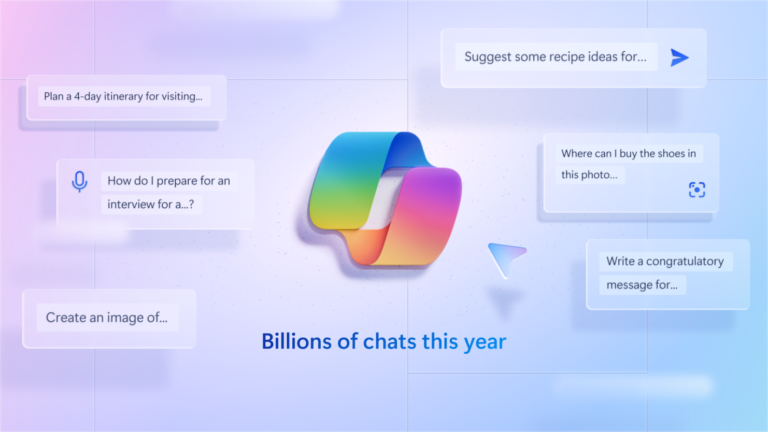
Microsoft is unveiling a host of exciting enhancements for its Copilot service. These upcoming features include support for GPT-4 Turbo, an upgraded DALL-E 3 model, a novel code interpreter, and deep search functionality within Bing.
ChatGPT’s voice feature is a game-changer for language learners who want to take their skills to the next level. This feature is not just an extra; it’s a whole new way of learning languages. In this article, we show you ten prompts that use ChatGPT’s voice feature to help you learn any language. These prompts are not just exercises; they are opportunities to immerse yourself in the language and learn from feedback. With ChatGPT’s voice feature, you can learn a language that suits your needs and preferences in the digital era.
Imagine having a conversation where you speak in your native tongue, and ChatGPT replies in the language you’re learning. This method is not just about learning new words; it’s about understanding context and developing listening skills in a practical setting.
2. Slang Translation – Bridging the Cultural Gap:
Often, the most challenging aspect of a new language is grasping the colloquialisms and slang. ChatGPT helps demystify these, offering insights into everyday speech that traditional learning methods might overlook.
3. Mastering Basic Greetings with Pronunciation Tips:
If you’re starting, focusing on greetings and common phrases is crucial. ChatGPT assists not just in learning these phrases but also in perfecting the pronunciation, ensuring you sound just like a native speaker.
4. Interactive Conversation and Correction:
Engage in a dynamic conversation with ChatGPT. What’s unique here is the model’s ability to correct your language use, providing a supportive environment for improvement.
5. Vocabulary Quiz for Enhanced Learning:
Test your knowledge with an interactive vocabulary quiz. Guess the meanings of foreign words, a fun and effective way to expand your linguistic repertoire.
6. Basic Sentence Translation for Daily Use:
Learn how to translate simple sentences, a skill that’s invaluable for everyday conversations. This exercise is about building a foundation in the new language, one sentence at a time.
7. Roleplaying Real-Life Scenarios:
Practice makes perfect, especially in language learning. Engage in roleplay scenarios like ordering food in a restaurant. This prompt is about applying your language skills in practical, real-world situations.
8. Idioms Understanding for Fluent Conversations:
Idioms are the essence of fluency in any language. ChatGPT helps you not just learn but also use these idioms correctly, enhancing your conversational skills.
9. Oral Exam Preparation:
If you’re preparing for a language proficiency test, ChatGPT can simulate an oral exam environment. This practice is invaluable for building confidence and readiness for the actual test.
10. Listening Comprehension Tests:
Finally, improve your listening skills by engaging in exercises that involve listening to passages and answering questions. This is crucial for complete language comprehension.
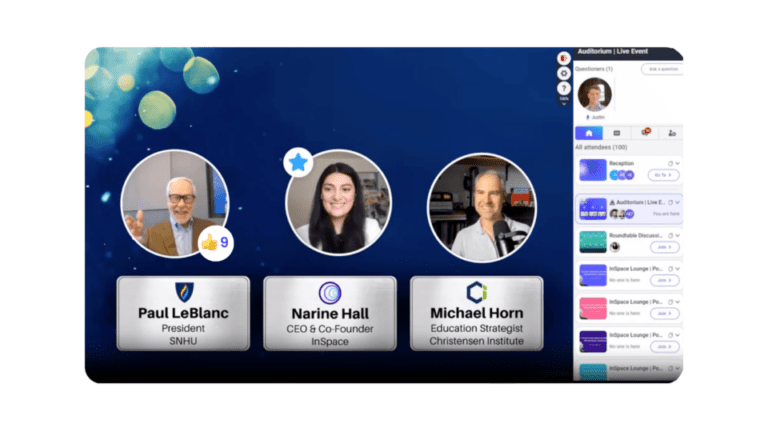
InSpace is a video conferencing platform specifically designed for education. Unlike traditional video conferencing tools, InSpace prioritizes creating a virtual classroom environment that mirrors the fluid, personal, and interactive nature of a real classroom. Let’s delve into its key features and benefits:
Features of InSpace:
Dynamic Virtual Environment:
InSpace allows participants to break free from the rigid “Brady Bunch” grid of video boxes. Instead, each person is represented in a video circle that can freely move around the virtual space. This fosters a more natural and engaging interaction.
InSpace isn’t just for individual teachers or classes; it caters to entire institutions and learning communities. Whether you’re a school, college, or organization, InSpace provides large-scale virtual communication solutions.
InSpace’s dynamic environment encourages active participation. Students can move their video circles, collaborate, and engage with peers and instructors naturally.
The platform fosters meaningful interactions, making virtual classes feel more like in-person sessions.
Seamless Transition:
InSpace enables instructors to maintain the natural flow of a face-to-face class in a virtual space. It bridges the gap between physical and online learning.
Unlike generic video conferencing tools, InSpace prioritizes education. It’s not just about video calls; it’s about creating an immersive learning environment.
In summary, InSpace combines the best of video conferencing technology with the personalized touch of a classroom. It empowers educators and learners alike, making virtual education more engaging and effective.
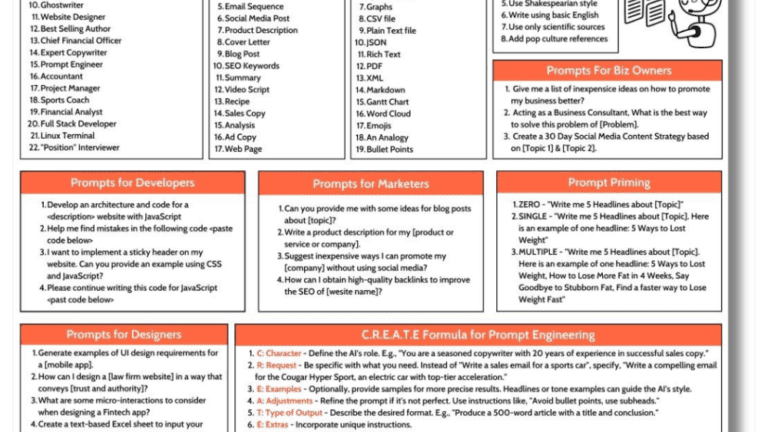
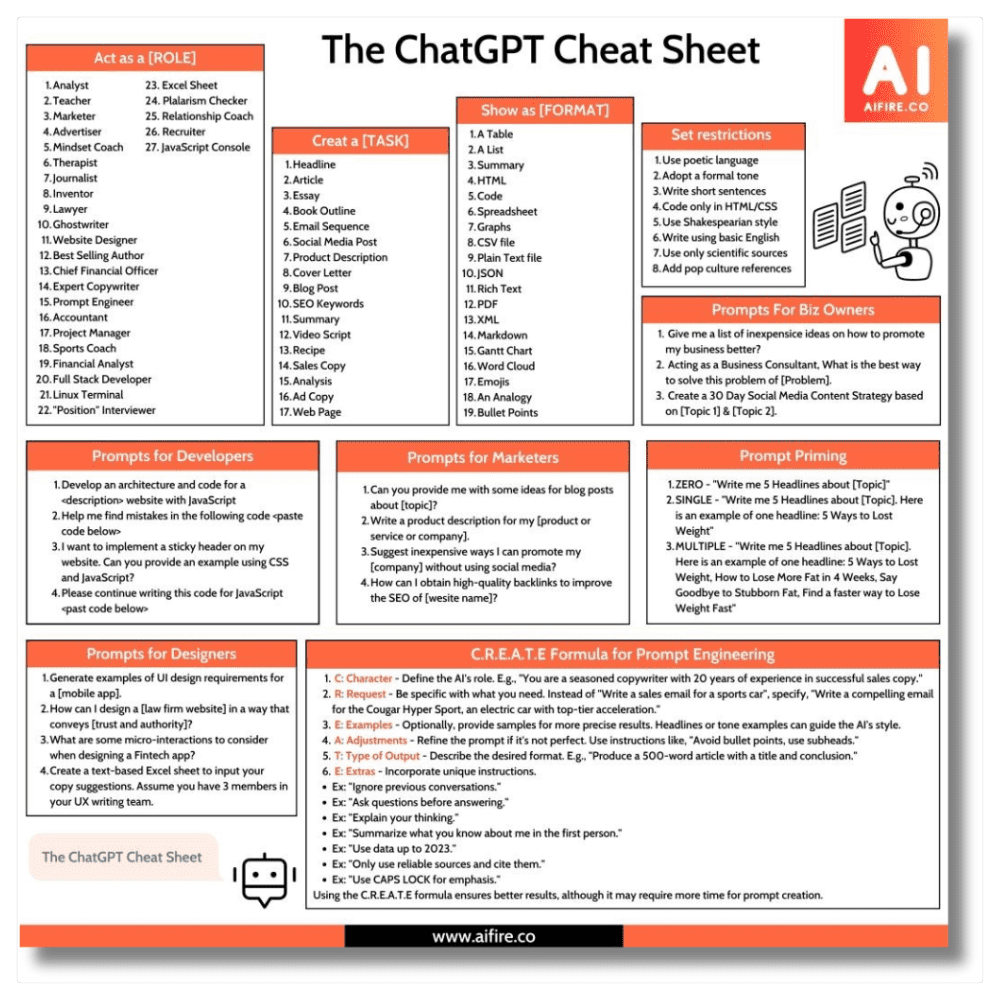
Ensuring that AI does your bidding means getting the Prompt right. This Cheat sheet from AIFire.co provides a great guide to follow when building your prompts!