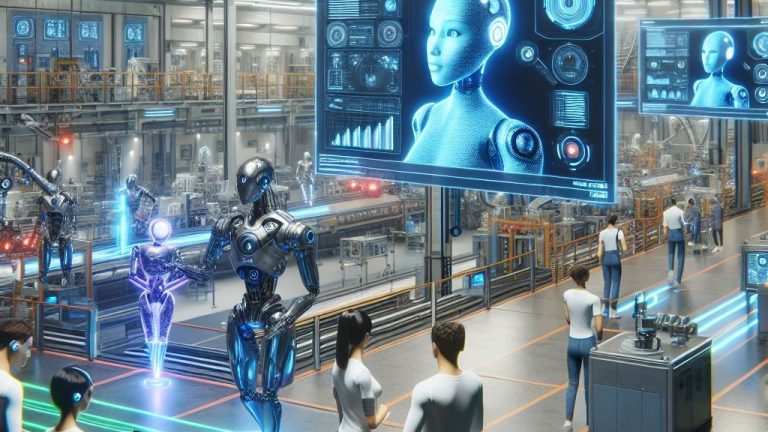
Category: Sentia Smart Mesh

  • AI in Sales Manufacturing. This is what you need to know

    AI in Sales Manufacturing. This is what you need to know

    AI in Manufacturing Sales: Revolutionizing the Industry

    The manufacturing sector is undergoing a significant transformation, with artificial intelligence (AI) playing a pivotal role in reshaping sales strategies and operations. As we delve into the world of AI-powered sales in manufacturing, it’s crucial for C-Suite Manufacturing Sales Leaders to understand the impact and potential of these technologies.

    According to recent studies, the adoption of AI in manufacturing is growing at an unprecedented rate. A report by McKinsey & Company reveals that AI has the potential to create between $1.2 trillion and $2 trillion in value for manufacturing and supply chain management. This staggering figure underscores the importance of embracing AI technologies in sales processes.

    Manufacturing Sector by the numbers (Selling Power Research ’24):

    • 439,537 salespeople employed
    • $6.1 trillion in total sale
    • $14 million average sales per salesperson
    • 11.7% increase in productivity from previous year
    • 1% decline in overall manufacturing employees

    Top 10 AI-Powered Strategies for Manufacturing Sales Professionals

    1. Leverage Predictive Analytics for Sales Forecasting
    2. Implement AI-Driven Lead Scoring
    3. Utilize AI for Personalized Customer Interactions
    4. Employ AI-Powered Sales Assistants
    5. Optimize Pricing Strategies with AI
    6. Enhance Product Recommendations
    7. Automate Sales Reporting and Analytics
    8. Implement AI-Driven Inventory Management
    9. Utilize AI for Competitive Analysis
    10. Implement AI-Powered Sales Training

    Manufacturing Trends: The Growing Impact of AI

    The manufacturing industry is witnessing a significant surge in AI adoption. Here are some key trends and data points:

    As AI continues to revolutionize the manufacturing sales landscape, it’s imperative for C-Suite Manufacturing Sales Leaders to stay ahead of the curve. By embracing these AI-powered strategies and keeping abreast of the latest trends, sales professionals can drive unprecedented growth and efficiency in their organizations.

    Key Phrases: AI-powered sales, predictive analytics, lead scoring, personalized customer interactions, dynamic pricing, AI-driven inventory management

    Keywords: Artificial Intelligence, Manufacturing Sales, Sales Forecasting, Customer Personalization, Competitive Analysis, Sales Training

    Hashtags: #AIinManufacturing #SalesAI #ManufacturingTrends #AIAdoption #SalesTech

    Add Your Heading Text Here

  • The Rise of Physical AI: Transforming Manufacturing Right Now

    The Rise of Physical AI: Transforming Manufacturing Right Now

    The Rise of Physical AI: Transforming Manufacturing in 2025

    As we head to the close of ’24 and strategize for 2025, the manufacturing sector is on the brink of a revolutionary transformation many are just getting up to speed with. It’s driven by the fusion of artificial intelligence and the physical world. This phenomenon, known as “physical AI”, is set to redefine how we produce goods, manage industrial processes, and interact with machines. Here are some examples of how physical AI and traditional technologies are reshaping the manufacturing landscape right now. And some projection as to what we can expect in early 2025 and beyond.

    The Essence of Physical AI

    Physical AI represents the embodiment of sophisticated AI algorithms in tangible, interactive systems. Unlike traditional AI, which operates primarily in the digital realm, physical AI manifests in robots and machines equipped with an array of sensors and actuators. These advanced systems can perceive their surroundings, make decisions based on real-time data, and physically interact with the world around them.

    7 AI Enhancing Robot Capabilities in Industrial Settings

    1. Adaptive and Flexible Operations: AI-powered robots can switch between different tasks and adapt to changing product specifications without extensive reprogramming.
    2. Improved Precision and Quality Control: Enhanced sensors and real-time data processing allow robots to perform tasks with exceptional accuracy.
    3. Advanced Object Manipulation: AI algorithms enable robots to handle objects of varying shapes and sizes with unprecedented finesse.
    4. Predictive Maintenance: Continuous monitoring of equipment performance helps prevent unexpected breakdowns and ensures uninterrupted operations.
    5. Enhanced Safety: AI enables robots to detect and respond to human presence, reducing the risk of accidents in collaborative environments.
    6. Optimized Process Efficiency: By combining AI and vision systems, robots can adjust parameters on the fly to mitigate issues and improve overall efficiency.
    7. Autonomous Navigation: AI-powered robots can move independently in warehouse and manufacturing environments, optimizing logistics and material handling.

    Key AI Manufacturing Trends to Watch in 2025

    We’re tracking several key trends that are poised to disrupt the manufacturing landscape with a number more in stealth mode:

    Smart Glasses and Augmented Reality

    A new generation of AR devices, rivaling the computing power of modern smartphones, will revolutionize product design and assembly line operations. Engineers will visualize 3D models in real-time, while workers access step-by-step instructions and troubleshooting guides hands-free.

    Generative AI

    AI systems capable of generating code, optimizing manufacturing processes, and even designing new products will democratize innovation. This technology will enable rapid prototyping and iteration, allowing even small enterprises to compete with industry giants.

    Autonomous Factories

    The convergence of generative AI, advanced robotics, and machine learning will lead to fully autonomous manufacturing facilities. These smart factories will dynamically adjust production lines, maximize output, and minimize waste with minimal human intervention.

    AI-Powered Chips

    Companies like Arm are developing specialized AI chips set to launch by 2025. These chips will enhance the capabilities of AI-driven devices and systems, further accelerating the adoption of physical AI in manufacturing.

    Impact on Industry

    The rise of physical AI in manufacturing is expected to bring significant benefits.

    – Increased productivity and efficiency

    – Reduced downtime and operational costs

    – Improved product quality and consistency

    – Enhanced workplace safety

    – Greater flexibility and customization capabilities

    – Reduced energy consumption and environmental impact


    Specific Use Cases and Research

    1. FANUC’s Zero Down Time (ZDT) Technology
      FANUC’s ZDT system uses AI to analyze data from robots in real-time, predicting potential failures and scheduling maintenance before breakdowns occur. This technology has helped automotive manufacturers reduce downtime by up to 90%.

    Learn more about FANUC’s ZDT

    1. Siemens’ AI-Powered Digital Twin
      Siemens is leveraging AI and digital twin technology to create virtual replicas of physical manufacturing processes. This allows for optimization and testing in a virtual environment before implementation in the real world.

    Explore Siemens’ Digital Twin technology

    1. ABB’s PickMaster Twin
      ABB’s PickMaster Twin uses AI and augmented reality to simplify the programming of robotic picking and packing applications, reducing setup time by up to 80%.

    Discover ABB’s PickMaster Twin

    1. Nvidia’s Isaac Sim for Robotics
      Nvidia’s Isaac Sim platform uses AI and photorealistic simulation to train and test robots in virtual environments, accelerating the development and deployment of physical AI systems in manufacturing.

    Learn about Nvidia’s Isaac Sim

    1. BMW’s AI-Powered Quality Control
      BMW is implementing AI-based image recognition systems to detect even the smallest deviations in components and surfaces during production, ensuring higher quality standards.

    Read about BMW’s AI quality control


    According to industry forecasts, AI could reduce energy consumption in manufacturing by up to 20% by 2025. Furthermore, AI-driven systems are predicted to reduce downtime by 30-50% and increase machine lifespan by 20-40%.

    The manufacturing vertical might be behind on AI adoption compared to other industries. That being noted, there are endless possibilities emerging with Physical AI and traditional technology that are above and beyond the opportunities in other spaces!

    With physical AI at its core in the center of next gen AI enabled IT enterprise grade systems, we can expect to see unprecedented levels of efficiency, innovation, and sustainability in the manufacturing sector. Forward thinking companies that strategize, plan, adopt and embrace the technologies that clearly provide ROI early will be well-positioned to lead in this new era of intelligent manufacturing production.

    Those that do not successfully deploy Physical AI and AI tools at the right points in the manufacturing process will be beaten by their competitors that did it, while they watched.

    Additional Research:

    [1] Physical Intelligence Raises $70M to Build AI-Powered Robots for Any Application

    [2] Manufacturing Revolution 2025 Smart Glasses, Gen AI

    [3] How AI In Manufacturing Is Transforming Key Industry Branches

    [4] Arm Plans AI Chips Launch in 2025 with SoftBank Backing

    [5] The Role of AI in Revolutionizing the Manufacturing Industry

    [6] https://redresscompliance.com/ai-in-industrial-robots/

    [7] https://blog.hirebotics.com/artificial-intelligence-for-robotics-and-welding

    [8] https://waverleysoftware.com/blog/ai-in-robotics/

    Social Media Hashtags:

    #PhysicalAI #ManufacturingRevolution #AI2025 #SmartFactories #IndustryInnovation #FutureOfManufacturing #AIRobotics #TechTransformation #Manufacturing #SAP #AIadoption #AITools #Siebel #Smartglasses #cobots

  • Sync Siebel to Anything, Anywhere, Here’s How

    Sync Siebel to Anything, Anywhere, Here’s How

    Moving from on-premises CRM solutions to cloud-based systems can be a challenging but necessary transition in today’s continuously evolving, AI saturated, IT landscape.

    As cloud adoption accelerates, many businesses with long-standing on-premises CRM systems are recognizing the need to modernize their approach. Sentia Smart Mesh offers a powerful solution for organizations looking to bridge the gap between legacy systems and cloud-based CRM that have the flexibility to connect and communicate.

    On-premises and Cloud CRM

    While Oracle Siebel CRM has been a robust on-premise solution for many companies since its inception way back in 1993, it lacks some of the key features that modern cloud-based CRMs provide. Siebel can be complex to use and maintain, requiring specialized IT staff. It also runs in batches, limiting real-time data access and updates.

    The Sentia Smart Mesh Advantage

    Sentia Smart Mesh is designed to address these limitations and empower organizations with a flexible, cloud-native approach to CRM. Key benefits include:

    • Real-time data access across multiple platforms (including Siebel on premise and cloud)
    • Seamless integration with other cloud applications and services
    • Reduced IT maintenance and infrastructure costs
    • Scalability to grow with your business needs
    • Enterprise grade security

    Creating Connectivity

    One of the biggest challenges in moving to the cloud is migrating existing data and integrating with legacy systems. Sentia Smart Mesh excels at creating connectivity between on-premises and cloud applications. Unlike custom-built integrations that can become tangled and difficult to maintain, Sentia Smart Mesh offers a streamlined approach:

    • Simplified data integration from Siebel and other on-premises CRMs
    • Pre-built connectors for popular enterprise applications
    • A flexible integration platform that adapts as your IT ecosystem evolves
    • Reduced complexity and easier modifications to integrations

    Sentia Smart Mesh Migration Solutions

    Sentia offers a number of integration solutions to aid businesses with their move from Siebel on-premises to Salesforce cloud solutions and or Sentia.

    In addition, Sentia supports organizations during the initial phase of migration where Siebel and Salesforce CRM co-exist to provide real-time integration to the end of the migration.

    • Sentia Smart Mesh is a cloud integration platform as a service (iPaaS) that offers safe and secure connectivity between on-premise / legacy software and SaaS applications. Businesses can use Sentia Smart Mesh between Siebel CRM and Salesforce (or any other platform such as HubSpot, Microsoft, SAP, Sentia AI, Zoho ) to transfer information seamlessly. In addition, Sentia Smart Mesh offers numerous  additional connectors, allowing businesses to share data across applications, services, and systems with only a few clicks. Bottom line. Corporations can maintain legacy data within their older Siebel CRM / on-premises solution, with the ability to integrate it with other applications and services providing access to all parts of the organization.

    Sentia Smart Mesh provides a comprehensive suite of tools and services to facilitate a smooth transition from Siebel CRM.

    By leveraging Sentia Smart Mesh, organizations can modernize their CRM infrastructure while preserving their valuable historical data and processes. This approach enables businesses to take advantage of cloud benefits without sacrificing the investments made in their existing systems. It also allows businesses to keep Siebel for the teams that want to use and it upgrade the rest to Sentia’s AI enabled CRM.

    “A perfect integration for organizations concerned about migrating from their legacy systems to a tangible and safe future state.” – M. Small, AI Strategy and Salesforce SME