Category: News

  • The AI Revolution in Customer Experience: How Chief Customer Officers Are Leveraging Technology in 2024 and Beyond

    The AI Revolution in Customer Experience: How Chief Customer Officers Are Leveraging Technology in 2024 and Beyond

    As the business landscape evolves, the role of Chief Customer Officer (CCO) has become increasingly crucial. These executives are responsible for overseeing and optimizing the entire customer experience, from initial contact to post-purchase support. In today’s digital age, CCOs are turning to artificial intelligence (AI) to revolutionize how they understand, engage with, and satisfy customers.

    The Role of a Chief Customer Officer

    A Chief Customer Officer is the executive responsible for creating a customer-centric culture within an organization. Their primary duties include:

    1. Developing and implementing customer experience strategies
    2. Analyzing customer data to drive insights
    3. Overseeing customer service operations
    4. Collaborating with other departments to ensure customer-centricity
    5. Measuring and reporting on customer satisfaction metrics

    10 Ways CCOs Are Using AI in 2024

    1. Predictive Analytics for Customer Behavior
      AI-powered predictive analytics to anticipate customer needs and behaviors, allowing for proactive engagement and personalized experiences.
    2. AI-Driven Personalization
      Machine learning algorithms, are creating hyper-personalized customer journeys across all touchpoints. Job title, function, purchasing power, experience can all be used to personalize each interaction.
    3. Chatbots and Virtual Assistants
      AI-powered chatbots are being deployed to provide 24/7 customer support, handling routine inquiries and freeing up human agents for more complex issues. This is one of the areas most AI enthusiasts see as low hanging fruit. The trick is making the customer experience better than with a well-trained human. That is still a goal.
    4. Sentiment Analysis
      Sales, Marketing and CCOs are all using AI to analyze customer feedback across various channels, gaining real-time insights into customer sentiment and satisfaction levels. Outliers – really good / bad customer interactions will be immediately flagged by AI and sent to management for review.
    5. Voice of Customer (VoC) Programs
      AI is enhancing VoC programs by processing and analyzing vast amounts of unstructured customer feedback data. The key is creating the right prompts to gain the best actionable insights. AI is perfect for this.
    6. Customer Churn Prediction
      Machine learning models are being employed to identify customers at risk of churning, allowing for targeted retention efforts. This has been done for a long time already. See Sentia.
    7. Automated Quality Assurance
      AI is being used to monitor and analyze customer interactions, ensuring consistent service quality across all channels. (See #4)
    8. Intelligent Routing
      CCOs are implementing AI-powered systems to route customer inquiries to the most appropriate agent or department based on the nature of the request. The most important calls (highest paying customers) usually have the top tier of service. Regardless getting customers to the right answers (AI or People) is critical to customer happiness and retention.
    9. Predictive Maintenance
      For product-based companies, AI is being used to predict when customers might need maintenance or support, enabling proactive outreach. They are also using IoT on machines to max output / maintenance downtime. Manufacturing is generally a bit behind in the AI race but will rapidly evolve.
    10. Customer Lifetime Value Optimization
      AI algorithms are helping CCOs identify high-value customers and optimize strategies to increase their lifetime value. The best customer is your current one. The cost of getting new clients is almost always higher than upselling, cross selling and keeping current customers happy!

    How AI Enhances Customer Satisfaction

    That sounds swell. Tell me how can AI play a crucial role in elevating customer satisfaction levels across various touchpoints? *(See research links at end of article and additional reading)

    Personalized Experiences at Scale

    AI enables businesses to deliver personalized experiences to each customer, regardless of the size of their customer base. By analyzing vast amounts of data, AI can tailor interactions, recommendations, and offers to individual preferences and behaviors. This level of personalization makes customers feel valued and understood, leading to higher satisfaction rates.

    Faster Resolution Times

    AI-powered chatbots and virtual assistants can provide instant responses to customer queries, significantly reducing wait times. For more complex issues, AI can quickly route customers to the most appropriate human agent, ensuring faster resolution. This efficiency in handling customer inquiries leads to improved satisfaction and reduced frustration.

    Proactive Customer Service

    By leveraging predictive analytics, AI can anticipate customer needs and potential issues before they arise. This allows businesses to reach out proactively with solutions or support, demonstrating attentiveness and care. Proactive service not only solves problems more efficiently but also shows customers that the company values their experience.

    24/7 Availability – When does AI Sleep?

    AI-driven customer service solutions offer round-the-clock support, catering to customers across different time zones and schedules. This constant availability ensures that customers can get help whenever they need it, enhancing their overall experience with the brand. It also doesn’t need to eat, sleep, have a bad day or take a break.  

    Consistent Quality of Service

    AI systems can maintain a consistent level of service quality across all interactions. Unlike human agents who may have varying levels of knowledge or experience, AI can provide standardized, accurate information every time. This consistency builds trust and reliability in the customer’s mind. However, the best approaches are almost always hybrid. Using Blended AI or the integration of humans and AI for optimal outcomes.

    Emotional Intelligence in Interactions

    Advanced AI systems are now capable of detecting customer sentiment and adjusting their responses accordingly. This emotional intelligence allows for more empathetic and appropriate interactions, which can significantly improve customer satisfaction, especially in challenging situations. (See #4 how sentiment analysis can be used)

    Seamless Omnichannel Experience

    AI facilitates a seamless experience across multiple channels by integrating data from various touchpoints. Customers can switch between channels (e.g., from chat to phone) without losing context, creating a more cohesive and satisfying journey.

    By implementing these AI-driven strategies, businesses can significantly enhance customer satisfaction, leading to increased loyalty, positive word-of-mouth, and ultimately, business growth. As AI technology continues to evolve, its potential to improve customer satisfaction will only grow, making it an essential tool for businesses focused on delivering exceptional customer experiences.

    Bonus: AI Innovations on the Horizon for 2025

    1. Emotion AI: Advanced systems that can detect and respond to customer emotions in real-time during interactions.
    2. Augmented Reality (AR) Customer Support: AI-powered AR solutions for visual, interactive customer assistance.
    3. Predictive Personalization: AI systems that can anticipate and fulfill customer needs before they’re expressed.
    4. Voice-First Customer Experiences: AI-driven voice interfaces becoming the primary mode of customer interaction for many services.
    5. Quantum Computing in CX: Leveraging quantum computing for unprecedented data processing and predictive capabilities in customer experience management.

    As we move towards 2025, CCOs who embrace these AI innovations will be well-positioned to deliver exceptional customer experiences and drive business growth.

    Tags: #CustomerExperience #AI #ChiefCustomerOfficer #CX #ArtificialIntelligence #CustomerService #BusinessInnovation #CCO #bestpractices #GenAI #ChatGPT

    Research Links:

    1. 13 Ways AI Will Improve the Customer Experience in 2024 – Zendesk
    2. 10 Excellent Ways AI Will Improve Customer Experience in 2024 – Survey Sparrow
    3. How AI Will Transform Customer Satisfaction in the Future – Delegate
    4. How AI is Transforming Customer Experience for Businesses – Full Story
    5. AI in Customer Service: All You Need to Know – Zendesk

  • Is AI capable of Breaking the Solow Paradox?

    Is AI capable of Breaking the Solow Paradox?

    Breaking the Solow Paradox: Unlocking AI’s Productivity Potential in the Enterprise

    In 1987, Nobel Prize-winning economist Robert Solow famously quipped, “You can see the computer age everywhere but in the productivity statistics.” This statement, known as the Solow Paradox, encapsulates a dilemma that still resonates today: despite massive investments in technology, particularly in AI and enterprise software, measurable productivity improvements remain elusive for many businesses.

    The Solow Paradox: A Persistent Challenge

    Solow’s observation was based on decades of studying business performance. During the period from the 1960s through the 1990s, companies dramatically increased their spending on technology—by 25% year-over-year in some cases. Despite this investment, productivity, measured by outputs per unit of input, didn’t follow suit. In fact, it often declined, with productivity dropping as much as 3% annually over that time frame.

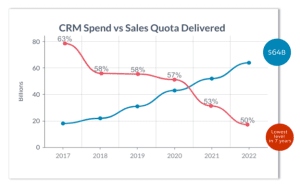
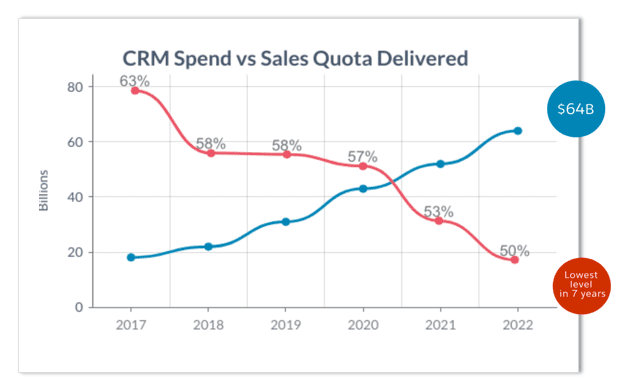
    Fast forward to today, and the paradox is still very much alive. In industries like customer relationship management (CRM), sales productivity has fallen by 25% in the last five years, even as spending on CRM software has tripled. This mirrors Solow’s paradox—technology is advancing at breakneck speed, but many organizations are still grappling with how to translate these advancements into productivity gains.

    Why Doesn’t Technology Always Improve Productivity?

    At the heart of this issue lies a misalignment between technology adoption and actual user needs. Let’s explore a few key reasons why technology, and especially enterprise software like CRMs and AI, often fails to drive the productivity it promises:

    Low User Adoption

    Despite significant investments in CRM software, a mere 26% of customer-facing teams actively use their CRM every day. This is a staggering statistic considering that CRM systems are designed to streamline sales and service processes, but if the majority of users are not engaging with the platform, it can never deliver on its promises of efficiency and productivity gains.

    Tool Overload

    Sales teams today are overwhelmed by tools—on average, they use 10 different applications just to close deals. Studies show that sales reps spend just 28% of their week actually selling, a number that has declined by 20% over the past five years. Much of this lost time is due to the juggling of tools and the associated administrative work.

    User Frustration

    The cognitive overload from having to switch between multiple applications is significant. 66% of sales reps report feeling “drowned” in tools, and 60% of staff in some studies admitted that they’ve considered leaving their jobs due to frustrations with their CRM software.

    The Solow Paradox in the AI Era

    As we enter the age of AI, the Solow Paradox takes on new dimensions. While AI promises to revolutionize productivity, we’re seeing similar patterns of investment without corresponding gains. Here’s how the paradox applies to AI today:

    1. Implementation Lag: Just as with computers in Solow’s time, there’s a significant lag between AI adoption and productivity gains. Organizations are investing heavily in AI, but many are still in the early stages of figuring out how to effectively integrate it into their workflows.
    2. Skill Mismatch: The rapid advancement of AI technology has created a skills gap. Many employees lack the necessary training to effectively use AI tools, leading to underutilization and reduced productivity.
    3. Overinvestment in Technology, Underinvestment in Complementary Factors: Companies often focus on acquiring the latest AI technology without investing sufficiently in the organizational changes, process redesigns, and employee training necessary to fully leverage these tools.
    4. Data Quality Issues: AI systems are only as good as the data they’re trained on. Many organizations struggle with data quality and integration issues, limiting the effectiveness of their AI implementations.
    5. Measurement Challenges: Traditional productivity metrics may not capture the full value of AI. Improvements in decision-making quality or customer experience, for instance, may not be immediately reflected in standard productivity measures.

    Chart: AI Investment vs. Productivity Growth

    Solow Paradox

    This chart illustrates the growing gap between AI investment and productivity growth, reminiscent of the original Solow Paradox.

    Moving Beyond the Paradox

    To break the cycle of unproductive technology spending, businesses need to focus on these core principles:

    1. User-Centric Design: Ensure AI solutions simplify day-to-day tasks and remove administrative burdens.
    2. Integrated Workflows: Seamlessly integrate AI with existing tools to reduce context switching.
    3. Focus on Real-Time, Actionable Insights: Emulate consumer apps by pushing relevant, timely information to users.
    4. Invest in Training and Change Management: Prioritize upskilling employees to effectively use AI tools.
    5. Redesign Processes: Rethink workflows to fully leverage AI capabilities, rather than simply automating existing processes.
    6. Improve Data Quality: Invest in data infrastructure and governance to ensure AI systems have high-quality inputs.
    7. Develop New Metrics: Create new ways to measure productivity that capture the full value of AI implementations.

    By addressing these factors, businesses can start to bridge the gap between AI investment and productivity gains, potentially breaking the cycle of the Solow Paradox in the AI era.

    For further research:

    1. McKinsey & Company: The Solow Paradox in the AI Age
    2. MIT Sloan Management Review: Productivity Paradox 2.0
    3. National Bureau of Economic Research: Artificial Intelligence and the Modern Productivity Paradox

    Lorem ipsum dolor sit amet, consectetur adipiscing elit. Ut elit tellus, luctus nec ullamcorper mattis, pulvinar dapibus leo.

  • LinkedIn Scraping User Data for AI Training. What you need to Know!

    LinkedIn Scraping User Data for AI Training. What you need to Know!

    LinkedIn, the world’s largest professional networking platform, is widely used for job hunting, networking, and sharing industry insights. However, there’s growing concern that LinkedIn is collecting and using vast amounts of user data to train its artificial intelligence (AI) models—largely without users being aware.

    What Is Data Scraping?

    Data scraping refers to the automated process of collecting data from websites. In LinkedIn’s case, the platform is extracting information from your profile, posts, interactions, and connections. This data, which is extremely valuable for AI development, is being used to train LinkedIn’s AI models—helping to power everything from job recommendations to predictive analytics.

    While LinkedIn is upfront about collecting data to improve the platform, most users are unaware that their activity is being used to train sophisticated AI systems behind the scenes.

    How LinkedIn Uses Your Data for AI Training

    LinkedIn’s AI models rely on vast amounts of data to function effectively. By scraping user profiles and interactions, LinkedIn gathers valuable data to:

    • Improve job matching algorithms: LinkedIn’s AI analyzes the skills and experiences of millions of users to make more accurate job recommendations.
    • Enhance search features: By learning from user behavior, the AI can provide better search results and suggest connections more intelligently.
    • Personalize content: LinkedIn uses AI to tailor the newsfeed to individual users, showing content that the platform predicts will be relevant or engaging.

    However, the scope of this data collection raises questions about how much information LinkedIn gathers and whether users are fully aware of how their data is being used.

    Can You Opt Out?

    While LinkedIn’s AI is powered by user data, there is a way to limit how much of your personal information is scraped for these purposes. The option to opt out is hidden within LinkedIn’s privacy settings, but you can adjust your preferences by following these steps:

    1. Go to your LinkedIn profile and click on your profile picture.
    2. Select Settings & Privacy from the dropdown menu.
    3. Navigate to the Data Privacy section.
    4. Here, you can adjust how your data is used, including whether it can be used to train AI models.

    Although opting out may reduce the personalization of some features, it’s a crucial step if you want more control over how LinkedIn uses your data.

    Why This Matters

    The use of user data to train AI models isn’t unique to LinkedIn, but it does raise concerns about transparency and consent. Many users join LinkedIn to network professionally, without realizing that their profiles, posts, and interactions are being used to develop AI systems. The fact that this data scraping happens without most users’ knowledge creates an ethical gray area.

    Training AI models requires massive amounts of data, and LinkedIn’s vast user base offers the perfect pool of information. But the practice leaves users with limited control over how their personal and professional details are being used.

    How AI Models Affect Your LinkedIn Experience

    The AI models trained using scraped data enhance the overall LinkedIn experience in many ways:

    • Smarter job recommendations: The more data LinkedIn collects, the better its AI can suggest jobs that align with your experience.
    • Improved search functionality: LinkedIn’s AI learns from user behavior to provide more relevant search results, making it easier to find the right people or companies.
    • Enhanced networking: The platform can suggest more accurate connections by analyzing user activity, helping users grow their professional networks.

    While these AI-driven features are beneficial, they come at the cost of user data being continuously mined for training purposes.

    What You Can Do

    If you’re concerned about LinkedIn scraping your data to train AI models, here are a few steps you can take:

    • Review and update your privacy settings: Go to your data privacy options in LinkedIn’s settings to see what’s being collected and adjust your preferences accordingly.
    • Limit the data you share: If you’re uncomfortable with LinkedIn using your information to train AI, consider limiting the amount of personal and professional details you post.
    • Stay informed: AI is a rapidly growing field, and platforms like LinkedIn are constantly evolving their use of user data. Keep an eye on updates to LinkedIn’s data practices to make sure you’re comfortable with how your information is being used.

    LinkedIn’s use of user data to train AI models highlights the complexities of data privacy in today’s digital world. While the platform uses AI to deliver smarter recommendations and a more personalized experience, most users are unaware of the extent to which their data is being harvested. By taking control of your privacy settings and staying informed, you can manage how much of your personal information LinkedIn uses, ensuring you remain in control of your data.

    tags: #linkedin #ai #dataprivacy #aitraining #genai

  • Agentic AI: The Next Big AI Breakthrough to Watch?

    Agentic AI: The Next Big AI Breakthrough to Watch?

    Agentic AI is strutting onto the tech scene like Mick Jagger rocking on the big stage.

    Unlike its older sibling, Generative AI, which is great at whipping up new content like a master chef, Agentic AI is the ultimate multitasker, ready to make decisions and tackle tasks with the finesse of Superman’s arch nemesis Brainiac. This shift towards goal-oriented and adaptive decision-making means Agentic AI can navigate complex environments like a pro gamer, executing actions in real-time and leveling up through continuous feedback.

    Imagine Agentic AI applications in fintech / financial services: it could be the ultimate stock market wizard, managing investment portfolios, executing trades faster than you can say “bull market,” and catching fraudsters red-handed like Batman and Robin protecting Gotham. This level of autonomy and adaptability could turn the finance world upside down, bringing efficiency and decision-making skills that would make even the sharpest Wall Street minds jealous.

    Agentic AI maybe the next big thing in the age of AI—it’s the AI equivalent of discovering fire. The implications for shared services and finance are mind-blowing, promising a future where AI can handle complex tasks and workflows like a boss, driving innovation and value creation in ways that would make even the Jetsons proud. So, buckle up AI Knowledge Seekers, because this journey is going to be one wild ride, and it’s one that professionals and organizations need to plan for, experiment, deploy, learn and evolve. AI isn’t set it and forget it software (yet?).

    As Spiderman would say to Mysterio – “that looks super cool – but I don’t believe it, what should I really be seeing?” Is that more marketing puffery, creating an image of success or something that actually works in the real world, that my boss will be super happy with? Lets jump in with five real world applications and then five examples of corporations that are developing Agentic AI right now.

    Five real-world applications across different sectors:

    1. Financial Services: Agentic AI is revolutionizing financial planning and analysis by autonomously managing investment portfolios and executing trades based on real-time market analysis. This not only enhances the accuracy of financial forecasting but also adapts to market changes dynamically, providing a significant edge in financial decision-making.

    2. Manufacturing: In the manufacturing sector, Agentic AI is being deployed for predictive maintenance of machinery, leading to a substantial reduction in downtime and maintenance costs. By autonomously managing inventory and overseeing robotic assembly, these intelligent agents are driving efficiency and productivity to new heights.

    3. B2C Sales: The power of Agentic AI in B2C sales lies in its ability to analyze vast datasets to personalize marketing campaigns with unprecedented precision. Understanding customer behavior and preferences allows for optimized advertising strategies, maximizing conversion rates and driving revenue growth.

    4. Banking: Agentic AI is being used in banking for advanced fraud detection by continuously monitoring transactions and flagging anomalies. This proactive approach significantly reduces financial losses and enhances security for both the institution and its customers.

    5. E-commerce: In e-commerce, Agentic AI is improving customer experiences by managing queries autonomously and providing 24/7 customer service. This not only improves resolution times but also ensures a consistent and personalized interaction for each customer, fostering loyalty and trust.

    These applications embody the versatility and potential of Agentic AI to enhance decision-making, optimize operations, and drive growth across various industries. As we continue to explore the capabilities of Agentic AI, it’s clear that its impact could be far-reaching, ushering in a new era of autonomous and intelligent systems. But is it different than what we already have in play today for businesses?

    With that question in mind. What are the big AI Players doing with Agentic AI you need to know about?

    Companies using Agentic AI with links:

    1. Microsoft: Through projects like Project AutoGen and Copilot, Microsoft is integrating Agentic AI to create more autonomous and action-based applications12. These tools help automate complex workflows and improve productivity by making independent decisions and executing tasks with minimal human intervention.
    2. Google: With initiatives like Project Astra, Google is focusing on developing AI systems that go beyond responding to user prompts, aiming for more proactive and autonomous functionalities1.
    3. OpenAI: Known for its advancements in AI, OpenAI is also investing in Agentic AI to enhance the capabilities of its models, enabling them to perform more complex and autonomous tasks1.
    4. Cognition Labs: This startup has developed Devin, an advanced Agentic AI that functions as a fully autonomous software engineer. Devin handles long-term reasoning, planning, and complex engineering tasks independently, collaborating with human engineers within a sandboxed environment3.
    5. Nagra DTV: A digital content company, Nagra DTV uses Agentic AI to support web, mobile, desktop, and API test automation, optimizing their testing processes and improving efficiency4.

    And there you have it fellow AI knowledge seekers. The latest on Agentic AI. For more on AI buzzwords, AI strategies and AI adoption techniques check out the 100’s of articles on www.sentia.community.

    Forbes Agentic AI: The Next Big Breakthrough

    Venture Beat Agentic AI is reshaping Development teams

    Andrew Ng on Agentic AI video

    Agentic AI https://www.agentic.ai/

    Gartner: The Top 10 Strategic Technology Trends For 2025

  • Composite AI: The Synergy of Multiple Artificial Intelligence Techniques

    Composite AI: The Synergy of Multiple Artificial Intelligence Techniques

    There are so many AI buzzwords being thrown about it is hard to keep up at times.

    The majority of terms aren’t so much “new things,” its more like a novel way of using AI on a old process then being first to name the new version with AI. With that in mind lets dive into Composite AI. What is it? How is it being used and is it something you should be using at your company now or in the near future?

    Composite AI stands out as a blended approach that integrates various AI techniques to tackle complex challenges. Unlike traditional AI, which often relies on a single methodology, Composite AI creates a cohesive system by combining strategies such as machine learning, natural language processing, and computer vision. This integrated approach enhances problem-solving capabilities, allowing for the addressal of more intricate issues with greater precision. Blended AI is the mesh of human and AI.

    What is Composite AI?

    The term refers to the systematic integration of different AI technologies into a unified solution pipeline. It brings together diverse analytical techniques, including machine learning (ML), natural language processing (NLP), computer vision (CV), knowledge graphs, and more, based on their strengths to build an end-to-end AI solution tailored to the problem at hand. It isn’t just one thing rather a combination of AI tech.

    How is it being used?

    The use of Composite AI is growing swiftly, with its market value projected to reach USD 4.4 billion by 2028. This growth underscores the increasing recognition of Composite AI’s potential across various business sectors, including healthcare, finance, and manufacturing. Organizations are leveraging Composite AI to enhance diagnostics, improve customer service, and optimize manufacturing processes, among other applications.

    5 Use Cases for your Review

    1. Healthcare Diagnostics: Companies like Leeway Hertz are using Composite AI to improve medical diagnostics by combining imaging analysis with patient data, leading to more accurate and timely treatment decisions.

    2. Finance Fraud Detection: In the financial sector, Composite AI is utilized for fraud detection by integrating various techniques such as anomaly detection algorithms and predictive analytics to identify fraudulent activities.

    3. Retail Customer Experience: Retailers are enhancing customer service by using Composite AI to analyze customer behavior, predict purchasing patterns, and personalize shopping experiences.

    4. Urban Planning: Smart city management is another area where Composite AI is applied, using a combination of spatial analysis, predictive modeling, and sensor data interpretation to optimize urban development and services.

    5. Manufacturing Optimization: In manufacturing, Composite AI is employed to monitor equipment, predict failures, and adjust production processes, thereby improving efficiency and reducing downtime.

    Lessons Learned?

    Composite AI represents a significant leap forward in the AI domain, offering a more sophisticated, flexible, and intelligent system. By strategically combining various AI methods, Composite AI addresses complex problems more effectively and is set to transform industries with its robust decision-making capabilities. As we continue to witness its adoption and growth, Composite AI is poised to become an indispensable tool in the enterprise AI toolkit.

    At the end of the day, it isn’t about AI or tech – it is about what business problems can you tech solve for me?

    For further information on Composite AI and its applications, please take a look at the following articles and resources for your perusal.

    Gartner Information Technology – This is Composite AI

    Blended AI – How can Blended AI make an impact on Sellers

  • The Future of AI in Sales Tech. What’s Coming you Need to Know

    The Future of AI in Sales Tech. What’s Coming you Need to Know

    The Future of AI in Sales Tech: What to Expect by 2025

    As the year winds down, every C-Suite executive I work with is eager to leverage AI in sales tech to stay ahead. Board meetings today prioritize shareholder expectations and the pressing question: “How will AI drive our growth faster than competitors?”

    The challenge for corporate strategists is navigating the “Irrational Exuberance of AI.”

    Just because AI “can” do something doesn’t mean it “should.” ROI remains crucial – that will never be a passing fad. It’s vital to create realistic AI adoption timelines, implement risk mitigation strategies, and plan for inevitable failures as tech teams learn to optimize AI.

    Looking ahead to 2025, AI is set to transform sales technology with hyper-personalized outreach, advanced predictive analytics, live sentiment analysis, and PCLV models. AI will continue to revolutionize sales operations—and it will be an adapt or get left behind activity. The future belongs to those who embrace blended AI.

    Based on my research, the most impactful AI features aren’t always the flashiest. Focus on those with significant ROI potential. Make safe bets, stretch goals, and a few long shots in your AI strategy. Remember, AI isn’t a set-it-and-forget-it tool; it requires ongoing tuning and parallel operation with current systems for risk mitigation and maximization.

    Here are the top ten AI features to consider, evaluated on their potential ROI impact.

    Top Ten AI Sales Tech Features for 2025

    1. AI-Driven Sales Strategy Optimization
    2. Advanced Sentiment Analysis
    3. AI-Powered Virtual Reality (VR) Sales Demos
    4. Predictive Customer Lifetime Value (CLV) Models
    5. AI-Enhanced Sales Training Programs
    6. Dynamic Pricing Algorithms
    7. AI-Generated Sales Scripts
    8. Automated Contract Generation and Management
    9. AI-Driven Market Segmentation
    10. Real-Time Competitive Analysis

    AI Sales Tech in Manufacturing

    The manufacturing sector is rapidly adopting AI technologies, often outpacing other industries in terms of investment and implementation. According to a study by MIT Technology Review Insights, 64% of manufacturers are currently researching or experimenting with AI, and 35% have begun to put AI use cases into production2. This sector’s focus on AI is driven by the need for enhanced product and process innovation, reduced cycle times, and improved operational efficiency. Compared to other verticals, manufacturing shows a higher rate of AI adoption, with significant investments expected to continue growing over the next few years1.

    Top 3 AI Features in AI-Enabled Sales Tech for Manufacturing

    1. Predictive Maintenance Sales Solutions
    2. AI-Enhanced Supply Chain Optimization
    3. Intelligent Product Recommendations

    Conclusion

    The integration of AI in sales technology is set to bring unprecedented efficiency and effectiveness to sales processes. From hyper-personalized outreach to advanced predictive analytics, these innovations will empower sales teams to better understand and serve their customers.

    In the manufacturing sector, AI will play a crucial role in predictive maintenance, supply chain optimization, and intelligent product recommendations, driving significant improvements in sales strategies and outcomes.

    Stay tuned as we continue to explore the exciting developments in AI and their impact on the future of sales!

    David is an investor and executive director at Sentia, a next generation AI sales enablement technology company and Salesforce partner. Dave’s passion for helping people with their AI, sales, marketing, business strategy, startup growth and strategic planning has taken him across the globe and spans numerous industries. You can follow him on Twitter LinkedIn or on Sentia Says.

    Tags: #manufacturing #CEO #BOD #AI #AIadoption #AIRisk #AIStrategy #Boardofdirectors #AItesting #AIusecase #AIplan #AIConsulting

  • What is the Best Way to Manage AI Expectations with CEO’s?

    What is the Best Way to Manage AI Expectations with CEO’s?

    As any US business executive will tell you Artificial Intelligence (AI) is not just a passing trend; it’s a transformative capability worth developing internally as it will differentiate each business, and hit the bottom line, in a way we haven’t seen with tech yet. I guarantee you every single fortune 500 meeting has a portion of their calls on “This what we’re doing with AI, here is our progress to date.”

    However, managing AI expectations within your organization, especially with your exuberant forward-thinking CEO and Board of Directors, requires a more strategic, well thought out and logical approach. The key is to educate and create realistic AI use cases while enabling your CEO to clearly understand and articulate how AI will be leveraged now and in the future at company XYZ.

    AI Best Practices

    • Clear set of AI goals and metrics to ensure it’s a real test
    • Accept that pushing the boundaries of AI, requires failures & learning
    • AI may take time to tweak, improve and rollout, realistic timelines are critical
    • Start small, test, test, dogfood it, get feedback from your AI champions, test again
    • If the test use case doesn’t increase efficiency, or sales (or path to either) kill it
    • Have a clear check list for when AI is ready for rollout as well as when to give up
    • Complete an AI Risk Analysis and AI Risk Assessment
    • Benchmark your current AI Risk to any future AI rollouts
    • Internal Legal team-review all software contracts for AI data use,
    • AI Lawyers prepare internal AI use policy for human resources,
    • Review use of AI in document preparation (see ChatGPT), ensure all client deliverables that have any use of AI are still legal and / or noted in client deliverables

    With these best practices in mind. The following ten steps will help you stick with a strategy and keep everyone on the same page of AI realism vs. AI sizzle and flash puffery.  

    10 Steps to manage AI expectations

    1. Advocate for a Dedicated AI Team and Budget

    AI development requires a dedicated team and budget. While it doesn’t have to be excessive, starting with a team of around five data scientists or analysts is a good approach for most companies.

    1. Educate on Reality vs. Hype

    It’s crucial to educate your CEO and executive staff on the realities of AI versus the hype. If necessary, bring in external consultants and spend several hours with your CEO to demystify AI, including some of the underlying math. This helps ensure AI doesn’t remain an esoteric concept.

    1. Focus on Business Outcomes

    Lead with the business outcomes you aim to achieve with AI. Remember, AI and Machine Learning (ML) are not panaceas; they won’t transform your business into something it’s fundamentally not. Business leaders should think creatively about how AI can support their goals.

    1. Prepare for Iteration and Failures

    Developing AI capabilities requires trying numerous projects to build the necessary expertise. Set the expectation with your CEO that rapid iteration and a high volume of projects will be the focus for the first six months. Be prepared for several failed initiatives along the way.

    1. Emphasize Data Availability

    AI and ML are heavily dependent on data availability. If your company lacks sufficient data, building effective models will be challenging. Set the expectation that a cultural shift towards data-driven decision-making is necessary, and the CEO and executive staff should lead by example.

    1. Revisit and Utilize Existing Data

    Examine the data your company already has but hasn’t utilized effectively. For instance, many companies have machine sensors generating large amounts of data that go unused. Revisit these data stores and explore new possibilities.

    1. Ensure Data Quality and Infrastructure

    AI projects are doomed to fail if the underlying data is poor. Continuously improve your data infrastructure to ensure all data sources needed for business outcomes are in good shape. This doesn’t mean embarking on a massive “data lake” project, but rather ensuring data quality incrementally.

    1. Clarify AI vs. Analytics Needs

    Often, when people say they want AI, they actually mean they want better analytics—more reliable and quicker answers to their questions. Test this assumption and consider hiring strong analysts if this is the case.

    1. Pair Business Leaders with Analysts

    Pair key business leaders with analysts who can answer data-related questions and educate them on interpreting data. Surprisingly, many leaders are unfamiliar with terms like p-value and correlation coefficient. Making leaders moderately data-savvy can significantly impact organizational culture.

    1. Understand AI, ML, and Deep Learning
    • Artificial Intelligence (AI): When machines perform tasks typically considered the realm of humans.
    • Machine Learning (ML): When a machine improves its performance on a task with experience.
    • Deep Learning: A subset of ML that uses neural networks.

    One of the other best practices your AI champions should do is stay on top of new use cases that may not be necessarily in your industry. It is impossible for most companies to test all the new AI coming out. But you can watch, learn and apply what others are doing and hopefully do better with fewer errors.

    Examples of Successful AI Implementation

    1. Healthcare: IBM Watson Health
    2. Finance: JPMorgan Chase
    3. Manufacturing: Siemens
    4. Retail: Amazon
    5. Transportation and Logistics: UPS
    6. Agriculture: John Deere
    7. Entertainment: Netflix

    By following these steps and learning from successful AI implementations, you can effectively manage AI expectations with your CEO and pave the way for successful AI integration in your organization.

    Tags: #CEO #BOD #AI #AIadoption #AIRisk #AIStrategy #Boardofdirectors #AItesting #AIusecase