Category: LLMs

  • What the Hell are / is / an: AI Agent(s)?

    What the Hell are / is / an: AI Agent(s)?

    AI Agents the next Frontier in artificial intelligence or just more AI Hype?

    With Billions of venture capital dollars already sunk into it, the AI marketing buzz continues to build. The latest excitement centers around a term many cannot agree upon. AI agents are becoming increasingly prevalent or at least written and hyped more and more. Ask most people what an AI Agent is, and the first thing they think of is chatbot type things. But what exactly are AI agents, and how are they shaping our technological landscape or is it just a bunch of tech marketing hype?

    What are AI Agents?

    AI agents are autonomous systems or programs capable of performing tasks on behalf of users or other systems. They go beyond simple chatbots, incorporating advanced decision-making, problem-solving, and execution capabilities1. These agents utilize large language models (LLMs) as their core, enabling them to understand and respond to complex inputs while adapting to user expectations over time1.

    Definitions Across Industries

    While there’s no universally agreed-upon definition, several key players offer their interpretations:

    • IBM defines AI agents as systems that can autonomously perform tasks by designing workflows and utilizing available tools1.
    • OpenAI describes them as automated systems that can independently accomplish tasks for users2.
    • Microsoft distinguishes agents from AI assistants, positioning agents as more specialized and tailored to specific expertise2.
    • Salesforce definition: AI agents are a type of AI system that can understand and respond to customer inquiries without human intervention. They are created using an agent builder, like Agentforce, and rely on machine learning and natural language processing (NLP) to handle a wide range of tasks. These intelligent agents can include anything from answering simple questions to resolving complex issues — even multi-tasking. Most importantly, AI agents can continuously improve their own performance through self-learning. This is distinct from traditional AI, which requires human input for specific tasks.

    Companies Developing AI Agents

    Several tech giants are at the forefront of AI agent development:

    1. OpenAI: Developing the Operator agent2.
    2. Google: Working on Project Mariner2.
    3. Anthropic: Claude – a generative AI chatbot and family of large language models (LLMs).
    4. Perplexity: Created a shopping agent2.
    5. Amazon: Developing AI agents for e-commerce applications4.
    6. Salesforce: Aiming to become a leading provider of “digital labor” through various agentic services2. See Agentforce.

    5 Real-World AI Agent Use Cases

    1. E-Commerce: AI agents on platforms like Amazon provide personalized product recommendations, automatically place orders, and track shipping, contributing significantly to revenue generation4.
    2. Sales and Marketing: AI agents like Find AI build lead lists, send personalized communications, and qualify leads, often outperforming human counterparts in lead generation4.
    3. Customer Support: Advanced AI agents, such as those developed by Chatbase, can handle complex technical support issues, process refunds, and provide product recommendations, leading to substantial reductions in support tickets4.
    4. Autonomous Vehicles: Self-driving cars represent a complex application of AI agents, combining multiple agent types for navigation, decision-making, and real-time responses. Companies like Waymo are pioneering this technology in cities like San Francisco and across the United States4.
    5. Healthcare: AI agents assist in diagnosing medical conditions, analyzing medical images, and creating personalized treatment plans. For instance, Google’s AI agent has demonstrated superior accuracy in diagnosing skin cancer compared to human dermatologists4.

    As AI agents continue to evolve, they promise to revolutionize various sectors, enhancing efficiency and providing personalized experiences. However, challenges remain in standardizing definitions and managing user expectations. The coming years will likely see further advancements and refinements in this exciting field of artificial intelligence.124

    Citations:

    1. https://www.ibm.com/think/topics/ai-agents
    2. https://www.glean.com/blog/ai-agents-how-they-work
    3. https://deviniti.com/blog/enterprise-software/best-ai-agent-development-companies/
    4. https://www.chatbase.co/blog/ai-agent-examples
    5. https://anth.us/blog/null/
    6. https://zapier.com/blog/ai-agent/
    7. https://www.youtube.com/watch?v=ZZ2QUCePgYw
    8. https://cloud.google.com/discover/what-are-ai-agents
    9. https://www.forbes.com/councils/forbestechcouncil/2025/03/07/ai-agents-in-2025-transforming-business-redefining-leadership-and-accelerating-digital-transformation/
    10. https://www.teneo.ai/blog/5-companies-leading-the-way-in-ai-agent-technology
    11. https://a16z.com/ai-voice-agents-2025-update/
    12. https://www.salesforce.com/agentforce/what-are-ai-agents/
    13. https://botpress.com/blog/real-world-applications-of-ai-agents
    14. https://aws.amazon.com/what-is/ai-agents/
    15. https://openai.com/index/new-tools-for-building-agents/
    16. https://www.reddit.com/r/AI_Agents/comments/1hhlzkh/whats_your_use_case_for_ai_agents_what_problems/
    17. https://direct.mit.edu/isal/article/doi/10.1162/isal_a_00605/116885/Towards-a-Theory-of-Mind-for-Artificial
    18. https://hallmark.libguides.com/c.php?g=1312147&p=9645253
    19. https://www.reddit.com/r/OpenAI/comments/1hk4d8h/eli5_what_exactly_is_an_ai_agent_with_examples/
    20. https://botpress.com/blog/what-is-an-ai-agent
    21. https://devrev.ai/blog/ai-agents
    22. https://en.wikipedia.org/wiki/Intelligent_agent
    23. https://github.com/resources/articles/ai/what-are-ai-agents
    24. https://www.geekwire.com/2025/microsoft-unveils-ai-agents-for-sales-striking-back-at-salesforce/
    25. https://www.businessinsider.com/generative-ai-evolution-software-companies-develop-ai-agents-workforce-2025-3
    26. https://tech.co/news/microsoft-new-ai-sales-agents
    27. https://cloud.google.com/transform/101-real-world-generative-ai-use-cases-from-industry-leaders
    28. https://www.techradar.com/pro/openai-wants-to-help-your-business-build-its-next-generation-of-ai-agents
    29. https://iblnews.org/microsoft-announces-two-sales-ai-agents-in-competition-with-salesforce/
    30. https://www.teneo.ai/blog/what-are-ai-agents-6-powerful-examples-in-action
    31. https://martech.org/ai-agents-2025-predictions/
    32. https://www.salesforce.com/news/stories/future-of-ai-agents-2025/
    33. https://guides.lib.purdue.edu/c.php?g=1371380&p=10135074
    34. https://papers.ssrn.com/sol3/papers.cfm?abstract_id=4772956
    35. https://customgpt.ai/sources-citations-observability/
    36. https://www.moveworks.com/us/en/resources/blog/what-is-an-ai-agent
    37. https://open.mitchellhamline.edu/mhlr/vol46/iss5/2/
    38. https://www.reddit.com/r/n8n/comments/1gxkf9c/ai_agent_pinecone_source_citations/

  • AI Banking Use Cases. How are Innovative COO’s Winning?

    AI Banking Use Cases. How are Innovative COO’s Winning?

    As a Chief Operating Officer (COO) in the banking sector, embracing Artificial Intelligence (AI) is no longer optional—it’s a necessity for staying competitive in our rapidly evolving industry. Let’s explore how AI, particularly agentic AI and Einstein GPT, is reshaping the COO’s role and the top AI use cases in banking today.

    The AI Impact on Banking COOs
    Recent studies show that 77% of COOs using Large Language Models (LLMs) report positive ROI, with customized tools leading the way. This underscores the growing importance of AI in banking operations and the need for COOs to champion this technology to stay ahead of competitors.

    Top 10 AI Use Cases in Banking

    1. Fraud Detection and Prevention: Agentic AI systems excel at identifying fraudulent activities by scrutinizing transaction patterns and detecting anomalies in real-time7.
    2. Customer Service Chatbots: AI-powered virtual assistants handle customer inquiries, with Einstein GPT enabling more personalized and contextually relevant interactions2.
    3. Risk Management: Agentic AI facilitates regulatory compliance by automating monitoring and reporting processes, including anti-money laundering (AML) and “know your customer” (KYC) initiatives7.
    4. Credit Scoring: AI models analyze a broader range of data for more inclusive and accurate creditworthiness assessments.
    5. Personalized Recommendations: Agentic AI analyzes vast amounts of customer data to offer bespoke financial advice, empowering clients to make well-informed decisions7.
    6. Automated Underwriting: AI-powered underwriting solutions streamline loan decisioning processes, enabling faster approvals5.
    7. Investment Management: Agentic AI-powered portfolio management tools offer tailored investment strategies based on individual risk tolerance and financial objectives7.
    8. Regulatory Compliance: Einstein GPT helps banks navigate complex regulatory landscapes by providing accurate and up-to-date information2.
    9. Document Processing: AI automates the analysis and processing of financial documents, improving efficiency.
    10. Operational Efficiency: Agentic AI is transforming banking by delivering autonomous, adaptive, and proactive solutions, streamlining operations and enhancing decision-making processes1.

    New Use Cases and Latest Applications

    1. Autonomous Trading: Agentic AI systems can execute trades with remarkable speed and precision, utilizing advanced algorithms to optimize returns7.
    2. Customer Onboarding: AI streamlines the onboarding process using biometrics, ID verification, and data validation to speed up “Know Your Customer” (KYC) checks5.
    3. Marketing Automation: AI Agents analyze customer behavior to help banks design targeted marketing campaigns, making customer segmentation and campaign effectiveness faster and more precise5.
    4. Predictive Banking: Einstein GPT enables banks to offer personalized financial coaching tailored to individual behaviors1.
    5. Compliance Refinement: Agentic AI can refine risk assessments in real-time, dynamically responding to emerging threats and anomalies1.

    COO Checklist: AI Leaders vs. Laggards
    AI Leaders:

    • Implement customized AI tools, including agentic AI and Einstein GPT
    • Establish an AI center of excellence (CoE)
    • Invest in AI foundations and cloud infrastructure
    • Focus on AI-driven efficiency gains and personalized customer experiences
    • Leverage AI for complex decision-making and autonomous processes
    • Continuously upskill staff on AI technologies, including agentic AI
    • Partner with top-tier tech firms for AI development
    • Use AI for predictive analytics and forecasting
    • Implement AI-powered risk management systems
    • Utilize AI for automated regulatory reporting and compliance

    AI Laggards:

    • Rely on off-the-shelf AI solutions
    • Limited internal AI adoption
    • Lack of strategic AI investment
    • Focus solely on cost-cutting through AI
    • Use AI only for basic tasks
    • Minimal AI training for employees
    • No significant tech partnerships for AI
    • Limited use of AI in analytics
    • Traditional risk management approaches
    • Manual regulatory reporting processes

    As an innovative COO working to stay ahead, it’s crucial to lead the AI transformation in your bank. By leveraging agentic AI and Einstein GPT across various operations, COOs can drive efficiency, enhance customer experiences, and position their banks for future success in the age of AI.

    Are you leading the AI revolution in your bank or falling behind?

    Share your experiences and thoughts in the comments below.


    #AIinBanking #FinTech #BankingInnovation #AgenticAI #EinsteinGPT #OperationalEfficiency #aichecklist #aiadoption #AIAgents #financialservices

    Citations:

    1. https://www.weforum.org/stories/2024/12/agentic-ai-financial-services-autonomy-efficiency-and-inclusion/
    2. https://acsgbl.com/blog/bringing-trusted-ai-to-banks-with-salesforce/
    3. https://thefinancialbrand.com/news/artificial-intelligence-banking/agentic-ai-the-next-big-innovation-for-banks-186428
    4. https://www.accenture.com/content/dam/accenture/final/accenture-com/document-2/Accenture-Age-AI-Banking-New-Reality.pdf
    5. https://openbots.ai/agentic-ai-in-banking-ten-transformative-processes-to-automate/
    6. https://acsgbl.com/blog/einstein-gpt-vs-chat-gpt/
    7. https://www.forbes.com/councils/forbesbusinessdevelopmentcouncil/2025/02/06/the-dawn-of-agentic-ai-systems-revolutionizing-financial-services/
    8. https://www.grazitti.com/blog/salesforces-2025-roadmap-how-ai-industry-cloud-will-drive-the-next-wave-of-innovation/
    9. https://www.fintechfutures.com/2025/02/agentic-ai-and-the-future-of-fintech-and-banking-automation/
  • The Rise of Autonomous AI Agents

    The Rise of Autonomous AI Agents

    Curious about the big buzz around Autonomous AI agents?

    Watching what Salesforce Agentforce Autonomous AI agents and Microsoft Copilot will do next? Heck – what are autonomous agents and have they been deployed (successfully)?

    Let’s take a step back. Autonomous AI agents are definitely in vogue and emerging in a myriad of industries redefining how businesses operate, make better data-based decisions, and interact with customers faster by utilizing AI driven. With that in mind let’s jump into the world of autonomous AI agents and their impact starting with the basics:

    What are Autonomous AI Agents?

    Autonomous AI agents are complex AI systems capable of performing tasks independently, and making decisions to achieve specific goals [1]. Unlike traditional AI models that rely on predefined rules, these agents can adapt, prioritize tasks, and operate without constant human supervision [1].

    Key features of autonomous AI agents include:

    – Autonomy: They can operate independently with minimal human guidance.

    – Reactivity: They quickly respond to changes in their environment.

    – Social ability: They can interact with other agents or IT systems [1].

    The Current (and Future) Landscape of Autonomous AI

    As we approach 2025, here are a number of the applications of autonomous AI agents in action now:

    1. Customer Service: AI agents are handling complex customer queries, reducing response times, and improving satisfaction rates, sometimes with VoC.
    2. Financial Services: Autonomous agents manage investments, detecting fraud, and providing personalized financial advice.
    3. Healthcare: AI agents assist in diagnostics, treatment planning, and patient care management.
    1. Logistics: These agents are optimizing supply chains, managing inventory, and improving delivery routes.

    Copilot and AI Agents: Transforming Business Operations

    Microsoft’s Copilot is leveraging AI agents to enhance productivity and decision-making across various business functions:

    1. Sales Optimization: Copilot analyzes customer data, predicts buying patterns, and suggests personalized sales strategies.
    2. Content Creation: It generates high-quality marketing content, adapting to brand voice and target audience preferences.
    3. Data Analysis: Copilot sifts through vast datasets, identifying trends and providing actionable insights for strategic planning.

    Salesforce Agentforce: Pioneering Autonomous AI in CRM

    Salesforce’s Agentforce is revolutionizing customer relationship management with its autonomous AI agents:

    1. Lead Qualification: Agentforce autonomously qualifies leads, prioritizes high-potential prospects, and initiates engagement strategies.
    2. Customer Support: It handles complex support tickets, escalating only when necessary, and continuously learns from interactions.
    3. Predictive Analytics: Agentforce forecasts customer churn, identifies upselling opportunities, and recommends retention strategies.

    Autonomous AI Agents in Manufacturing

    The manufacturing sector is witnessing the integration of autonomous AI agents. This is what Sentia’s team is currently able to do with AI in manufacturing:

    Supply Chain Optimization: 24/7 AI agents scan for supply chain problems and offer suggestions to alternatives if problems are identified.

    Process Optimization: AI agents analyze production data in real-time, adjusting parameters to maximize efficiency and reduce waste.

    Predictive Maintenance: These agents predict equipment failures, scheduling maintenance to minimize downtime and extend machinery lifespan without human interference.

    Quality Control: Autonomous agents use computer vision and machine learning to detect defects with higher accuracy than traditional methods.

    2025 & The Road Ahead

    As we look to 2025 and beyond, autonomous AI agents are poised to become integral to business operations across all sectors. Their ability to learn, adapt, and make complex decisions will drive innovation, efficiency, and competitive advantage.

    However, this technological leap also brings challenges. Businesses must address ethical considerations, data privacy concerns, and the need for human oversight. The key to success lies in striking the right balance between AI autonomy and human expertise.

    The era of autonomous AI agents is here, offering unprecedented opportunities for businesses ready to embrace this transformative technology. Are you ready to harness the power of autonomous AI agents in your business?

    The future is autonomous, and it’s happening now.

    Tags: #autonomousai #aiagents #copilot #agentforce #salesforce #microsoft #augmentedai #genai #autonomousagents #ai #aiadoption #airisk 

    Citations:

    [1] https://autogpt.net/autonomous-agents-are-the-new-future-complete-guide/

    [2] https://neontri.com/blog/autonomous-ai-agents/

    [3] https://shelf.io/blog/the-evolution-of-ai-introducing-autonomous-ai-agents/

    [4] https://aws.amazon.com/what-is/ai-agents/?nc1=h_ls

    [5] https://en.wikipedia.org/wiki/Autonomous_agent

    [6] https://www.ibm.com/think/topics/ai-agents

    [7] https://www.bcg.com/publications/2023/gpt-was-only-the-beginning-autonomous-agents-are-coming

    [8] https://www.sciencedirect.com/topics/computer-science/autonomous-agent

  • CRM Dead? Sherlock Holmes- AI the Perp?

    CRM Dead? Sherlock Holmes- AI the Perp?

    Will AI be the Perpetrator of CRMs demise?

    On a weekly basis I get C-Suite execs calling me after AI events like Dreamforce and any of the myriad AI “you name it conferences” asking me if they can replace their salespeople with AI agents right now, or…use AI to replace their pesky CRMs…Or both! Yikes – the Kool-Aid is flowing in AI land!

    I ask them to tell me about the last AI conference they attended, review the event marketing puffery and often outlandish claims of what AI can do “just by buying our XYZ AI Tool and sales will Soar,” and let out an inaudible sigh.

    These conferences are designed to get attendees to drink the Alice in Wonderland vision of an utopian AI and just like every other tech hype cycle before it (yep AI isn’t the first “revolutionary technology”) there is a kernel of truth in what AI “maybe able to do.”  That being said. I see a lot of could do vs. can do/doing right now in the AI adoption cycle.    

    So, let’s get it out of the way. AI is unlikely to fully replace CRM systems in the next few years. But top enterprise grade AI enabled CRMs are already doing far more than traditional CRMs ever could. Most significantly. The most advanced AI enabled CRMS are already enhancing and transforming enterprise CRM capabilities. This will accelerate as cutting-edge AI technologists and tech savvy AI enabled salespeople work together to enhance what AI does well and keep what was working. (See Blended AI).

    With that in mind, let’s look at what the research and our own inhouse AI fortune tellers have forecasted for AI CRM Advancements:

    AI Evolution Timeline for CRM Systems

    2024-2025: Enhanced AI Features

    In the next 12 months, we’ll see more widespread adoption of AI-powered features within existing CRM platforms:

    – Advanced predictive analytics for sales forecasting and lead scoring

    – Natural language processing for improved chatbots and virtual assistants

    – AI Agents deployed

    – Automated data entry and cleansing

    -Conversational sentiment analysis post call – heading to real-time

    -Training recommendations based on AI evaluation of seller daily actions

    -Email comprehension, writing, reply and auto CRM addition (no data entry)

    2026-2028: AI-First CRM Platforms

    Within 5 years, we’ll likely see the emergence of AI-centric CRM systems:

    – Full voice activated conversational interfaces for querying and updating CRM data

    – AI-driven workflow automation and task prioritization

    – Hyper-personalized customer interactions at scale

    – AI driven B2B sales without human intervention or approval

    – AI driven procurement – AI Agents talking to Agents lowest price, shipping

    -AI driven manufacturing risk mitigation in procurement, sales and maintenance  

    -Human involvement / need for “human” salespeople evolving with blended AI at its core

    2029 and beyond: Potential AI Dominance

    In 5+ years, AI could become the primary driver of CRM functionality / replace many CRM based features:

    – Autonomous decision-making for many customer-facing processes

    – Predictive modeling of complex market trends and customer behaviors

    – Seamless integration with other business systems for holistic insights

    -Significantly faster response times with AI driven reporting and customer centric personalization enhancing customer service while reducing costs

    AI Features Poised to Transform CRM

    Intelligent Automation

    AI will take over routine tasks, freeing up human workers for higher-value activities. This includes automated data entry, scheduling, and follow-ups [1].

    Hyper-Personalization

    AI-powered CRMs will analyze vast amounts of data to deliver truly personalized experiences for each customer, far beyond current segmentation capabilities [1].

    Predictive Analytics

    Advanced AI models will provide increasingly accurate forecasts of customer behavior, sales trends, and market shifts [2].

    Natural Language Interfaces

    Conversational AI will allow users to interact with CRM systems using natural language, dramatically improving ease of use and adoption rates [3].

    Autonomous Decision-Making

    As AI systems become more sophisticated, they’ll be able to make certain decisions without human intervention, such as adjusting pricing or inventory levels based on real-time data [4].

    Benefits of AI-Enhanced CRM Available Now

    1. Improved efficiency, data capture & access, with blended AI productivity gains
    2. More accurate sales forecasting and lead scoring – enhancing C-Suite confidence
    3. Gold standard customer service experiences through personalization
    4. Better data quality and insights
    5. Reduced human error in data entry and analysis
    6. Significantly reduced data entry and time devoted to CRM maintenance activities
    7. Email writing, reply and auto CRM entry based on sales rep skill & role personalization
    8. Personalized training based on AI assessment of activities and results for all reps
    9. Hyper focused AI enhanced sales processes based directly on CRO sales goals, tracking requirements and 24/7 view of all sales activities with AI driven recommendations
    10. AI enhanced reporting on rep performance with training recommendations, improvement opportunities, or other rolls the AI “sees” they could be much better at than sales
    11. Cull ranking based on unbiased review of performance, potential, opportunities, training performance and client recorded sentiment analysis
    12. Enhanced AI driven cross sell and upsell opportunities    

    Why AI Won’t Completely Replace CRMs

    As noted in the features and benefits previously, AI has enhanced CRM capabilities and will undoubtedly transform enterprise CRM systems in amazing ways we haven’t envisioned yet. With that as a base AI is unlikely to fully replace them in the next five years. This is a mix of legacy CRM systems already deployed, reluctance to change (IT and C-Suite) and legacy enterprise integrations which can slow transitions.

    Companies facing difficult situations that know they must change or go bankrupt, profitable with innovative leadership teams or emerging companies building their AI infrastructure now or in the coming years will be far more likely to be fully AI integrated / replace CRMs.  

    Here are the things that AI can’t do by itself and will require Blended AI to accomplish

    1. Human Touch: Many aspects of customer relationships require human empathy, understanding and perceptual judgment that AI cannot replicate
    2. Complex Decision-Making: High-stakes decisions often require human oversight and contextual understanding. Think internal politics – who know who and how to get things done
    3. Data Privacy Concerns: Regulations and customer trust issues may limit the extent of AI’s autonomy in handling sensitive data
    4. Integration Challenges: Fully replacing existing CRM systems with AI would be a massive undertaking for most organizations (see current legacy system replacement timelines)
    5. Ethical Considerations: The use of AI in customer relationships raises ethical questions that will need to be carefully addressed (see EU AI ACT and recent California AI Act)

    10 Things AI Can Do That Traditional CRMs Cannot

    AI Capability

    Traditional CRM

    Real-Time Sentiment Analysis

    Static Customer Data

    Automated Data Enrichment

    Manual Data Entry

    Predictive Lead Scoring

    Rule-based scoring

    Natural language querying

    Complex Query Languages

    Autonomous Task Prioritization

    Manual Task Management

    Adaptive Sales Forecasting

    Personalize Content Generation

    Anomaly detection in customer behavior

    Cross-Channel Interaction Analysis

    Continuous self-optimization

    Fixed Forecasting Models

    Template Based content Generation

    Threshold based alerts

    Siloed Channel data

    Periodic Manual Updates

    If we stick with the facts vs. the AI CRM enhanced industry marketing puffery CRM is here for the long run (at least for the next 5 years (see legacy systems like Siebel CRM on premise still running). While AI already is and will dramatically enhance CRM capabilities in the coming years, it’s more likely to augment rather than replace CRM systems entirely.

    The future of CRM lies in blended ai. The seamless integration of AI technologies with human expertise to deliver superior customer experiences and business outcomes.

    Thanks for reading and please add your thoughts and comments to the future of AI & CRM!

    Research and Citations:

    [1] https://ddi-dev.com/blog/programming/ai-in-crm-benefits-and-use-cases-of-ai-powered-crm-system/

    [2] https://www.itransition.com/ai/crm

    [3] https://blog.hubspot.com/sales/crm-with-ai

    [4] https://callhippo.com/blog/telephony/how-ai-technologies-are-changing-the-face-of-crm

    [5] https://www.cio.com/article/465624/5-ways-ai-will-transform-crm.html

    [6] https://technologyadvice.com/blog/information-technology/ai-crm/

    [7] https://foundationinc.co/lab/the-rise-of-ai-in-crm/

    [8] https://www.blobr.io/post/ai-crm-industry

    Social Media Hashtags:

    #CRM #AIadoption #AIenabledCRM #AICRM #AI2025 #IndustryInnovation #AIRobotics #TechTransformation #Manufacturing #SAP #AIadoption #AITools #Siebel 


  • The AI Revolution in Customer Experience: How Chief Customer Officers Are Leveraging Technology in 2024 and Beyond

    The AI Revolution in Customer Experience: How Chief Customer Officers Are Leveraging Technology in 2024 and Beyond

    As the business landscape evolves, the role of Chief Customer Officer (CCO) has become increasingly crucial. These executives are responsible for overseeing and optimizing the entire customer experience, from initial contact to post-purchase support. In today’s digital age, CCOs are turning to artificial intelligence (AI) to revolutionize how they understand, engage with, and satisfy customers.

    The Role of a Chief Customer Officer

    A Chief Customer Officer is the executive responsible for creating a customer-centric culture within an organization. Their primary duties include:

    1. Developing and implementing customer experience strategies
    2. Analyzing customer data to drive insights
    3. Overseeing customer service operations
    4. Collaborating with other departments to ensure customer-centricity
    5. Measuring and reporting on customer satisfaction metrics

    10 Ways CCOs Are Using AI in 2024

    1. Predictive Analytics for Customer Behavior
      AI-powered predictive analytics to anticipate customer needs and behaviors, allowing for proactive engagement and personalized experiences.
    2. AI-Driven Personalization
      Machine learning algorithms, are creating hyper-personalized customer journeys across all touchpoints. Job title, function, purchasing power, experience can all be used to personalize each interaction.
    3. Chatbots and Virtual Assistants
      AI-powered chatbots are being deployed to provide 24/7 customer support, handling routine inquiries and freeing up human agents for more complex issues. This is one of the areas most AI enthusiasts see as low hanging fruit. The trick is making the customer experience better than with a well-trained human. That is still a goal.
    4. Sentiment Analysis
      Sales, Marketing and CCOs are all using AI to analyze customer feedback across various channels, gaining real-time insights into customer sentiment and satisfaction levels. Outliers – really good / bad customer interactions will be immediately flagged by AI and sent to management for review.
    5. Voice of Customer (VoC) Programs
      AI is enhancing VoC programs by processing and analyzing vast amounts of unstructured customer feedback data. The key is creating the right prompts to gain the best actionable insights. AI is perfect for this.
    6. Customer Churn Prediction
      Machine learning models are being employed to identify customers at risk of churning, allowing for targeted retention efforts. This has been done for a long time already. See Sentia.
    7. Automated Quality Assurance
      AI is being used to monitor and analyze customer interactions, ensuring consistent service quality across all channels. (See #4)
    8. Intelligent Routing
      CCOs are implementing AI-powered systems to route customer inquiries to the most appropriate agent or department based on the nature of the request. The most important calls (highest paying customers) usually have the top tier of service. Regardless getting customers to the right answers (AI or People) is critical to customer happiness and retention.
    9. Predictive Maintenance
      For product-based companies, AI is being used to predict when customers might need maintenance or support, enabling proactive outreach. They are also using IoT on machines to max output / maintenance downtime. Manufacturing is generally a bit behind in the AI race but will rapidly evolve.
    10. Customer Lifetime Value Optimization
      AI algorithms are helping CCOs identify high-value customers and optimize strategies to increase their lifetime value. The best customer is your current one. The cost of getting new clients is almost always higher than upselling, cross selling and keeping current customers happy!

    How AI Enhances Customer Satisfaction

    That sounds swell. Tell me how can AI play a crucial role in elevating customer satisfaction levels across various touchpoints? *(See research links at end of article and additional reading)

    Personalized Experiences at Scale

    AI enables businesses to deliver personalized experiences to each customer, regardless of the size of their customer base. By analyzing vast amounts of data, AI can tailor interactions, recommendations, and offers to individual preferences and behaviors. This level of personalization makes customers feel valued and understood, leading to higher satisfaction rates.

    Faster Resolution Times

    AI-powered chatbots and virtual assistants can provide instant responses to customer queries, significantly reducing wait times. For more complex issues, AI can quickly route customers to the most appropriate human agent, ensuring faster resolution. This efficiency in handling customer inquiries leads to improved satisfaction and reduced frustration.

    Proactive Customer Service

    By leveraging predictive analytics, AI can anticipate customer needs and potential issues before they arise. This allows businesses to reach out proactively with solutions or support, demonstrating attentiveness and care. Proactive service not only solves problems more efficiently but also shows customers that the company values their experience.

    24/7 Availability – When does AI Sleep?

    AI-driven customer service solutions offer round-the-clock support, catering to customers across different time zones and schedules. This constant availability ensures that customers can get help whenever they need it, enhancing their overall experience with the brand. It also doesn’t need to eat, sleep, have a bad day or take a break.  

    Consistent Quality of Service

    AI systems can maintain a consistent level of service quality across all interactions. Unlike human agents who may have varying levels of knowledge or experience, AI can provide standardized, accurate information every time. This consistency builds trust and reliability in the customer’s mind. However, the best approaches are almost always hybrid. Using Blended AI or the integration of humans and AI for optimal outcomes.

    Emotional Intelligence in Interactions

    Advanced AI systems are now capable of detecting customer sentiment and adjusting their responses accordingly. This emotional intelligence allows for more empathetic and appropriate interactions, which can significantly improve customer satisfaction, especially in challenging situations. (See #4 how sentiment analysis can be used)

    Seamless Omnichannel Experience

    AI facilitates a seamless experience across multiple channels by integrating data from various touchpoints. Customers can switch between channels (e.g., from chat to phone) without losing context, creating a more cohesive and satisfying journey.

    By implementing these AI-driven strategies, businesses can significantly enhance customer satisfaction, leading to increased loyalty, positive word-of-mouth, and ultimately, business growth. As AI technology continues to evolve, its potential to improve customer satisfaction will only grow, making it an essential tool for businesses focused on delivering exceptional customer experiences.

    Bonus: AI Innovations on the Horizon for 2025

    1. Emotion AI: Advanced systems that can detect and respond to customer emotions in real-time during interactions.
    2. Augmented Reality (AR) Customer Support: AI-powered AR solutions for visual, interactive customer assistance.
    3. Predictive Personalization: AI systems that can anticipate and fulfill customer needs before they’re expressed.
    4. Voice-First Customer Experiences: AI-driven voice interfaces becoming the primary mode of customer interaction for many services.
    5. Quantum Computing in CX: Leveraging quantum computing for unprecedented data processing and predictive capabilities in customer experience management.

    As we move towards 2025, CCOs who embrace these AI innovations will be well-positioned to deliver exceptional customer experiences and drive business growth.

    Tags: #CustomerExperience #AI #ChiefCustomerOfficer #CX #ArtificialIntelligence #CustomerService #BusinessInnovation #CCO #bestpractices #GenAI #ChatGPT

    Research Links:

    1. 13 Ways AI Will Improve the Customer Experience in 2024 – Zendesk
    2. 10 Excellent Ways AI Will Improve Customer Experience in 2024 – Survey Sparrow
    3. How AI Will Transform Customer Satisfaction in the Future – Delegate
    4. How AI is Transforming Customer Experience for Businesses – Full Story
    5. AI in Customer Service: All You Need to Know – Zendesk
  • Is AI capable of Breaking the Solow Paradox?

    Is AI capable of Breaking the Solow Paradox?

    Breaking the Solow Paradox: Unlocking AI’s Productivity Potential in the Enterprise

    In 1987, Nobel Prize-winning economist Robert Solow famously quipped, “You can see the computer age everywhere but in the productivity statistics.” This statement, known as the Solow Paradox, encapsulates a dilemma that still resonates today: despite massive investments in technology, particularly in AI and enterprise software, measurable productivity improvements remain elusive for many businesses.

    The Solow Paradox: A Persistent Challenge

    Solow’s observation was based on decades of studying business performance. During the period from the 1960s through the 1990s, companies dramatically increased their spending on technology—by 25% year-over-year in some cases. Despite this investment, productivity, measured by outputs per unit of input, didn’t follow suit. In fact, it often declined, with productivity dropping as much as 3% annually over that time frame.

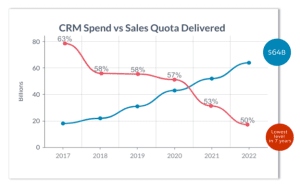
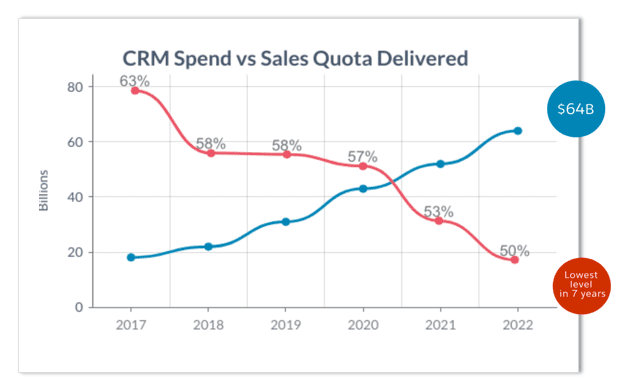
    Fast forward to today, and the paradox is still very much alive. In industries like customer relationship management (CRM), sales productivity has fallen by 25% in the last five years, even as spending on CRM software has tripled. This mirrors Solow’s paradox—technology is advancing at breakneck speed, but many organizations are still grappling with how to translate these advancements into productivity gains.

    Why Doesn’t Technology Always Improve Productivity?

    At the heart of this issue lies a misalignment between technology adoption and actual user needs. Let’s explore a few key reasons why technology, and especially enterprise software like CRMs and AI, often fails to drive the productivity it promises:

    Low User Adoption

    Despite significant investments in CRM software, a mere 26% of customer-facing teams actively use their CRM every day. This is a staggering statistic considering that CRM systems are designed to streamline sales and service processes, but if the majority of users are not engaging with the platform, it can never deliver on its promises of efficiency and productivity gains.

    Tool Overload

    Sales teams today are overwhelmed by tools—on average, they use 10 different applications just to close deals. Studies show that sales reps spend just 28% of their week actually selling, a number that has declined by 20% over the past five years. Much of this lost time is due to the juggling of tools and the associated administrative work.

    User Frustration

    The cognitive overload from having to switch between multiple applications is significant. 66% of sales reps report feeling “drowned” in tools, and 60% of staff in some studies admitted that they’ve considered leaving their jobs due to frustrations with their CRM software.

    The Solow Paradox in the AI Era

    As we enter the age of AI, the Solow Paradox takes on new dimensions. While AI promises to revolutionize productivity, we’re seeing similar patterns of investment without corresponding gains. Here’s how the paradox applies to AI today:

    1. Implementation Lag: Just as with computers in Solow’s time, there’s a significant lag between AI adoption and productivity gains. Organizations are investing heavily in AI, but many are still in the early stages of figuring out how to effectively integrate it into their workflows.
    2. Skill Mismatch: The rapid advancement of AI technology has created a skills gap. Many employees lack the necessary training to effectively use AI tools, leading to underutilization and reduced productivity.
    3. Overinvestment in Technology, Underinvestment in Complementary Factors: Companies often focus on acquiring the latest AI technology without investing sufficiently in the organizational changes, process redesigns, and employee training necessary to fully leverage these tools.
    4. Data Quality Issues: AI systems are only as good as the data they’re trained on. Many organizations struggle with data quality and integration issues, limiting the effectiveness of their AI implementations.
    5. Measurement Challenges: Traditional productivity metrics may not capture the full value of AI. Improvements in decision-making quality or customer experience, for instance, may not be immediately reflected in standard productivity measures.

    Chart: AI Investment vs. Productivity Growth

    Solow Paradox
     

    This chart illustrates the growing gap between AI investment and productivity growth, reminiscent of the original Solow Paradox.

    Moving Beyond the Paradox

    To break the cycle of unproductive technology spending, businesses need to focus on these core principles:

    1. User-Centric Design: Ensure AI solutions simplify day-to-day tasks and remove administrative burdens.
    2. Integrated Workflows: Seamlessly integrate AI with existing tools to reduce context switching.
    3. Focus on Real-Time, Actionable Insights: Emulate consumer apps by pushing relevant, timely information to users.
    4. Invest in Training and Change Management: Prioritize upskilling employees to effectively use AI tools.
    5. Redesign Processes: Rethink workflows to fully leverage AI capabilities, rather than simply automating existing processes.
    6. Improve Data Quality: Invest in data infrastructure and governance to ensure AI systems have high-quality inputs.
    7. Develop New Metrics: Create new ways to measure productivity that capture the full value of AI implementations.

    By addressing these factors, businesses can start to bridge the gap between AI investment and productivity gains, potentially breaking the cycle of the Solow Paradox in the AI era.

    For further research:

    1. McKinsey & Company: The Solow Paradox in the AI Age
    2. MIT Sloan Management Review: Productivity Paradox 2.0
    3. National Bureau of Economic Research: Artificial Intelligence and the Modern Productivity Paradox

    Lorem ipsum dolor sit amet, consectetur adipiscing elit. Ut elit tellus, luctus nec ullamcorper mattis, pulvinar dapibus leo.

  • Private LLM vs. ChatGPT, Which is Better Right Now?

    Private LLM vs. ChatGPT, Which is Better Right Now?

    In the rapidly evolving landscape of artificial intelligence, businesses are increasingly faced with the choice between leveraging commercial AI solutions like ChatGPT and developing their own private Large Language Models (LLMs). Each option presents a unique set of benefits and challenges, impacting areas such as data privacy, continuity, security, and cost management. While commercial AI services offer convenience, they often come with hidden risks related to data exposure and dependency on external providers. On the other hand, private LLMs, though requiring a significant initial investment, promise enhanced control, customization, and long-term value. This article delves into a detailed comparison of these two approaches, highlighting the critical factors that businesses need to consider to make an informed decision.

    Data Privacy

    One of the primary advantages of using a private LLM (Large Language Model) over a commercial AI solution like ChatGPT is data privacy. Commercial AI providers, even though they might not explicitly use your data to train their models, still collect and analyze the information you input. This can include what questions are being asked, how often, and on what topics. Such insights can inadvertently leak sensitive information about your business’s activity, growth, and market positioning. Competitors might glean valuable insights from this aggregated data, potentially putting your strategic advantages at risk.

    In contrast, a private LLM ensures that all data remains within your business’s control. By claiming a private LLM, you can offer a more secure and private experience for your clients, reinforcing trust and confidentiality. This level of privacy is especially crucial for industries handling sensitive information, such as finance, healthcare, and legal services.

    Continuity & Security

    Reliability is another significant consideration. Commercial AI providers, despite their robustness, are not immune to market fluctuations, service outages, or even potential collapses. Dependency on these providers can expose your business to unforeseen risks, including forced outages or disruptions.

    Private LLMs, on the other hand, offer greater control over continuity and security. Since the infrastructure is managed internally or through a dedicated provider, you can mitigate risks associated with external service dependencies. This ensures uninterrupted access to AI capabilities, enhancing operational stability and customer satisfaction.

    Quality of Answers

    The quality of responses from private LLMs can be meticulously controlled. These models can be trained exclusively on curated datasets pertinent to your industry, ensuring that the information is accurate, up-to-date, and relevant. For instance, a private LLM in the medical field can be trained using the latest medical resources, avoiding outdated or erroneous information commonly found on the broader web.

    Moreover, private LLMs can be programmed to acknowledge the limits of their knowledge, offering responses like “I don’t know, seek medical advice” when they encounter questions beyond their training scope. This ensures that users receive reliable and responsible guidance, enhancing trust in your AI solutions.

    Asset Not an Expense

    Investing in a private LLM transforms it from a recurring expense into a valuable business asset. Unlike commercial AI services that incur ongoing subscription costs, a private LLM can be developed, trained, and optimized over time, becoming an intellectual property asset on your balance sheet. This asset can appreciate in value as it continuously learns and adapts to your business needs, providing a long-term return on investment.

    Directed Responses

    Private LLMs offer the flexibility to align responses with your business preferences. They can be engineered to recommend specific products, vendors, or service providers, tailoring interactions to support your strategic goals. This directed approach ensures that the AI’s output consistently aligns with your business objectives and customer service standards.

    Visible & Recognized Costs

    The cost predictability of private LLMs is another advantage. With a private LLM, you can establish a clear cost structure, such as costing per response, making it easier to forecast and manage expenses. In contrast, commercial AI services often have variable pricing models, which can result in unpredictable costs over time. Every interaction with a commercial AI incurs a fee, which can quickly accumulate and become a significant, often underrepresented, expense.

    Future Marketable Data

    A private LLM, trained on user interactions, complaints, and concerns, becomes a valuable repository of marketable data. This data can provide insights into consumer trends, interests, and pain points, which can be leveraged for additional revenue streams. For example, insights derived from a healthcare-focused LLM can inform product development, marketing strategies, and customer engagement approaches, enhancing your competitive edge.

    Additional Benefits

    1. Compliance: For businesses operating in highly regulated industries, a private LLM can be tailored to comply with specific regulatory requirements, ensuring that data handling and processing meet all necessary legal standards.
    2. Performance Optimization: Private LLMs can be optimized for performance based on the unique usage patterns of your business. This can result in faster response times and more efficient processing.
    3. Integration with Proprietary Systems: Private LLMs can be seamlessly integrated with proprietary systems and databases, ensuring that all relevant information is accessible and that the AI can provide the most accurate and contextually appropriate responses.

    Conclusion

    While commercial AI solutions like ChatGPT offer convenience, the benefits of a private LLM are compelling for businesses seeking enhanced privacy, security, and control. By investing in a private LLM, you not only safeguard sensitive information but also create a valuable business asset that can be tailored to your specific needs. The ability to manage costs predictably, ensure the quality of responses, and leverage future marketable data further underscores the strategic advantages of opting for a private LLM over a commercial alternative.

    #ChatGPT #PrivateLLM #OpenAI #AI #GenAI #AIRisk #RiskMitigation #Bestpractices #ROI

  • 10 Ways Banks are Using Generative Artificial Intelligence Right Now!

    10 Ways Banks are Using Generative Artificial Intelligence Right Now!

    Banks are the life blood for many small and medium-sized businesses across North America. They often know the community, business leaders and local business environment better than anyone else.

    Their typically fiscally conservative but willing to try new business practices or technology if they can see a clear value proposition for their customers and their bottom line.  Is AI something that could differentiate their businesses?

    The answer is a resounding YES!

    Savvy, forward thinking bankers are increasingly turning to Generative AI to enhance their competitive edge. Here are ten ways they’re doing it, complete with real-world examples: 

    AI in Banks (see use links below)

    1. Personalized Customer Experiences: Banks like Wells Fargo are pioneering Large Language Models (LLMs) to create multimodal banking experiences, offering personalized services [3]. 
    2. Efficient Risk Assessment: Commonwealth Bank of Australia (CBA) uses Generative AI for enhanced customer experience and combating financial abuse [3]. 
    3. Fraud Detection: JPMorgan Chase employs Generative AI to analyze emails for signs of fraud, improving their detection systems [5]. 
    4. Automated Customer Service: Bunq has introduced a GenAI bot for its banking app, streamlining customer service interactions [3]. 
    5. Market Trend Analysis: Deutsche Bank provides AI-powered personalized investment guidance, helping customers navigate market trends [3]. 
    6. Regulatory Compliance: HSBC is training AI software to manage back-office functions, ensuring compliance with regulations [4]. 
    7. Operational Efficiency: Royal Bank of Canada (RBC) uses AI to automate process-heavy tasks, increasing operational efficiency [4]. 
    8. Credit Scoring Models: Banks are refining credit scoring with AI, though specific examples are under proprietary use and not publicly disclosed. 
    9. Investment Strategies: AI-driven models assist banks like Deutsche Bank in developing robust investment strategies [3]. 
    10. Customized Banking Products: Generative AI helps banks create financial products tailored to their community’s needs, as seen with Wells Fargo‘s LLMs [3]. 

    5 Ways Community Banks Can Integrate Private LLMs to Safeguard Corporate Content 

    Community banks are also cautiously adopting Private LLMs to protect sensitive data and reduce AI Liability exposure. Here’s how they’re doing it: 

    1. Data Control: Morgan Stanley Wealth Management uses an advanced chatbot powered by OpenAI’s technology to leverage the bank’s research and data library while maintaining data control [7]. 
    2. Customized Solutions: Banks can develop bespoke tools that align with their operational models, similar to ABN AMRO‘s use of Generative AI to summarize conversations between bank staff and customers [7]. 
    3. Secure Customer Interaction: By managing customer data securely, banks like ABN AMRO ensure privacy and build trust with their customers [7]. 
    4. In-House Expertise: Developing in-house expertise with Private LLMs allows banks to produce more accurate and relevant insights, as demonstrated by Morgan Stanley [7]. 
    5. Strategic Innovation: Private LLMs enable banks to innovate strategically, developing unique services that differentiate them from competitors, much like Morgan Stanley‘s approach [7]. 

    In conclusion, banks are not just keeping pace—they’re setting the pace, using Generative AI and Private LLMs to redefine the banking experience for their customers and secure a competitive edge in the digital age. However, they do need to keep pace on the evolving AI Legal Landscape as new precedents are set and new laws hit the book. See this video for more on AI Legal Challenges.  

    This article includes specific examples of large banks and community banks using Generative AI, Private LLMs, Data Security and with references to further information on their applications. 

    Article Link Source: Conversation with Copilot 

    1. Generative AI in Banking Best Practices in 2024 [With Examples] 
    2. Here’s how banks are using and experimenting with generative AI 
    3. Leading banks rolling out more generative AI – Oracle 
    4. Generative AI in finance: How banks are using LLMs in 2023 
    5. Generative AI in banking and financial services | McKinsey 
    6. Generative AI’s unfolding transformation of banking 
    7. Top 4 Use Cases of Generative AI in Banking [2024] – AIMultiple 
    8. Bridging the AI Divide: How Banks Can Responsibly Adopt Large Language … 
    9. Private LLMs on Your Local Machine and in the Cloud With LangChain … 
    10. Private LLMs: Key to Business Innovation and Secure AI Integration 

    Tags: #banks #banking #communitybanks #finance #OpenAI #LLM #LLMs #AI #usecase #CEO #CFO #CMO #technology #WallStreet #financialservices #loans