Category: CRMs

  • The Rise of Physical AI: Transforming Manufacturing Right Now

    The Rise of Physical AI: Transforming Manufacturing Right Now

    The Rise of Physical AI: Transforming Manufacturing in 2025

    As we head to the close of ’24 and strategize for 2025, the manufacturing sector is on the brink of a revolutionary transformation many are just getting up to speed with. It’s driven by the fusion of artificial intelligence and the physical world. This phenomenon, known as “physical AI”, is set to redefine how we produce goods, manage industrial processes, and interact with machines. Here are some examples of how physical AI and traditional technologies are reshaping the manufacturing landscape right now. And some projection as to what we can expect in early 2025 and beyond.

    The Essence of Physical AI

    Physical AI represents the embodiment of sophisticated AI algorithms in tangible, interactive systems. Unlike traditional AI, which operates primarily in the digital realm, physical AI manifests in robots and machines equipped with an array of sensors and actuators. These advanced systems can perceive their surroundings, make decisions based on real-time data, and physically interact with the world around them.

    7 AI Enhancing Robot Capabilities in Industrial Settings

    1. Adaptive and Flexible Operations: AI-powered robots can switch between different tasks and adapt to changing product specifications without extensive reprogramming.
    2. Improved Precision and Quality Control: Enhanced sensors and real-time data processing allow robots to perform tasks with exceptional accuracy.
    3. Advanced Object Manipulation: AI algorithms enable robots to handle objects of varying shapes and sizes with unprecedented finesse.
    4. Predictive Maintenance: Continuous monitoring of equipment performance helps prevent unexpected breakdowns and ensures uninterrupted operations.
    5. Enhanced Safety: AI enables robots to detect and respond to human presence, reducing the risk of accidents in collaborative environments.
    6. Optimized Process Efficiency: By combining AI and vision systems, robots can adjust parameters on the fly to mitigate issues and improve overall efficiency.
    7. Autonomous Navigation: AI-powered robots can move independently in warehouse and manufacturing environments, optimizing logistics and material handling.

    Key AI Manufacturing Trends to Watch in 2025

    We’re tracking several key trends that are poised to disrupt the manufacturing landscape with a number more in stealth mode:

    Smart Glasses and Augmented Reality

    A new generation of AR devices, rivaling the computing power of modern smartphones, will revolutionize product design and assembly line operations. Engineers will visualize 3D models in real-time, while workers access step-by-step instructions and troubleshooting guides hands-free.

    Generative AI

    AI systems capable of generating code, optimizing manufacturing processes, and even designing new products will democratize innovation. This technology will enable rapid prototyping and iteration, allowing even small enterprises to compete with industry giants.

    Autonomous Factories

    The convergence of generative AI, advanced robotics, and machine learning will lead to fully autonomous manufacturing facilities. These smart factories will dynamically adjust production lines, maximize output, and minimize waste with minimal human intervention.

    AI-Powered Chips

    Companies like Arm are developing specialized AI chips set to launch by 2025. These chips will enhance the capabilities of AI-driven devices and systems, further accelerating the adoption of physical AI in manufacturing.

    Impact on Industry

    The rise of physical AI in manufacturing is expected to bring significant benefits.

    – Increased productivity and efficiency

    – Reduced downtime and operational costs

    – Improved product quality and consistency

    – Enhanced workplace safety

    – Greater flexibility and customization capabilities

    – Reduced energy consumption and environmental impact


    Specific Use Cases and Research

    1. FANUC’s Zero Down Time (ZDT) Technology
      FANUC’s ZDT system uses AI to analyze data from robots in real-time, predicting potential failures and scheduling maintenance before breakdowns occur. This technology has helped automotive manufacturers reduce downtime by up to 90%.

    Learn more about FANUC’s ZDT

    1. Siemens’ AI-Powered Digital Twin
      Siemens is leveraging AI and digital twin technology to create virtual replicas of physical manufacturing processes. This allows for optimization and testing in a virtual environment before implementation in the real world.

    Explore Siemens’ Digital Twin technology

    1. ABB’s PickMaster Twin
      ABB’s PickMaster Twin uses AI and augmented reality to simplify the programming of robotic picking and packing applications, reducing setup time by up to 80%.

    Discover ABB’s PickMaster Twin

    1. Nvidia’s Isaac Sim for Robotics
      Nvidia’s Isaac Sim platform uses AI and photorealistic simulation to train and test robots in virtual environments, accelerating the development and deployment of physical AI systems in manufacturing.

    Learn about Nvidia’s Isaac Sim

    1. BMW’s AI-Powered Quality Control
      BMW is implementing AI-based image recognition systems to detect even the smallest deviations in components and surfaces during production, ensuring higher quality standards.

    Read about BMW’s AI quality control


    According to industry forecasts, AI could reduce energy consumption in manufacturing by up to 20% by 2025. Furthermore, AI-driven systems are predicted to reduce downtime by 30-50% and increase machine lifespan by 20-40%.

    The manufacturing vertical might be behind on AI adoption compared to other industries. That being noted, there are endless possibilities emerging with Physical AI and traditional technology that are above and beyond the opportunities in other spaces!

    With physical AI at its core in the center of next gen AI enabled IT enterprise grade systems, we can expect to see unprecedented levels of efficiency, innovation, and sustainability in the manufacturing sector. Forward thinking companies that strategize, plan, adopt and embrace the technologies that clearly provide ROI early will be well-positioned to lead in this new era of intelligent manufacturing production.

    Those that do not successfully deploy Physical AI and AI tools at the right points in the manufacturing process will be beaten by their competitors that did it, while they watched.

    Additional Research:

    [1] Physical Intelligence Raises $70M to Build AI-Powered Robots for Any Application

    [2] Manufacturing Revolution 2025 Smart Glasses, Gen AI

    [3] How AI In Manufacturing Is Transforming Key Industry Branches

    [4] Arm Plans AI Chips Launch in 2025 with SoftBank Backing

    [5] The Role of AI in Revolutionizing the Manufacturing Industry

    [6] https://redresscompliance.com/ai-in-industrial-robots/

    [7] https://blog.hirebotics.com/artificial-intelligence-for-robotics-and-welding

    [8] https://waverleysoftware.com/blog/ai-in-robotics/

    Social Media Hashtags:

    #PhysicalAI #ManufacturingRevolution #AI2025 #SmartFactories #IndustryInnovation #FutureOfManufacturing #AIRobotics #TechTransformation #Manufacturing #SAP #AIadoption #AITools #Siebel #Smartglasses #cobots


  • Sync Siebel to Anything, Anywhere, Here’s How

    Sync Siebel to Anything, Anywhere, Here’s How

    Moving from on-premises CRM solutions to cloud-based systems can be a challenging but necessary transition in today’s continuously evolving, AI saturated, IT landscape.

    As cloud adoption accelerates, many businesses with long-standing on-premises CRM systems are recognizing the need to modernize their approach. Sentia Smart Mesh offers a powerful solution for organizations looking to bridge the gap between legacy systems and cloud-based CRM that have the flexibility to connect and communicate.

    On-premises and Cloud CRM

    While Oracle Siebel CRM has been a robust on-premise solution for many companies since its inception way back in 1993, it lacks some of the key features that modern cloud-based CRMs provide. Siebel can be complex to use and maintain, requiring specialized IT staff. It also runs in batches, limiting real-time data access and updates.

    The Sentia Smart Mesh Advantage

    Sentia Smart Mesh is designed to address these limitations and empower organizations with a flexible, cloud-native approach to CRM. Key benefits include:

    • Real-time data access across multiple platforms (including Siebel on premise and cloud)
    • Seamless integration with other cloud applications and services
    • Reduced IT maintenance and infrastructure costs
    • Scalability to grow with your business needs
    • Enterprise grade security

    Creating Connectivity

    One of the biggest challenges in moving to the cloud is migrating existing data and integrating with legacy systems. Sentia Smart Mesh excels at creating connectivity between on-premises and cloud applications. Unlike custom-built integrations that can become tangled and difficult to maintain, Sentia Smart Mesh offers a streamlined approach:

    • Simplified data integration from Siebel and other on-premises CRMs
    • Pre-built connectors for popular enterprise applications
    • A flexible integration platform that adapts as your IT ecosystem evolves
    • Reduced complexity and easier modifications to integrations

    Sentia Smart Mesh Migration Solutions

    Sentia offers a number of integration solutions to aid businesses with their move from Siebel on-premises to Salesforce cloud solutions and or Sentia.

    In addition, Sentia supports organizations during the initial phase of migration where Siebel and Salesforce CRM co-exist to provide real-time integration to the end of the migration.

    • Sentia Smart Mesh is a cloud integration platform as a service (iPaaS) that offers safe and secure connectivity between on-premise / legacy software and SaaS applications. Businesses can use Sentia Smart Mesh between Siebel CRM and Salesforce (or any other platform such as HubSpot, Microsoft, SAP, Sentia AI, Zoho ) to transfer information seamlessly. In addition, Sentia Smart Mesh offers numerous  additional connectors, allowing businesses to share data across applications, services, and systems with only a few clicks. Bottom line. Corporations can maintain legacy data within their older Siebel CRM / on-premises solution, with the ability to integrate it with other applications and services providing access to all parts of the organization.

    Sentia Smart Mesh provides a comprehensive suite of tools and services to facilitate a smooth transition from Siebel CRM.

    By leveraging Sentia Smart Mesh, organizations can modernize their CRM infrastructure while preserving their valuable historical data and processes. This approach enables businesses to take advantage of cloud benefits without sacrificing the investments made in their existing systems. It also allows businesses to keep Siebel for the teams that want to use and it upgrade the rest to Sentia’s AI enabled CRM.

    “A perfect integration for organizations concerned about migrating from their legacy systems to a tangible and safe future state.” – M. Small, AI Strategy and Salesforce SME

  • The AI Revolution in Customer Experience: How Chief Customer Officers Are Leveraging Technology in 2024 and Beyond

    The AI Revolution in Customer Experience: How Chief Customer Officers Are Leveraging Technology in 2024 and Beyond

    As the business landscape evolves, the role of Chief Customer Officer (CCO) has become increasingly crucial. These executives are responsible for overseeing and optimizing the entire customer experience, from initial contact to post-purchase support. In today’s digital age, CCOs are turning to artificial intelligence (AI) to revolutionize how they understand, engage with, and satisfy customers.

    The Role of a Chief Customer Officer

    A Chief Customer Officer is the executive responsible for creating a customer-centric culture within an organization. Their primary duties include:

    1. Developing and implementing customer experience strategies
    2. Analyzing customer data to drive insights
    3. Overseeing customer service operations
    4. Collaborating with other departments to ensure customer-centricity
    5. Measuring and reporting on customer satisfaction metrics

    10 Ways CCOs Are Using AI in 2024

    1. Predictive Analytics for Customer Behavior
      AI-powered predictive analytics to anticipate customer needs and behaviors, allowing for proactive engagement and personalized experiences.
    2. AI-Driven Personalization
      Machine learning algorithms, are creating hyper-personalized customer journeys across all touchpoints. Job title, function, purchasing power, experience can all be used to personalize each interaction.
    3. Chatbots and Virtual Assistants
      AI-powered chatbots are being deployed to provide 24/7 customer support, handling routine inquiries and freeing up human agents for more complex issues. This is one of the areas most AI enthusiasts see as low hanging fruit. The trick is making the customer experience better than with a well-trained human. That is still a goal.
    4. Sentiment Analysis
      Sales, Marketing and CCOs are all using AI to analyze customer feedback across various channels, gaining real-time insights into customer sentiment and satisfaction levels. Outliers – really good / bad customer interactions will be immediately flagged by AI and sent to management for review.
    5. Voice of Customer (VoC) Programs
      AI is enhancing VoC programs by processing and analyzing vast amounts of unstructured customer feedback data. The key is creating the right prompts to gain the best actionable insights. AI is perfect for this.
    6. Customer Churn Prediction
      Machine learning models are being employed to identify customers at risk of churning, allowing for targeted retention efforts. This has been done for a long time already. See Sentia.
    7. Automated Quality Assurance
      AI is being used to monitor and analyze customer interactions, ensuring consistent service quality across all channels. (See #4)
    8. Intelligent Routing
      CCOs are implementing AI-powered systems to route customer inquiries to the most appropriate agent or department based on the nature of the request. The most important calls (highest paying customers) usually have the top tier of service. Regardless getting customers to the right answers (AI or People) is critical to customer happiness and retention.
    9. Predictive Maintenance
      For product-based companies, AI is being used to predict when customers might need maintenance or support, enabling proactive outreach. They are also using IoT on machines to max output / maintenance downtime. Manufacturing is generally a bit behind in the AI race but will rapidly evolve.
    10. Customer Lifetime Value Optimization
      AI algorithms are helping CCOs identify high-value customers and optimize strategies to increase their lifetime value. The best customer is your current one. The cost of getting new clients is almost always higher than upselling, cross selling and keeping current customers happy!

    How AI Enhances Customer Satisfaction

    That sounds swell. Tell me how can AI play a crucial role in elevating customer satisfaction levels across various touchpoints? *(See research links at end of article and additional reading)

    Personalized Experiences at Scale

    AI enables businesses to deliver personalized experiences to each customer, regardless of the size of their customer base. By analyzing vast amounts of data, AI can tailor interactions, recommendations, and offers to individual preferences and behaviors. This level of personalization makes customers feel valued and understood, leading to higher satisfaction rates.

    Faster Resolution Times

    AI-powered chatbots and virtual assistants can provide instant responses to customer queries, significantly reducing wait times. For more complex issues, AI can quickly route customers to the most appropriate human agent, ensuring faster resolution. This efficiency in handling customer inquiries leads to improved satisfaction and reduced frustration.

    Proactive Customer Service

    By leveraging predictive analytics, AI can anticipate customer needs and potential issues before they arise. This allows businesses to reach out proactively with solutions or support, demonstrating attentiveness and care. Proactive service not only solves problems more efficiently but also shows customers that the company values their experience.

    24/7 Availability – When does AI Sleep?

    AI-driven customer service solutions offer round-the-clock support, catering to customers across different time zones and schedules. This constant availability ensures that customers can get help whenever they need it, enhancing their overall experience with the brand. It also doesn’t need to eat, sleep, have a bad day or take a break.  

    Consistent Quality of Service

    AI systems can maintain a consistent level of service quality across all interactions. Unlike human agents who may have varying levels of knowledge or experience, AI can provide standardized, accurate information every time. This consistency builds trust and reliability in the customer’s mind. However, the best approaches are almost always hybrid. Using Blended AI or the integration of humans and AI for optimal outcomes.

    Emotional Intelligence in Interactions

    Advanced AI systems are now capable of detecting customer sentiment and adjusting their responses accordingly. This emotional intelligence allows for more empathetic and appropriate interactions, which can significantly improve customer satisfaction, especially in challenging situations. (See #4 how sentiment analysis can be used)

    Seamless Omnichannel Experience

    AI facilitates a seamless experience across multiple channels by integrating data from various touchpoints. Customers can switch between channels (e.g., from chat to phone) without losing context, creating a more cohesive and satisfying journey.

    By implementing these AI-driven strategies, businesses can significantly enhance customer satisfaction, leading to increased loyalty, positive word-of-mouth, and ultimately, business growth. As AI technology continues to evolve, its potential to improve customer satisfaction will only grow, making it an essential tool for businesses focused on delivering exceptional customer experiences.

    Bonus: AI Innovations on the Horizon for 2025

    1. Emotion AI: Advanced systems that can detect and respond to customer emotions in real-time during interactions.
    2. Augmented Reality (AR) Customer Support: AI-powered AR solutions for visual, interactive customer assistance.
    3. Predictive Personalization: AI systems that can anticipate and fulfill customer needs before they’re expressed.
    4. Voice-First Customer Experiences: AI-driven voice interfaces becoming the primary mode of customer interaction for many services.
    5. Quantum Computing in CX: Leveraging quantum computing for unprecedented data processing and predictive capabilities in customer experience management.

    As we move towards 2025, CCOs who embrace these AI innovations will be well-positioned to deliver exceptional customer experiences and drive business growth.

    Tags: #CustomerExperience #AI #ChiefCustomerOfficer #CX #ArtificialIntelligence #CustomerService #BusinessInnovation #CCO #bestpractices #GenAI #ChatGPT

    Research Links:

    1. 13 Ways AI Will Improve the Customer Experience in 2024 – Zendesk
    2. 10 Excellent Ways AI Will Improve Customer Experience in 2024 – Survey Sparrow
    3. How AI Will Transform Customer Satisfaction in the Future – Delegate
    4. How AI is Transforming Customer Experience for Businesses – Full Story
    5. AI in Customer Service: All You Need to Know – Zendesk
  • Is AI capable of Breaking the Solow Paradox?

    Is AI capable of Breaking the Solow Paradox?

    Breaking the Solow Paradox: Unlocking AI’s Productivity Potential in the Enterprise

    In 1987, Nobel Prize-winning economist Robert Solow famously quipped, “You can see the computer age everywhere but in the productivity statistics.” This statement, known as the Solow Paradox, encapsulates a dilemma that still resonates today: despite massive investments in technology, particularly in AI and enterprise software, measurable productivity improvements remain elusive for many businesses.

    The Solow Paradox: A Persistent Challenge

    Solow’s observation was based on decades of studying business performance. During the period from the 1960s through the 1990s, companies dramatically increased their spending on technology—by 25% year-over-year in some cases. Despite this investment, productivity, measured by outputs per unit of input, didn’t follow suit. In fact, it often declined, with productivity dropping as much as 3% annually over that time frame.

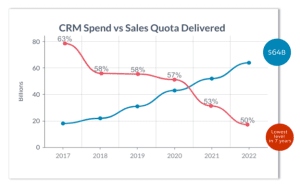
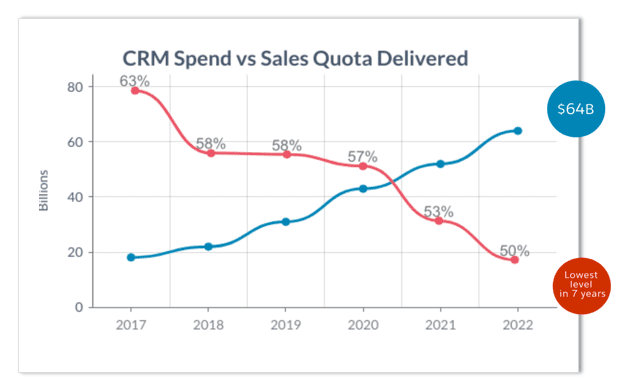
    Fast forward to today, and the paradox is still very much alive. In industries like customer relationship management (CRM), sales productivity has fallen by 25% in the last five years, even as spending on CRM software has tripled. This mirrors Solow’s paradox—technology is advancing at breakneck speed, but many organizations are still grappling with how to translate these advancements into productivity gains.

    Why Doesn’t Technology Always Improve Productivity?

    At the heart of this issue lies a misalignment between technology adoption and actual user needs. Let’s explore a few key reasons why technology, and especially enterprise software like CRMs and AI, often fails to drive the productivity it promises:

    Low User Adoption

    Despite significant investments in CRM software, a mere 26% of customer-facing teams actively use their CRM every day. This is a staggering statistic considering that CRM systems are designed to streamline sales and service processes, but if the majority of users are not engaging with the platform, it can never deliver on its promises of efficiency and productivity gains.

    Tool Overload

    Sales teams today are overwhelmed by tools—on average, they use 10 different applications just to close deals. Studies show that sales reps spend just 28% of their week actually selling, a number that has declined by 20% over the past five years. Much of this lost time is due to the juggling of tools and the associated administrative work.

    User Frustration

    The cognitive overload from having to switch between multiple applications is significant. 66% of sales reps report feeling “drowned” in tools, and 60% of staff in some studies admitted that they’ve considered leaving their jobs due to frustrations with their CRM software.

    The Solow Paradox in the AI Era

    As we enter the age of AI, the Solow Paradox takes on new dimensions. While AI promises to revolutionize productivity, we’re seeing similar patterns of investment without corresponding gains. Here’s how the paradox applies to AI today:

    1. Implementation Lag: Just as with computers in Solow’s time, there’s a significant lag between AI adoption and productivity gains. Organizations are investing heavily in AI, but many are still in the early stages of figuring out how to effectively integrate it into their workflows.
    2. Skill Mismatch: The rapid advancement of AI technology has created a skills gap. Many employees lack the necessary training to effectively use AI tools, leading to underutilization and reduced productivity.
    3. Overinvestment in Technology, Underinvestment in Complementary Factors: Companies often focus on acquiring the latest AI technology without investing sufficiently in the organizational changes, process redesigns, and employee training necessary to fully leverage these tools.
    4. Data Quality Issues: AI systems are only as good as the data they’re trained on. Many organizations struggle with data quality and integration issues, limiting the effectiveness of their AI implementations.
    5. Measurement Challenges: Traditional productivity metrics may not capture the full value of AI. Improvements in decision-making quality or customer experience, for instance, may not be immediately reflected in standard productivity measures.

    Chart: AI Investment vs. Productivity Growth

    Solow Paradox

    This chart illustrates the growing gap between AI investment and productivity growth, reminiscent of the original Solow Paradox.

    Moving Beyond the Paradox

    To break the cycle of unproductive technology spending, businesses need to focus on these core principles:

    1. User-Centric Design: Ensure AI solutions simplify day-to-day tasks and remove administrative burdens.
    2. Integrated Workflows: Seamlessly integrate AI with existing tools to reduce context switching.
    3. Focus on Real-Time, Actionable Insights: Emulate consumer apps by pushing relevant, timely information to users.
    4. Invest in Training and Change Management: Prioritize upskilling employees to effectively use AI tools.
    5. Redesign Processes: Rethink workflows to fully leverage AI capabilities, rather than simply automating existing processes.
    6. Improve Data Quality: Invest in data infrastructure and governance to ensure AI systems have high-quality inputs.
    7. Develop New Metrics: Create new ways to measure productivity that capture the full value of AI implementations.

    By addressing these factors, businesses can start to bridge the gap between AI investment and productivity gains, potentially breaking the cycle of the Solow Paradox in the AI era.

    For further research:

    1. McKinsey & Company: The Solow Paradox in the AI Age
    2. MIT Sloan Management Review: Productivity Paradox 2.0
    3. National Bureau of Economic Research: Artificial Intelligence and the Modern Productivity Paradox

    Lorem ipsum dolor sit amet, consectetur adipiscing elit. Ut elit tellus, luctus nec ullamcorper mattis, pulvinar dapibus leo.

  • The Future of AI in Sales Tech. What’s Coming you Need to Know

    The Future of AI in Sales Tech. What’s Coming you Need to Know

    The Future of AI in Sales Tech: What to Expect by 2025

    As the year winds down, every C-Suite executive I work with is eager to leverage AI in sales tech to stay ahead. Board meetings today prioritize shareholder expectations and the pressing question: “How will AI drive our growth faster than competitors?”

    The challenge for corporate strategists is navigating the “Irrational Exuberance of AI.”

    Just because AI “can” do something doesn’t mean it “should.” ROI remains crucial – that will never be a passing fad. It’s vital to create realistic AI adoption timelines, implement risk mitigation strategies, and plan for inevitable failures as tech teams learn to optimize AI.

    Looking ahead to 2025, AI is set to transform sales technology with hyper-personalized outreach, advanced predictive analytics, live sentiment analysis, and PCLV models. AI will continue to revolutionize sales operations—and it will be an adapt or get left behind activity. The future belongs to those who embrace blended AI.

    Based on my research, the most impactful AI features aren’t always the flashiest. Focus on those with significant ROI potential. Make safe bets, stretch goals, and a few long shots in your AI strategy. Remember, AI isn’t a set-it-and-forget-it tool; it requires ongoing tuning and parallel operation with current systems for risk mitigation and maximization.

    Here are the top ten AI features to consider, evaluated on their potential ROI impact.

    Top Ten AI Sales Tech Features for 2025

    1. AI-Driven Sales Strategy Optimization
    2. Advanced Sentiment Analysis
    3. AI-Powered Virtual Reality (VR) Sales Demos
    4. Predictive Customer Lifetime Value (CLV) Models
    5. AI-Enhanced Sales Training Programs
    6. Dynamic Pricing Algorithms
    7. AI-Generated Sales Scripts
    8. Automated Contract Generation and Management
    9. AI-Driven Market Segmentation
    10. Real-Time Competitive Analysis

    AI Sales Tech in Manufacturing

    The manufacturing sector is rapidly adopting AI technologies, often outpacing other industries in terms of investment and implementation. According to a study by MIT Technology Review Insights, 64% of manufacturers are currently researching or experimenting with AI, and 35% have begun to put AI use cases into production2. This sector’s focus on AI is driven by the need for enhanced product and process innovation, reduced cycle times, and improved operational efficiency. Compared to other verticals, manufacturing shows a higher rate of AI adoption, with significant investments expected to continue growing over the next few years1.

    Top 3 AI Features in AI-Enabled Sales Tech for Manufacturing

    1. Predictive Maintenance Sales Solutions
    2. AI-Enhanced Supply Chain Optimization
    3. Intelligent Product Recommendations

    Conclusion

    The integration of AI in sales technology is set to bring unprecedented efficiency and effectiveness to sales processes. From hyper-personalized outreach to advanced predictive analytics, these innovations will empower sales teams to better understand and serve their customers.

    In the manufacturing sector, AI will play a crucial role in predictive maintenance, supply chain optimization, and intelligent product recommendations, driving significant improvements in sales strategies and outcomes.

    Stay tuned as we continue to explore the exciting developments in AI and their impact on the future of sales!

    David is an investor and executive director at Sentia, a next generation AI sales enablement technology company and Salesforce partner. Dave’s passion for helping people with their AI, sales, marketing, business strategy, startup growth and strategic planning has taken him across the globe and spans numerous industries. You can follow him on Twitter LinkedIn or on Sentia Says.

    Tags: #manufacturing #CEO #BOD #AI #AIadoption #AIRisk #AIStrategy #Boardofdirectors #AItesting #AIusecase #AIplan #AIConsulting

  • Trust, Is it the Only Job Skill AI can’t Replace?

    Trust, Is it the Only Job Skill AI can’t Replace?

    Trust, the Only Job Skill AI can’t Replace?

    In an era where artificial intelligence is revolutionizing industries and transforming the way we live and work, there remains a fundamental human element that AI can never replicate trust.

    Trust is a deeply personal and intricate skill, built through genuine interactions, empathy, and understanding. While AI can analyze data and predict outcomes with remarkable accuracy, it lacks the emotional intelligence and authenticity required to foster true trust. This article explores why trust remains an irreplaceable human skill, highlighting the nuances and complexities that make it uniquely ours in a sales use case.

    Story

    After filling out a software online information request page, I received an instant email from a salesperson introducing himself. Let’s call him Jack. Jack is a software salesperson and an expert in his company’s product. I was working on a new social media strategy at the time and researching options. I was curious about his product and wanted to see if it would assist with the process, I was looking at implementing.

    Jack diligently followed up with an email, attachments of features and benefits, links to case studies, demo options, and questions about when I wanted to start. I responded to his email by informing him I was only at the beginning of researching social media tools. So not yet.

    Two weeks later, my inbox chimed. Jack acknowledged how busy I might be and asked if I was ready to get started. Not yet. Still establishing the plan. The process with the team is taking longer than expected.

    A month later, Jack again asked if I was ready to get started. When I saw his email, I deleted it. No reply. Ever again.

    It’s a shame because I might have considered his product.

    Not all prospects are ready to buy from you. But knowing how to occupy the mindshare of those people is critical to maintaining a pipeline of prospects and building the long-term value of your company.

    Whatever you do, don’t make the mistake Jack made, which was to ask if I was ready to consider his product while repeatedly pushing emails to me. This strategy is ‘me’-focused. To be frank, I didn’t really care about his product at this early stage of my planning. My concern was getting my strategy and process right first. That’s how your buyers feel. They don’t care about you or your product; they care about themselves.

    Hence, your objective with prospects should be to build relationships, build trust, and be of value because people only do business with people they know, like, and trust.

    Here are ten proven ways to help you do just that.

    Build Your Dream List

    Make a dream list of your top twenty prospects that you’d like to have as your customers. Think of ways to add genuine value to their lives. Once you have your dream list, review it daily, plan, and ask yourself, “How can I help, inform, and serve these people today?”

    Sales expert Barb Giamanco says, “Appropriate rapport will happen when your sales approach and messaging are focused on what the buyer cares about and NOT what you want to pitch or demo. This is the definition of rapport – ‘a close and harmonious relationship in which the people or groups concerned understand each other’s feelings or ideas and communicate well.’ What the buyer wants is for salespeople to demonstrate that they can help them solve their business problems. You don’t build rapport with someone you don’t know with a pitch or an offer to do a product demo. It is that simple.”

    AI Use Case: Use AI-powered CRM tools to analyze your prospects’ behavior and preferences. These tools can help you tailor your communication and offers to match their specific needs and interests, making your interactions more relevant and valuable.

    Socialize, Genuinely

    Follow the people on your dream list and their organizations on Twitter, LinkedIn, or any other platforms they’re using. Engage with them in a meaningful and genuine way.

    Interacting on social media also allows salespeople to build up little bits of rapport to nudge a prospect towards engaging with you. Start following and engaging them online. The whole point of social media is to get people to talk to you. So, talk to them! Take time to comment and offer your thoughts on the content posted by your targeted prospects. Recognize their interesting insights. You’re showing them what you care about and you’re adding social proof to the value of their posts.

    AI Use Case: Leverage AI-driven social listening tools to monitor your prospects’ social media activity. These tools can alert you to opportunities for engagement, such as when a prospect posts about a topic related to your product or industry.

    Show Respect for Their Inbox

    Instead of bombarding your dream list’s inbox with stuff about you, share insight that might help them or their business. Set up Google Alerts for your prospect’s company, or any major interests they might have. Invest some time each day sifting through this resource. When you find an article or insight someone from your list might find relevant or useful, share it, explaining why it might be of interest. Be careful with this tip; if you overdo it, you might come across as spammy.

    AI Use Case: Utilize AI-based email marketing platforms to personalize your email content. These platforms can analyze your prospects’ past interactions with your emails and suggest the best times to send emails, the most engaging subject lines, and the type of content that resonates most with each prospect.

    Make Them Stand Out

    Following on from the last tip, you could also use your new content aggregation to sift through and think of ideas that might help prospects. Instead of asking me to just look at his product, Jack could have pointed me to content to help me with my social strategy. I would have been thrilled. Sharing ideas shows prospective customers you’re genuine and trying to help them, which builds trust while waving the magic wand of reciprocity. It’s all about the client, not you.

    Working from content posted by your top-twenty picks, you can also review and share their best material with your friends and colleagues online. You are helping your prospect when you do this because you’re amplifying their message—which is another big reason why they’re online in the first place.

    AI Use Case: Use AI-powered content curation tools to find and share relevant content with your prospects. These tools can help you discover high-quality articles, blog posts, and other resources that align with your prospects’ interests and needs.

    Connect People

    When you regularly think of your dream list, you will find yourself meeting people you could connect them to. To avoid any awkward connections, first ask yourself if the connection is useful to both parties. If it’s not, then don’t do it. When you think of a good reason both parties could benefit from the connection, explain to both parties why you think an introduction might bring value to them and whether they would like you to make the intro. Only when both parties are interested should you make the introduction.

    AI Use Case: AI-driven networking platforms can help you identify potential connections between your prospects and other professionals in your network. These platforms can suggest introductions based on shared interests, goals, and mutual benefits.

    Celebrate Their Success

    If you have gathered information as a result of striking up great rapport and a relationship, don’t miss an opportunity to celebrate or acknowledge any good news, promotions, or wins. Celebrate their success and be genuine about it.

    AI Use Case: Use AI tools to track your prospects’ achievements and milestones. These tools can notify you of any significant updates, such as promotions or company news, so you can congratulate them in a timely and personalized manner.

    Think Outside the Box

    Jack the salesperson knew I was in the thick of establishing my social media strategy with some team challenges along the way. Had he communicated something like, “Hey Billie Jean, many of our clients are in the same position as you and I know how complicated and stressful it is. Thought you might find this document useful, giving you step-by-step how to get your team working towards a common goal. Hope it helps, Jack.” I would have appreciated the relevance and the fact that he could relate to my circumstances.

    So, think back to your previous conversations with dream listers. Do any problems spring to mind? Can you anticipate challenges they might have? Maybe they’re having a hiring or supplier problem, or a personal issue you might be able to solve? Sales is about problem solving, not just the specific problems your product solves, but also exploring ways to make people’s lives easier.

    AI Use Case: AI-powered customer relationship management (CRM) systems can help you keep track of past conversations and identify potential challenges your prospects might face. These systems can provide insights and suggestions for how you can offer relevant solutions.

    Know When to Walk Away

    You can’t win them all, and that’s okay. It is important that salespeople know when to walk away. The old adage “don’t take no for an answer” is a formula for disaster. If it’s not a fit for the customer, you’ll end up doing your company and brand more harm than good. If they simply aren’t interested and you continue to press the topic, you’ve entered the threshold of stalker just like Jack.

    AI Use Case: AI analytics can help you determine when a prospect is unlikely to convert. By analyzing engagement patterns and other data, AI can provide recommendations on when it might be best to move on to other opportunities.

    Don’t Take It Personally

    One of the benefits of not taking things personally is that you’re showing the prospect that it’s not about the sale, it’s about the relationship. If your solution is not the best for them, make sure it’s clear that you’re okay with that, and what you truly want for them is that they get what they need. Even if you truly, genuinely, believe with all your heart that your product is the right one for them, and they go elsewhere and they’re going to be disappointed, it’s still their choice. Allow them to make it at their own pace, on their own time. Just patiently stay in touch until they do make the decision.

    AI Use Case: AI sentiment analysis tools can help you gauge the tone and mood of your interactions with prospects. These tools can provide insights into how your messages are being received and suggest adjustments to improve your communication.

    Stay in Touch Even If They Do Say No

    Even prospects who have given you a clear ‘no’ may still appreciate hearing from you. Continue looking for ways to assist them, provide helpful and relevant information, and listen for any hints they might drop. Someone who says no today might change their mind in six months or even six years. This is the power of long-term follow-up: if they should have listened to you but didn’t, and you remain kind, helpful, and supportive of their decision, you may be the first person they think of when they reconsider.

    According to Stanford University, 85% of sales are made after the fifth meeting with a prospect, yet 95% of salespeople give up before then. Why do they give up so soon? Because the bottom 95% of salespeople don’t understand how to build genuine trust and rapport with prospects. It’s a fine line between persistence and stalking. You’ll never get it absolutely perfect, but the key is to be yourself, be friendly and personable, and balance your follow-up with a real-world understanding that nothing in our lives and businesses goes perfectly to plan.

    AI Use Case: Enhancing Follow-Up Strategies

    Artificial Intelligence can significantly enhance your follow-up strategies. AI-powered tools can analyze past interactions and predict the best times to reach out to prospects, ensuring your follow-ups are timely and relevant. Additionally, AI can personalize communication by analyzing a prospect’s preferences and behaviors, helping you craft messages that resonate more effectively. By leveraging AI, you can maintain a consistent and thoughtful follow-up process, increasing your chances of converting prospects who initially said no.

    Tags: #Trust #Sales #Training #Salestraining #buyerjourney #CRO #CSO #AI #AItraining #Aiadoption #AIRisk 

  • AI and Salesforce Einstein. Is it’s AI Ready for Deployment?

    AI and Salesforce Einstein. Is it’s AI Ready for Deployment?

    In the ever-evolving landscape of enterprise AI, Salesforce’s Einstein platform stands as an emerging enterprise grade comprehensive suite tailored for the modern corporate buyer. Yes, it has lots of room for improvement just like every other AI in the market, that being said if you are already a Salesforce customer and want to get some help evaluating it here is a high-level view of what exactly Einstein is and is not.

    Setting the table. As an enterprise leader, I recognize the critical importance of integrating AI capabilities that not only enhance operational efficiency but also secure a competitive edge.

    As a strategic thinker. It is important to go back to basics and remember MBA 101.

    It isn’t about the flashing AI sizzle, slick AI PowerPoint presentations or those “gee whiz you can do that,” features. It is about what can AI do, that I can’t do now, that will make an immediate impact on my business. Use the following before you start your AI buyer journey.

    AI Evaluation Checklist:

    1. Take AI out of the equation. What are the problems your company needs to solve.
    2. These specific problems can be solved by AI
    3. How long will it take to develop these AI tools?
    4. How much will it cost to develop, integrate and train employees?
    5. Are there internal resources to install it or will you need AI Implementation help?
    6. When will you see a return on your AI investment?

    Einstein 1 Platform serves as the cornerstone of Salesforce’s AI offerings, encompassing a wide array of tools from predictive analytics to advanced AI-driven actions. The inclusion of both legacy and cutting-edge features, such as Einstein for Developers, ensures a robust and versatile environment for any organization.

    The Einstein Copilot is particularly noteworthy for its user-friendly interface and customizable actions, providing a glimpse into the future of organization-wide AI chatbots. Its simplicity out of the box belies its potential for extensive customization, empowering users to tailor it to their unique business needs.

    The Einstein 1 Studio is where the magic of personalization happens. Here, you can fine-tune the Copilot’s actions, imbue it with a distinct personality, and meticulously test and debug to ensure seamless deployment.

    The Prompt Builder is a game-changer, offering unparalleled value by enabling the creation of sophisticated prompts that leverage both internal and external data sources. This tool is instrumental in harnessing the full power of the Data Cloud, akin to crafting an intricate email merge template on a grand scale.

    The Einstein Trust Layer is a robust set of features and guardrails that protect the privacy and security of your data, improve the safety and accuracy of your AI results, and promote the responsible use of AI across the Salesforce ecosystem. With features like dynamic grounding, zero data retention, and toxicity detection, the Einstein Trust Layer is designed to help you unleash the power of generative AI without compromising your safety or security standards.

    Lastly, the Model Builder may appear modest, but it is a fundamental component that grows in significance as one delves deeper into the AI models suitable for enhancing Copilot Actions.

    It’s essential to note that while Salesforce’s solutions provide a secure and structured approach to AI within an organization, they do not restrict the ingenuity and expertise of AI specialists. The safety measures in place are commendable, yet the flexibility remains for specialists to extract maximum value from AI, ensuring that the enterprise remains at the forefront of innovation and efficiency.

    Fortune 500 companies are testing, deploying and have been using AI for some time. From the field the number one issue I hear is that it takes time to get it right, it can produce amazing results but it isn’t set it and forget it software. To max the value it requires constant tweaking and enhancements from a knowledgeable team. This often requires mixing inside and outside talent to ensure outside best practices are brought in.

    There you go. Grab a certified Salesforce partner (like Sentia AI) to help understand how large enterprise businesses like yours, can evaluate how, when and where they can leverage the amazing potential of AI in their businesses, profitably.

    tags: #Salesforce #AI #Einstein #CRM #Salesforce.com #GenAI #AIadoption #AIRisk #CRMChecklist

  • What is an Autonomous AI Agent? How is it being used Right Now??

    What is an Autonomous AI Agent? How is it being used Right Now??

    The Advantages, Risks, and Applications of Autonomous AI
    Agents

    Autonomous AI agents are at the forefront of technological innovation, transforming industries and redefining how we solve complex tasks.

    However, like any powerful tool, they come with both benefits and risks. In this article, we’ll explore the advantages and risks of using autonomous AI agents, delve into their diverse applications, and highlight companies that are harnessing their potential.

    Advantages of Autonomous AI Agents

    Autonomous AI agents are intelligent software programs designed to perform tasks without constant human supervision. They can sense their environment, reason, learn from their experiences, and take actions12. Here are some of the key advantages:

    1. Autonomy: AI agents can operate independently without human intervention1.
    2. Perception: They can sense their environment through various input methods such as cameras, sensors, and data streams1.
    3. Reasoning: They use algorithms and models to process information and make decisions1.
    4. Learning: Many AI agents are capable of learning from their experiences using machine learning techniques1.
    5. Action: They can take actions or provide recommendations based on their reasoning1.
    6. Efficiency: AI agents can automate complex workflows, enhancing operational efficiency3.
    7. Time-saving: They free up human employees to focus on higher-value tasks by automating repetitive tasks3.
    8. Adaptability: AI agents can adjust their actions according to changes in the environment or new data2.
    9. Collaboration: One of the most significant advantages of AI agents is their ability to work together in multi-agent systems1.
    10. Applications: AI agents have a wide range of applications across various domains, from customer service to finance4. 

    Companies Using Autonomous AI Agents

    Several companies are leveraging the power of autonomous AI agents to drive efficiency and innovation:

    1. Significant Gravitas Ltd.: Developed AutoGPT, one of the early autonomous AI agents5.
    2. Untapped Capital: Published the concept of autonomous AI agents5.
    3. Microsoft: Known for its AI agent, JARVIS6.
    4. Google: Utilizes AI agents in various applications7.
    5. Broadcom: Employs AI agents for different tasks7.

    Risks of Using Autonomous AI Agents

    While autonomous AI agents offer numerous benefits, they also present potential risks:

    1. Overlooking Rare Cases: As AI agents are based on statistical models, they might overlook rare cases and abnormalities, potentially leading to operational errors3.
    2. Complex Algorithms: The complex algorithms powering autonomous AI agents can be esoteric, making it challenging for users to understand or predict their behavior. This raises trust and transparency issues3.
    3. Ethical and Societal Considerations: The advent of autonomous AI agents brings to the forefront critical ethical and societal considerations. Issues such as privacy, security, and the impact on employment and social structures are paramount8.

    In conclusion, autonomous AI agents are transforming the way we approach complex tasks and decision-making processes. While they offer numerous advantages, it’s crucial to be aware of the potential risks and implement responsible usage strategies. As we continue to innovate and evolve, autonomous AI agents will undoubtedly play a significant role in shaping our future.

    Tags: #AI #automonousai #AIAgents #AITrust #aisecurity #GenAI